


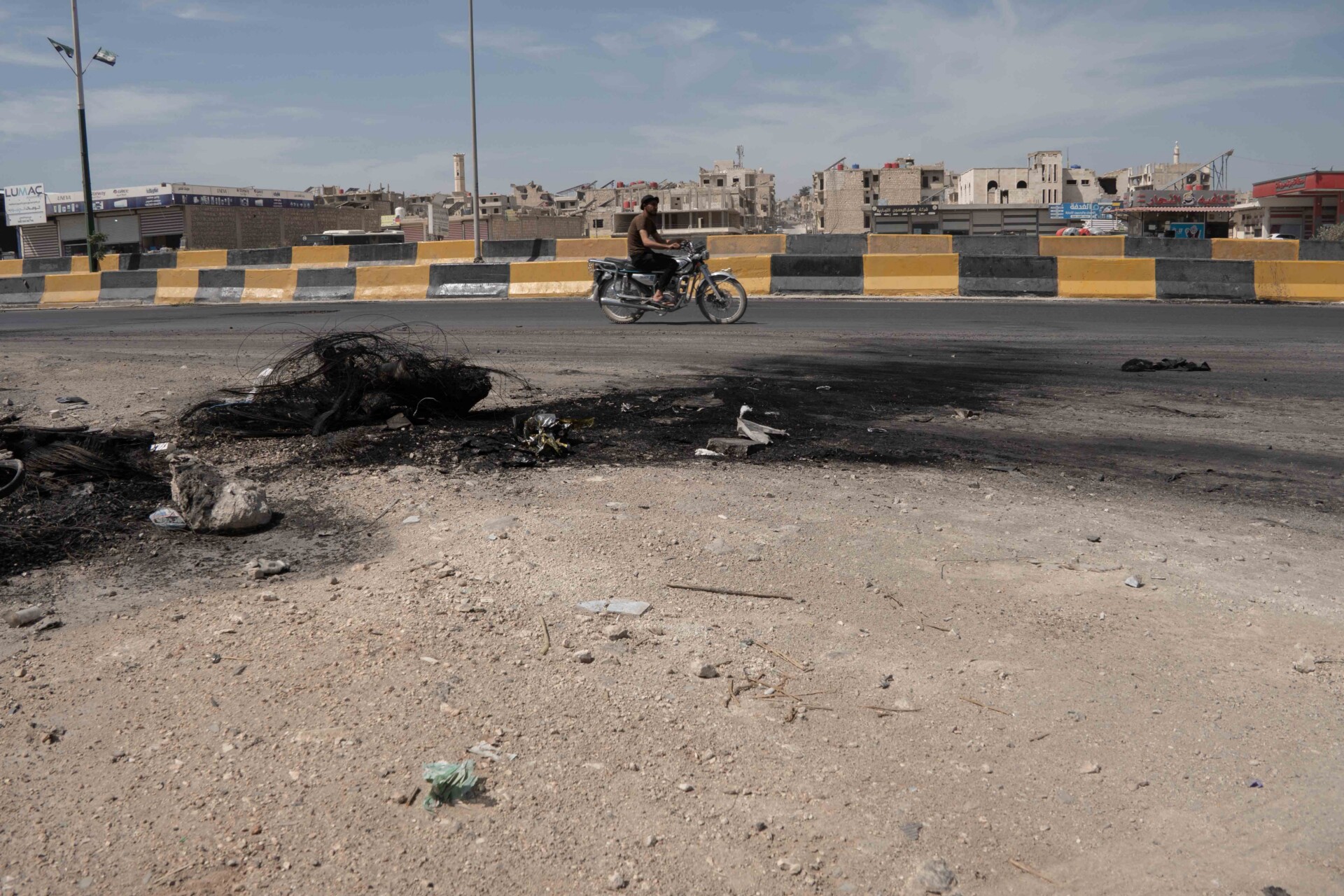
As I tried to nap on the bus from Damascus to Maarrat al-Numan — or al-Maarra, as it’s commonly called — I kept getting interrupted by the bus driver venting loudly about rising prices. It was seemingly all anyone could talk about. We were on the M5 highway on the way to the town, which is administratively part of the Idlib governorate.
This collective anger over price hikes reached a breaking point on Sunday when the Syrian government announced a 40% rise in the price of diesel — a massive increase in a country devastated by a 14-year-long civil war.
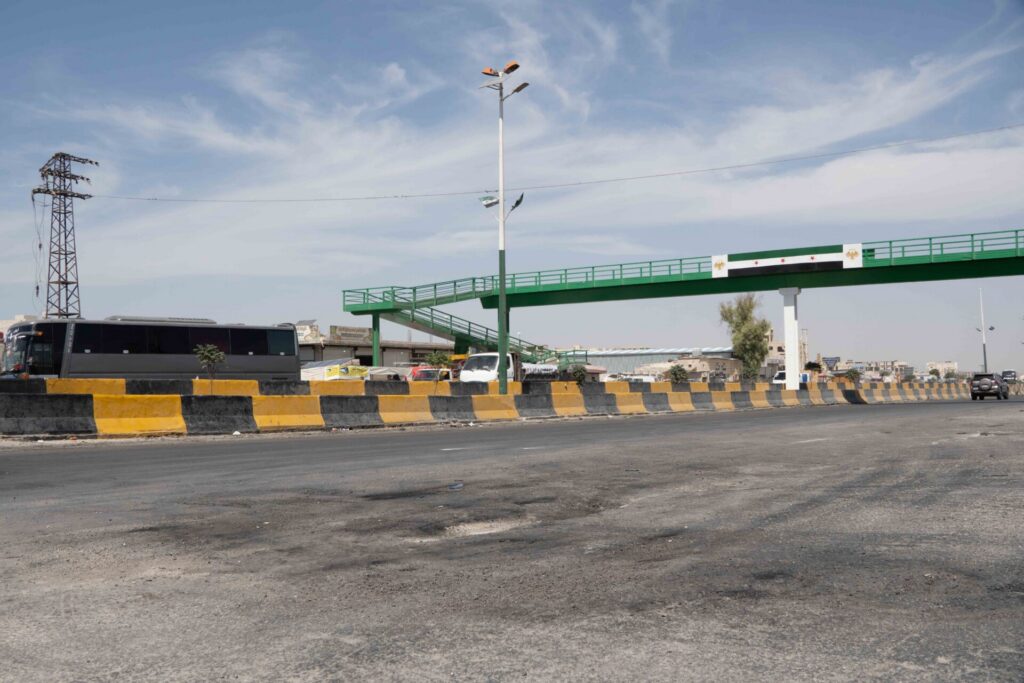
Hassan al-Doodi, 46, watched as the protesters burned tires and chanted, demanding a return to subsidized fuel. Following then-President Bashar al-Assad’s ouster in December 2024, he opened a woodwork shop in August 2025 along the M5 with his childhood friend Hosam al-Asfar, also 46. The two were displaced to the northern city of Sarmada, while al-Maarra was under the control of the Assad regime.
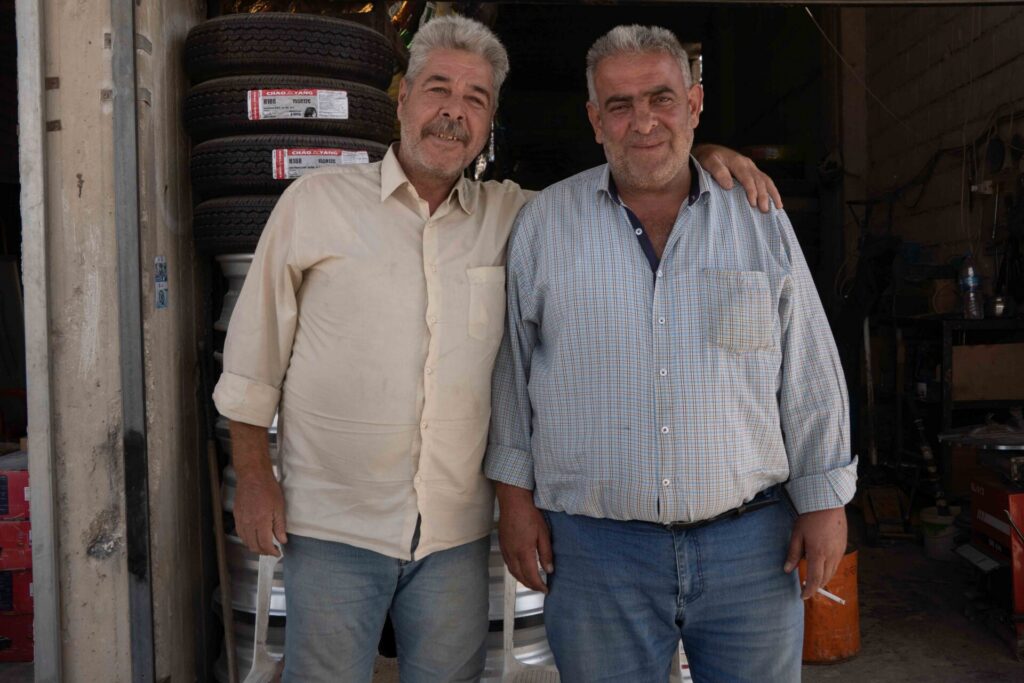
“The crowd was about 500 strong,” al-Doodi said, before quickly adding, “It was just about the diesel [prices]. Everyone is with the state.” It’s a qualifier I heard many times in the few hours I spent in al-Maarra.
“People were living in camps. They don’t have work, and their houses are ruined,” he said, explaining the growing frustration. “After the regime fell, there was a lot of hope, but now with this rise in prices, people are so tired.”
Close to the woodworking shop, Ahmed, whose name has been changed for security reasons, paced in anger, raising his voice in frustration as he spoke.
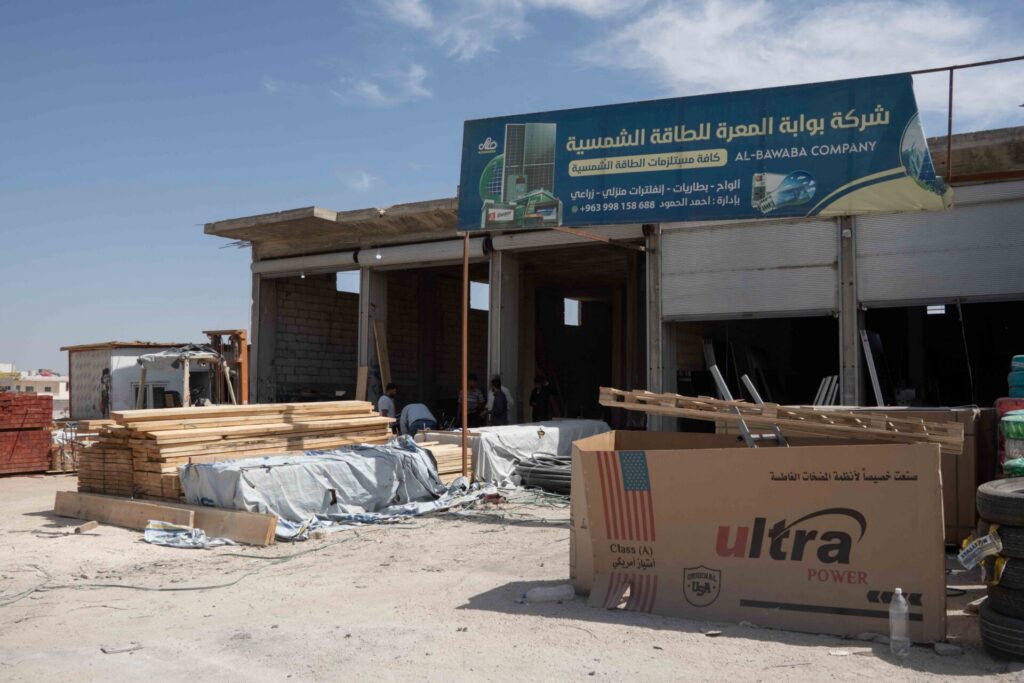
“Look, we slept one night, and when we woke up, the prices had increased,” the exasperated 26-year-old shop and food stand owner said.
He aggressively rubbed his palm over the white surface of a tiny shack where he sold cigarettes and instant drinks. His upturned hand bore remnants of the soot.
Ahmed seemed to empathize with the protesters, but also with the government. His attitude signaled unhappiness with everything and everyone. He bemoaned the fire that could have destroyed his shop, the skyrocketing fuel prices, the slowness of the civil defense, which couldn’t make it to the area in time. He lamented the daily visits of those who came to his shop and weren’t able to afford bread.
“We do have petrol, but it’s all just going to Europe,” he said, referencing Iraqi oil tankers that were traveling the width of the country from Albu Kamal to Tartus, but all for export to the West. With the closure of the Strait of Hormuz during the regional war, Syria had turned into an important land corridor for petroleum export. Yet the country was experiencing a fuel shortage of its own, leading to a bizarre phenomenon where there were thousands of gallons of fuel in Syria, but none for Syrians themselves.
“The prices are going up globally, so the government can’t do anything, but the people are dying here.” When I asked him what he hoped for, Ahmed waved his hand toward the back of his food stand, nearly empty save for a battery powering it.
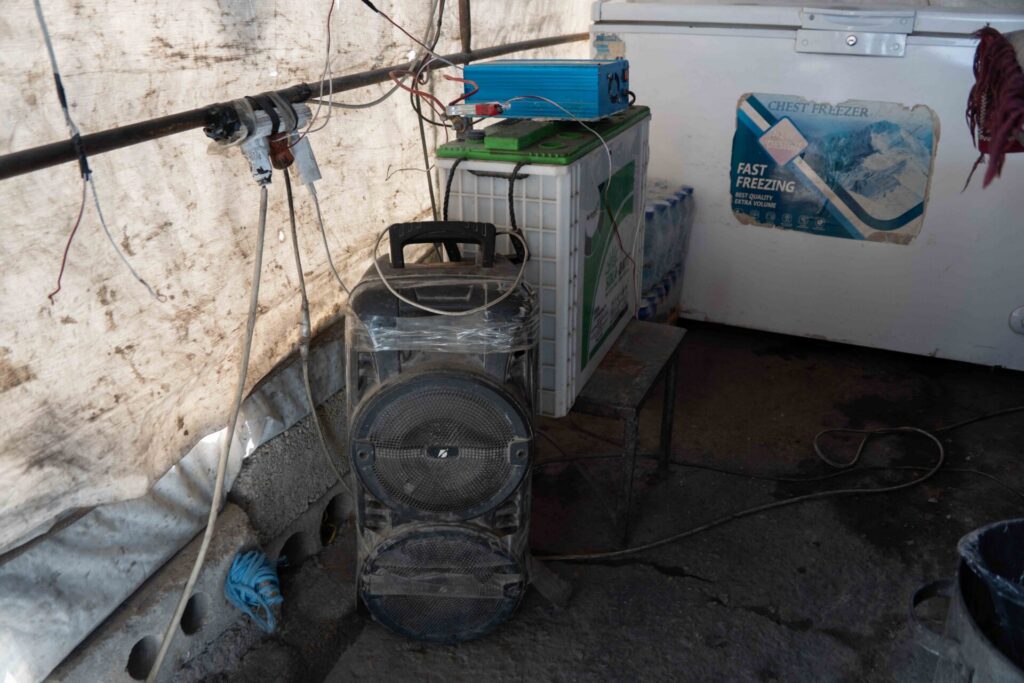
“This is my future,” he said dryly.
He admitted, however, that it felt like the government was listening to the voices of the protesters. Ahmed said the head of the administrative area arrived at the site to tell protesters they were being heard, albeit with vague promises of things improving.
“Can you imagine, under Assad, a regional official coming to a protest site to talk to protesters?”
According to Benjamin Feve, senior consultant at Karam Shaar Advisory, the increase in fuel prices globally, combined with the government’s policy to lift subsidies on energy products, led to the sharp increase overnight.
“Syria does not have the ability to sustain a large and heavy subsidies scheme,” he explained. “The country was nearly bankrupt before, and just in the first half of 2026, they sustained a $1 billion fiscal deficit.”
A five-minute drive away, another Ahmed — or Hammoudi, as he’s known — shyly showed me his kindergarten notebook. Fatmeh, the 6-year-old’s mother, can’t afford public transport for Hammoudi’s school anymore, so he makes the walk on his own. Yesterday, he lost his way in the dusty streets, taking many wrong turns before he finally arrived home.
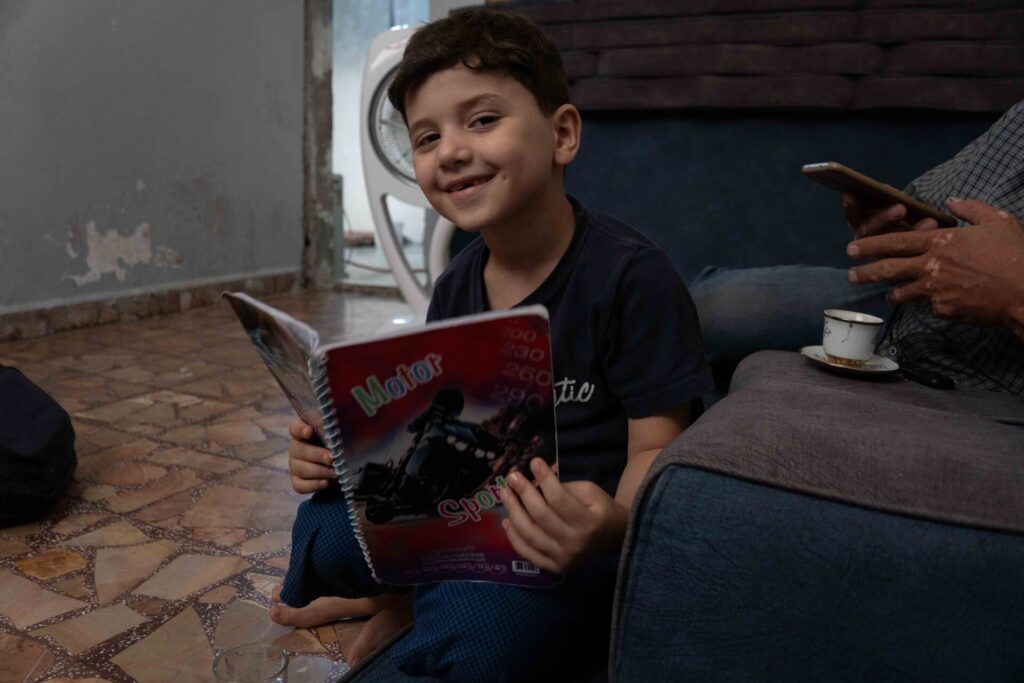
“The diesel prices going up affects everything. It’s all interrelated,” she said. “Gas is expensive, my cooking is affected too.”
Her husband, Mahmoud Albish, nodded as she spoke. Albish, nicknamed Abu Abdul Hadi, has spent the past three hours driving me around al-Maarra in his service — a large gray minivan that he drives regularly from the northern Aleppo city of al-Bab to al-Maarra. Since the rise in prices, he hasn’t been working.
“I don’t even know what to charge the passengers,” he said, looking down. Before, he was paying about $60 a day for diesel. He doesn’t know what it will cost him now.
“I told you, I haven’t even been working since the price hike.” Still, he said, he disagrees with the tactics used by protesters.
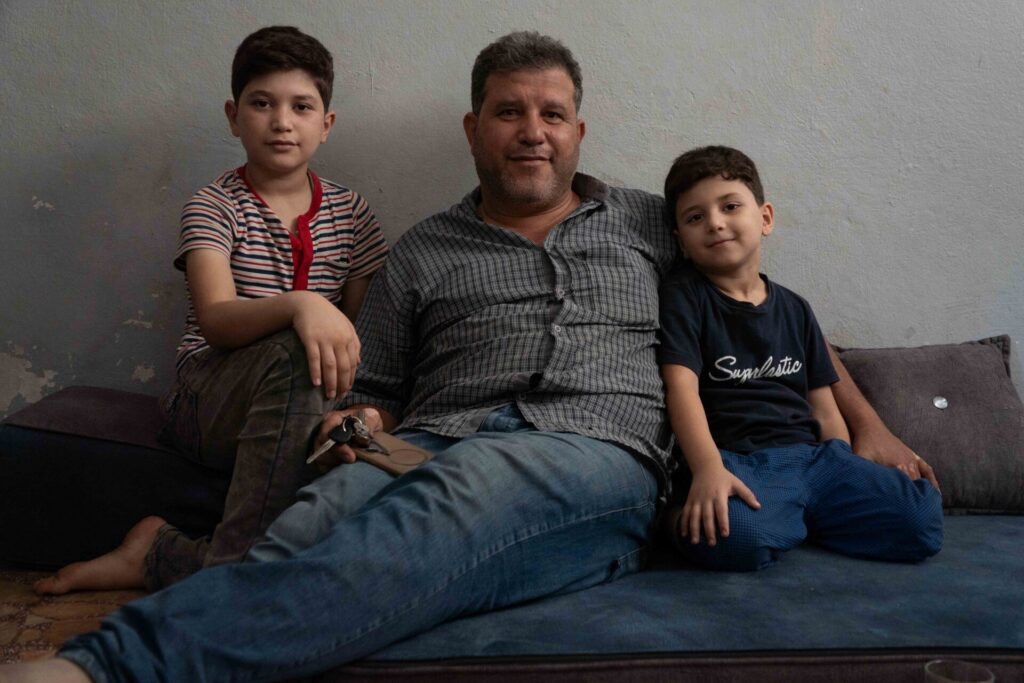
“I’m against cutting of roads and all that; the highway is used by cars carrying injured people, students going to school, and maybe people who have airplane bookings in Damascus, and what is their guilt?” he said. “There are 10 other roads they could use instead of that one.”
Less than half an hour earlier, Abu Abdul Hadi was pulled into a debate over the protests, at a transportation company near his house. One of the workers at the company — a survivor of the war, who lost his leg in an airstrike — told me the protests had nothing to do with rising fuel prices.
“Do you know why people here protest? Because it’s what they’re used to,” he said, as those around him, including one customer, began to object loudly.
“How long did it take for you to rebuild your home?” he asked one attendee at the debate. “Four months, for just four walls of your own home. This is a whole country the government has to rebuild — why can’t you wait another five years?”
His brother, Mohammed Khishan, is a taxi driver at the same company. He participated in the protests the day before. He normally makes between 10 and 15 trips a day, taking people from place to place within the city. Today, he has had only two trips.
“When people saw the spike in prices, they refused it and wanted to protest,” he explained. “This is a global rise in prices, but the salaries of the Syrian people are not in proportion to the new prices.”
“There was no coordination on WhatsApp or anything; people saw the news, and everyone took to the streets, as a reaction.”
Khishan explained that the people of Maarrat al-Numan are supportive of the Syrian state, and recognize that they inherited a broken system from the Assad regime.
“We are standing with the state, but we want them to stand with us in this critical period,” he said. Yet tensions are bubbling under the surface. One person seated at the transport company remarked on the allocation of the government’s limited resources.
“Why do these ministers have a convoy of 20 or 30 cars? It’s a shame,” he said. “The prime minister of the Netherlands goes out on a bicycle.”
As the debate ensued and people began yelling over the tabletop, Khishan pulled out his phone and opened Google Maps, cautioning against the dangers of ignoring the protesters.
“Khan Sheikhun, al-Maarra and Saraqib are three cities in a very strategic location,” he said, zooming in to show their location on the M5. “If the government doesn’t pay attention, protesters will use this.”
Feve believes that, in Syria’s postconflict context, as the country moves from a very subsidized economy to a more liberalized model, the government could consider aid from donor countries and loans from the International Monetary Fund.
“The government is in an extremely difficult position now, but they could be clearer in their communication as to why this policy was adopted,” he said. “The government could be clearer in explaining that they are moving towards a new economy and liberalizing, so that Syrians can understand what is going on.”
The Syrian parliament is due to hold a session to discuss details of the price hikes, and how to reduce the negative impact on those it affects most. Feve believes that the government should also explain how it will “compensate the poorest in the country.”
“I also think it would be good to not lift all subsidies at once — for example, whatever remains of subsidized electricity should not be lifted,” he said. “From an economic perspective, there are major distortions that come with subsidies, so they should be lifted over a few years, or at least there should be a long-term plan.”
As I covered these price hikes, I got the sense that this was a story about two things: people struggling financially in a society recovering from war, but also rediscovering their relationship to voicing dissent. They were exploring, I sensed, how patriotism and protest could coexist, and defining their own relationship with those in power.
Some of those I spoke to emphasized, almost as if to themselves, their right to speak out.
“Everyone has the right to their own point of view, and to explain it.”
“We love the president, but if he does something wrong, we will call him out.”
The protests are already spreading: Residents of the northeastern provinces of Raqqa and Hasakah, who enjoyed subsidized fuel under the Kurdish-led Syrian Democratic Forces, are taking to the streets too. How the government responds remains to be seen, but it is clear that it will eventually have to face the ire of the people and answer their many questions.
But until then, the people wait, still looking at a horizon they’ve been watching for 15 years.
“We are finished with the criminals,” said Ahmed, standing at the food stand on the M5 that helps provide for 18 members of his family. “Now, we just want to eat, drink, pray and look after our kids and families. We just want to survive.”
“Spotlight” is a newsletter about underreported cultural trends and news from around the world, emailed to subscribers twice a week. Sign up here.