


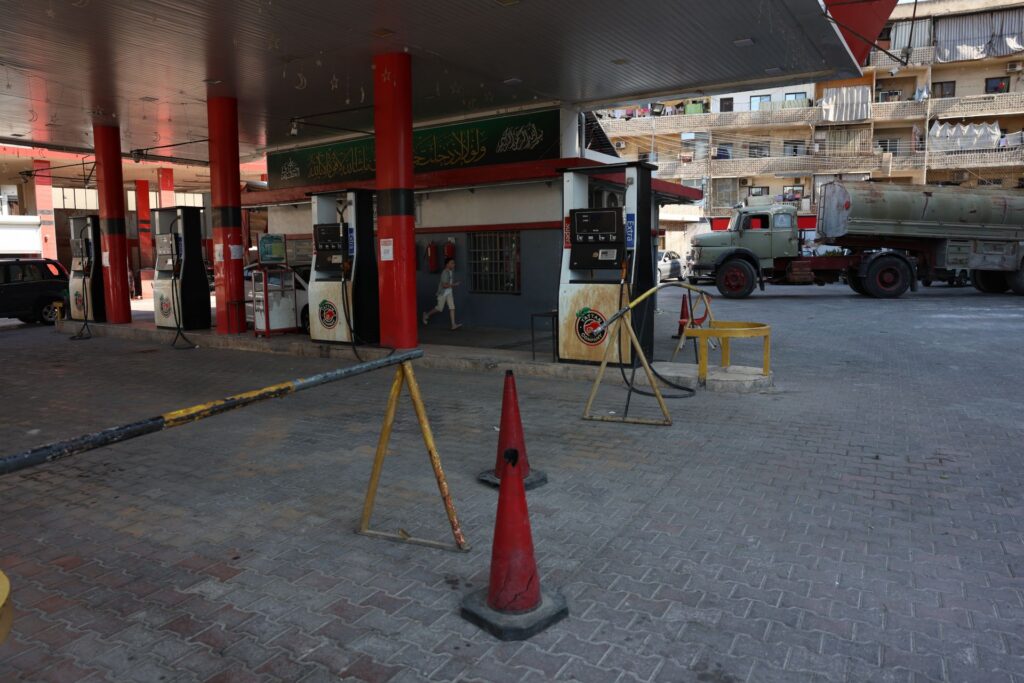
In Aleppo, the city long known as Syria’s industrial capital, the fuel stations look abandoned. In a country considered an oil producer, the gasoline pumps have gone completely dark. Station owner after station owner repeats the same thing when we talk to them: We don’t know when the gasoline will arrive from the refineries at Baniyas or Homs.
The crisis has drawn no explanation from the Energy Ministry of Syria’s new government beyond a terse statement attributing it to the rejection of an imported fuel installment, from a source the ministry did not name, for failing to meet technical specifications, along with public panic after news spread of gasoline shortages, driving people to stock up.
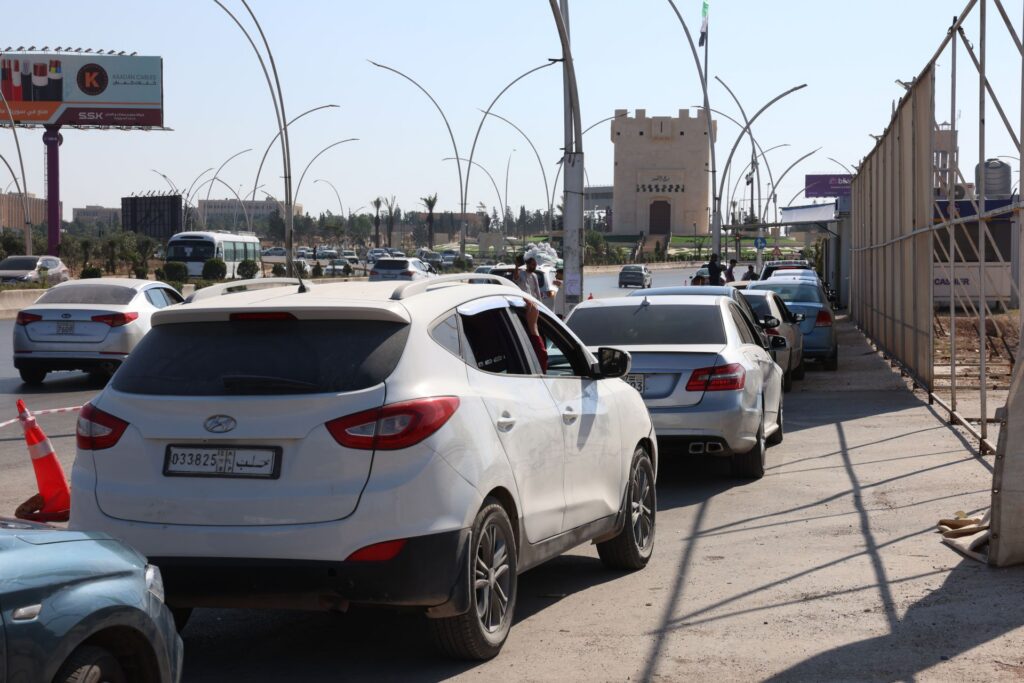
The scenes of empty stations in Aleppo and other cities across the country did not extend to one hastily erected structure near the Citadel roundabout, where more than 200 cars stood waiting their turn at the pumps. It is the only station in Aleppo with gasoline, and the reason, according to Abu Mohammad, the security head responsible for the station, is that “the Golden Gate station belongs directly to the Syrian Sovereign Fund. Its share of gasoline, as a result, rarely runs dry, unlike the other private and state-invested stations across the city.” The Syrian Sovereign Fund is an economic institution established by presidential decree in July 2025, tied directly to the presidency itself and tasked with investing state assets and diversifying the state’s sources of income.
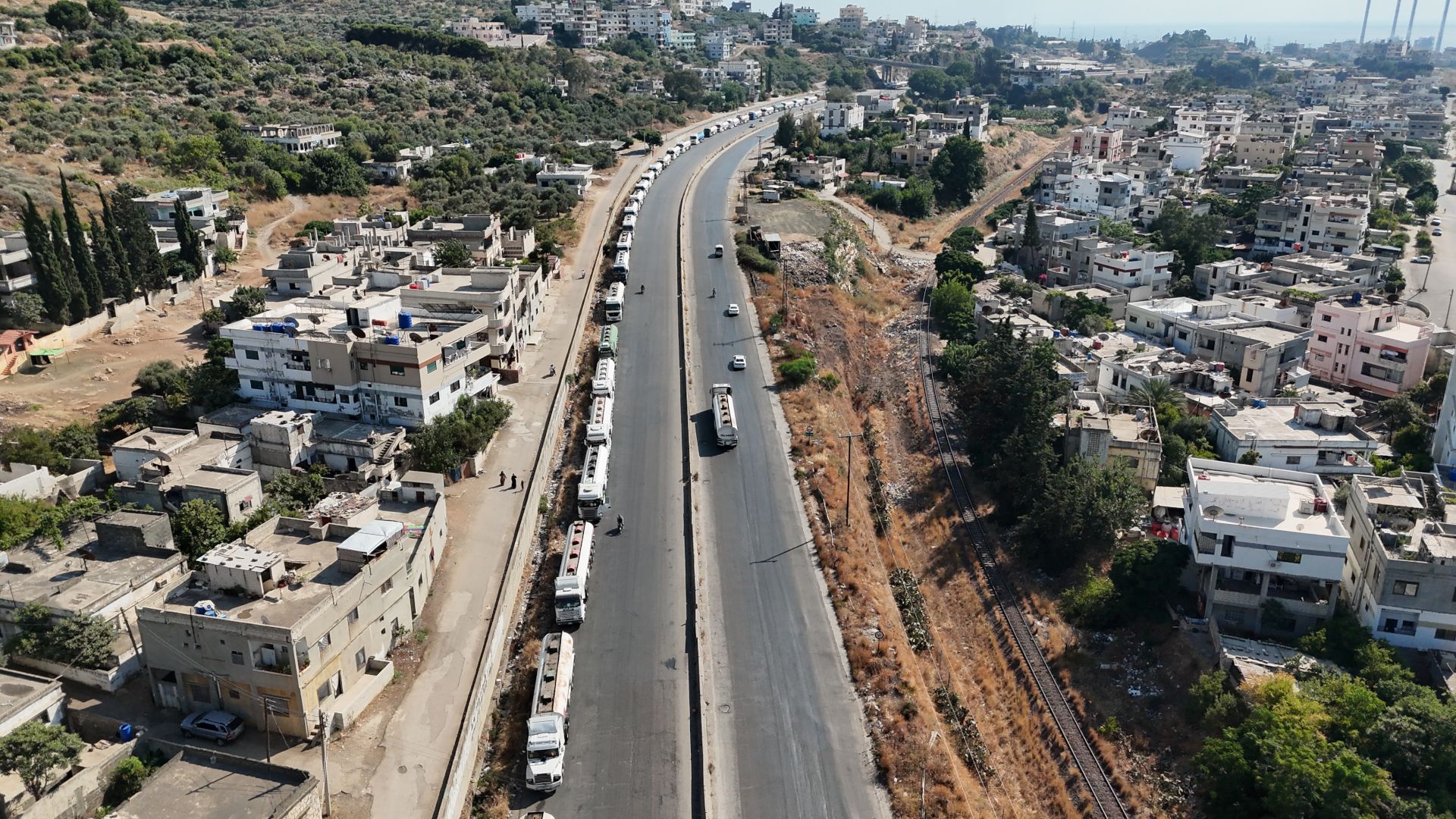
Elsewhere, other lines stretch across Syria, not queuing for gas but carrying Iraqi oil across the country. Iraq, an oil state, lost its main outlet to the sea with the closure of the Strait of Hormuz due to the war between Iran and the U.S., so the country has turned west instead, striking an agreement with the Syrian government to move Iraqi oil from the al-Tanf crossing in Syria’s east to the oil port of Baniyas in its west, and on to the Mediterranean, bound for consumption in several destinations.
On behalf of the Syrian government, the Syrian Petroleum Company coordinates this vast arrangement. “The average number of Iraqi tankers moving through Syria is 5,000 a day, in total,” said Ahmad Qabahji, the company’s deputy executive director for transport and storage. The number roughly breaks down into 1,000 entering, 1,000 waiting at Baniyas, 1,000 unloading into the terminal, and the rest strung out along the road back.
Yet almost none of these 5,000 tankers are helping to alleviate the Syrian domestic fuel crisis. The fuel crosses the country under armed escort, from tank to terminal to ship, without stopping at a single Syrian pump. Two queues exist side by side, then, as Syrians wait outside empty stations and Iraqi fuel moves past them to the sea.
Despite the Energy Ministry’s brief account of Syria’s fuel shortage and its efforts to alleviate it, the road leading from al-Tanf to Baniyas told a different, more plain story: that the oil moving reliably through Syria was the oil heading out of the country, while the fuel Syrians needed and were waiting for was stuck offshore.
The reason may lie under the water at Baniyas. According to Abed al-Thalji, a trade analyst focused on energy and maritime shipping, the port’s geography forces a choice the government does not acknowledge. The sea off Baniyas is only about 40 feet deep, too shallow for tankers to berth at the shore, so everything that enters or leaves Syria by sea moves through underwater pipelines, loaded at platforms out at sea. And a pipeline can pump in only one direction at a time.
Every shipment of Iraqi oil loaded onto an export tanker, a process that takes five to seven days per vessel, holds the line closed to whatever waits behind it, including the ships carrying the gasoline and diesel Syrians queue for. “Receiving imports must wait until the loading of the Iraqi oil is complete,” he said. Ship-tracking data he shared with New Lines shows the result: vessels at anchor in a line off the platforms, sometimes waiting more than two weeks for a turn to unload.
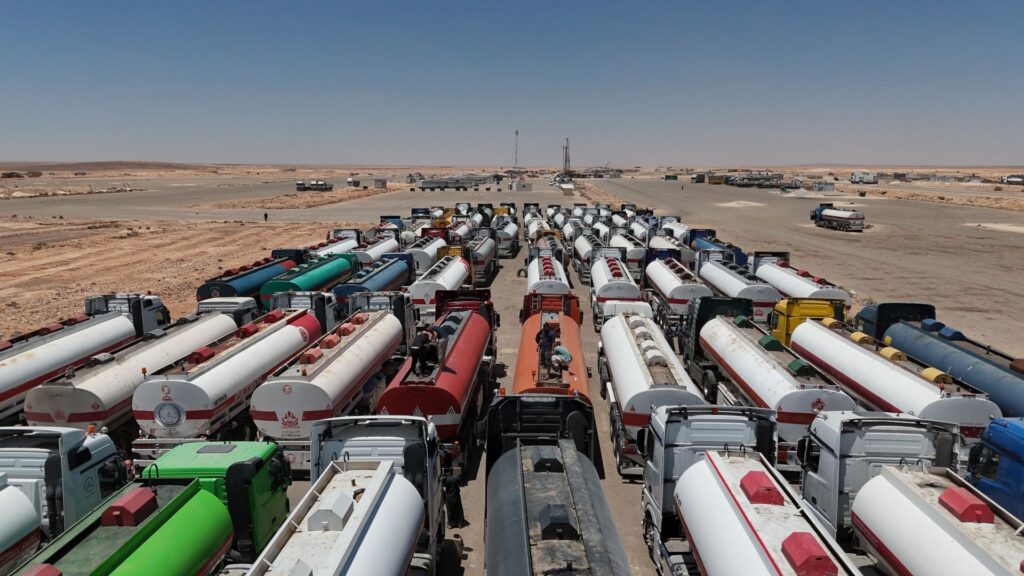
The Syrian Petroleum Company disputes this, and the dispute is where this story goes. But first, the road: 250 miles from Syria’s eastern edge through the expanse of the country’s desert to its western coast, which New Lines traveled, counting more than 450 Iraqi tankers in three convoys along the way.
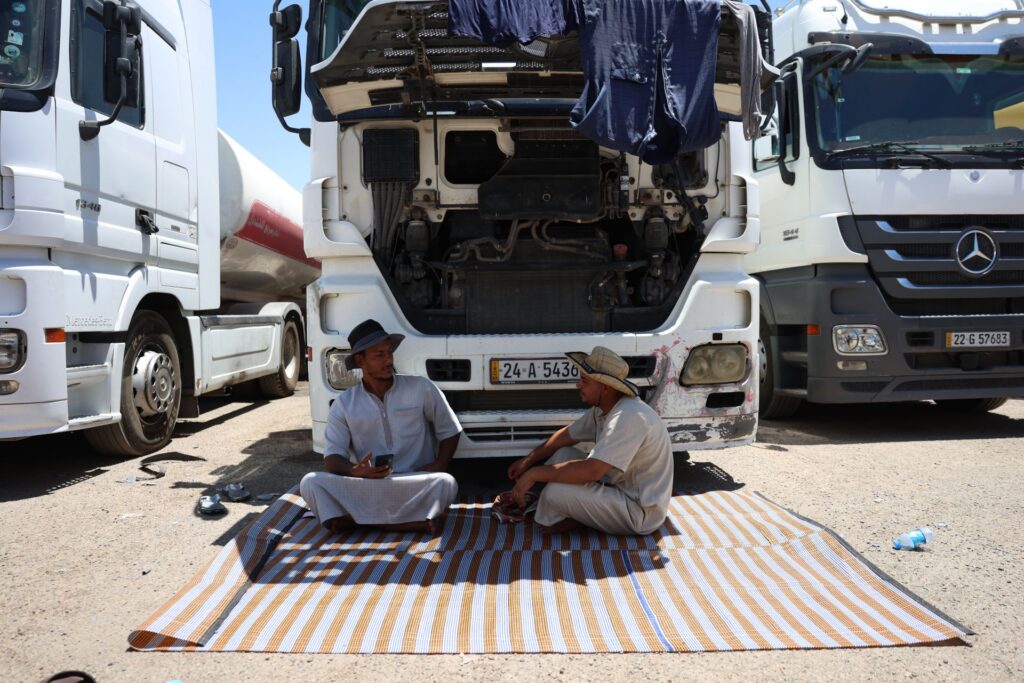
At the new, rapidly built al-Tanf crossing, dozens of cabins provided by the United Nations High Commissioner for Refugees (UNHCR) serve as makeshift offices for the Syrian Petroleum Company, the General Authority for Borders and Customs, and passport control. It is the petroleum company’s employees who collect the passports from the Iraqi drivers, carrying them to the immigration and passports section to be checked for violations and stamped. Rejections are rare, according to an official at the crossing who spoke to us informally. We asked about their concerns that some drivers might have fought alongside Iraq’s Popular Mobilization Forces in support of Bashar al-Assad during the years of Syria’s conflict. “Men like that don’t dare come,” he said. “They know that we know them.” Meanwhile, the drivers of 140 Iraqi tankers waited beside their trucks on the Syrian side for the security vetting and stamping to finish.
The crossing into Syria remains a source of fear on both sides. On July 16, the borders authority seized a large quantity of military drones and missiles smuggled into Syria aboard one of the tankers. An investigation is underway into who was behind it, but the authority made no mention of any effect on the movement of Iraqi oil due to this dangerous development.
The Iraqi drivers, for their part, fear the Syrian roads themselves. Abu Yousef, from Salahuddin, described them as too poor and too narrow for the loads they carry: “The roads here aren’t built to take tanker traffic. On July 6, an Iraqi oil tanker burned after running off the road in the Homs countryside — a traffic accident, but the flames we saw in videos were terrifying [because] it could happen to any of us.” Driving at night, he said, is extremely dangerous.
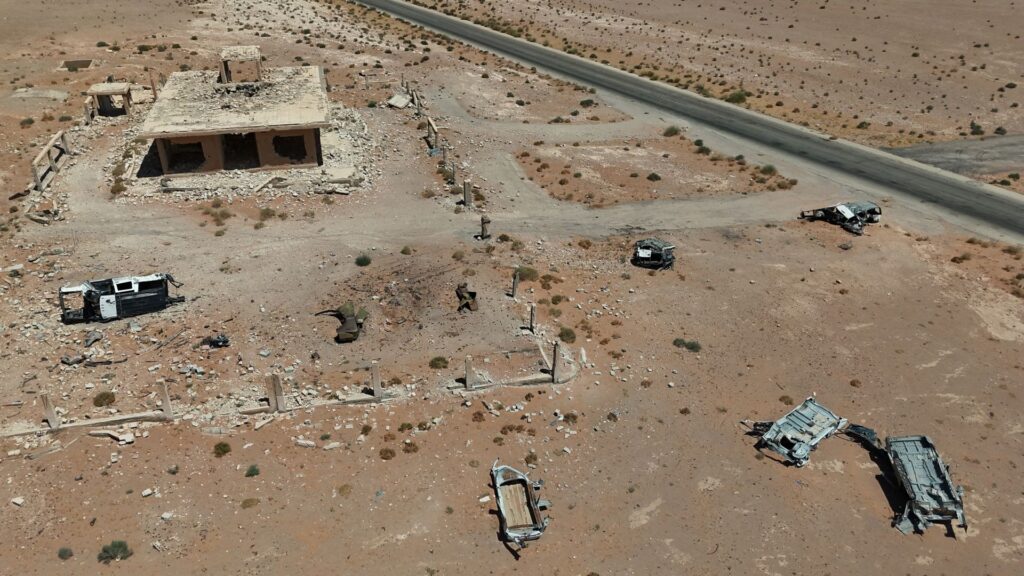
Abu Abdullah, another Iraqi driver we met in al-Tanf, fears less what the road does than what waits beside it. Asked about the convoy’s security protocol, he explained that the trucks are linked by walkie-talkie, but a driver who falls out of the convoy loses both the network and the protection at once, and could face a fine of between $500 and $700. Still, his real fear has a name and a hometown. He is from Mosul, and it is the Islamic State group he thinks of when crossing the Badiya. “When I see the burned-out cars on the roadside, around 50 kilometers past al-Tanf, when we have to drive slowly there, the road is bad, it brings back terrifying memories,” he said. But weighing against his fear is the money: At $2,400 a trip, according to him, it is not something fear will make him give up.
It is not only the Iraqi oil that never touches Syrian lives; the men carrying it are kept from touching the Syrian local economy too. At al-Qaeed supermarket in one of the roadside stations in the town of Furqlus, in the Homs countryside, a staff member described the arrangement from behind his counter. “This is a main stop on the route. The escort cars have to fill up at the governmental fuel station right next to us, which makes the tracks stop too for some hours. But the Iraqi drivers aren’t allowed to come into my store and buy anything. A few days ago, an Iraqi driver who came in to buy something was stopped by the escort, and his passport was seized, right here, in my store.”
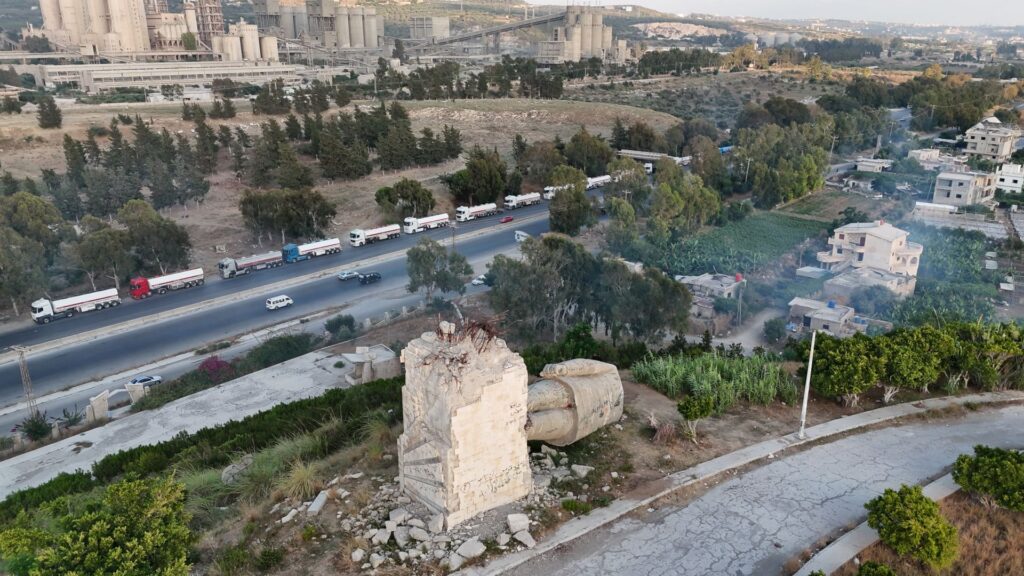
Past Homs, the road bends toward the coast, and the Iraqi trucks begin to gather, first in clusters, then in an unbroken line, waiting for their turn at Baniyas. Abu Saif, whom we found unloading at the station, recounted his journey for us: “I entered on the eighth of July and unloaded on the 13th. Five days, one on the road and four in the queue, waiting to reach the unloading tanks.” The line of trucks becomes visible some 45 miles before Baniyas, watched over by a toppled statue of Hafez al-Assad, the man who closed this same route to Iraqi oil in 1982, siding with Iran in its war with Iraq. Four decades later, it is once again Iran that decides which way the oil flows: Its closure of Hormuz sent Iraq’s crude back down the road Hafez shut, past his broken likeness.
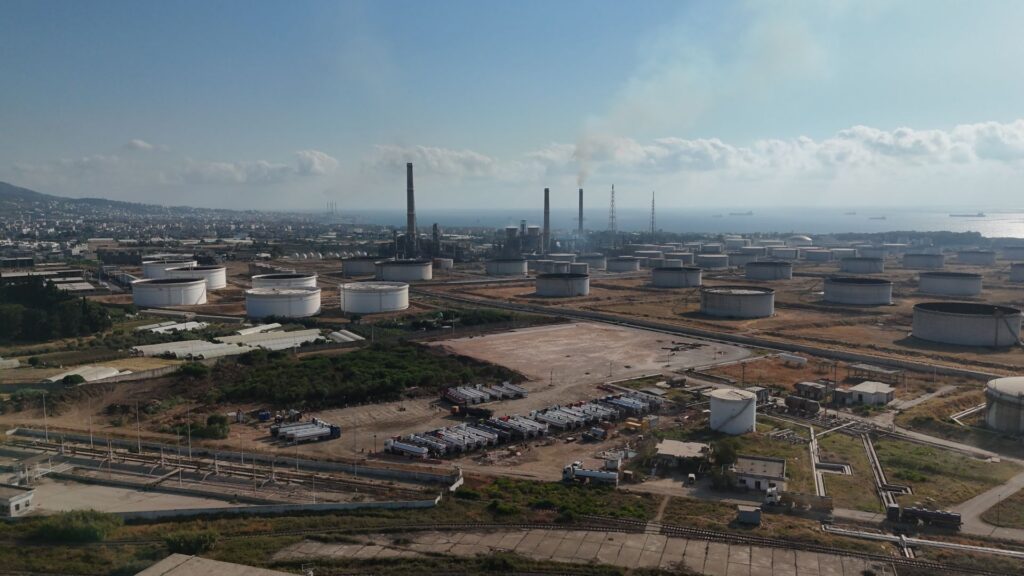
Inside the site, the scale of the improvisation became visible: The port’s storage area holds 23 tanks in all, and the export operation runs on borrowed space. “We made use of some of the refinery’s fuel-oil tanks as temporary storage capacity by agreement with the refinery itself,” Qabahji said. Unloading centers were erected for the Iraqi trucks, which empty into those tanks; from there, the fuel moves “straight from the Baniyas tanks to the oil terminal, then through a pipeline network to the tankers at sea.” The ships anchor offshore and load at platforms fed by underwater pipelines.
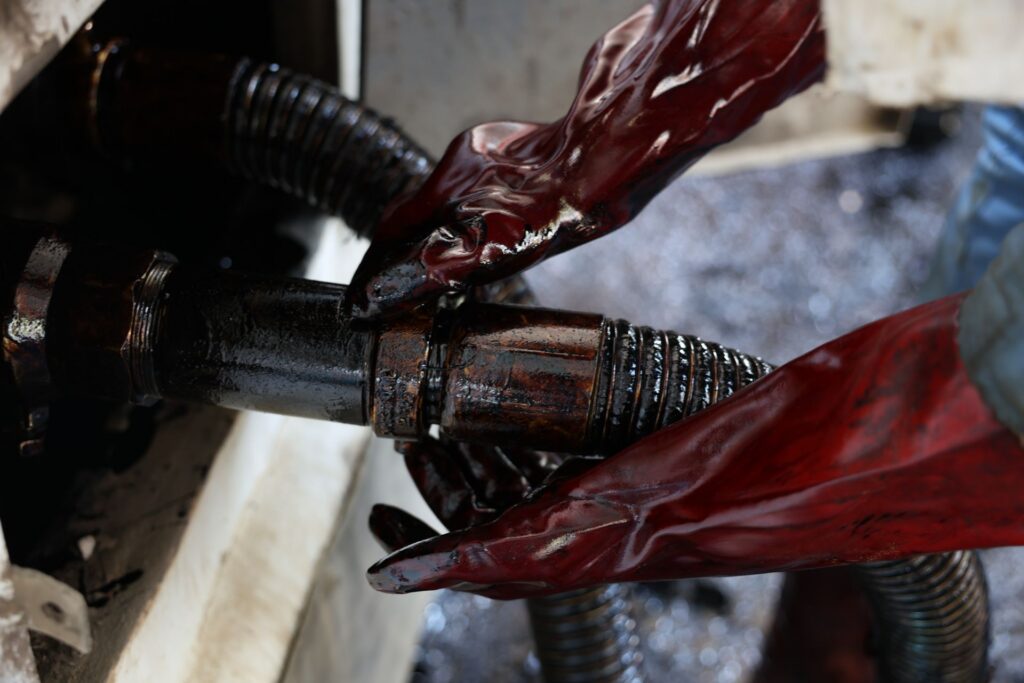
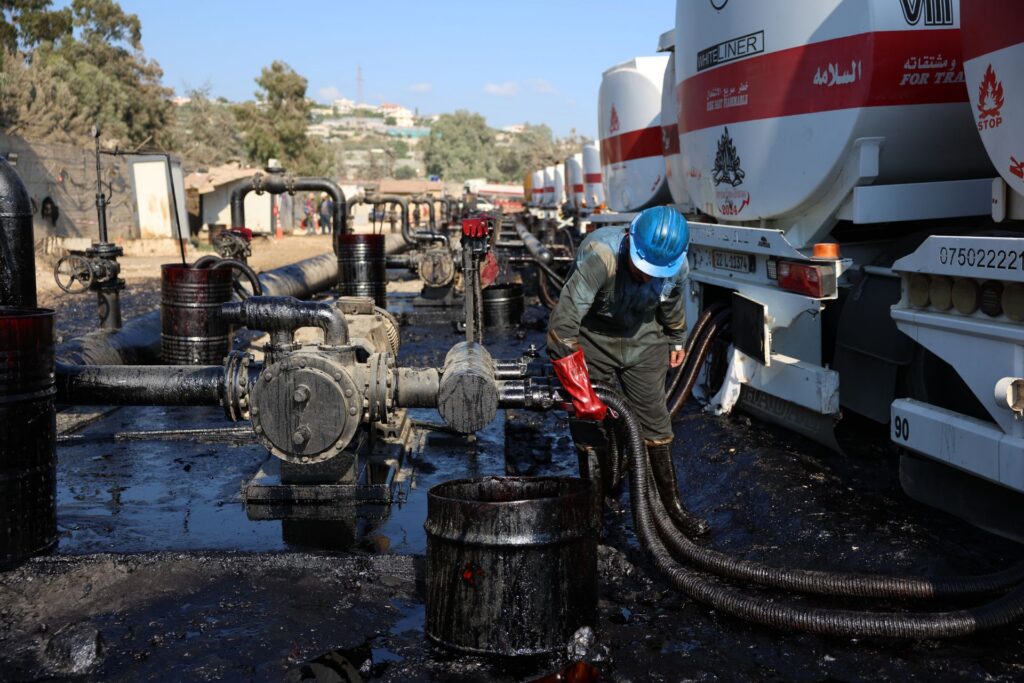
“We work 24 hours a day,” Qabahji said. Two tanker ships are filled every day, the sea side of the port running like a machine, while behind it, the trucks wait four days or more for their turn at the pipes.
Also, two of the tanks are leased to a U.S. company operating in the Rmeilan fields of Syria’s northeast. New Lines reporters spotted the Americans at Baniyas’ oil terminal; asked who they were, Qabahji explained: “They have a share of the oil, and we provide them the space to export it. We have leased [to the American company] two tanks out of the terminal’s 23.”
The Syrian Petroleum Company’s answer to al-Thalji’s charge that there is a trade-off between imports and exports is separation. “The import and export networks are separate from each other,” Qabahji told New Lines, adding that a three-month plan coordinates the refinery’s daily consumption with the volume of Iraqi oil permitted in, “so that the operations do not conflict with one another. We have direct instructions not to disrupt import and export movement.”
Yet the numbers refuse to line up. Qabahji described a single day’s wait for the trucks at Baniyas; Abu Saif’s journey took four. The export operation, by Qabahji’s own account, runs on the refinery’s borrowed tanks. And according to al-Thalji’s tracking, the ships carrying Syria’s imports wait longest of all, two weeks or more for their turn at pipes that spend five days at a time loading outbound Iraqi fuel.
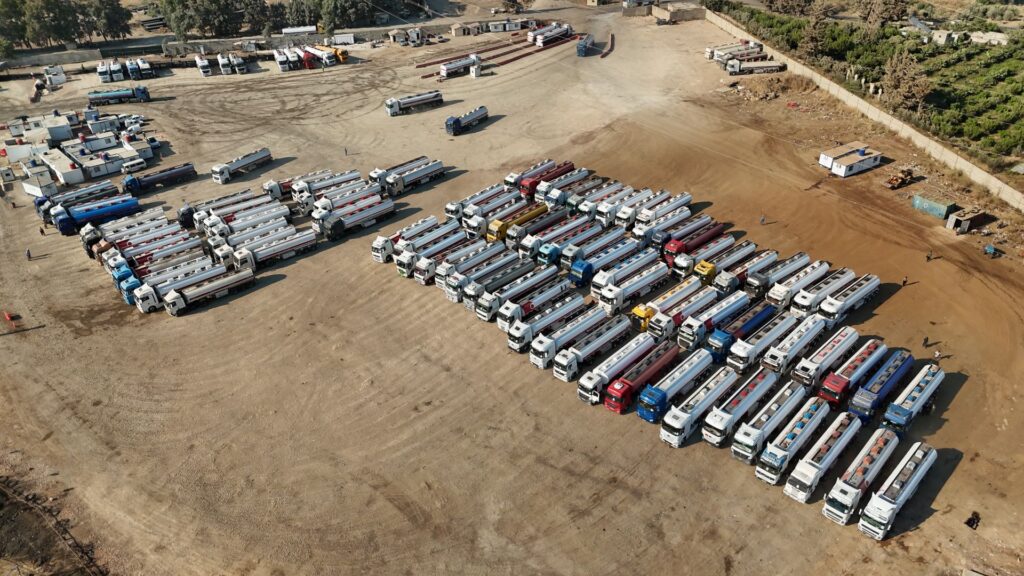
By mid-July, the Syrian government had pushed gasoline back into the market, and the lines in Aleppo and other cities began to shorten. Nothing about the road had changed. Two hundred and fifty miles away, Abu Saif turned his empty tanker east for another load, and behind him, at anchor off Baniyas, the ships carrying Syria’s next imports waited for the pipes to turn their way.
“Spotlight” is a newsletter about underreported cultural trends and news from around the world, emailed to subscribers twice a week. Sign up here.