



Mention “Ohio” to an American teen, and you might get a grimace or a knowing grin. In the last decade or so, the state’s name has become internet slang for what Merriam-Webster defines as “awkward, cringeworthy, or otherwise undesirable.” But long before it was a meme, Ohio held an unflattering place in the American imagination.
To much of the country, the Buckeye State, like its miles of flatlands, is an archetype of the middle ground, a kind of baseline for the ordinary. The contemporary American folk singer John Gorka described his home state of New Jersey, the Big Apple’s less glamorous neighbor, as “like Ohio, but even more so.” Here, along the Midwest’s fields and byways, the best summers taste of frozen custard and Lake Erie perch, of sweet corn that is “knee-high by the Fourth of July.”
Now, the warm days are waning, and a popular corn maze cuts through the bare stalks in the nearby Cuyahoga Valley. Soon to be behind us, too, is this year’s midterm election frenzy, during which Democrats and Republicans have scrambled to win over the country’s mythical median voter. And where better to stage that fight than in Ohio? Every couple of years, it seems, the state’s reputation as a kind of blank canvas lends it outsize political heft: Pundits and politicians throw various shades of red and blue at its citizenry, who, as anyone who’s lived here will tell you, neither seek nor particularly care for the attention.
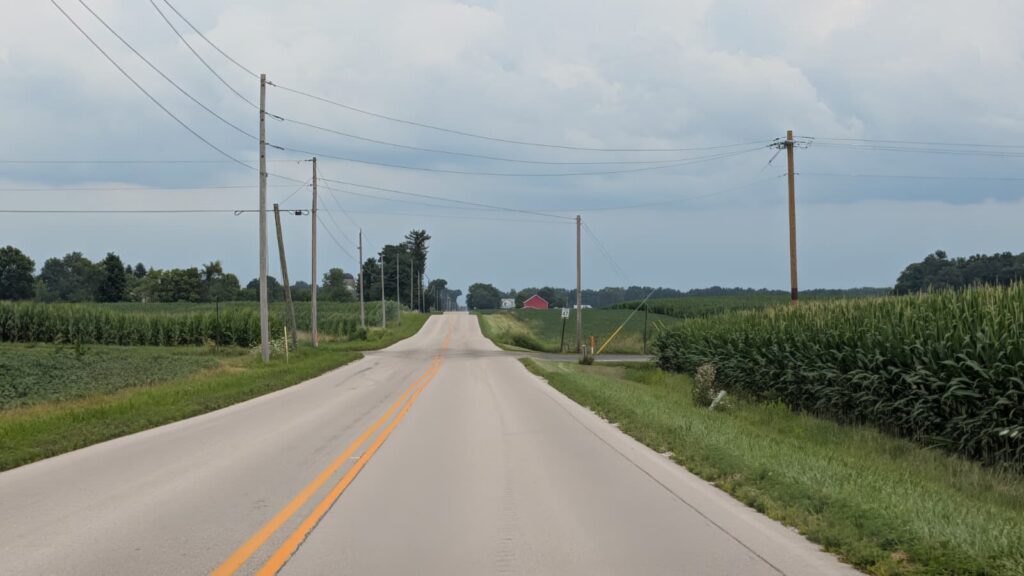
Ohio’s on-again, off-again popularity with the rest of the country makes sense, I suppose. Once a reliably “purple” place — just as likely to be among the electoral map’s red Republican states as its blue Democratic ones — it has seemed, over the last three presidential election cycles, to have swung decidedly right. But despite Donald Trump and his allies winning handily each time they have run here, his picks this year seem to be floundering.
There’s the race for governor, in which an 11th-hour ad from billionaire Republican candidate Vivek Ramaswamy earned the Trump acolyte widespread, bipartisan rebuke. In it, his opponent’s estranged mother resurfaces to call her daughter, whose accusations of childhood abuse led to her stepfather’s indictment, a liar. That Amy Acton’s former boss, sitting Republican Gov. Mike DeWine, was among the first to condemn the ad has some forecasters convinced that Ohio voters will rally behind the state’s former health director.
Something similar is said to be in the offing for Sherrod Brown, the Democrat looking to reclaim his seat from sitting Republican Sen. Jon Husted, whose support of data centers, deeply unpopular in much of the Midwest, has helped put him behind Brown by three points heading into today’s vote count. A Husted loss would be especially noteworthy for the president’s opponents, as he was appointed to the seat when its previous holder, JD Vance, became vice president.
It’s not just this year’s voter rolls that matter, though. Yes, the state’s record as an electoral bellwether — “as Ohio goes, so goes the nation,” the saying has it — is well-deserved, and it’s true that every president elected between 1964 and 2016 has won it (some Trump backers, who reject the 2020 results, would say the streak never ended). But since Trump’s rise, Ohio’s place on the political map has grown beyond its physical boundaries, a phenomenon that says more about the flattening rhetoric of our national politics than the realities of this mostly flat state.
Take the Trump administration’s fixation on Springfield, a small town just outside Dayton, Ohio. To hear the president and vice president tell it, it was a place beset by pet-eating foreigners and Americans under siege. When I went there, shortly before the Haitian population’s temporary protected status was permanently revoked, I found a quiet place, heavy with the weight of an offshored economy and the national gaze its people had come under. There were no loud protests or National Guard standoffs, only a standing-room vigil at St. John Missionary Baptist Church.
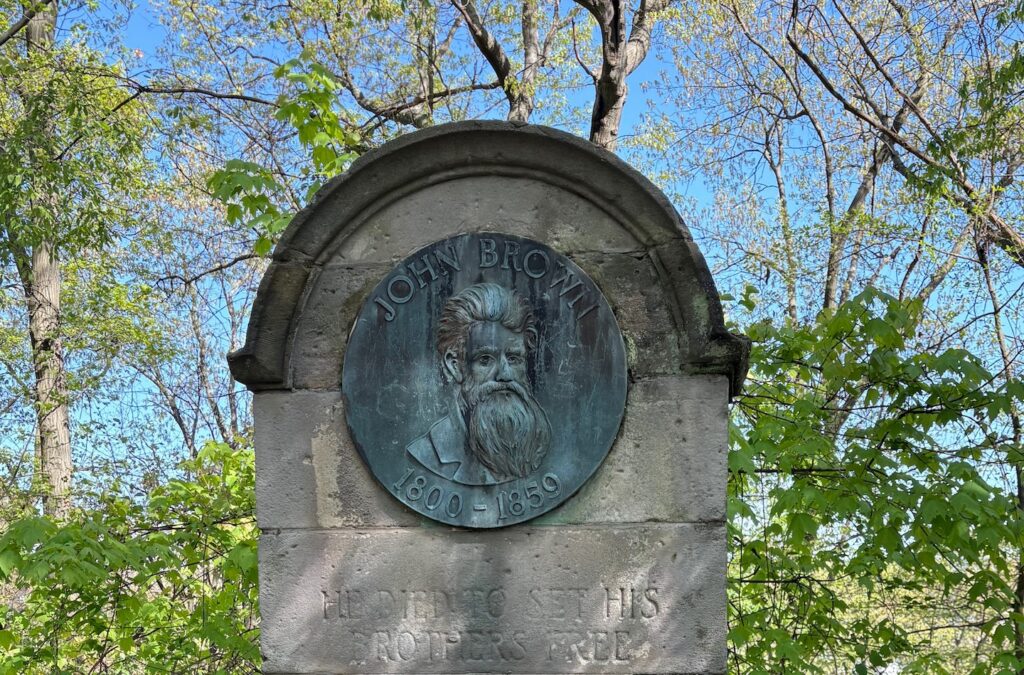
Further north, in Akron, the same state hosts the house where John Brown — the abolitionist credited by some with having sparked the Civil War and, with it, slavery’s violent undoing — lived for a decade, five years before hatching his plot to attack the federal armory at Harpers Ferry. This summer, the city inaugurated a restored monument to Brown, at the end of a narrow footpath surrounded by thick woods. It was in this city, too, that I first learned of an Episcopalian preacher who taught himself sign language so that he could minister to its growing population of deaf people. They had come to Akron in the 1920s, when it was the fastest-growing city in America, to work in the prohibitively loud tire factories that had made it so. The wife of one of the tire industry’s magnates would later provide the space here for the first meeting of Alcoholics Anonymous, and each year, people in recovery from around the world travel to Akron to gather and pay tribute to its co-founder, the Ohio native known affectionately as Dr. Bob.
None of this history, of course, has figured in the grandstanding of the current election cycle, now mercifully coming to a close. No matter what happens today, the chattering classes on either side of the aisle may be tempted to blame their fortunes on places like Ohio. But they must resist that temptation. For beyond the polling data and sound bites are the same people who can help America reclaim something of itself. In quiet Ohio, with its ordinary summers and its Rust Belt towns, there is a more enduring lesson beyond the memes: When the rallies end and the losses are tallied, we will first have to live with ourselves.