


In the heart of Old Damascus’ Azem Palace, a group of waxen figures wearing tarboushes crowd around an old stage to watch a puppet show. It is a Potemkin performance, a historical recreation for gawping tourists — a mirage of a time when similar stages could be found across the city, from the old pasha’s palace to smoke-filled coffee shops huddled around the edges of the Umayyad Mosque. Yet while this art form now appears consigned to the great historical trash heap, condemned to collect dust as part of a museum exhibit, Syrian shadow puppetry is not technically dead.
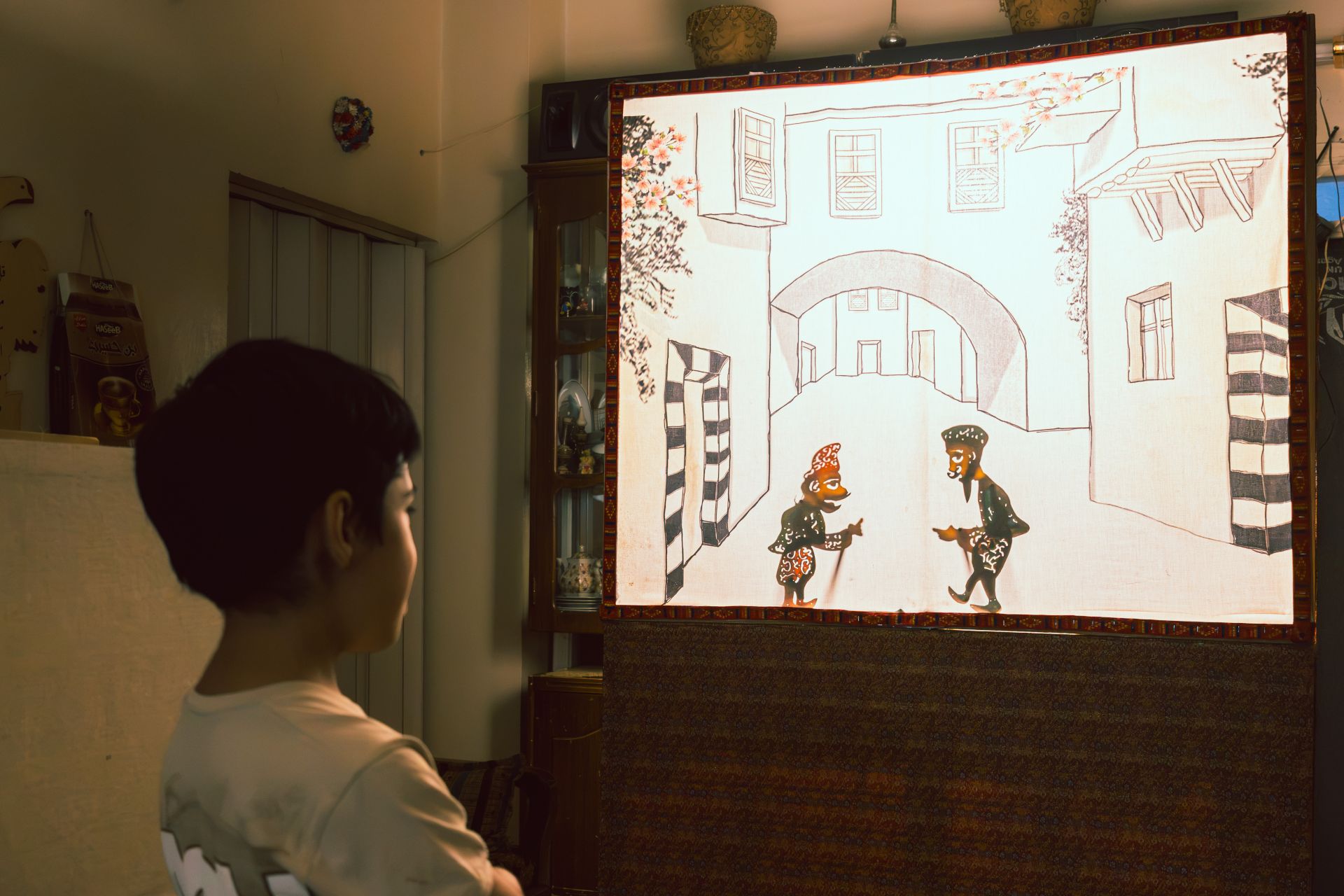
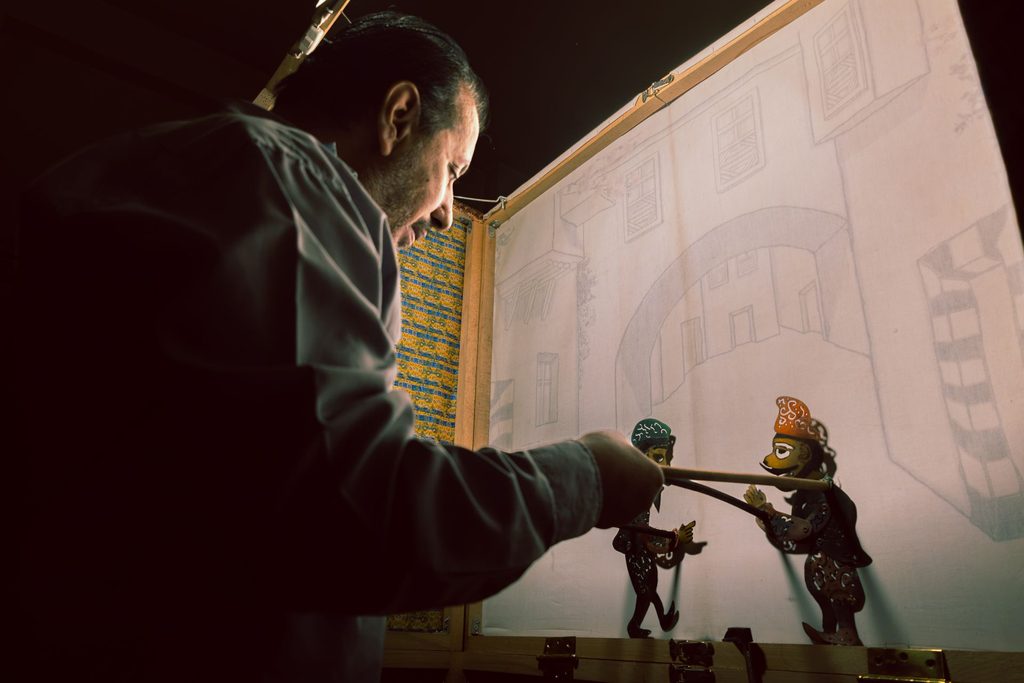
There is still one place to watch it. Miles from the grand confines of Azem Palace, past the blasted ruins of Jobar, is the dusty suburb of Hamoura, and the home of Shadi al-Hallaq. As Shadi darkens his living room, his four children gather in front of his small stage and cheer when the figures of Karakoz and Aywaz appear.
“How can you tell a jinni from a human?” Aywaz asks. “Simple! Observe the shadow!” wily Karakoz declares. The little figures dance in jerking awkward movements across a field of starched cloth, as Shadi’s voice twists, swoops and whines.
“But what about at night?” responds Awyaz. “Hm. You must place a mirror next to him,” says Karakoz. “If he has the reflection of a human, he is human. If he has the reflection of another, then you have met with the devil.”
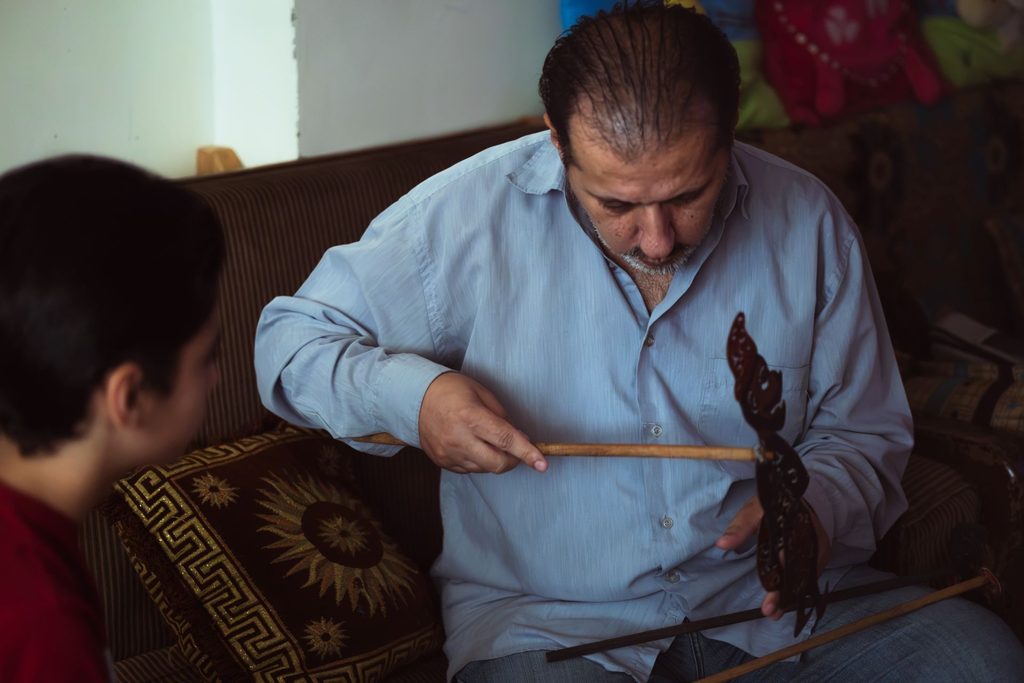
With microscopic twitches, Shadi deftly manipulates the arms and legs of each puppet in each hand. “The most characters I’ve ever been able to perform is eight, four on each hand,” he brags. “I wouldn’t be able to do that now, though. I’m out of practice.”
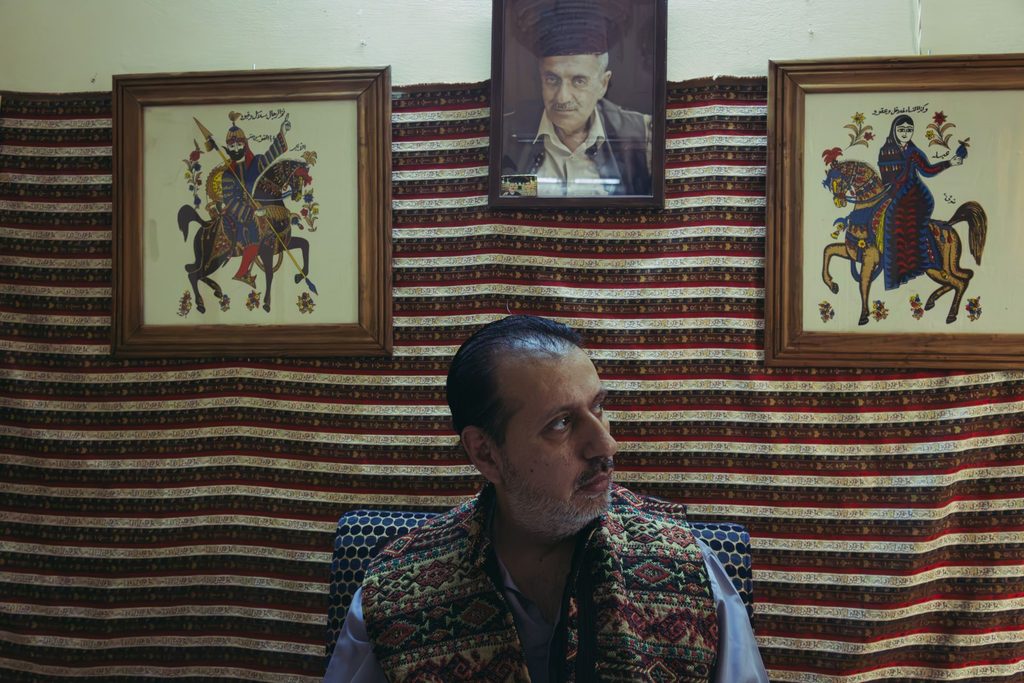
Above his head is the faded image of a mustachioed man wearing a dusty-looking tarboush. “It is from him that I learned to love storytelling,” says Shadi. It is his father, Abu Shadi, a famed hakawati, or storyteller.
His photo also adorns the wall of Nofara Cafe, the last place in which hakawati storytelling continues. Every night, except on Friday, Abu Sami wanders down from the neighboring Umayyad Mosque after the maghreb, or sunset, prayer, to take his seat on a high chair amid the whirl of ceiling fans that dangle from Roman arches and lazily slice through the thick summer air.
The old man places a tarboush on his head, lifts a sword and announces the commencement of his nightly recital. It will take him over a year and a half to complete the story — an antidote to the current obsession with “short-form content.”
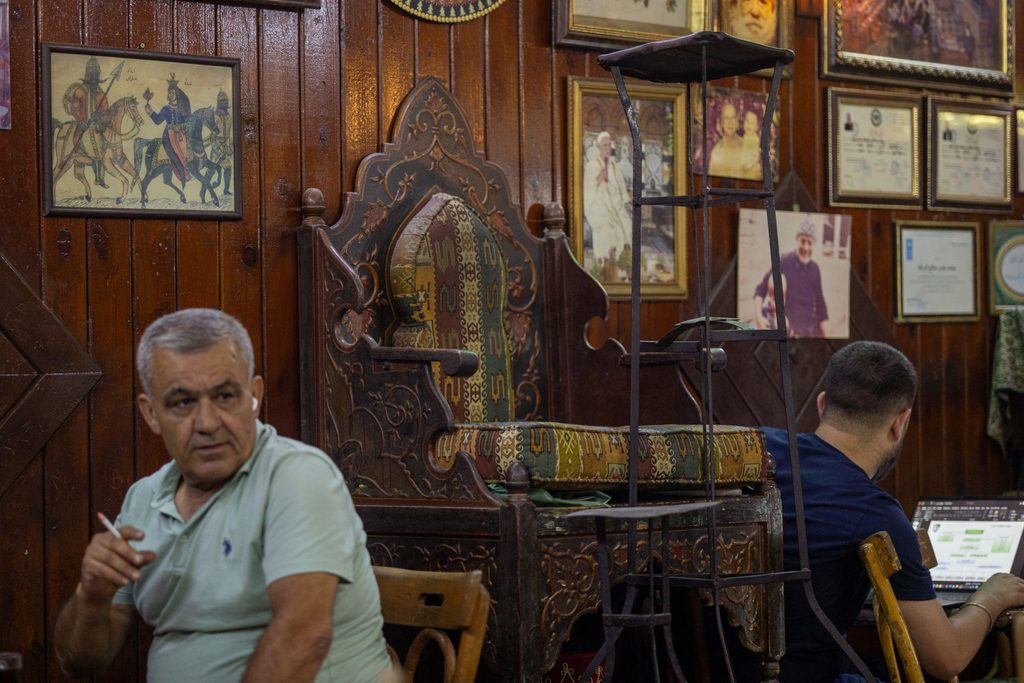
Soon after he begins the story, conversation at the tables drifts back, and the famed hakawati is left to recite to a cafe half-empty and half-listening. (Following his interview, he demanded payment to publish his words or images. New Lines declined.)
Shadi used to perform his puppetry at Nofara Cafe, before an argument with the owner saw him sent on his way. Two of his figures of Karakoz and Awyaz still sit above the hakawati’s chair.
The characters are Ottoman, but the art of shadow puppetry comes from Java, brought to the region on boats laden with nutmeg and cinnamon. Although their figurative shadows exist in some form across the post-Ottoman world, in Syria, their numbers have dwindled.
Shadi once counted over a thousand leather figurines in his collection, although now only a dozen remain. “I sold them all,” he explains. “I needed the money. I have debts and am not working currently.”
“Shadow puppetry is all but dead; there’s no money to be made from it. There is no one left — even I have stopped performing,” he says. “Even its recognition by UNESCO didn’t do anything to save it.”
In 2018, Syrian shadow puppetry was listed as intangible cultural heritage by UNESCO. It was the culmination of a goal Shadi had been pushing for over a decade, the first step of which was when he convinced officials from the former regime to list the art form on the national heritage list in 2008.
Yet it was only with the Syrian civil war and the country’s global isolation that officials began to take it seriously. “They wanted to present a different image of Syria,” he remarks.
Shadi fled Syria in 2015, after he was briefly kidnapped outside his home in Ghouta by individuals associated with one of the opposition factions. He was working on a construction site in Lebanon’s Bekaa Valley when he got the call. “The first lady would like you to come back,” the voice told him over the phone. “She wants you to practice your craft in Syria. We will give you a house, a car and a permanent salary.”
According to Shadi, the voice belonged to Fares Klass, an official working for the Syrian Trust for Development — an organization founded in 2007 by Asma al-Assad, the former first lady and wife of deposed dictator Bashar al-Assad, as a merger of several nongovernmental organizations.
The trust held a near monopoly on accessing international humanitarian funding, so its portfolio was broad, spanning education, microfinance, orphanages, disaster relief and cultural preservation.
It was one of the primary recipients of over $4 billion in U.N. funding directed toward regime-held territories during the Syrian civil war. UNESCO did not respond to requests for comment on the amount that was provided to the trust.
For Shadi, backing from such an organization promised escape from the backbreaking hardship of life in Lebanon. On the day of his return, a convoy of black SUVs rushed him and his family across the border, breezing past the military checkpoints with a flash of a badge — on the authority of the first lady.
They took him to a school in al-Mazzeh. “[They] brought us upstairs to a classroom with some mattresses in it and told us this was where we would be staying,” he recounts. “It was all a lie. There was no home, no car and no wage.”
A week later, he was informed that an exit ban had been placed on him, and he was not allowed to return to Lebanon.
Asma al-Assad used the Syrian Trust for Development as a vehicle for enrichment and empowerment within Assad’s court. According to the Syrian Network for Human Rights, under Asma’s leadership, the organization “imposed its control over markets, cultural landmarks, and development projects, enabling it to establish a vast economic empire, under the guise of civil and development activities.”
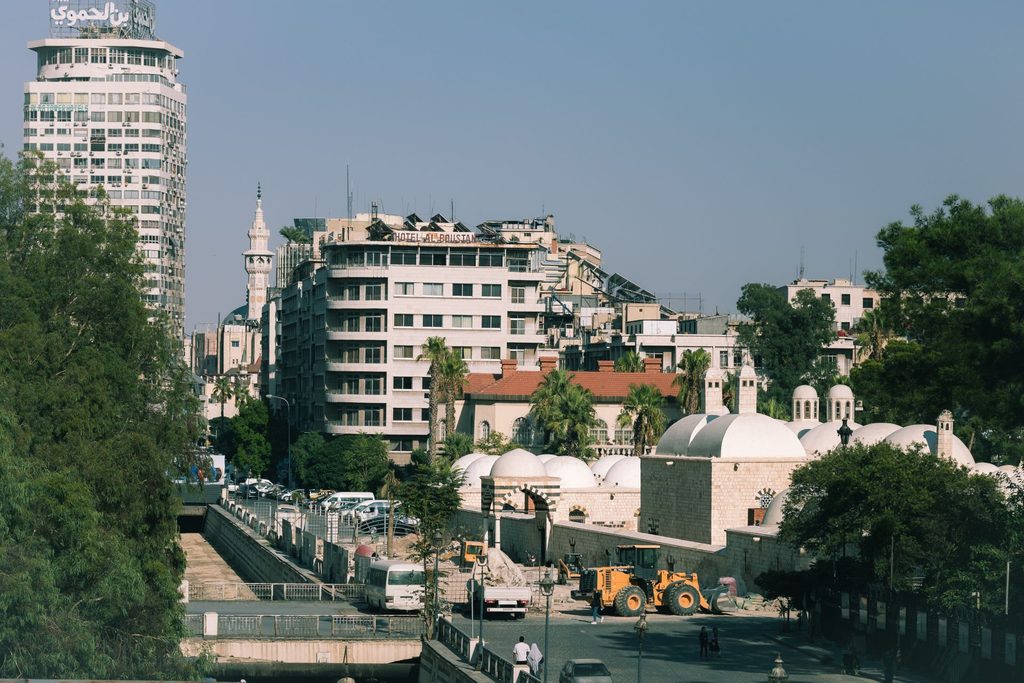
Antoun Tawil’s family had built ouds for generations. Their shop, nestled among a number of master craftspeople in the historic Ottoman-era site of the Sulaymaniya Takiya, was famous. The Syrian Trust for Development evicted Antoun and dozens of other master craftspeople from the site in 2022, after it decided to “restore” it.
The year before, the trust, alongside the Iranian government, had nominated Syrian oud-makers to be recognized by UNESCO as part of Syria’s intangible cultural heritage.
Antoun sits on a plastic chair outside a small shop in Old Damascus’ Straight Street, tinkering with a half-built oud. “I remember going home that day and crying,” he remembers. “I didn’t even have anywhere to keep my instruments. I had to ask friends to look after them while I found a new shop.”
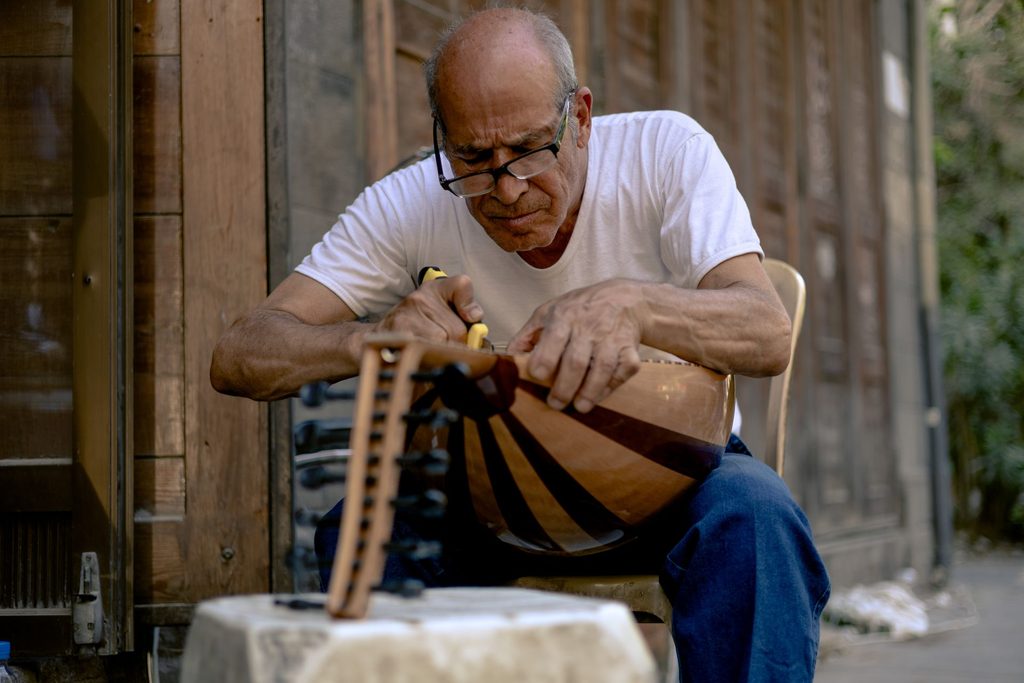
He managed to get discounted rent by taking over the tenancy of a shopkeeper who emigrated to Canada, yet now the lease is up, and he can’t afford to stay. “Everywhere is expensive, at least $500 per month, and they want a year up-front,” he explains. “I managed to find a place that only wants $150, but it is the size of a closet. I can barely keep five ouds there.”
“Honestly, I want to leave this line of work,” he laments. “About a week ago I decided that I don’t want to do this craft anymore.”
A few days later, Al-Manhal, a local cafe with a community-oriented approach, launched a fundraising initiative to support Antoun. The effort raised $3,000, which he was able to put toward a new shop.
The Sulaymaniya Takiya, where Antoun’s old shop sits empty, is still under restoration; in fact, the project is still technically being managed by the Syrian Trust for Development.
Following the ouster of Assad’s regime, the trust was brought under the mandate of the new authorities, who christened it with a new board, new branding and a new name — the Syrian Development Organization (SDO).
A few minutes’ walk from the historic gates of Bab Sharqi stands an office block that could pass for a tech start-up in San Francisco or London: gray vinyl flooring, whitewashed walls, and glass partitions that frame groups of well-dressed staff sitting on imported office chairs in expansive conference rooms.
“When the regime fell, people set fire to the office, so we have had to renovate it entirely,” Owis al-Abbas, public relations manager for the SDO, says with a shrug.
According to al-Abbas, the SDO’s top priority is implementing a number of internal reforms, to “strengthen governance, improve procedures, clarify decision-making responsibilities and reinforce institutional controls.”
“We are working to foster an institutional culture grounded in professionalism, independence and adherence to internationally recognized professional standards,” he says.
It is clear, however, that there is still a lot of institutional drag left from the previous regime. “Seventy percent of the employees have been kept from before the liberation, including the head of the cultural heritage division,” Abbas acknowledges. “[And] the restoration of the Sulaymaniya Takiya [remains] one of our most important projects.”
The SDO did not respond when asked later whether those craftspeople who were kicked out of their shops in 2022 would be able to return.
“One of the major issues faced by the SDO currently is the lack of financial support that it is able to provide,” Abbas says, “although we are working on fostering closer partnerships with the U.N. and other actors to provide funding.”
As part of this recent push, the SDO managed to secure $99,700 in funding from UNESCO to support the “safeguarding of Traditional Glassblowing through training new artisans, strengthening intergenerational transmission, and supporting the viability of the craft.”
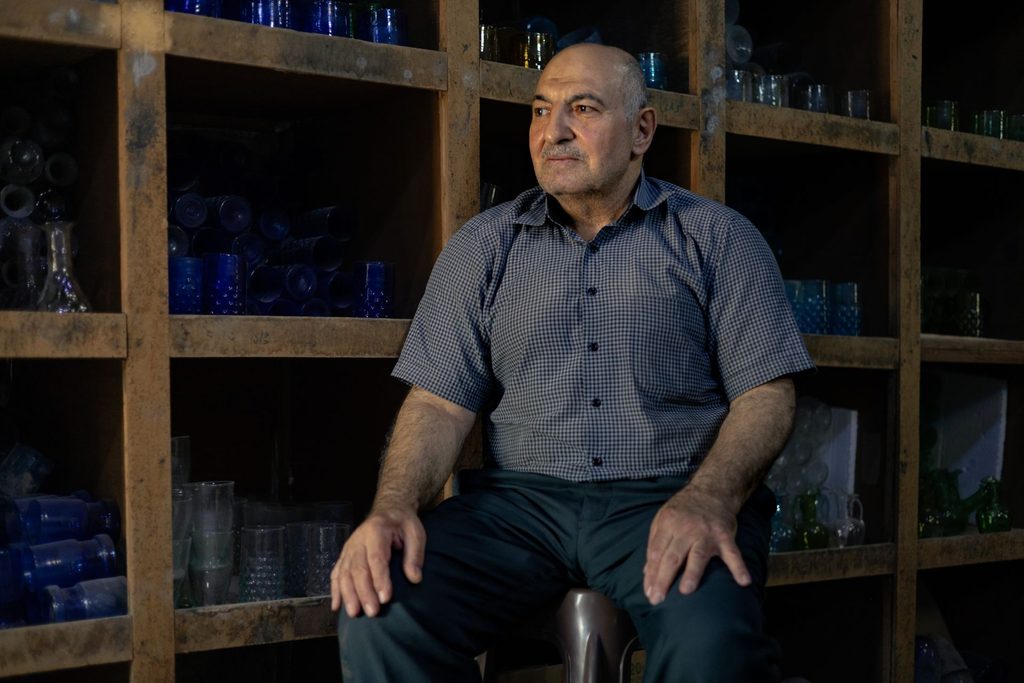
A number of stray dogs sleep lazily in the sun outside a small workshop across the road from the historic Bab Sharqi gate. Most days, Abu Mahmoud can be found sitting in front of a furnace blowing red-hot globules of liquid glass into various shapes. He works with the rhythmic efficiency of a master craftsperson who has been doing this since he was just 7.
“I haven’t heard anything about that [initiative],” Abu Mahmoud says. “We’ve never received any financial support from anyone — even after we were listed by UNESCO.”
Yet he is not currently working. The blazing embers of his furnace have been quenched. Instead, he sits and drinks coffee with a few friends, antique sellers from Damascus’ Old City, who all complain about the lack of customers.
“The furnace needs to stay hot 24/7. It’s not something that can just be turned on and off,” Abu Mahmoud explains. “If we have no orders, it’s too expensive to feed it fuel constantly.”
“People here just buy plastic from China now, and the export market to Europe is still weak, despite the lifting of sanctions,” he says.
The workshop is at least 150 years old, although his family took it over in the 1960s. It is also the last surviving handblown glass factory in Syria. “Damascus was the first city in human history to blow glass by hand,” he claims. “It is part of our history.”
“In my grandfather’s time there was a whole neighborhood in Damascus dedicated to the craft,” he recalls. The neighborhood, he tells me, is still called Qazaz (“glass” in Arabic), though “all the workshops have closed there. Now it’s just here.”
Glassblowing is a family business, one that Abu Mahmoud’s family has been practicing for 300 years. It is passed loyally from father to son. Abu Mahmoud was just a child when his father sat him in front of the furnace for the first time, but his may be the last generation. His son hasn’t taken up the trade.
“It takes years to master the trade, and the reward is small,” he says. “The new generation doesn’t want to learn, and we don’t have the capacity to stop work in order to teach them.”
The tension between generations is a common thread that runs through the lives of many practitioners of these heritage practices. Abu Mahmoud’s children won’t carry on the family legacy. Antoun Tawil’s daughter gave up the craft of oud-making after their family’s eviction from the Sulaymaniya Takiya.
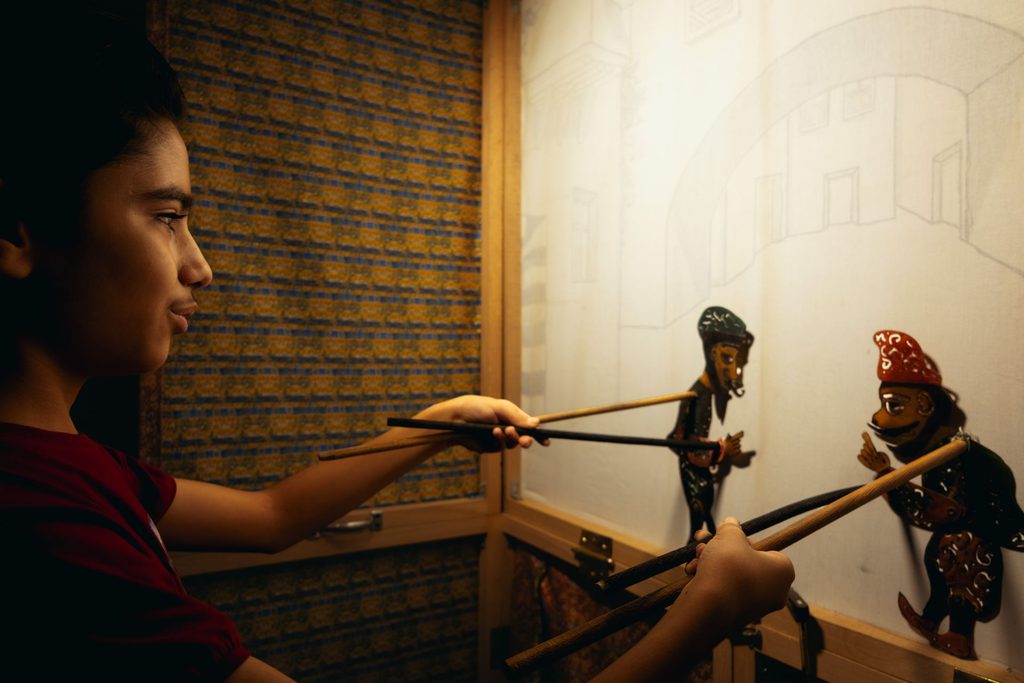
Shadi is ambivalent. While his children adore his puppetry and he is keen to pass on the craft, he is equally wary. “Their schooling comes first. I don’t want them dedicating too much time to this,” he confesses. Despite that, Jawad, 13, his eldest, is keen to carry on his family’s storytelling legacy.
“It’s something that brings joy to people,” he beams. “It makes them laugh, and that makes me happy.”
“It is part of our family history to tell stories. So of course I hope to do the same. I may not be able to live from it, but I won’t stop loving it.”
“Spotlight” is a newsletter about underreported cultural trends and news from around the world, emailed to subscribers twice a week. Sign up here.