


When ByBee opened its gates in 2021, the site in the village of Mazraat Jemjim in southern Lebanon hummed with activity: three-quarers of an acre speckled with wildflowers and low crops planted for forage. Bees moved in steady, audible currents between blossoms and rows of multicolored hives, their paths tracing the contours of the land. Solar panels glittered in the sun, feeding electricity into three modest buildings constructed from wooden beams. The plot was owned collectively by ByBee, a community-led initiative founded in 2021 to tackle the steady decline of Lebanon’s bee population.
Today, repeated Israeli bombardments have reduced the site to rubble. Two of the three buildings lie partially collapsed, the roofs torn away and walls shattered. Twisted wax frames sit half-buried under dust, surrounded by broken benches and charred wood. Of the 120 beehives that once lined the fields outside, only eight remain. The site is a stark indicator of how Lebanon’s battle to protect its bees is being lost.
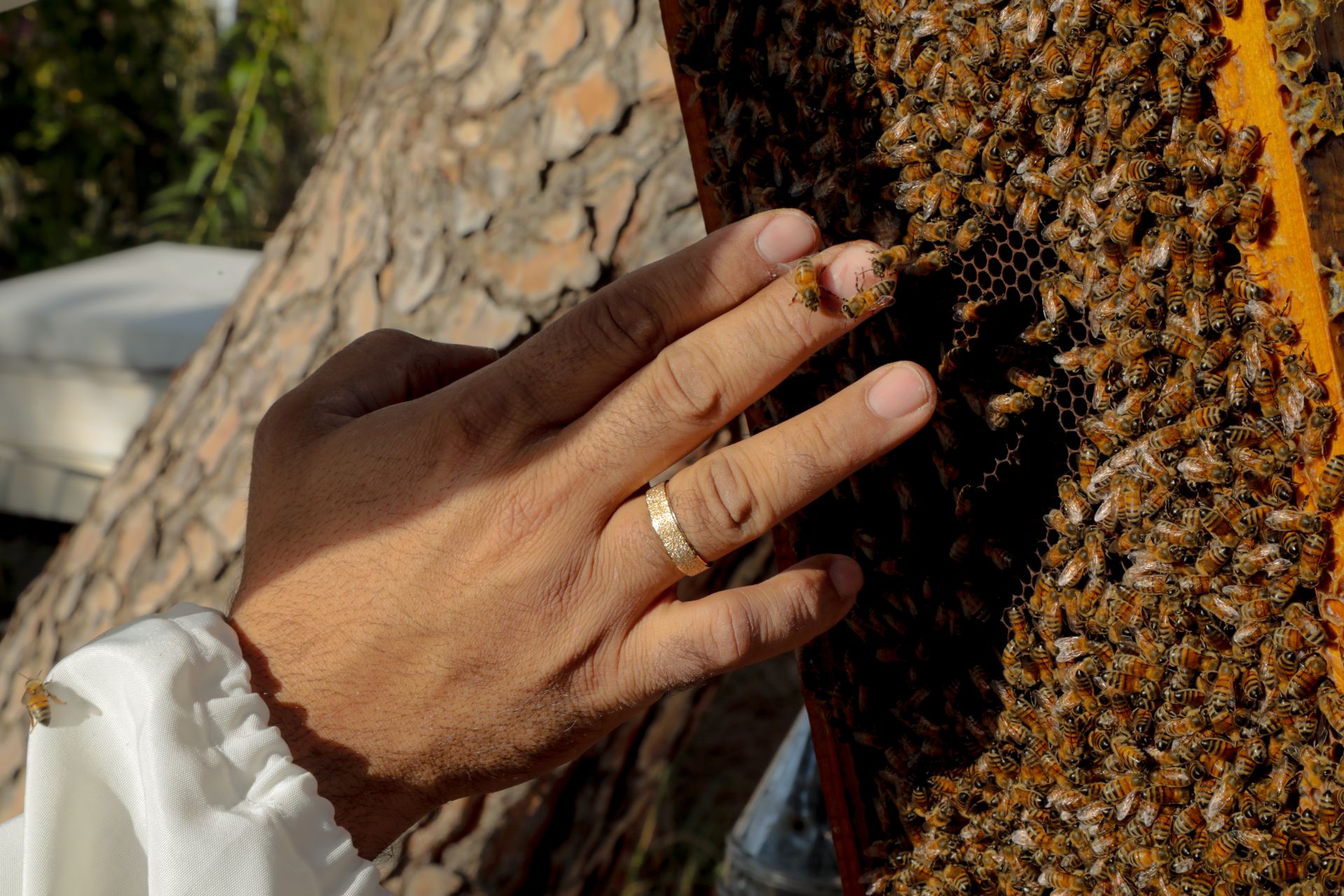
Lana Chafic Eid learned beekeeping from her father-in-law, who has had apiaries in the Aishiyeh municipality of southern Lebanon since the 1970s. “Back then, there were far more hives across the countryside,” she tells me. “You would see them lined up in rows across the field. People who enjoyed beekeeping as a hobby often kept a single hive in their garden, too.”
The colonies would feast on local orange and oak trees, forming the two main honey varieties Lebanon has become known for. “The oak honey is dark, resinous and malty, with a deep, almost molasses-like bitterness, while orange blossom honey is pale and fragrant, carrying a bright citrus sweetness,” the keeper explains. “Back then, there was more free land and flowers for the bees to feed off — so thousands of liters of honey was produced across the country each season.”
Bees played a wider role in the ecological balance of the country, too. “Bees are responsible for most of the pollination of wild plants and fruited trees,” says Mohamed Ibrahim Moneim, one of ByBee’s founders. This makes them central to sustaining local food systems and biodiversity. In the past, their plentiful numbers gave life to luscious landscapes full of wildflowers, citrus groves and mountain herbs.
Memories of bountiful honey yields and fields thrumming with biodiversity are largely in the past now. “My father-in-law was the only one who could continue and thrive as a beekeeper in Aishiyeh,” Chafic Eid, a beekeeper, says solemnly. The example points to a wider decline. “Over the past two decades, bee populations in Lebanon have fallen by around 60%,” Moneim says.
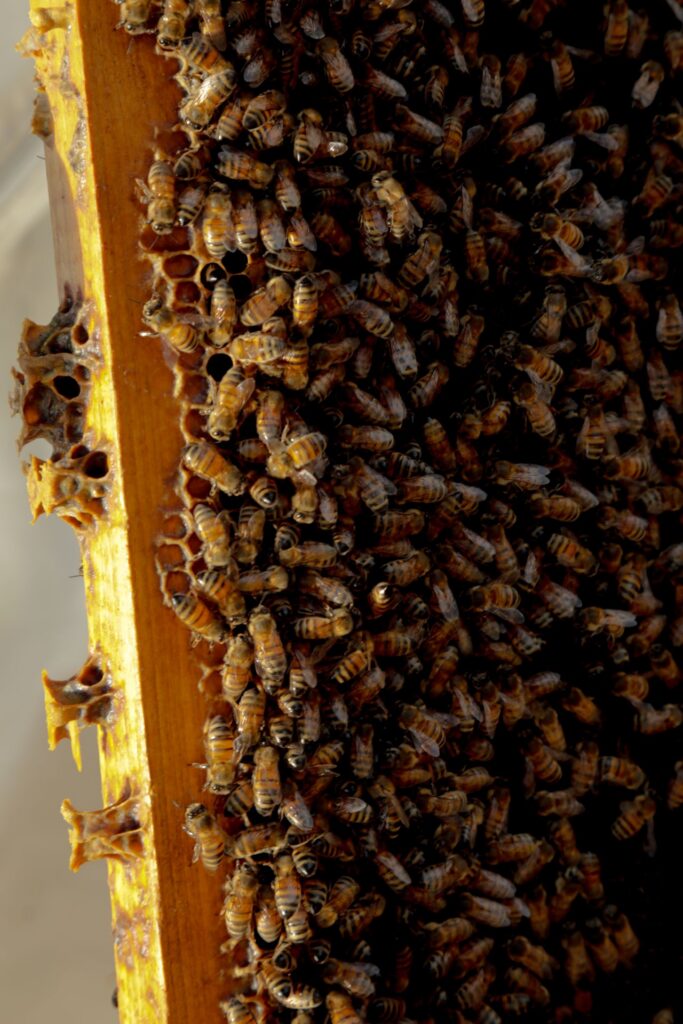
Long before the war, environmental pressures had already begun to erode the sector. Widespread pesticide use has become increasingly common, with the deadly chemicals sprayed on trees right before they flower. When the bees visit to collect the pollen, they either die instantly or bring the poison back to the hives and infect others. “Some mornings I find piles of poisoned bees surrounding the hive — shaking, weak and unable to fight,” Moneim trails off. The lack of regulation in Lebanon is at the heart of the issue, with Moneim explaining that the Ministry of Agriculture has done little to stop farmers from using pesticides.
Climate change has further undermined traditional beekeeping practices. “We used to plan our years around bloom cycles,” Chafic Eid explains. These brief windows occur when wildflowers, citrus trees and herbs open for bees to gather nectar.
The knowledge Chafic Eid inherited from her father-in-law has become unreliable. “The warmer months now stretch longer than they should,” she says. “Plants that once bloomed reliably open too late. Then the bees are unable to collect enough nectar to sustain the hives.” This year, the oak trees, prized for producing the smoky, earthy variety of honey, flowered later than usual.
One route beekeepers can take in the face of climate-driven disruption is to relocate during particular seasons. However, unregulated construction and urban expansion have been steadily narrowing the land available.
Marcel Joe Houayek, founder of Pure Farms, keeps the majority of his bees in Oura, a mountainous village in the north, well known for producing oak honey. “The capacity here is around 300 hives,” Houayek explains. “In the last few seasons, there have been roughly 2,000 hives here — it strains nectar sources.” The surplus colonies arrived from areas like Akkar, where urban expansion and forest fires have encroached upon the land.
In tandem with these environmental encroachments, beekeepers have had to contend with a series of national crises: the 2019 revolution, COVID-19, the Beirut Port blast in 2020 and economic crisis have all taken their toll. The prices of tools and machinery skyrocketed, with the majority of equipment imported into Lebanon and priced in U.S. dollars rather than the local currency. Fewer customers could afford local honey, too. “We sold at lower prices just to keep our clients and win their loyalty for the next years,” Chafic Eid recalls.
The crisis also led to the mass migration of Lebanese youth. “The younger generation that remains now wants to work more with technology or other associated fields,” the keeper laments, telling me that agricultural work, increasingly associated with low returns and substantial risk, has become less attractive over time. “Most of the beekeepers left in Lebanon are now older,” Moneim adds gravely.
With limited state action to encourage or help keepers, ByBee stepped in. Classes covered responses to pesticide exposure, including the importance of coordination with farmers and hive distribution to limit total loss. The team also taught keepers how to spot altered bloom patterns and adjust harvest timing. “Other classes were directed toward newcomers to teach them how to enter the profession,” Moneim says.
To ensure colonies could access forageable land, ByBee made its ample plot available to others. “One of the units on the site also housed shared stocks for members who could not afford equipment,” Moneim recounts, describing the industrial honey extractor, honey dehumidifier and wax melter available.
The organization stepped in as an informal cooperative, negotiating bulk purchases of bee feed and medicine at lower costs. One building even acted as a small market, with shelves lined with jars of honey and bags of pollen. “We helped people sell their products,” the founder tells me. “Occasionally we organized meetings with distributors to get the honey stocked in chain supermarkets.”
Some beekeepers also took individual action. Chafic Eid asked municipality officials to speak with nearby farmers about limiting pesticide use. On occasion, she managed to coordinate with the government directly. “They started spraying chemicals to eradicate an insect infestation,” she tells me. “We were able to work with them to prevent the area where our bees eat from being sprayed.”
During the economic crisis, bee treatments became expensive, with importation issues often making it difficult to find high-quality options or the relevant product. Eid turned to the techniques she learned from her father-in-law. “I used zaatar to counteract diseases in the hives,” she says. “Cinnamon was also helpful for making the queen more productive. I know other beekeepers could not afford candy, so they had to revert to using water with sugar and a little bit of lemon.”
At Pure Farms, Houayek took matters into his own hands as well. The keeper started importing breeding stock from Europe, selecting traits for disease resistance and lower nectar consumption. “I now breed these queens and sell them across the country,” he tells me.
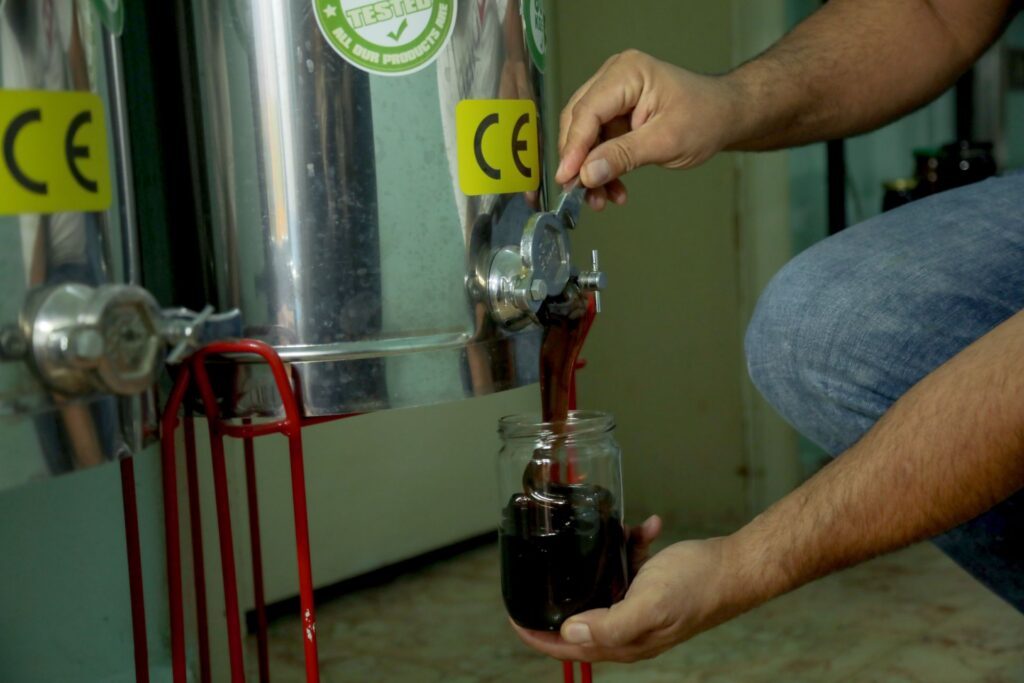
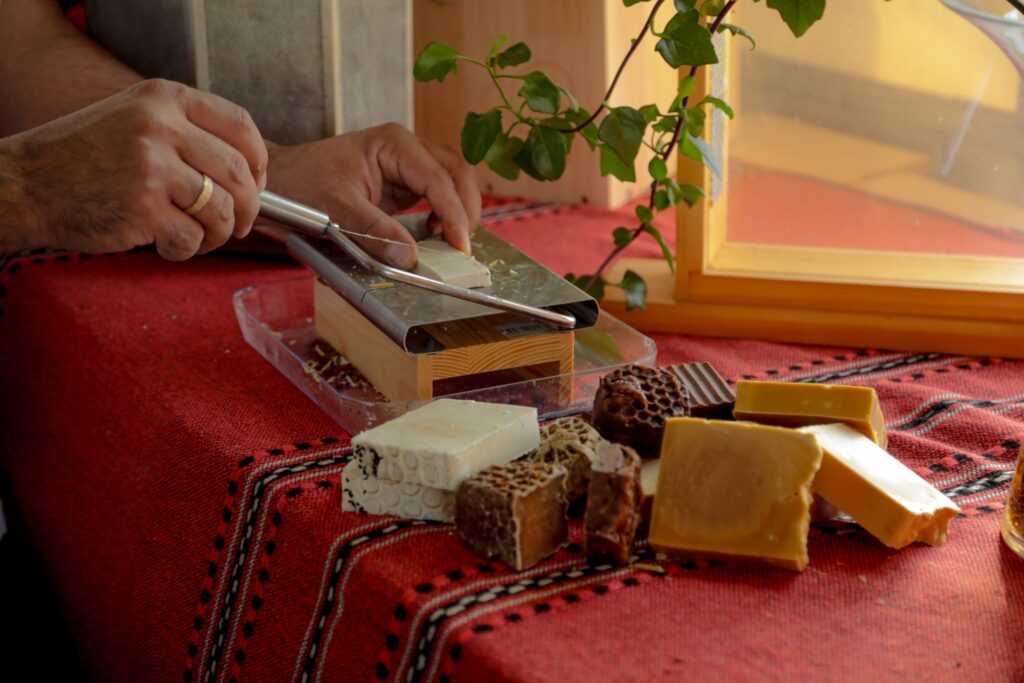
The keeper also diversified his business. “If you work with only honey, you are lost,” he says. “In dry years, my honey yields in the north fall from 20 or 30 kilos per hive to seven or eight.” To endure fluctuations, Houayek produced an ecosystem of products; at Pure Farms, honey is stored in glittering stainless steel vessels alongside shelves stacked with curing soaps, honey wine and beeswax candles.
Just as beekeepers were beginning to adapt and replenish Lebanon’s bee populations, Israeli bombardments began. Today, Pure Farms is one of the few apiaries still alive with movement — largely because Houayek could move his hives between his land in Oura in the north and Saida in the south, escaping the worst of the war. Elsewhere, apiaries lie depleted. Adaptation, it turns out, only works when land, safety, capital and mobility still exist.
Those unable to relocate, like ByBee, experienced complete destruction. “Hundreds of beekeepers lost their hives,” Moneim says solemnly. Ahmed Mahmoud Jumaa saw his 150 hives on the agricultural outskirts of Tyre reduced to 65. In Majdal Zoun, Salem Taha once kept 45 hives; only five survived.
For some, the damage was caused by direct hits. Chafic Eid kept her 37 hives on a secluded mountain slope in Aishiyeh. “They were a deliberate distance away from nearby houses and shops, we thought they would be safe there,” she laments. In late October 2024, Israeli strikes hit the mountain’s summit. The blast sent debris cascading downward. Stones tore through the apiary, splitting hives apart and causing the surviving bees to flee.
“These were colonies we had built over years,” she tells me. “You feed them, house them and care for them just like any other pet. To see them dissolved in minutes — it was bad. It was the same as losing someone from our own family.”
Others experienced a slower, multipronged attack. Some of ByBee’s hives were hit outright, while others suffered indirectly; bees scattered because of the constant sound of bombs and died due to reduced food sources. “Fires sparked by strikes swept through forage zones,” Moneim says. Elsewhere, chemicals from the bombs contaminated nectar and water sources. The bees either died from the strain or fled from the apiaries.
In the face of Israeli attacks, beekeepers were also forced to flee their homes. Cut off from their land, they could not feed their bees or even inspect the hives. “Bee diseases spread through the colonies,” Jumaa says, explaining that these illnesses are normally treatable. Left unattended for weeks, hives weakened quickly: Queens stopped laying, varroa mite infestations spread unchecked and food stores ran out. Stressed colonies collapsed or swarmed.
After the ceasefire was signed, beekeepers set about rebuilding. “We bought new bees, replaced equipment and sterilized the tools we could,” Jumaa says. Chafic Eid and her family embarked on a similar path this autumn. “We separated our remaining strong hives and allowed the bees to raise a new queen,” she says. “We are still waiting to see if the bees will accept the new queen — it is a long journey to recovery.”
Others have struggled to recuperate losses and find the necessary funds to rebuild. Ali Murshed, a beekeeper from al-Maashouk, had 40 hives before the war; now there are only seven left. To buy new hives and repair damaged equipment, Murshed would have to obtain a loan, which has been hard to source. “I’ve had to stop beekeeping almost entirely,” Murshed says.
Some are also wary of restarting due to the persistent threat of Israeli attacks; in June 2025, Lebanese beekeeper Mohamed Abdel Salam Nasrallah was killed in a drone strike that targeted his village of Houla. He was tending to his bees when the bomb hit. “If we rebuild, we stand to lose everything a second time,” Moneim says. “It is a huge risk.”
Unable to plan beyond their immediate needs, ByBee is focused on maintaining what is left. Even this proves difficult in the face of ongoing threats. “After the war, 10 hives remained,” Moneim says. “Two additional hives were then lost due to local pesticide usage.”
The toll has been both financial and emotional. “The project was only possible because we received grants of around $50,000,” Moneim tells me. “The founders then pooled our savings to invest an additional $35,000. Now there is nothing left to prove for all of this effort, and we do not have the will to make another project like it again soon.”
Newcomers have only been further discouraged by the evident fragility of the profession, with youth migration increasing due to the war as well. “ByBee was one of the only projects encouraging younger people to start,” Moneim says. Now, even those who are motivated to keep bees have to contend with sourcing machinery, land and knowledge by themselves.
Wider concerns are emerging about the effect on the country’s ecological balance. “As hive numbers drop, we are seeing fewer flowers, less fruit and weaker plant growth,” Moneim says.
These effects then ripple outward: Animals lose food sources, soil health declines and biodiversity is threatened. “Even if the landscape still looks green today, the destruction of hives — especially in the south — is slowly weakening the local ecosystem,” Moneim warns.
Lebanon’s beekeepers sit at the center of this ecological struggle, yet the responsibility placed upon them has grown impossible to bear. With survival no longer shaped by skill or knowledge alone, keepers must also have access to land, time, capital, mobility and the emotional capacity to absorb repeated crises. All of these resources are increasingly out of reach. Given the ecological importance of bees, it is not just local beekeepers that stand to lose from this crisis — but the very land itself.
“Spotlight” is a newsletter about underreported cultural trends and news from around the world, emailed to subscribers twice a week. Sign up here.