

Hosted by Faisal Al Yafai
Featuring Yeganeh Torbati
Produced by Finbar Anderson
Listen to and follow The Lede
Apple Podcasts | Spotify | Youtube | Podbean
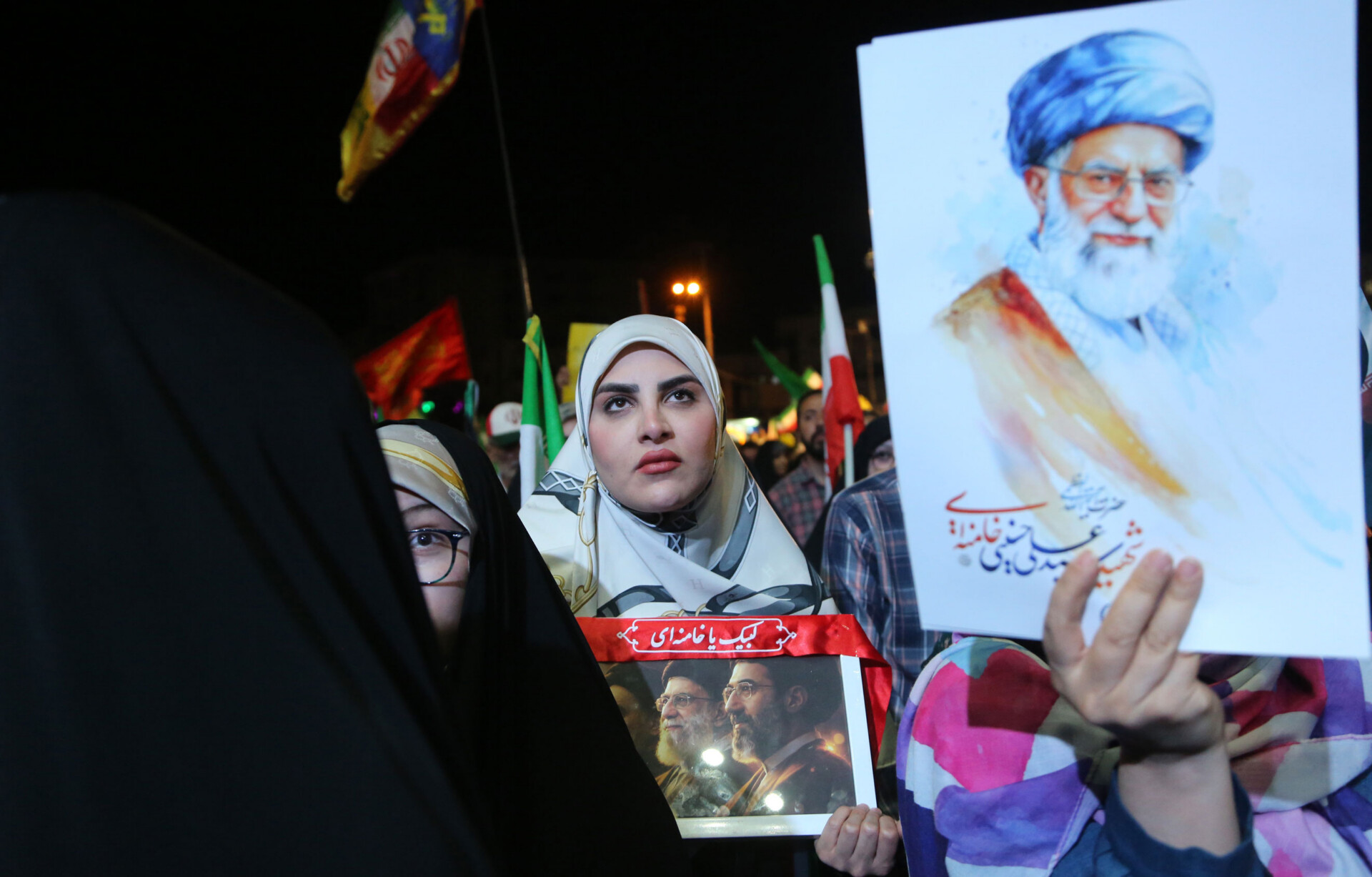
At the time Yeganeh Torbati and her colleague Bozorgmehr Sharafedin decided to write a modern history of Iran in 2020, “really there wasn’t much going on,” she tells Faisal Al Yafai on The Lede.
Fast forward to the present day and the publication of “Stolen Revolution: Betrayal and Hope in Modern Iran,” and her subject is at the center of every major global news story. Following the characters of six Iranians, she and Sharafedin hope to improve understanding of the Iranian regime and those who support it.
“Iran has obtained a deterrent that is far greater than the nuclear program ever was.”
Contrary to reductionist, but popular, narratives, “it’s not just ideology that drives the regime,” Torbati explains. The regime exhibits an appetite for economic corruption and greed — “a desire for control over those sectors that do make money in Iran.”
This, Torbati argues, is one of the ways that “the regime has been able to keep a fairly substantial portion of its supporters.”
Torbati and Sharafedin’s book begins with the 1979 revolution that overthrew the shah, considering “the promises [the regime] made to people as the first ‘stolen revolution,’” Torbati says.
They then follow “the reform movement, this chance that young people were offering the Islamic Republic to change and broaden its base of support and form a stronger social contract with its people by de-emphasizing some of the theocratic elements of the government. That opportunity was also stolen.”
The Islamic Republic’s early supporters, Torbati emphasizes, often came to regret their initial enthusiasm – a lesson she hopes might be considered by supporters of other authoritarian projects. “We’re seeing a rise in authoritarian movements around the world, and we wanted to make the point either for the people who are in power today, or for those who might take power in the future, that you can have the best of intentions,” she says. The cleric Mehdi Karroubi, who she follows in the book, “wanted to create a just society — he wanted to bring social justice and help the poor — but along the way, some of the tactics that he adopted laid the groundwork for his own exclusion and oppression later on.”
The failure by the architects of the current conflict to fully understand the Islamic Republic has led to some damaging results, Torbati says. “An interesting outcome of this war, and I’m sure unintended by the Trump administration, is that Iran has obtained a deterrent that is far greater than the nuclear program ever was, which is control over the Strait of Hormuz.” For many years during the Obama administration this was an unrealized threat, which the Islamic Republic has finally been able to put into practice. “The war gave them the excuse to do that, and I think they probably found it a little easier than they were expecting.”