

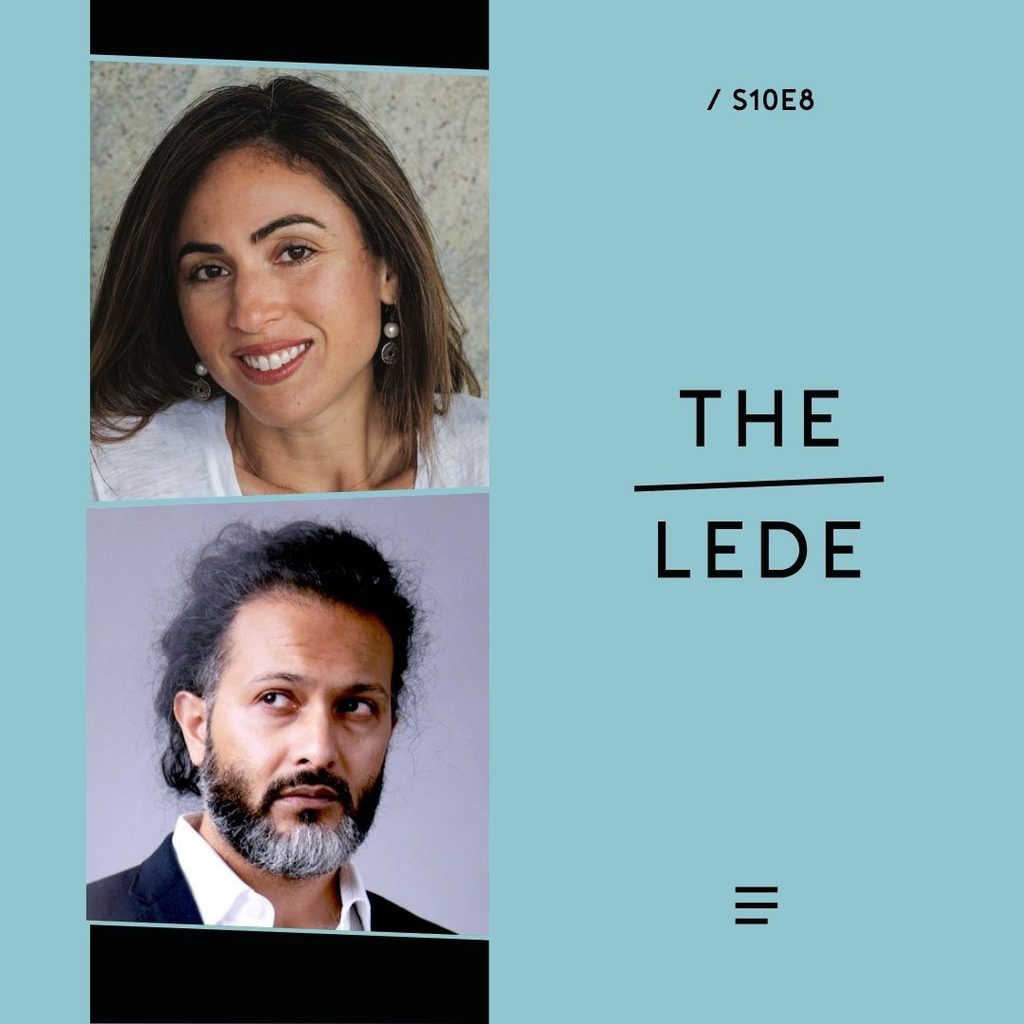
Hosted by Faisal Al Yafai
Featuring Zaina Arafat
Produced by Finbar Anderson
Listen to and follow The Lede
Apple Podcasts | Spotify | Youtube | Podbean
An unavoidable part of being a writer, Zaina Arafat tells Faisal Al Yafai on The Lede, is being an outsider. “When you are on the outside looking in, I think the best way to mitigate the awkwardness and pain of that is to write down your observations and to notice things,” she says. “When you’re fully immersed in something, you don’t notice things right around you.”
Arafat has crystallized some of those experiences into a new collection of essays, “Our Arab: On Longing, Belonging and Hope.” The collection, Arafat tells Al Yafai, considers “the way that exile and displacement and the conditions of growing up under occupation as well has affected all of the various members of my family, including aunts and uncles and my grandparents, and what that has looked like for each and every one of them.”
“When you’re fully immersed in something, you don’t notice things right around you.”
The experiences of Arafat’s parents, both of whom were originally born in Palestine, form a key part of the book. Both parents, she says, were impacted by the joint traumas of the Nakba and the Naksa. “They never really had the opportunity to process this trauma,” she says. “As a result, our lives — the lives of my brother and I — have been really affected by that trauma. It’s trickled down to us.”
Arafat notes that her father’s image of America, where he would ultimately make his home, was shaped as much by what he wanted it to be as by what it really was. “ He projected his ideas of what the West was onto the West, and this is what led him to return here, build a life here. It shaped so much of his future, his family’s future, his grandchildren’s future,” she says.
As much as Arafat’s writing has traditionally been influenced by her experience as an outsider, a recent article penned by Arafat in New York Magazine suggested that may have changed. That article, “Habibi City,” documented the growing cultural visibility of SWANA, and particularly Arab communities in New York City. “What’s so inspiring about what is happening in this community is the way that individuals are coming together without the institutional support. It’s just very collaborative and also tied to a political moment,” she says.
Highlighting the leading role played by New York Mayor Zohran Mamdani in this movement, Al Yafai proposed that Mamdani offers another way of understanding power: “It can be really something that is for you and of you,” he suggests.
“Mamdani, as you say, showed us another way,” agrees Arafat. “I think what ‘Habibi City’ is about, really, is that other way. There was this question of, is ‘Habibi City’ a cause or effect of Mamdani?” she says.
Ultimately, the ongoing violence by Israel against the inhabitants of her native Palestine has demanded questions of Arafat as to the value of her writing. “I’m left with this question: How do you pass on a lineage that’s facing such violent erasure?” she tells Al Yafai. “Do I turn to the page and write? Do I go out there and protest every single day, fundraise as much as I can, teach my children about Palestine and do everything I can to take them there as much as I can while it’s still there?”