

Hosted by Kwangu Liwewe Agyei
Featuring Tope Folarin and Tuhin Chakrabarty
Produced by Finbar Anderson
Listen to and follow The Lede
Apple Podcasts | Spotify | Youtube | Podbean
African writers trying to appeal to global audiences find themselves in a bind, author and 2013 Caine Prize winner Tope Folarin tells Kwangu Liwewe Agyei on this week’s episode of Global Insights on The Lede. “If you look at the corpus of African stories and African novels, there are a few stories that seem to come up again and again,” he says. “One is a story about poverty. Immigration stories — these are really popular stories. American or European stories that take place in an African setting, those stories are also very popular.”
The reason for this, he explains, is that “African writers are trying their best to appeal to editors in London and New York City, many of whom have never been to the continent or have no sense of what’s happening on the continent, whose only exposure to what’s happening on the continent is what they read or see on television.”
“Writers have basically been trained to produce certain kinds of work, and chatbots have been trained on that work.”

For Folarin, this means that writers from the African continent find themselves echoing generic, conventional stories, which may increase the likelihood that they are accused of having used AI in the writing process.
This year’s Caine Prize winner, Zimbabwean writer Simbarashe Steyn Kundizeza, was accused of using AI to write his story “The Blue Fighter” after the AI detection software Pangram suggested the book had been largely written by AI. Folarin raises the possibility that Kundizeza may have found himself caught out by trying to make his work conform to societal expectations. “Writers have basically been trained to produce certain kinds of work, and chatbots have been trained on that work,” he says.
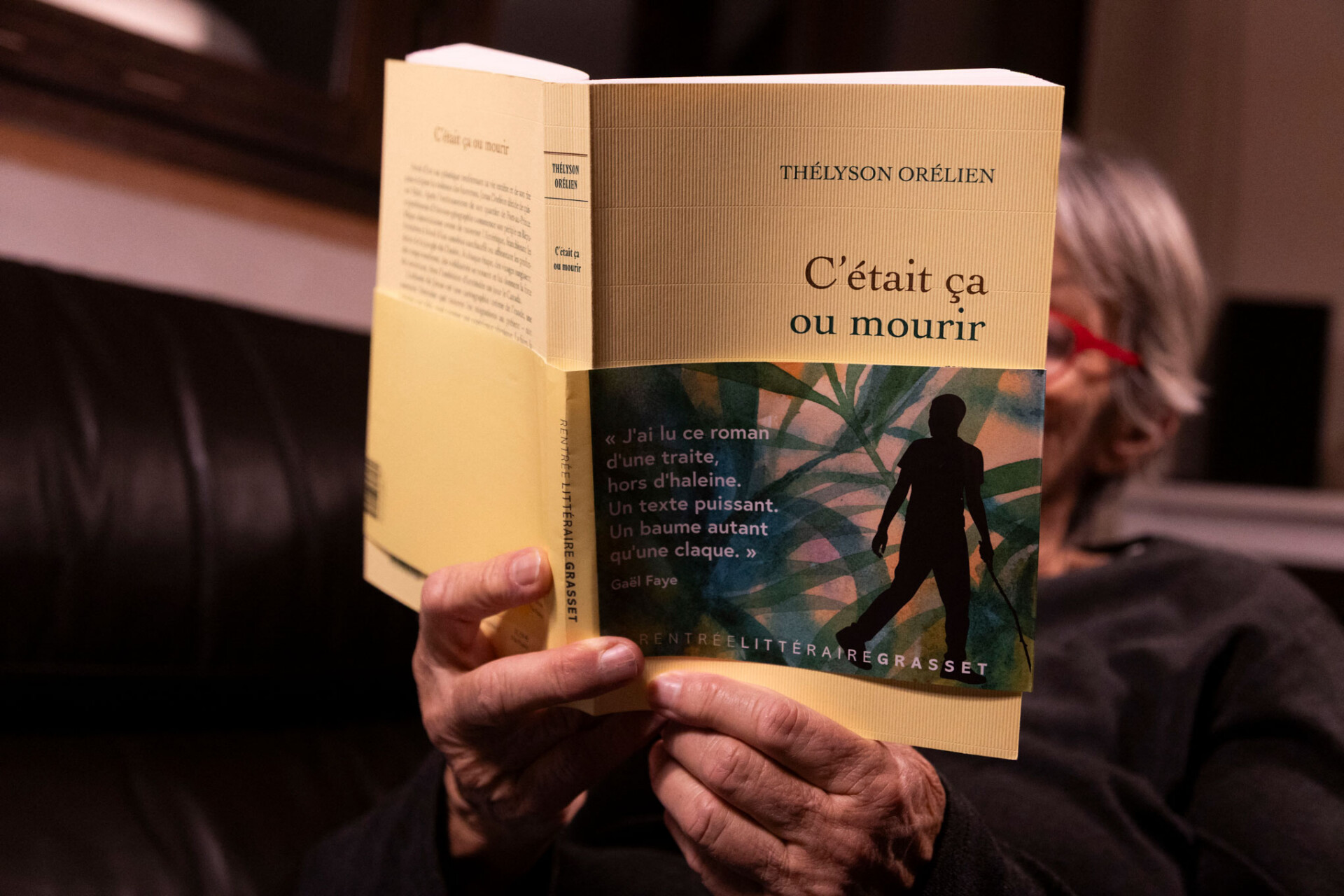
Kundizeza was not the only writer this year to have been accused of using AI. Haitian author Thélyson Orélien, shortlisted for one of France’s most prestigious literary prizes, the Goncourt, and Trinidadian writer Jamir Nazir, who won the Commonwealth Short Story Prize, both found themselves accused of similar infringements, with critics using Pangram to highlight apparent AI use by Orélien and Nazir. All three writers denied having used AI in their work.
Folarin proposes a solution: “The entire literary world will be in a much better position if African writers, Black and brown writers around the world, write about who they are and what they experience.”
AI researcher Tuhin Chakrabarty is confident, however, that the detection software was likely correct in flagging Kundizeza’s work as AI generated. “If a detector says that it’s substantially AI, there are very, very low odds that it would be human written and it’s a false positive,” he tells Liwewe Agyei.
Pangram, he maintains, has “consistently delivered” accurate results, despite claims that the software is biased against nonwhite writers and non-native English speakers. Others, however, are not as impressive — some “would probably flag Mary Shelley’s ‘Frankenstein’ as AI written,” he quips.
AI companies, Chakrabarty warns, are part of the problem. “AI companies don’t necessarily care if you write fiction using AI,” he says. “They are actually promoting you to write fiction using AI, because every time you use their product, they get money.”
Some writers will use the new technology available to them in bad faith, Chakrabarty says. “Just like there are good and honest writers, there are also people who are not necessarily being honest with themselves or with the public.”
The solution, he argues, is to return the power back to the literary and cultural institutions that run the major prizes. “They need to make sure that they can distinguish between human literary achievements and something that’s produced by AI, because if they don’t do this, no one else is going to.”