

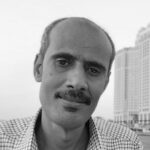
Ahmed Abdul Jalil has spent most of his life tending to a place of worship in Aden, the port city in southern Yemen. Yet it is not one of the mosques that Muslims like him attend regularly across the country, but rather a Hindu temple.
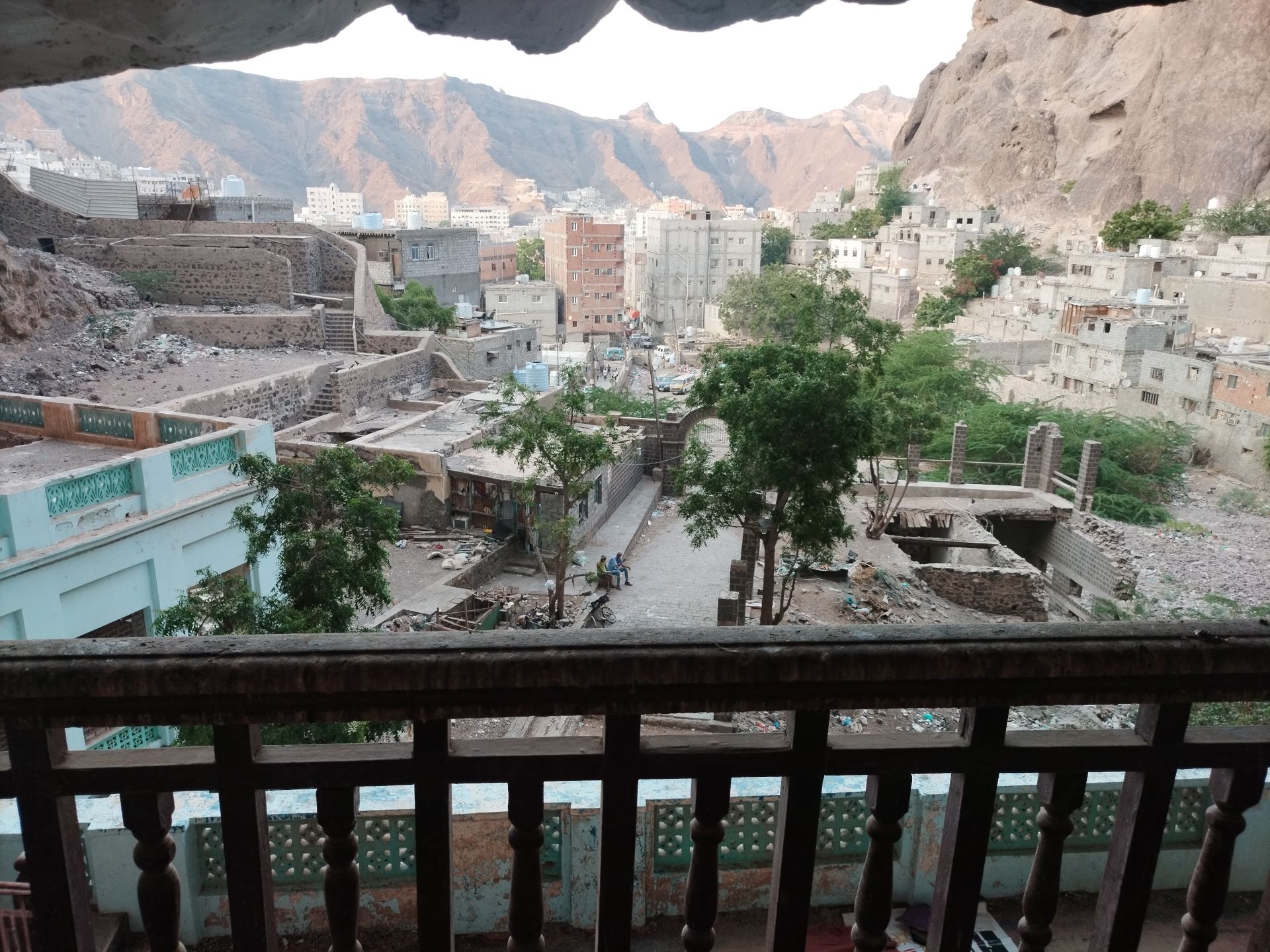
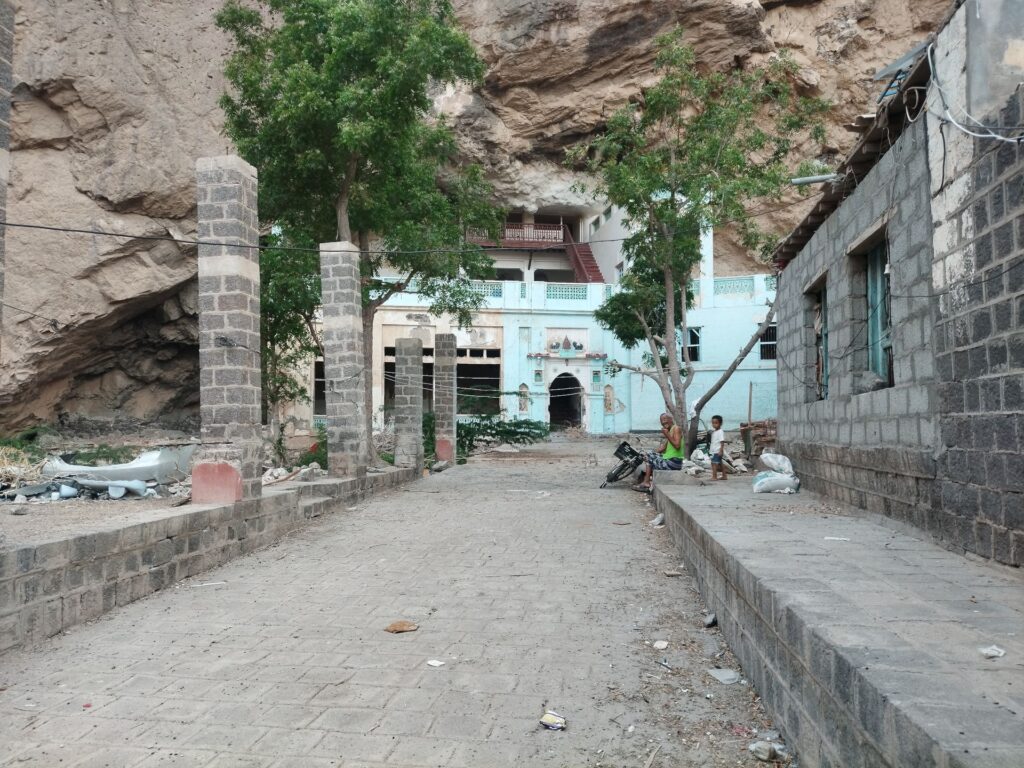
Snuggled in a cave in the foothills of a volcanic mountain in the Khussaf Valley in Crater, a historic district of Aden, it was built more than 160 years ago to be the largest among 11 Hindu temples and Sikh gurdwaras. Called Shree Hinglaj Mataji Mandir, the cave temple in Crater appears to have been named after a Hindu temple situated in a mountain cavern along the Hingol River in what is now the Balochistan province of Pakistan, a place both Hindus and Muslims hold in high esteem. Yet the cave temple in Crater is popularly known among the residents as the temple of the Banyans — the Hindu Gujarati traders.
Most of the Hindu temples and gurdwaras in Aden were built during the second half of the 19th century, with the cave temple in Crater being the only one dedicated to puja worship services.
When the well-known Hindu monk and thinker Swami Vivekananda stopped in Aden on his way to the United States in 1899, he visited the temple. Fascinated by its atmosphere, he was reported to have described it as “instrumental in rekindling the love for God all over the world.”
At the time, the Hindu places of worship had helped to shape a colorful religious landscape in Aden, a cosmopolitan port city where Muslims, Hindu Banyans, Zoroastrian Parsis, Christians and Jews coexisted in peace. Mosques, temples and churches were all attended in harmony — a past often viewed today as Aden’s “tradition of tolerance.”
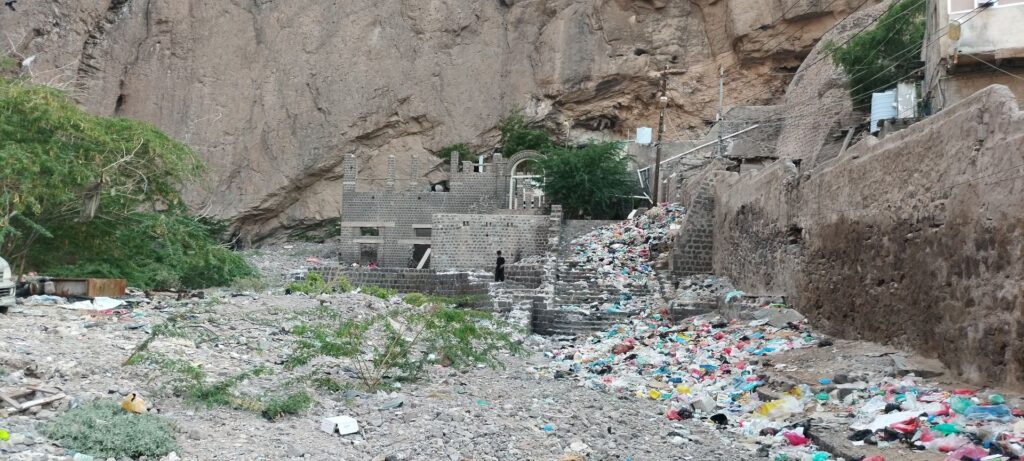
While locally listed as heritage sites, some of the Hindu temples and gurdwaras fell into ruin over time; others were vandalized. The cave temple in Crater was the last one standing, until recently. In early 2015, it was still open for the Indian community members living in Aden and elsewhere in Yemen. Soon after, however, it would not just shut but begin to fall into ruin.
Now, at 70 years old and after nearly three decades of caretaking work, Abdul Jalil is struggling to protect what’s left of it. “I have to stay here to protect the place,” he said as we sat chatting on the temple’s patio. “If I leave now, it will be looted brick by brick.”
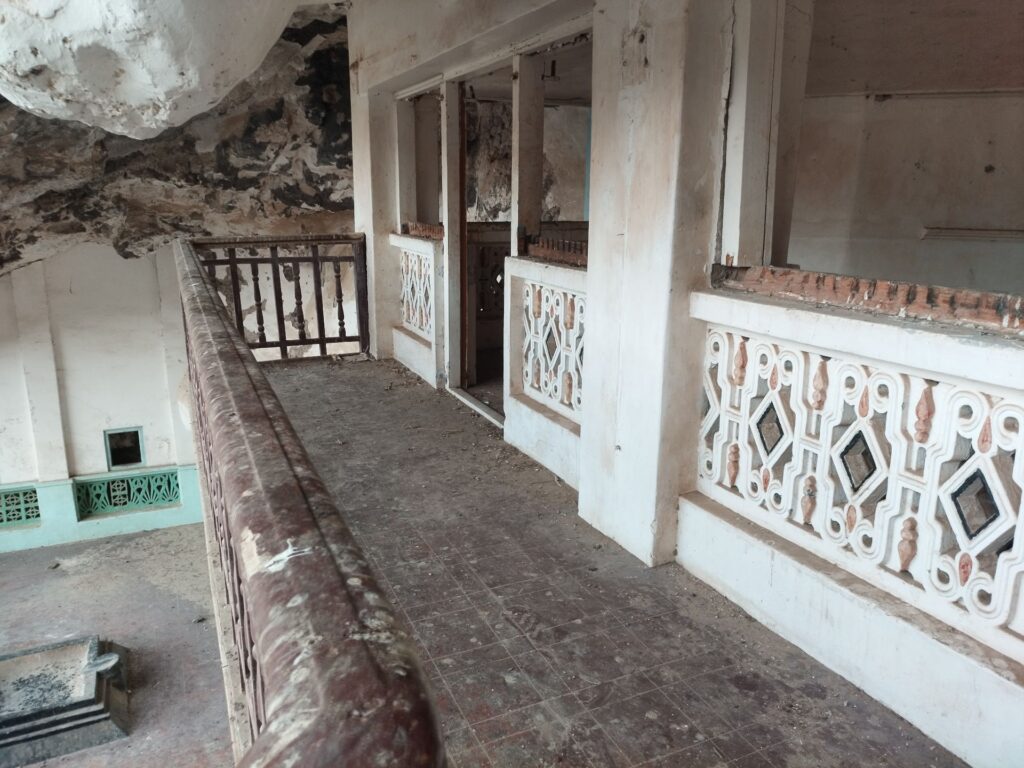
Yet his single-handed effort may not be enough to preserve this survival from the history of both Aden and India. Crater is the oldest quarter of Aden, a district shaped by maritime trade and where the Indian presence predated the British colonial era.
Nestled in a volcanic peninsula in southern Arabia, Crater boasts a horseshoe-like front bay jutting into the Aden Gulf of the Indian Ocean, making it a naturally fortified waterfront at the crossroads of vital maritime trade routes. An ancient harbor, Crater saw the rise and fall of many medieval powers. Over 2,000 years ago, at the time of the Roman Empire, it stood as a trading hub connecting the East with the West through the Indian subcontinent. After the collapse of Rome, the trading link continued to increase in prominence well into the era of the Mamluks of Egypt, whose rule began in the 13th century, before its status fell after the Portuguese discovered the Cape of Good Hope route to India late in the 15th century.
But even with the departure of such a trading link, the presence of the Indians and their places of worship in Aden remained evident in the next century. A Sikh gurdwara is said to have existed in Crater when Guru Nanak — the founder of Sikhism — visited Aden in 1517 during the fourth round of his overseas travels. The Indian spiritual teacher had stayed near the Sira Fortress for a few days, where the Sikh gurdwara could be found. The gurdwara was large enough to be visible half a mile from the city while traveling by ship.
Nearly two centuries later, however, the trading connection between Aden and India took on a new form as the Europeans took the lead in global trade. In 1839, the British occupied the port city of Aden and made it part of British India. It was run from Bombay for the next 107 years. As the port city morphed into a colony, an Indian business community grew, constituting the largest diasporic population in the city (an African community was the second largest). Languages like Gujarati, Marathi and Hindi were common. A stopover for travelers, Aden was often seen as “little India” and “an Indian city in the Arabian Peninsula.” Although India won its independence in 1947, Aden remained a colony city under the direct rule of the British crown, but the Indian community remained the largest diaspora presence in one of the world’s busiest ports (Aden port was only second to New York harbor in the 1950s).
Abdul Jalil came to Aden late in the next decade, a teenager dreaming about a better life than he had growing up in his hometown in Taiz province. He would soon witness a series of events and political changes that would shape the modern history of Aden. The British left the city in 1967 amid the Yemeni struggle for independence. The Parsis were concerned about the safety of the holy flame at the fire temple, but in November it was successfully transferred aboard an Air India-chartered plane. In the next month, the port city of Aden became the capital of the world’s newest Arab state — South Yemen — under a Marxist regime. The Indian business community shrank, but the city remained home to a large Indian-origin diaspora. Of the 11 Hindu temples and gurdwaras in Aden, however, only a handful remained open, including the cave temple in Crater — until 1990, when North and South Yemen became a united state under a democratic regime. Following the civil war between the two parts of Yemen four years later, it became the only temple standing.
At the turn of the millennium, Abdul Jalil began working as the caretaker of the cave temple in Crater. His new job was not something he had dreamed of doing, but it gave him a change after several years of hard peddling on the streets and, later, earned him an opportunity to start a new life. Over the years, he went on keeping the temple ready for the large Indian diaspora living in Aden and elsewhere in Yemen. He was able to bond with the community, proving himself not just a caretaker, but also a dependable friend. He also managed to get a small house in the Khussaf neighborhood to start his own family.
“The temple used to be frequented by Indians every Friday evening,” Abdul Jalil said. “And by the end of each month, a large number of them would gather together for a feast. They would come from different places — not only from Aden, but also from Hodeidah and Sanaa. They would cook and prepare food and bring fruits in here with them, and would share that with the locals in the neighborhood.”
In early 2011, things began to change, as the situation in Yemen descended into revolution and then civil war. The Indian community members were advised to leave, amid unrest following Yemen’s Arab Spring revolution. While many left, the cave temple in Crater remained open for those who chose to stay in the country — but only for a few years. In early 2015, Houthis stormed into the temple, destroyed the deity idols and declared it open for looting.
In March of that year, a few months after they had taken power in the Yemeni capital, Sanaa, the Iran-backed Houthis advanced on Aden as the ousted Yemeni president, Abed Rabbu Mansour Hadi, retreated to the port city. A bloody four-month battle would soon transform Aden into a ghost town. Most of the country’s Indian community lived there; it’s estimated that as many as 200,000 of the Indian-origin diaspora were among the city’s residents at the time.
When Houthi fighters came to Khussaf, Abdul Jalil was not there. The caretaker and his family had to leave for their safety and go elsewhere in Aden. “We were in Shaykh Othman [district] when the Houthis came to the neighborhood and broke into the temple,” he said, adjusting his eyeglasses. “A man who used to be a military soldier was watching the temple at the time when we left.”
Abdul Jalil said that he was later told that armed Houthis aboard three military pickup trucks drove to the temple looking for him, before they entered and wrecked it. Following the Houthi break-in incident, a representative from the Indian community called Abdul Jalil on the phone to check on him. “When I told him what happened, he assured me that my safety was what mattered most,” he said. “That was the last thing I heard from them.”
In April, the Indian government launched Operation Raahat, an 11-day evacuation effort in Yemen. More than 5,000 members of the Indian community were evacuated aboard warships through the ports of Aden and Hodeidah. Abdul Jalil and his family had to flee for their safety. They stayed in Ibb province until the fighting in Aden came to an end.
When Abdul Jalil returned to Crater, he decided to set up a shack by a rundown gatehouse in the temple’s courtyard. Since then, he has been staying there to watch over the place and fend off looters and land-grabbers.
Following the 2015 battle in the city, a state of insecurity and lawlessness prevailed, and looting and land-grabbing became rife. In the next year, reports emerged that a Houthi-linked tycoon was attempting to take over the temple site to build a commercial mall in its place. Then came the owner of the adjacent car bodywork repair shop, who attempted to grab the temple’s acre of front yard. Abdul Jalil’s resistance effort prompted a lengthy legal process, and the workshop owner eventually lost.
In January this year, however, a local business owner showed up claiming to be the proprietor of that front yard, presenting a title deed. Abdul Jalil, along with a number of locals from the neighborhood, stood together against his first attempt, but the caretaker is yet to face him in a final showdown.
“Spotlight” is a newsletter about underreported cultural trends and news from around the world, emailed to subscribers twice a week. Sign up here.