

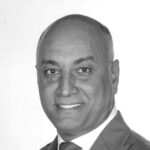
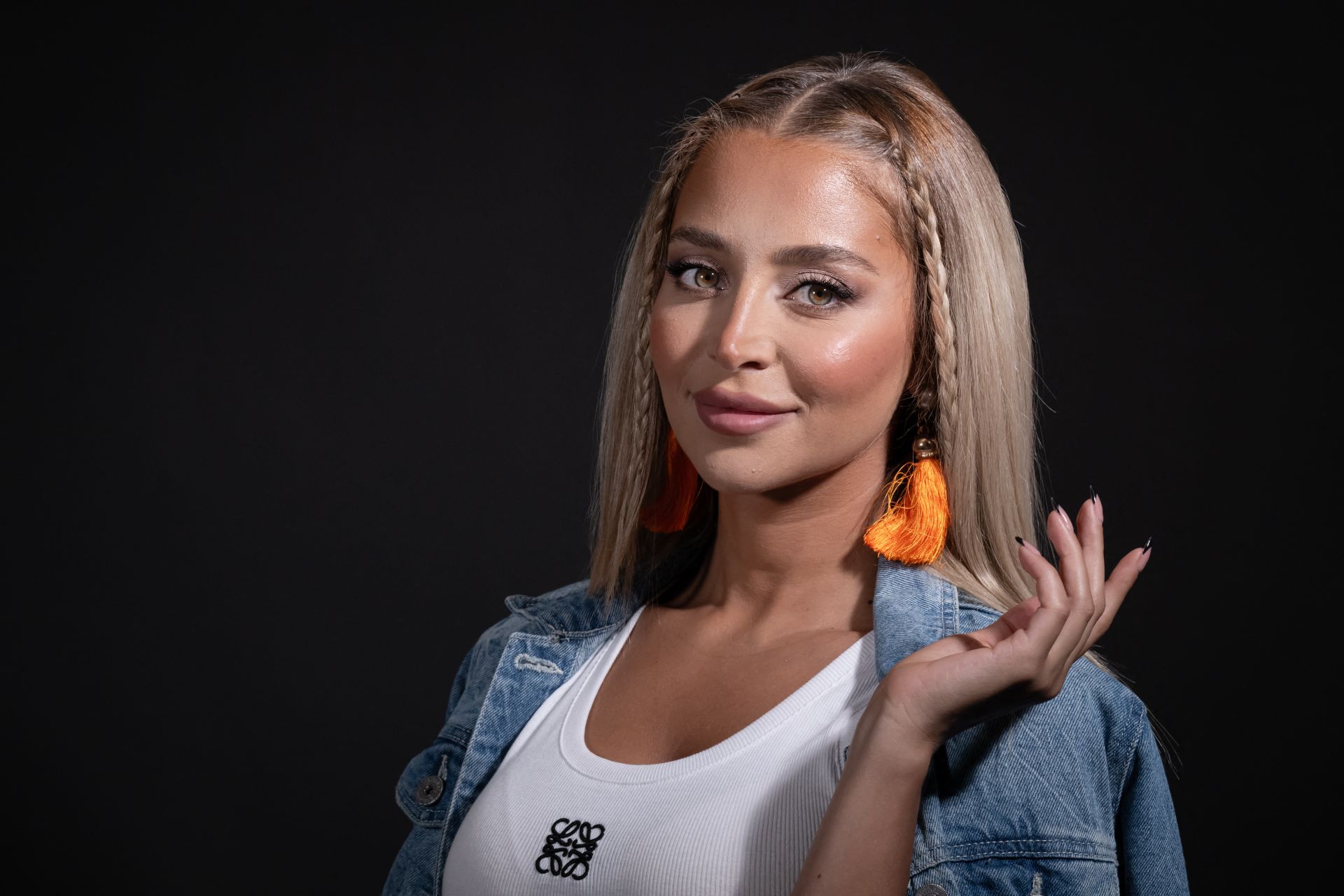
When Syrian President Ahmad al-Sharaa released his list of appointees to the new People’s Assembly on Wednesday, two names stood out. One was Nasser al-Hariri, a former member of parliament who defected from the chamber in the Assad era and was now, pointedly, being restored to it. The other was Rouzaina Lazkani, one of Syria’s famous actors, a woman installed, in effect, as the new parliament’s female face. Between them, the two appointments said more about how power will actually work in post-Assad Syria than the elections that preceded them.
That is because Syria’s first post-Assad parliament arrives wearing two faces, and neither can be read without the other. The first belongs to the 140 members produced by the elections the government staged last October — a vote that was largely pro forma, but whose winners nonetheless form the clearest map yet drawn of who holds power in the new Syria. The second belongs to the 70 members al-Sharaa appointed himself, a list that reveals the president’s own sense of what the elections failed to deliver, and his attempt to correct it. Together, at a moment when Syria’s politics, economy and security remain dangerously fragile, the two groups tell us what kind of state is being assembled in Damascus.
I went through the resumes of all 210 members, starting with the 140 whose backgrounds show how the parliament was born of the 13-year war, not of party life. The overwhelming majority of members come largely from no declared party and ran on no institutional platform. Instead, they rose through the social and political networks that Syrians built after 2011, including the opposition movement and its local armed factions, Sharia councils and local councils, relief organizations and field hospitals, free professional unions, civil defense groups, reconciliation committees, town notables and Kurdish parties.
In this sense, the chamber breaks into roughly six blocs, albeit constantly overlapping: a diverse Islamist bloc; a revolutionary-military bloc; a bloc of local administrators; a professional bloc of doctors, lawyers, engineers, academics and businesspeople; a tribal bloc concentrated in the east; and a Kurdish bloc. The overlap is the point. One member pairs Sharia education with military command, another combines medicine with field relief, a third links local administration to human rights work, and a fourth blends social standing with revolutionary credentials.
Nothing in these life stories suggests a parliament of genuine partisan contradictions, and many of these networks will likely remain confined to their local networks, as happened over the course of the war, rather than develop into parties. A more likely scenario is the emergence of a postwar political current that instinctively closes ranks against anything that might threaten the new political order in Damascus. After decades in which Sunnis were shut out of political life in Syria, that reflex is not surprising.
The most visible of these blocs is the one that carried the anti-Assad uprising’s guns. The assembly seats men who fought in the Free Syrian Army, commanded local battalions and brigades, served in factions like Faylaq al-Rahman and Ahrar al-Sham, or sat in the military councils that ran the war and negotiated the displacement agreements that ended its sieges. A significant share of this parliament, in other words, earned its legitimacy in confrontation with the old regime. Its members arrive bearing the scars of siege, exile, negotiation and the running of cities under bombardment. In one of its dimensions, the chamber is simply the Syrian revolution’s memory, given a political afterlife. That is truest in the Damascus countryside, Daraa, Homs, Aleppo, Hama and Deir ez-Zor, and it makes this parliament unlike any of its predecessors, unlike any conventional party chamber anywhere.
But the fighters may not be the layer that matters most. The class of revolutionary local administrators is arguably more consequential. They ran education, health, civil registries, relief, civil defense and reconciliation committees in areas that slipped from regime control, or in the displacement camps of the north. For years they practiced a kind of alternative local governance, managing society through its collapse. Few are partisans in any explicit or traditional sense. But they know how the real machinery works, through the networks of services, funding, relief, notables and factions that kept opposition Syria alive. That knowledge, more than any ideological label, may be the most useful currency inside the new chamber. Its votes will not split neatly between Islamists and secularists, or soldiers and civilians, but among conservative, regional, professional, revolutionary and religious networks that ally and drift apart issue by issue.
On paper, the chamber also boasts an impressive professional class, including doctors, lawyers, former judges, engineers, academics and businesspeople. But the technocratic credentials come with something more consequential. The doctors, in many cases, ran field hospitals. The lawyers belong to free bar associations or spent the war documenting detainees. The engineers rebuilt services under fire and the academics built alternative schools. The competence is real, but it rose from inside the revolution, and it carries the revolution’s politics with it.
Some of the members served in the Salvation Government in Idlib, in its ministries, its Shura Council, its health and administrative directorates. The trail does not run through the whole chamber, and it rarely proves a direct organizational tie to Hayat Tahrir al-Sham, the group that led the campaign that overthrew the Assad regime in December 2024. But it confirms that part of the elite that learned to govern in the north under the group’s shadow has now graduated to national representation.
None of this makes the ruling elite a monolith, and that may be the chamber’s most important feature. Inside it sit religious Islamists and figures shaped by the Muslim Brotherhood’s milieu — a current with real capacity for influence, though the members’ backgrounds alone do not justify calling it the chamber’s organized core. Alongside them sit former commanders, administrators, doctors and relief workers, tribal notables and local businesspeople. The likeliest result is not an ideological bloc but a flexible coalition that unites on some things and fractures on others. It may unite on identity, the revolution’s legacy, accountability for the old regime and a refusal of any return of the old state’s structure. It’s more likely to split over decentralization, relations with minorities, personal status laws, the economy, the reach of executive power and the role of Sharia in legislation.
The chamber’s minorities complicate the picture without changing it. Kurds, Turkmen, Christians, Alawites and Ismailis are all present alongside the Sunni Arab majority. On the coast, in Latakia and Tartus, the lists include Alawite and Christian professionals, some from opposition families or leftist and human rights backgrounds. Their presence gives the parliament national coverage and softens its image as the product of one aggrieved community. It also serves a double purpose of signaling inclusion to an international audience and offering reassurance to local communities that sat out the armed opposition or were close to the old regime. So far this looks like balancing, symbolic representation rather than a force that could bend the chamber’s direction. The difference between symbolism and real representation will be tested in committee assignments and legislation. If minority members land on sensitive files, such as security and transitional justice, they could become genuine bridges between the parliament and the communities behind them.
In eastern Syria, the usual categories don’t apply. In Hasakah, Kobani, Malikiyah and Qamishli, the seats were divided between Kurds and Arabs. The Kurdish seats went to Kurdish National Council figures and respected independents; the Arab seats went to tribal notables and revolutionary activists, media figures, medics and tribal networks. Neither side was allowed to dominate. That balance gives the Kurds something no other minority in this parliament has: a real negotiating position, particularly if decentralization, cultural rights, the Kurdish language or the relationship between Damascus and Qamishli reach the floor. That balance could also produce cross-communal alliances that dilute the Sunni bloc’s unitary weight. It could also become a source of friction, if questions of national identity or provincial authority are forced onto the agenda.
Which brings the story back to the president’s 70, the parliament’s second face, and arguably the more revealing one. Al-Sharaa used his appointments to fill the holes the election left. Al-Hariri’s rehabilitation was a message to the defectors of the Assad years. Lazkani, whose brother was killed under the Assad regime, for her part gave the chamber a public face that its fighters and sheikhs could never have supplied on their own. Fourteen of the 70 are women, a high share compared with what October’s vote produced. And the list made room for Christians, Kurds, Turkmen and tribal figures. It amounted to a correction of the election’s course, “as far as possible.” Without the president’s late intervention, this parliament would have looked considerably less like Syrian society than it now does.
So the institution is built. Now come the tests, the first of which is the relationship between the chamber and the government. The big question being asked about the parliament is what happens when it disagrees with a presidential decision, if it ever allows itself to. The second is whether political life can genuinely widen less than two years after Assad’s fall, in a country stripped of the most basic elements of political freedom for decades. The third is the economy: Syrians’ needs are growing just as international support, and Gulf support in particular, recedes.
And there is a map of failure available for study next door. Iraq, a country that resembles Syria to an uncomfortable degree, shows what happens when a parliament replacing a dictatorship becomes a bazaar of networks rather than a legislature, and Syria’s chamber, itself a parliament of networks, is structurally vulnerable to the same fate. Avoiding it will require things that do not come naturally to new orders. They include, above all, candor with the public about what powers and privileges this assembly actually holds.
The deeper question underneath all the others is whether the networks that fill this parliament can complete the journey they began in 2011, from siege committees and field hospitals to actual politics. Those networks earned their legitimacy by defending Syrians and keeping them alive when the state was trying to kill them. That is a moral inheritance no ordinary parliament possesses. And it is wartime legitimacy that the chamber can translate into open argument and real oversight that reach the Alawite coast and the Kurdish northeast as surely as they reach Idlib and Damascus.
“Spotlight” is a newsletter about underreported cultural trends and news from around the world, emailed to subscribers twice a week. Sign up here.