

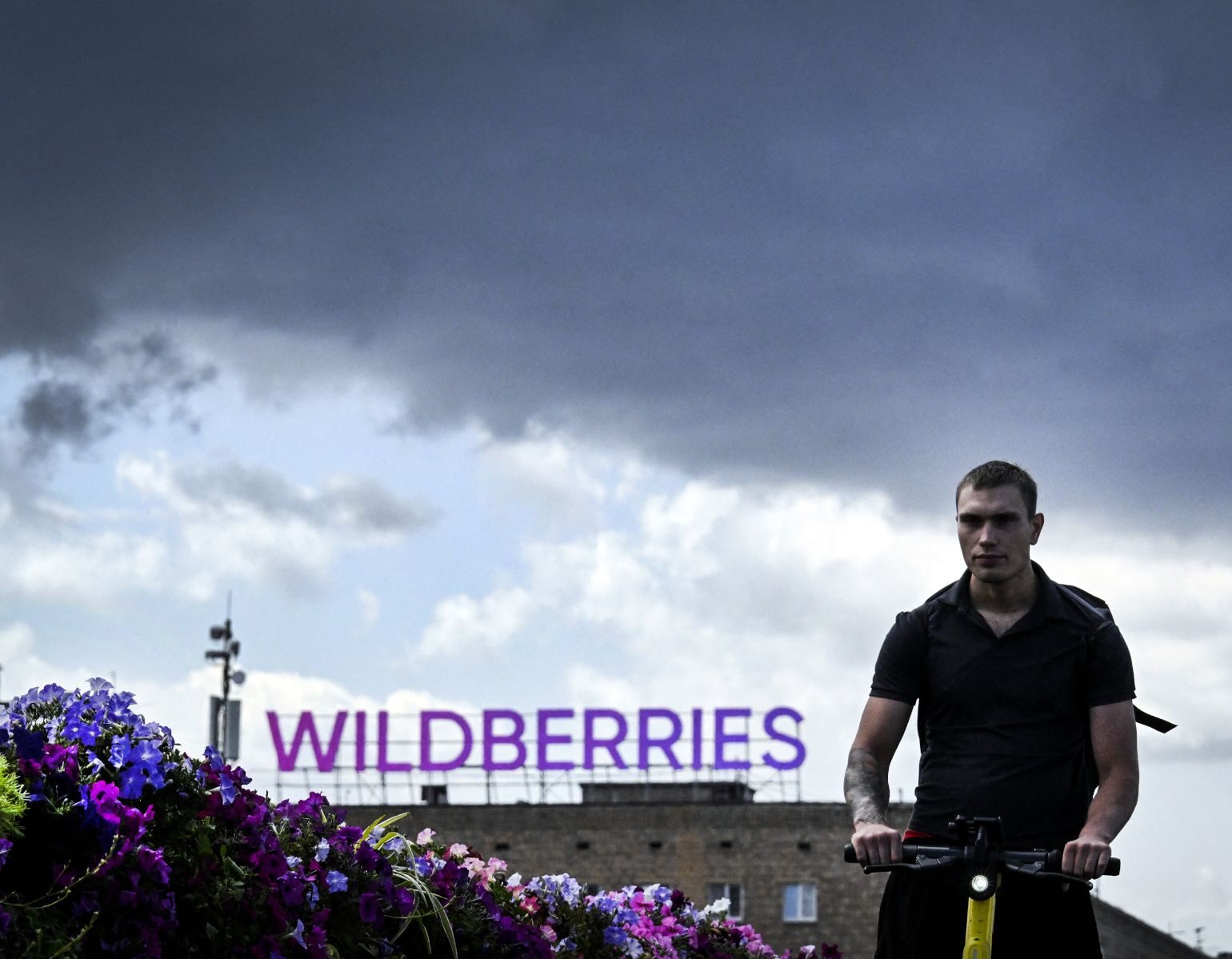
“Yesterday I was a millionaire — and today I have nothing, absolutely nothing left.” Katya, a dolled-up beauty blogger who sold her makeup brand on the Russian e-commerce platform Wildberries, was speaking through tears into a tiny microphone for her Instagram audience. Her entire stock had been destroyed, she said, after Ukrainian drones had struck several Wildberries depots around the country, sending goods worth almost $2 billion up in flames.
Wildberries, the online megaretailer that is Russia’s answer to Amazon, has become a juicy target for Ukrainian drones in recent weeks, as Kyiv looks to push the war front to the doorsteps of everyday Russians. Founded in 2004 by Tatyana Kim, a young English teacher on maternity leave at the time, the company initially enabled Russian shoppers to purchase from German mail-order catalogs. Twenty-two years later, one can buy anything from a Chanel handbag to paperclips on the site, which has become the beating heart of the nation’s e-commerce industry.
The company, which now represents about 3% of Russia’s gross domestic product — around $79 billion in 2025 — saw explosive growth in the wake of the 2022 full-scale invasion of Ukraine. With Western retailers — particularly fashion brands like Zara and H&M — making a swift exit from the country after sanctions were put in place, Wildberries’ ingenious model stepped in. Parallel imports of goods from those same brands, coming from countries like the United Arab Emirates, could be sold on their platform, paid for in rubles and delivered to one of the thousands of Wildberries outposts around the country that had enabled even Russians living in some of the least developed parts of the nation to access a massive variety of consumer goods.
“In a way, Wildberries made shopping even better than before the sanctions,” said Chris Weafer, CEO of Macro-Advisory, a business consulting firm in Russia. “Before, you only had access to what was in the store. But now, you can browse Zara’s whole online catalog of what’s available in Turkey, or Dubai, and get it delivered to your door in five days — and pay in rubles.”
Ukraine claims that Wildberries is a legitimate target because it sells military-type equipment, such as bulletproof vests and emergency kits, on its website, which many conscripts into the Russian army purchase before deploying. But the real target isn’t flak jackets or drab woolen socks. Mykhailo Podolyaka, an adviser to Ukrainian President Volodymyr Zelenskyy, told reporters on Aug. 1 that the attacks were designed to have “a huge impact on large social groups that pretend to be apolitical” in Russia; the kind of people who say “that the war doesn’t involve them.”
From the tearful confessionals flooding Telegram and Instagram this week from sellers who’d lost their stock — and discovered that Wildberries did not intend to compensate them for their losses — it certainly appears that some of the apolitical class has started to feel the heat after four years of war. But Weafer says the hits are unlikely to sway the public’s opinion away from support for the war.
“People are talking more about the war, they are asking more questions,” he said, “but support for the government certainly isn’t going to be undermined because you have to wait a few days longer for your package.”