

From Sisi’s Satirist to Sisi’s Guest: Bassem Youssef’s Surprise Appearance
“Fascism in the name of religion will be replaced by fascism in the name of patriotism and national security,” warned Egyptian satirist and former television host Bassem Youssef in the 2013 season premiere of his wildly successful TV show “El Bernameg” (“The Program”). The episode was titled “El-Sisiophilia” and was mostly dedicated to poking fun at the emerging personality cult built around the military and, in particular, Gen. Abdel Fattah el-Sisi.
The day after the episode aired, the surgeon-turned-satirist was hit with at least four legal complaints filed against him for insulting Sisi and his supporters, including using phrases that “undermine the honor and dignity of Egypt and its people.” The series’ broadcaster Capital Broadcasting Center (CBC) abruptly pulled the following week’s episode, citing violations of its editorial policies and contractual terms. At the same time, family members of the production crew were reportedly taken into custody. The incident made international headlines and would serve as one of the first tests of the new regime’s willingness to tolerate criticism.
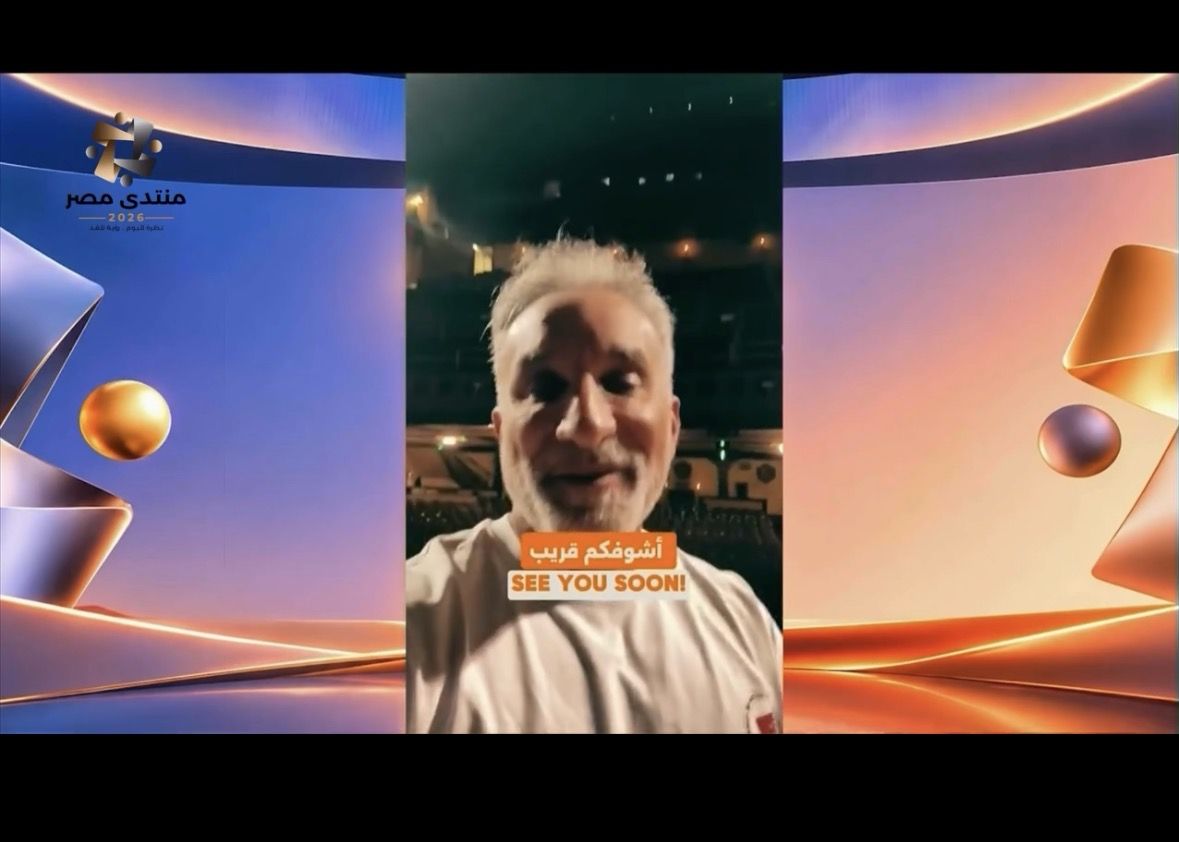
On Oct. 19, 13 years after Youssef left Egypt never to return, he made a special appearance by video at the inaugural Egypt Forum 2026. Launched by President Sisi (who was in attendance for the opening ceremony) in the New Administrative Capital under the name “A Look at Today, a Vision for Tomorrow,” the conference brings together government officials and experts to review national development. In keeping with one of its core themes — countering misinformation and the spread of rumors — Youssef discussed the impact of social media and urged Arabs not to let online feuds turn them against each other, specifically referring to online meme wars between Egyptians and Saudis. “We know which accounts are behind it,” the comedian said. He ended on a more personal note, expressing his longing for Egypt. “I miss you. See you soon! Inshallah, I’ll visit the Egyptian Museum, get back to kitesurfing and eat some Owaisi mangoes.”
Other high-profile guests included celebrity surgeon Magdy Yacoub, Al Azhar’s Grand Imam Ahmed El Tayyeb and a host of government officials including Prime Minister Mostafa Madbouly, who delivered the opening address. In a prerecorded speech during one of the sessions, dissident talk show host Ibrahim Eissa remarked on media responsibility and the value of diverse perspectives. Long considered one of Egypt’s leading opposition voices, his relentless criticism of President Hosny Mubarak’s regime earned him a one-year prison sentence for “insulting the president” in 2006, and his commentary is credited with contributing to the political climate in the lead-up to Mubarak’s ouster in February 2011 following massive nationwide protests.
But it was specifically Youssef’s appearance, which lasted less than three minutes and seemed to serve as the headlining act, that garnered attention both online and in the press. In the days that followed, his image was splashed all over state media, including on social media accounts belonging to the State Information Service — the official media and public relations apparatus of the Egyptian government. Clips of his appearance focused on Sisi’s reaction, showing the president laughing at some points and even writing down notes attentively.
Some saw it as an endorsement of the authoritarian president, whose government has made criticism of its actions increasingly dangerous, including for Youssef and his colleagues. Some of the more forceful reactions from Egyptian commentators portrayed the comedian as a self-seeking opportunist. An X post by the late Palestinian professor and poet Refaat Al Areer, who was killed in a targeted Israeli strike in December 2023, which read “BASSEM YOUSSEF IS NOT AN ALLY!” also made the rounds. The post referred to Youssef’s somewhat unexpected return to the limelight following a viral interview on “Piers Morgan Uncensored” in Oct. 2023. “He’s awful on Egypt but great on Palestine,” posted media studies professor Mohamad H. Elmasry. “Now he’s made an appearance at Sisi’s big conference, an event designed to polish Sisi’s image after 13 years of murder, mayhem, and economic failure.”
Youssef is no stranger to controversy. Six weeks after Mubarak’s ouster, the former heart and chest surgeon started an online show that immediately got tens of thousands of views within its first few days. It caught the attention of ONTV execs, who premiered “El Bernameg” during Ramadan, making it one of the first internet shows to be picked up on TV in the Middle East. It eventually took the form of a political sketch and variety show, and fans and reporters began to call Youssef “the Egyptian Jon Stewart.” Some of his most incisive commentary was reserved for President Mohammed Morsi and the Muslim Brotherhood. The satirist was sued by Muslim Brotherhood supporters for insulting the presidency and Islam in early 2013. He was arrested and questioned for several hours, and was released on bail for 15,000 Egyptian pounds. The court dismissed the case, and Youssef continued to take jabs at the president and his supporters, even after Morsi was detained, charged and removed from office following a military coup in July 2013. After the Rabaa massacre in August that saw hundreds of Egyptians killed by state security, Youssef celebrated the coup with a satirical song and dance performance set to the tune of Old MacDonald, which some critics saw as making light of the brutal crackdown.
In the 2017 documentary film “Tickling Giants,” which revolves around his attempts to navigate the increasingly hostile media environment, Youssef says that network executives gave him the choice to continue “El Bernameg” as long as he stopped making fun of authority. “I cannot do that,” he broods over soft, melancholic music. “Every single TV channel, every single show, they’re praising Sisi, making him into a prophet, a savior, a godsend. I will not just be another mouthpiece for the government. This show is about holding authority accountable, regardless of who’s in charge.”
Following its cancellation by CBC, “El Bernameg” briefly returned for a third season in Feb. 2014 on a different broadcaster, Dubai-based, Saudi-owned MBC. But the damage had already been done, and the return proved to be short-lived. A few months later, in June, which coincided with Sisi formally assuming the presidency, “El Bernameg” was canceled. “The show will not be allowed to continue, not on MBC or any other Egyptian or Arabic channel,” Youssef announced in its final episode. “I am tired. Tired of fighting, tired of worrying and fearing for my safety and that of my loved ones.”
That history is what made Youssef’s appearance at Egypt Forum so striking. Aside from the obvious implication of appearing so publicly at a conference launched by the regime, his comments reinforced a familiar rhetoric deployed by that very regime, one in which profound socioeconomic and political issues can be explained away by the “hidden hand” of foreign meddlers and mysterious malicious actors, rather than any abuses of power at home. The overriding narrative becomes one of national unity in which the leader of the regime cannot be held to account because he transcends the politics of mere mortals and instead comes to embody the nation itself, rendering him untouchable.
Youssef’s appearance at Egypt Forum was technically not his first foray back into Egyptian media. Last year he appeared remotely from Los Angeles as a guest on Ahmed Salem’s talk show “Kelma Akheera” on ONTV, the network that first aired “El Bernameg.” Whether or not these appearances mark a genuine softening in his approach to the state or simply an opportunity to make a return to Egypt possible remains to be seen. What is clear is that despite years of distance and a newfound chapter in his celebrity profile abroad, the desire to return to his homeland hasn’t waned.
Less than a year after his move to America, in May 2015, the comedian’s father, Rafaat Youssef, was killed in a car accident. Like so many of the Egyptian writers, journalists, political dissidents, human rights defenders and vocal regime critics forced into exile in Berlin, London, New York, Washington, Abu Dhabi and elsewhere, Youssef was unable to attend his father’s burial. In one of the final scenes in “Tickling Giants,” the surgeon-turned-satirist meditates over that somber reality.
“My daughter may not get to grow up in our country. I don’t know if I’ll ever be able to go back. … I want to go back.”