

“Hey guys … Do you know where’s Abdul’s extended family in Alexandria specifically?”
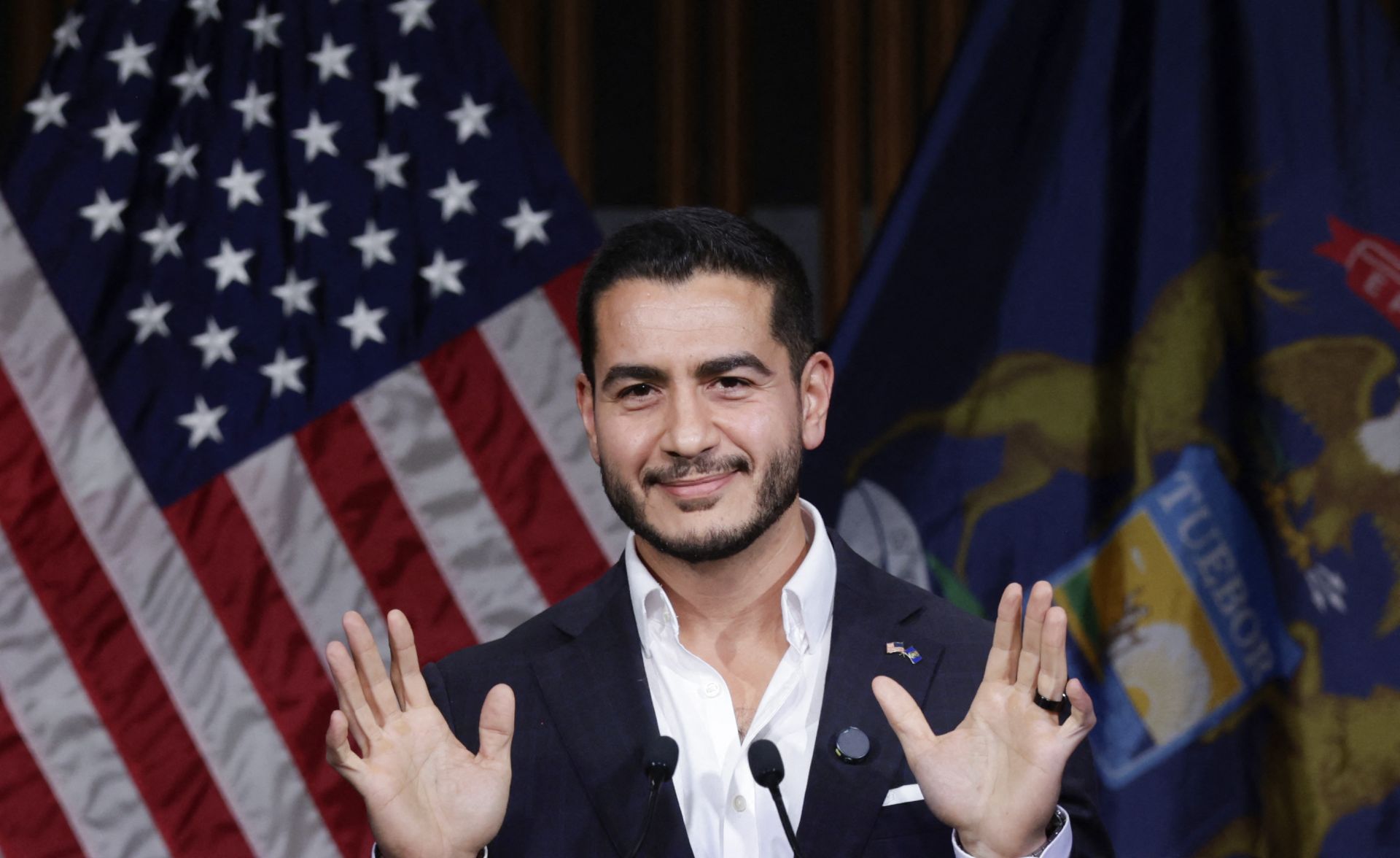
I woke up to that message in a WhatsApp group of reporters based in Cairo. It was the morning after the U.S. midterm elections and results were still coming in, but one race in particular was being followed by Egyptians thousands of miles away: Michigan’s U.S. Senate race. Abdul El-Sayed, the Egyptian-American doctor whose candidacy captured the attention of non-Egyptians too, had just delivered his victory speech. As his loyal supporters packed a ballroom in Detroit, in Cairo, the news was already making the rounds. My social media timelines were brimming with clips, memes and news items marking the occasion, and I started to imagine how the headlines here would tell the story of an “ibn el-balad” (“son of the land”) from Alexandria making his way into the American Senate. And although he is not the first Egyptian-American senator per se (that title belongs to George Helmy, who was appointed to represent New Jersey in 2024), he is the first one elected to the position — a distinction worth recognizing.
Later that evening, at a gathering downtown that I’d tagged along to with a friend, I asked those around me — mostly filmmakers and writers, it seems — if they’d heard the news. I met with a muted response; they were utterly unmoved. One said, wryly, “There were a few Egyptians elected, right? … Egyptians will have more representation in America’s Congress than in their own Parliament now.”
There were signs of enthusiasm, too. Earlier in the day on the Cairo metro, I caught a glimpse of the phone screen of a young woman seated next to me. She was watching a video of El-Sayed’s victory speech on Instagram. I saw her tap to add a comment, or perhaps share the video with others. Several minutes passed before I caught myself looking again. This time she was reposting another El-Sayed image to her stories with fireworks emojis before hurrying off at the next stop.
Scrolling through my Instagram timeline once more, I landed on a bevy of videos from Egyptian content creators talking about his win. One chest-thumping video stitched together clips of El-Sayed alongside Barack Obama, Obama coolly tossing a microphone and El-Sayed strutting confidently across the stage, all to a thumping mahragan track. Several videos specifically celebrated his Alexandrian roots, playing into the long-standing and mostly friendly rivalry between the city and the capital. “There was an Egyptian ‘zaghroota’ in the victory speech,” pointed out popular TV host Amr Adib on X. “Say whatever you want about America, but the political life that allows Abdulrahman Mohamed El-Sayed to become a senator, you gotta tip your hat to it.”
One subgenre of social media posts poked fun at the vicious anti-Muslim campaigning aimed at the candidate, which had become a feature of the 18-month run-up. “We are turning the white house west to face mecca,” one X user posted, eliciting thousands of likes and reposts. Some of my favorite reactions spawned from something said by Laura Loomer, the far-right provocateur and self-described “proud Islamophobe” who was one of the main proponents of the Muslim Brotherhood accusations lobbed at El-Sayed. “I hope everyone is learning Arabic,” she posted. The response was explosive; the original post was viewed over 37 million times in just a few days. Some users responded with clips from popular Egyptian pop music videos or viral American TV clips dubbed in Arabic, while others simply flooded the comments with “inshallahs” (sometimes followed by an expletive). At least one of the accounts I follow offered Arabic lessons.
But it wasn’t all celebrations and jokes. In a since-deleted tweet, one of Egypt’s most prominent pro-regime media figures, Ahmed Moussa, rejected El-Sayed’s Egyptian identity altogether: “‘Abdul’ has no connection to Egypt other than his parents. He is not Egyptian, he is American … his victory means absolutely nothing to us.” Much like the MAGA detractors, Moussa also attacked El-Sayed over his positions on homosexuality, his alleged ties to the Muslim Brotherhood and his stance on Palestine, arguing that he would do little for Arab or Muslim causes.
Reuters observed the absence of coverage in Egyptian state media. Egyptian writer and journalist Khaled Mahmoued also drew attention to the lost opportunity, writing that the episode “reveals an inability to engage with a different political and social environment.” He acknowledged that some of El-Sayed’s comments about Egypt being a military dictatorship may not have landed well with some Egyptians, suggesting that these should not have become a reason to ignore the historic win, but “an entry point for serious dialogue, an attempt to understand his motivations and background. … The greater loss is not that El-Sayed criticized Egypt, but that Egypt, through its media, did not even bother to understand the man who carries its heritage and has become part of a significant legislative institution in the United States.”
Meanwhile, Al Jazeera, whose local operations have been suspended by the government since 2013, published a lengthy profile by Egyptian investigative journalist and researcher Abdulrahman Ayash. The piece delved into the politics of El-Sayed’s name, from Donald Trump and MAGA’s repeated mockery of it, to his decision to invoke his full name during his victory speech, as well as going through his family history and tracking Muslim Brotherhood allegations. After months of consuming every written piece and podcast episode on El-Sayed that I could find, I thought the profile one of the most comprehensive I’d read.
Ayash closed by reflecting on what El-Sayed’s victory meant for a family name that had come so far: “Now, Republicans, Democrats, the president, and his vice president will address Abdulrahman Mohamed El-Sayed by the same family name that the tomato vendor [El-Sayed’s grandfather] in the Alexandria fish market used to bear.”