

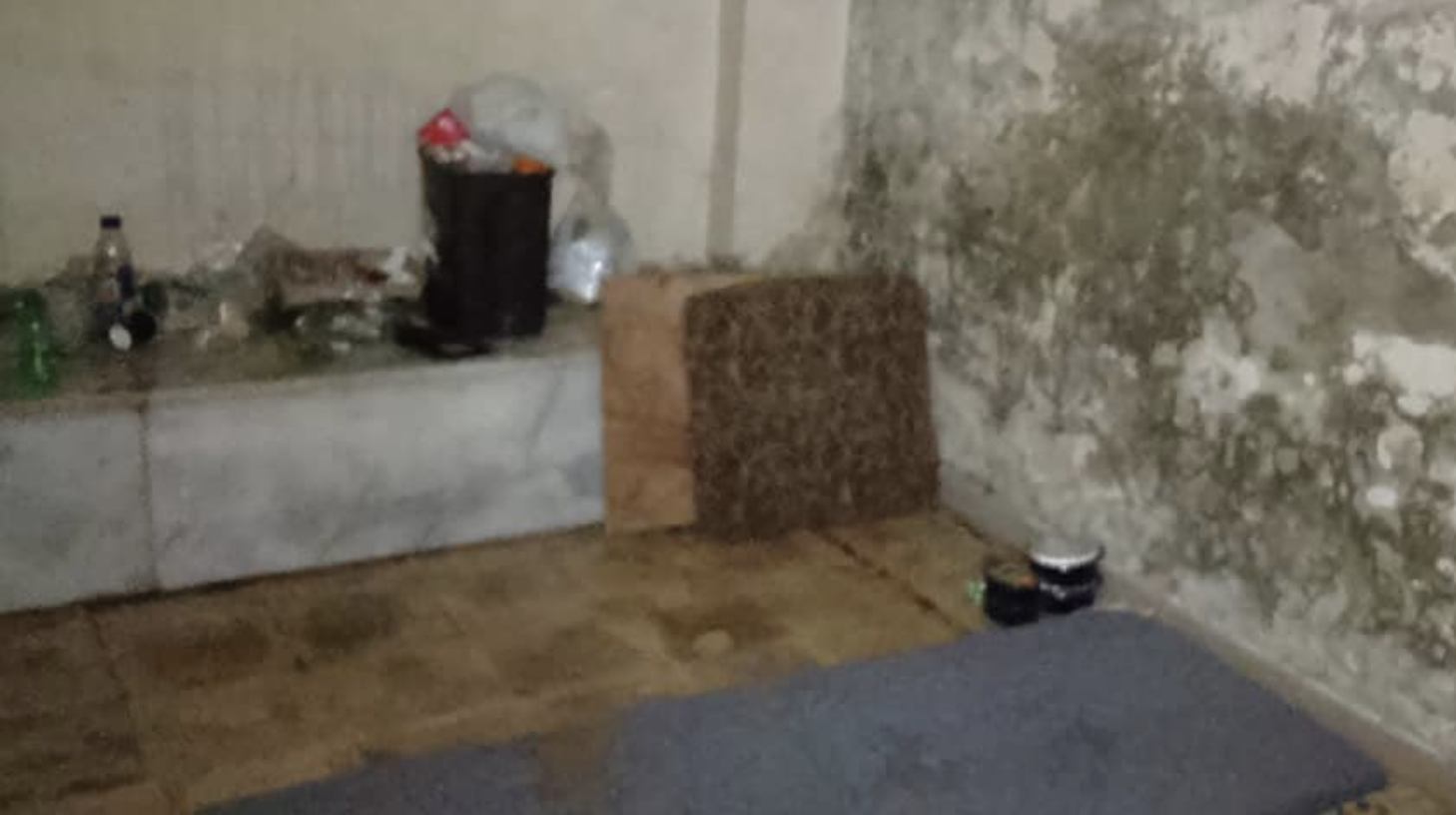
A group of 33 Somali women and children, who were recently removed from a camp for families of alleged Islamic State group sympathizers, has been detained by Syrian authorities in a basement cell underneath the former Immigration and Passports Department in central Damascus, according to documents and information reviewed by New Lines Magazine.
The facility had been an official building but was partially burned during the takeover of Damascus by rebel forces, led by Hayat Tahrir al-Sham, in December 2024.
On Nov. 8, Syrian government officials took the individuals from Roj camp, according to the site’s authorities. The camp holds women and children thought to have traveled to Syria to join the Islamic State, although none of the women has been formally charged with a crime.
The families spent their first night in a hotel. The general mood was incredulous disbelief, as many of the children saw beyond the walls of Roj camp for the first time.
“Hands are not for hitting,” one mother gently chided her excited children.
A few hours later, however, the women, all of whom are ethnically Somali, were moved to a makeshift underground detention facility, photographs of which have been viewed by New Lines Magazine. There, they were told that they would likely be getting deported to Somalia.
The facility conditions appear dire: There is no heating, and the families have not been supplied with sufficient blankets. There is no ventilation or sunlight, and the white fluorescent lights are kept on 24 hours a day.
They also have not been provided with clean drinking water. New Lines Magazine was shown a photo of a child whose lips were bleeding and chapped, apparently due to the lack of water.
On Tuesday, several women went on hunger strike to protest the inhumane conditions. Then, on Wednesday, after the women refused to have their photos taken by Syrian officials, their phones were withheld for a prolonged period.
According to one woman, the worst part of their experience so far has been the lack of clarity about what will happen to them. The women say they have not had any communication from the Somali government. They also say that the Syrian government has not given them concrete information, other than telling them that they are sorting out papers, and that it might take a “couple of weeks.”
A representative from the Somali embassy, who declined to be named, said the women and children were not yet in the custody of the Somali authorities, and that all questions should be directed to the Syrian government. They said they were unaware of where the women and children were being held but that, according to the information the Somali government has gathered, the detainees were being treated well. They later hung up the phone abruptly.
New Lines Magazine reached out to a Ministry of Interior spokesperson with questions about the women and children but did not receive a response.
“We left the camp to see freedom,” said one mother, before bursting into tears. “If I was told, ‘You and your kids are going to be in underground detention, waiting for your papers,’ I would’ve preferred to stay in the camp.”
Although the 33 people who were removed — 24 children and nine women — are ethnically Somali, their citizenship status is unclear. Many countries have stripped citizenship from individuals who were accused of joining the Islamic State.
Some of the women who have been removed from Roj camp are willing to move to Somalia, but others are said to be less willing to be deported to the country. New Lines Magazine was not able to verify the specifics of some cases, and is unable to publish certain details to preserve the safety of the detainees.
“They’ve kept us in here like sardines,” one woman said.
The women were allegedly taken out of the camp in a hurry. Even though several identified themselves as not being Somali citizens, they were told by one of the Syrian officials that they could leave the camp, regardless of their nationality, and “whether they wanted to go to Somalia [or not] could be dealt with afterward.”
The Syrian authorities have previously stated that they intend to close Roj camp.
In May and June 2026, 33 Australian women and children were repatriated from Syria to Australia. Another woman, Hodan Abby, was issued a temporary exclusion order by the Australian government prohibiting her return to Australia. She wasn’t returned to Roj camp, according to authorities there, and her circumstances remain unknown.
In July, camp authorities announced that two Tunisian families were transferred from Roj camp to Damascus and Idlib, respectively.