

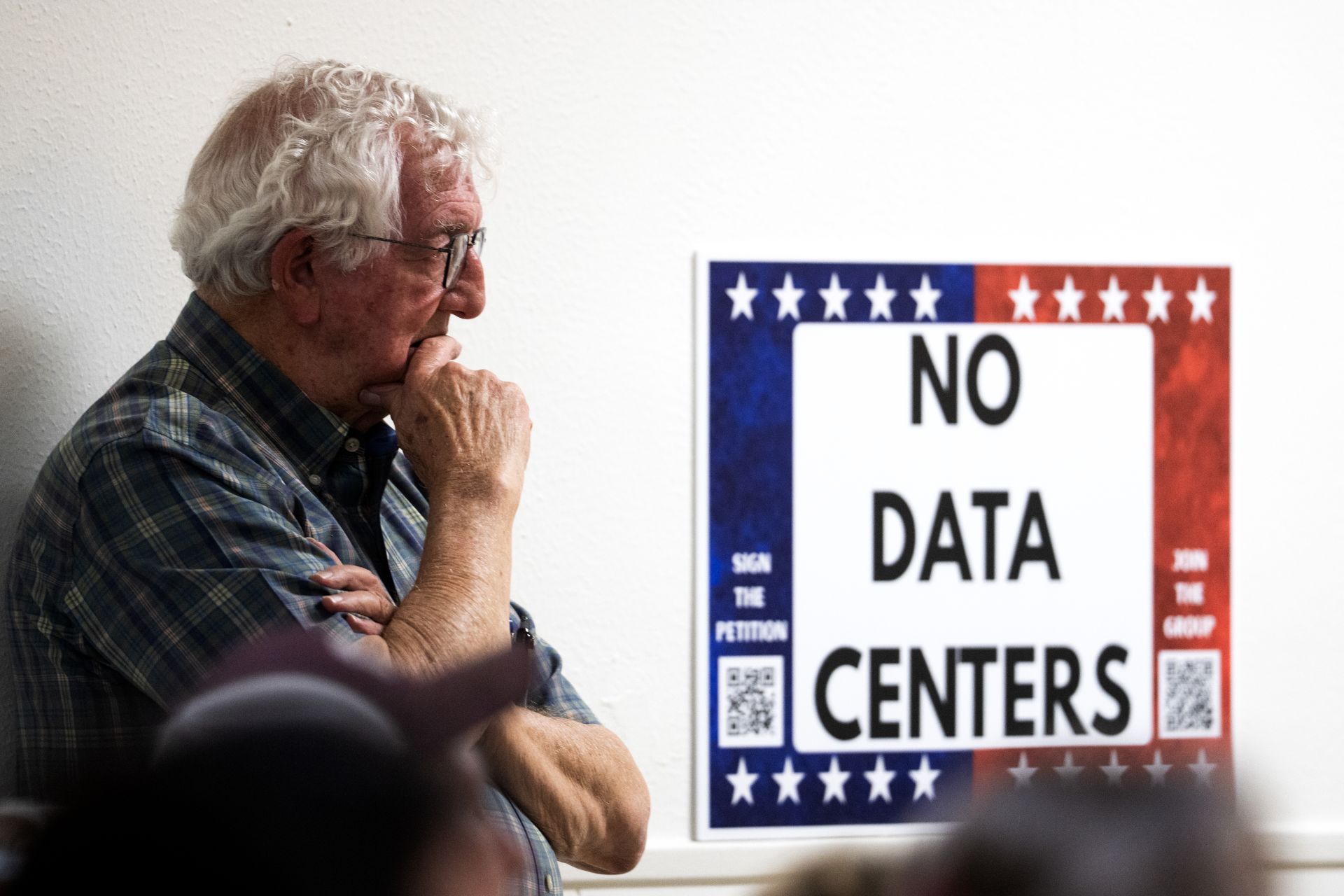
As the floodwaters receded from the Great Blue Tsunami of 2026 on Wednesday, and the Republican Party began assessing damage, there was another, nonpartisan loser picking up the pieces in the aftermath of the election: data centers. On election day, hundreds of thousands of Americans went to the polls to cast ballots on measures that would restrict data centers in their towns, cities and municipalities. In all but one, measures on restrictions passed (or will pass — votes are still being counted in some races, but in each the margin is wide in favor of restriction). Only the city of Harwood, North Dakota, where a 250-megawatt data center was approved last September, voted against proposed restrictions.
Data centers have become a focus of civic engagement in recent years, as U.S.-based tech companies betting on AI expand their physical infrastructure at rapid speed. As they proliferated in suburban and rural areas across the country, complaints from nearby residents about noise, water use, pollution and the price of electricity grew as well.
Now zoning laws, grid access, environmental restrictions and development caps have become fierce battles in county councils and township boards across the nation. And in many instances, they’re causing a political reckoning for Republican lawmakers who were eager to partner with big tech to bring data centers to their states and towns. Earlier this year, I wrote in New Lines about how a proposed hyperscale data center in Utah sparked a civic revolt over sweetheart deals, corruption and lack of trust between citizens and their leaders in a reliably Republican county. The resulting uproar saw the longtime Utah State Senate president ousted in a primary challenge, and on Wednesday, local Democrats broke a decades-long supermajority in the state by flipping more than a dozen seats in the legislature.
Democratic nominees took note of the rising resentment toward the tech infrastructure expansion that has grown in just the last year, and many made data centers a feature of their own campaigns. In Ohio, where 21 towns and cities had data center restrictions on the ballot, Sherrod Brown made tech growth a wedge issue in the campaign to retake his former Senate seat, running ads accusing his opponent, Sen. Jon Husted, of being a supporter of data centers.
On Tuesday night, Brown told the crowd gathered for his victory speech, “I do not work for the utility companies. I do not work for data centers. I do not work for Wall Street. I work for you, I work for Ohio.”
The incoming crop of U.S. lawmakers is poised to take action on data center growth — whether through protections like the Ratepayer Protection Act, which is already working its way through Congress, or with more aggressive action. It is clear that Democrats will largely side with efforts to curb data center growth, but with the political winds shifting in the aftermath of the midterms, there may be more bipartisan support for restrictions on tech infrastructure coming Americans’ way.