



The man sitting next to me on Delta’s direct flight from Paris to Salt Lake City was deep in his slop. For two and a half hours, he had been watching AI-generated video clips of a gorilla and a lion in a kind of mortal combat on the savanna that was also the jungle that was also a basement from a slasher movie. The lion had opposable thumbs and pecs with nipples; the gorilla had an M-16 and an overbite. When the lion finally triumphed and the man moved onto AI schoolgirls tickling one another, I queued up “Marty Supreme” hoping to distract myself. A half hour in, Gwyneth Paltrow, playing a fading Hollywood beauty, glided onto the screen, trailed by her rich and terrible husband, played by the rich and, some would argue, terrible Canadian billionaire and celebrity investor, Kevin O’Leary, who is best known for his hard-hitting negotiation style and moniker “Mr. Wonderful” on ABC’s “Shark Tank.” I laughed out loud.
O’Leary was the reason I was on the plane, flying halfway across the world back to the place I grew up. Three weeks earlier, his company O’Leary Digital had announced it was developing the largest data center in the country in a remote valley in Box Elder County, in northern Utah, that would, in part, serve the U.S. military’s data needs. The project, called Stratos, would sit on 40,000 acres of land — an area twice the size of Manhattan — and use a proprietary natural gas power plant to supply the 9 gigawatts of power, more than double what the entire state uses, that its servers would require. It seemed like the perfect project for a place like Box Elder, a sleepy, blood-red rural pocket of a Republican supermajority state, where residents supported and trusted their elected officials, loved the military and had long been open to ambitious, high-security development projects.
Yet when the story found me in Tunis, where I now live, it was accompanied by photos of hundreds of local residents — retired dairy farmers, grandmothers with bleached bobs, weathered ranchers — up in arms at the County Commission meeting where the project was approved. Some of those residents had filed paperwork to overturn the decision with a referendum; others had started a campaign to log complaints with the state water board and were mailing postcards to state senators’ offices. There were rallies being planned in small towns throughout the county and at the Utah State Capitol.
My ancestors were among the Mormon homesteaders who settled Box Elder County in the 1850s, and for five generations were dry farmers on the inhospitable but promised land. The Great Basin is no Willamette Valley; it is harsh and unforgiving. It took the concerted effort of doggedly determined people to figure out the irrigation, the crop cycles, and how to balance the limits of the land with the needs of the community. A hundred and eighty years on, it’s a place where people value hard work, where whining isn’t tolerated, where you know and help your neighbors and you don’t rock the boat, and where politics are civil. This referendum and campaign against the data center felt so wildly out of step with the normal way of being in Box Elder that I had to figure out what was going on. What was it about the data center that was changing the civic fabric of this rural community?
I called up Ben Abbott, a professor of environmental science at Brigham Young University, to get a sense of why this data center might be causing such a stir. He runs an initiative called Grow the Flow, which has been working for years to engage communities around Utah with saving the Great Salt Lake. He’s worked extensively in Box Elder County, where the majority of the water that feeds the lake comes from, and knows both the people and the ecology up there. Abbot, who has the kind of warm approachability and clear communication style that makes for a successful politician or Mormon missionary, wanted to get something on record up front: “For a long time, I’ve been a big ‘let’s cool our heels about data centers’ guy,” he told me. The 35 data centers already in Utah use a fraction of a percent of the state’s water — its most precious and scarce resource — and fears about data centers guzzling or polluting water are largely overblown. But Stratos was a different beast.
The proposed data center is on a scale that is hard to wrap your mind around. Most modern data centers in the U.S. operate on a few million watts, or megawatts, of power. Some of the bigger ones run on tens of megawatts. O’Leary’s project would operate on 9 billion watts or gigawatts — about 3,000 times larger than your average data center, and nearly three western states’ worth of power demand. It would need millions, if not billions, of gallons of water to cool it. One of Abbot’s colleagues, Robert Davies, a physics professor at Utah State University, ran the numbers on the potential heat output that hundreds of acres of cooling fans could cause in the valley of the proposed site. “It was sci-fi level,” Abbott told me. As Davies grappled with how to explain the scale to his colleagues and eventually to the public, he finally hit on an analogy: The data center would be pumping 23 nuclear bombs’ worth of heat into the valley every day.
But it was more than the hyperscale environmental impacts that Abbott saw drawing people to engage with the data center. The project had been proposed and approved in a matter of weeks, without public comment. Republican lawmakers were lauding the project, staking their reelection bids on the roughly 2,000 jobs it would create and how it would help the U.S. beat China in the AI race. But residents who had long trusted their leaders felt like they’d been railroaded into accepting a development that could drastically alter their way of life, without having any say, and they were livid.
For a state that, from the outside, looks largely homogeneous, Utah has some profound internal divides, particularly between its rural and urban communities, which take very different and sometimes hostile approaches to development, land use and environmental protection. “This, more than anything in my lifetime, has united people,” Abbott said, even those usually diametrically opposed to one another. “You’ve got Box Elder ranchers and Salt Lake environmentalists working hand in hand against this thing.”
That I had to see. I booked a flight that night.
Over the next three weeks, I saw how a data center revealed the gestalt of a state at a tipping point as it grappled with development and growth, a deterioration of trust between the public and its leadership, a growing sense of inequality, and the struggle to live an ordinary, pleasant life in a place of astounding, if fragile, beauty.
Brenna Williams heard about the Stratos Data Center project the way she heard about most things in her small town of Brigham City, in northern Utah — at the grocery store. “You run into people, and you just start talking. Pretty soon it was the only conversation you heard,” she told me. It was late April, and an inch-long notice in the local paper mentioned that the county commissioners would be voting that week on a resolution that would turn unincorporated land in their county over to an autonomous semigovernmental organization, the Military Installation Development Authority, or MIDA, for development of a hyperscale data center.
Brenna, a retired econometrician who spends most of her energies on her six grandchildren, decided to attend the meeting to see what was being proposed. She had no idea, walking into that first meeting, that 10 days later she’d be leading the fight against what would be the largest data center in the nation, up against a reality television star and billionaire investor who would claim she was an agent of the Chinese Communist Party, and taking on one of the most powerful organizations in the state of Utah.
In the County Commission’s meeting on April 27, the three commissioners told the 80 or so people packed into their chamber that they’d only recently been presented with the project, and had been asked to expedite it by state lawmakers and MIDA. “The thing that’s so frustrating for us, for commissioners, is all of a sudden, we’re brought this in the last hour, and we’re expected to hurry,” commission chair Tyler Vincent said. They did not take any public comment, and decided to table the motion for a week.
Brenna used that time to learn more about the proposed project, which was being called Stratos by the developers. While some residents were railing about the potential environmental impacts, Brenna, who’s a Republican (“My son’s a Marxist, my husband’s MAGA and I’m somewhere in between”), was fuming about the economics of the project. The developers were offered an 80% discount on energy tax; at a rate of just 0.5% instead of 6%, property tax for the development would be less than 1%; and any personal property developed on the site would have its property tax rebated. Box Elder County is home to many retirees, and her neighbors had taken a hard hit when the county raised property taxes a few years ago to support local schools. “Why would a bunch of podunk retired people have to support a bunch of billionaires?” she told me. “Either the commissioners are stupid, or they think we are — and I don’t think they’re stupid.”
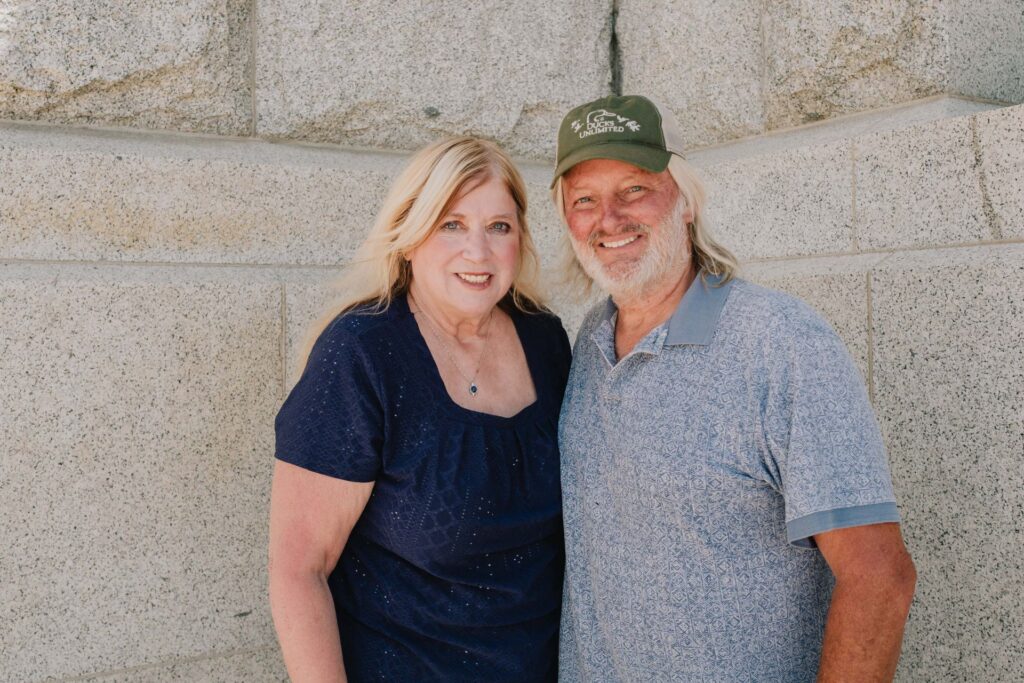
That next week, Brenna and her husband Alan went to the commissioners’ meeting to see the vote. “I told my husband on the way in, they’re going to approve this because it’ll make them rich and it’ll make the rest of us poor. And if they approve it, I’m going to referendum it.”
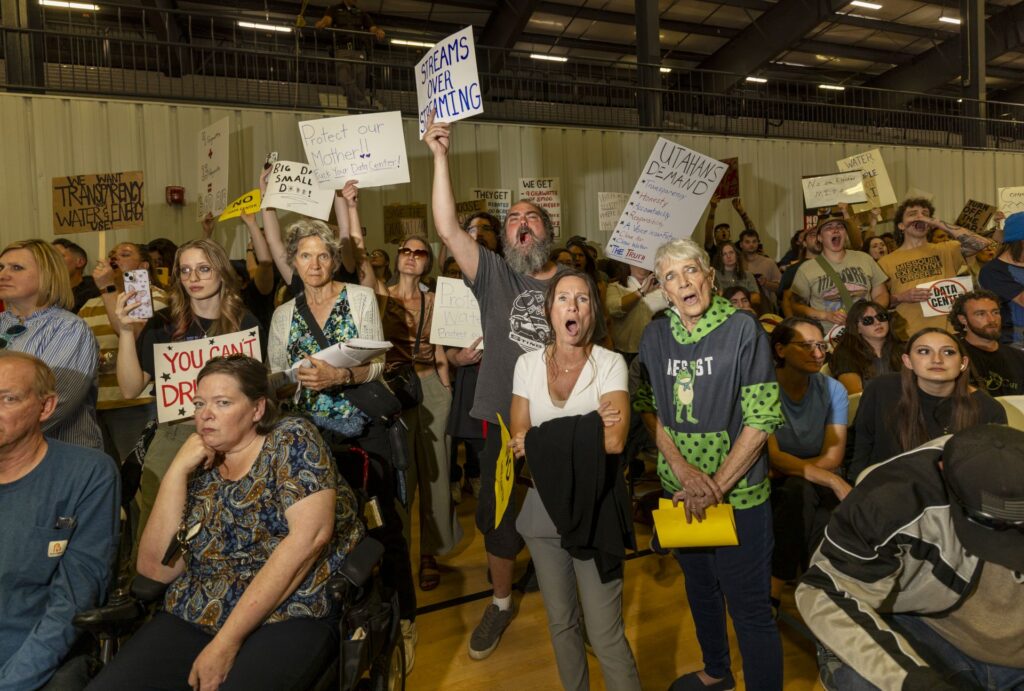
The night of May 4, hundreds of people filled a gymnasium at the Box Elder County Fairground where the vote was to take place. It had been moved to a larger venue to accommodate what they knew would be an unprecedented turnout. Hundreds of protesters who’d come from across the state held signs and shouted down the commissioners. When it was announced that they would not be taking public comments at the meeting, the crowd erupted. “For hell’s sakes, grow up,” Commissioner Boyd Bingham fumed. When the onlookers refused to quiet down, the commissioners left the room and finished the meeting virtually, voting 3-0 to approve the creation of the project area. The crowd was stunned. Many attendees I spoke to told me they left in tears, feeling utterly betrayed.
The next morning, Brenna walked into the county clerk’s office and demanded to file a referendum. By the end of the week, she’d connected with other local residents to form a nonpartisan organization to work against the data center. They christened themselves the Box Elder Accountability Referendum, or BEAR.
BEAR had about 10 days to get up to speed on Utah water rights, on the referendum process, and on the vague proposals from the data center and what they could actually mean for the residents of northern Utah. Jayden Weekes, a stay-at-home mom of three young children who joined BEAR, told me that despite what she called the “procedural inequality” — that the project backers and politicians moving the data center forward already knew the laws and had had months to research the procedures to get the project through — some 200 members of BEAR were “compiling knowledge,” dividing up areas to research, calling state and county officials and experts to rapidly upskill their members. Weekes began sharing their findings on social media in short, informative clips, shot in her living room while her youngest napped. “I realized all the people I admired most” in the fight “were just normal people,” she told me. “And I thought, I could do that, I could be normal and loud.”
Social media quickly became a central component of the campaign against the data center. While Kevin O’Leary went on a media blitz with Fox, Tucker Carlson and others claiming that the Stratos project was vital for national security, momfluencers — arguably one of Utah’s greatest cultural and economic assets — encouraged thousands of Utahns to pay the $15 to lodge a complaint against the transfer of water rights to the project. Local activists at Elevate Utah, who have a sizable Instagram audience, collaborated to sleuth out property records near the proposed site and found that the speaker of the Utah House of Representatives, Mike Shultz, had recently purchased thousands of acres of land nearby — land that would surely rise in value if a project like Stratos came to the neighborhood — another revelatory bombshell that enraged even disengaged citizens.
The corruption and lack of transparency fueled Brenna and the other members of BEAR. But for Brenna, it wasn’t just her taxes or her trust in local government that were at stake, it was the way of life in her small town and the nature that brings her so much solace, especially the bird refuges on the Great Salt Lake near her home. She asked me if I’d been before. It’s been a good decade, I said. You should go, she told me. “It’s almost a holy place.”
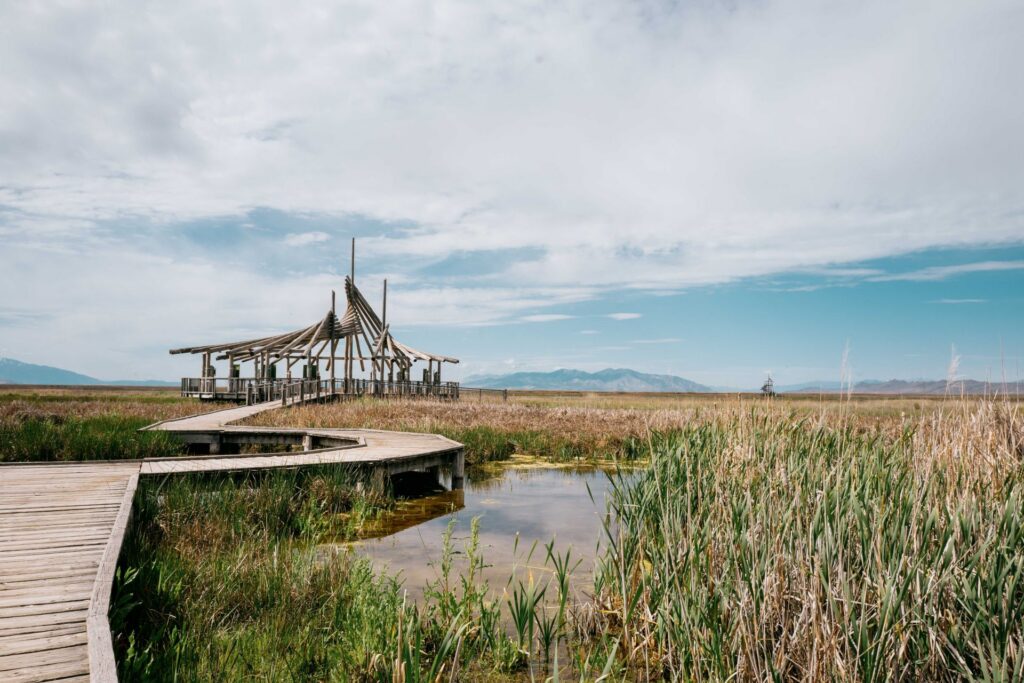
So one morning, I drove out to the Great Salt Lake Shorelands Preserve in Layton and walked the mile-long boardwalk that stretches out into the wetlands. At first, it seemed relatively still, a kind of quagmire of dried reeds and gurgling water, until I heard the call of a redwing blackbird as it rose up out of the marsh to perch on a cattail. Soon, another sang out, and another, a chorus calling back and forth to each other. The longer I stood still, the more I saw: I caught a glimpse of a small snowy plover dashing through the reeds; a pair of ducks dabbling in a little pool just behind some invasive phragmites; a group of white-faced ibis dipping their long beaks into the mud, digging for insects; two glorious red-tailed hawks swooping low and hovering over the marsh, scanning for their next meal.
Every year, the Great Salt Lake becomes a temporary home to 10 million migratory birds who stop over to gorge themselves on the brine shrimp and brine flies that are one of the lake’s primary resources and make it a keystone ecosystem in the western U.S. It is a critical stopover, since the birds cannot complete their full migratory route without a pause midway to refuel and regain at times up to half their bodyweight to continue their journey. Many nest and raise their chicks in the lake’s wetlands because of this abundance. For years, a sole flamingo who had escaped from the Hogle Zoo cut a flaming fuchsia silhouette in the lake’s shallows, so rich was his diet of the little pink crustaceans. Those same brine shrimp nourish people as well — they’re used as feed in aquaculture farms that raise millions of tons of seafood per year.
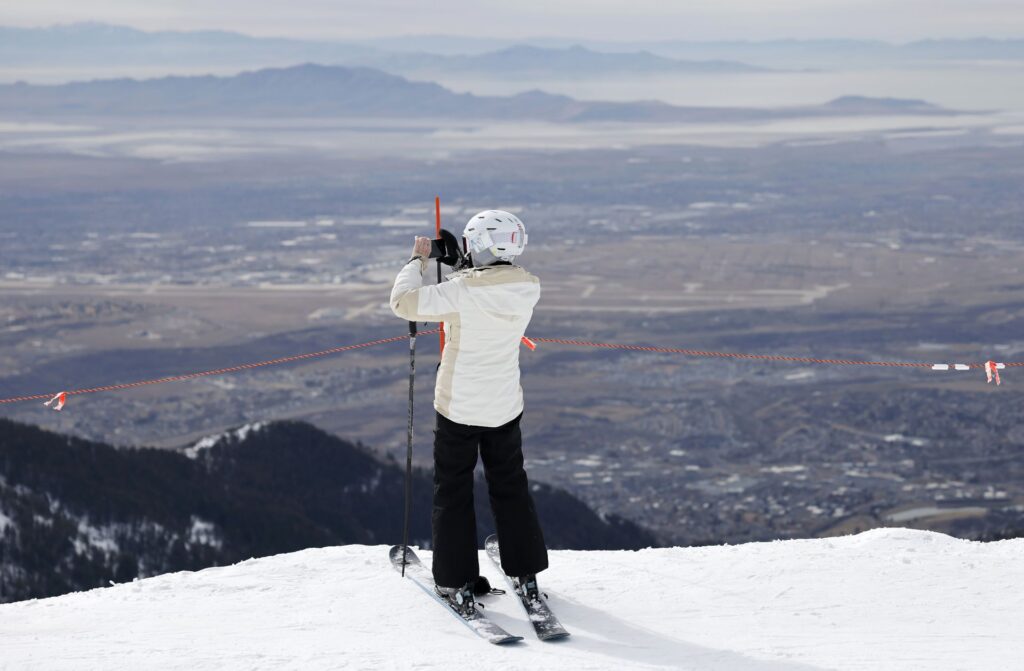
The lake, which is the largest saline lake in North America, also supports some $2.5 billion in direct economic activity per year. Beyond aquaculture, the lake supplies minerals to local industry and is a major driver of one of Utah’s greatest gems: its skiing industry. The deep, dry, champagne powder the Cottonwood Canyons are known for is lake-effect snow, caused when a cold front of air moves over the warm lake, causing evaporation that then condenses into snow as the air cools again. That snow is the primary water source for the Wasatch Front — the corridor of land between the Wasatch Mountains and the lake, where the majority of Utah’s population lives.
Out at the end of the boardwalk, an observation tower stands looking out toward the lake and the Oquirrh Mountains beyond. Halfway up the first flight of stairs, a good 19 feet above the marsh, there’s a plaque that shows where the lake’s high-water mark was in the 1980s, when it was so full that Gov. Norman Bangerter actually built massive pumps to move water out of it. In the decades since, it has receded drastically. According to a report by scientists at Brigham Young University, including Abbott, the lake had lost 73% of its water and 60% of its surface area by 2023. The causes are complex, but largely come down to the fact that Utah uses more water than it used to. Who gets to use the limited water in the area, and for what purpose — agriculture, mining, development, domestic — has been a source of contention since as far back as the 1840s, when Mormon pioneers settled the Salt Lake Valley. But with more and more being diverted away and never reaching the lake, it is headed toward an existential tipping point.
Terminal saline lakes all around the world have dried up, largely due to water diversion for agriculture or industry: the Aral Sea in Central Asia, Mar Chiquita in Argentina, the Salton Sea in California. What they leave in their wake can be disastrous. Toxic dust from the lake bed blows onto population centers, air becomes dangerous to breathe, food webs collapse, economic activity is halted. “When these lakes disappear, the communities around them do, too,” Abbott told me. He and other scientists warn of a similar future for the Great Salt Lake, with a compounding catastrophe of long-term drought if the lake-effect snow dries up as well.
Gov. Spencer Cox has made the lake, and the water that feeds it, a priority in his administration, putting new water policies in place, imploring President Trump for aid, and issuing executive orders encouraging Utahns to conserve water by cutting back on lawn watering, reducing shower time and running full loads of laundry. Twice in the last year, which had the hottest summer and lowest snowpack on record, he’s invited Utahns to fast and pray for precipitation — though it is an invocation already so common in Latter-day Saint congregations in the high mountain deserts that the word “moisture” is a kind of in-joke among Mormons in the West.
So when a report that showed the data center could potentially use up to 50,000 acre-feet (16 billion gallons) of water per year began circulating, Utahns who’d let their lawns dry up, or dutifully turned off their tap while brushing their teeth felt a sense of betrayal. “We’ve spent millions to put water back in the Great Salt Lake,” Alan Williams, Brenna’s husband, told me. “They tell us to stop watering our lawns and tell the farmers to stop growing alfalfa to feed their cows to get more water in there. And now what? This data center’s going to dig wells out there that are going to drop the aquifer even further?”
No one felt that sense of betrayal more keenly than Karen Marriott, a scion of the hotel empire, who had helped to secure a $10 million donation from her family’s charitable foundation to benefit the lake in April. “Just two weeks after we received a personal letter from the governor of Utah saying that this is a top priority and that this donation will go a long way to protecting air quality and saving the lake, they announce they’re building a data center, run on natural gas, on the north shore of the lake,” she told me. “I felt completely betrayed.”
That sense of whiplash and a growing anxiety about the lake helped further coalesce the fight against the data center. “We had been making changes out of a sense of shared sacrifice for an abundant future,” Abbott said, but “there hadn’t been one boogeyman with the Great Salt Lake before. It was just 3 million people using too much water.” The data center became the embodiment of a larger threat.
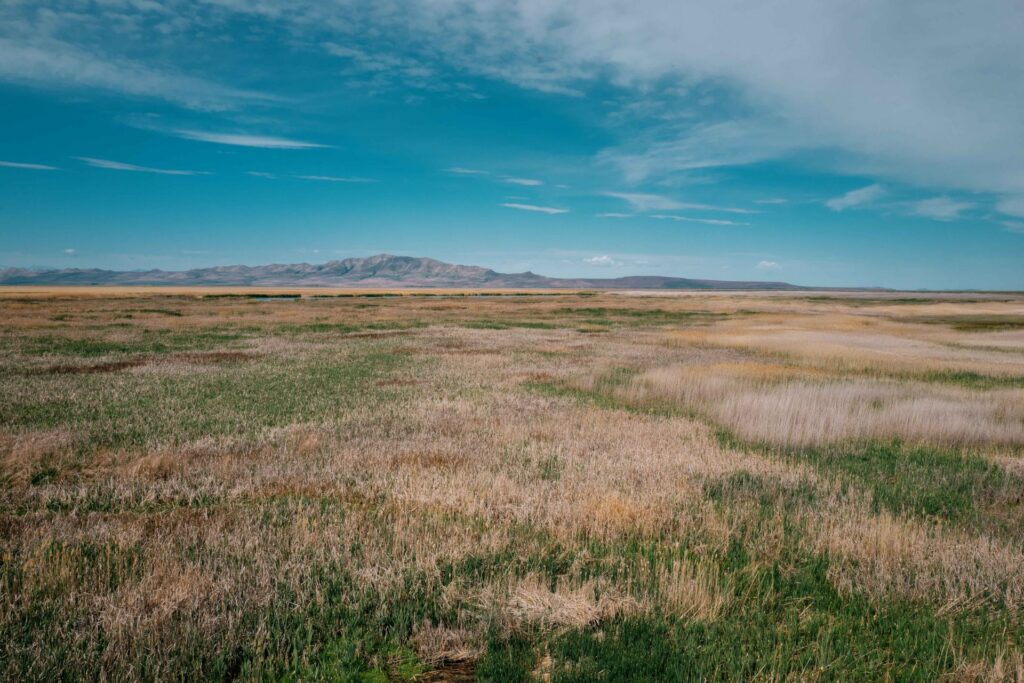
As I walked back to my car at the shoreland preserve, I ran into Brooke Kapler, who’d brought her two young daughters out for a bit of what she called “wild nature,” sitting under the weathered pavilion. “It’s much more soothing to the nervous system than groomed nature, you know?” she said. I asked if she’d heard about the data center project, and if she was worried about the lake. “It’s hard to comprehend something on that scale,” she said. “The lake has always been here. What are we leaving for our kids to enjoy?”
“Moooooom, there aren’t any birds here,” her 4-year-old, in sparkly purple cowboy boots with a toy camera around her neck, groaned. “Sure there are,” I replied, and walked over to crouch down where she was standing, looking out across the wetland. “Look, right there, do you see those two birds swooping over the marsh? Those are red-tailed hawks,” I said, and pointed to the raptors. “They’re looking for lunch.” She eagerly pointed them out to her younger sister.
The girls watched the hawks for a few minutes, transfixed. “Look! It caught its prey!” the older girl shouted, beaming at both the event and her chance to use a word like “prey.” Then, suddenly, the air was filled with a massive booming sound, echoing back across the mountains and muffling the calls of the hawks and the blackbirds. “Jets!” both girls shouted at once, and scrambled out from under the pavilion to look up to the sky, where four F-35s passed overhead in perfect formation on their way to Hill Air Force Base, just a few miles away.
In 2005, Hill Air Force Base narrowly escaped closure as part of the Base Realignment and Closure (BRAC) process instigated by the U.S. government after the end of the Cold War. Designed as a cost-cutting measure, BRAC shut down over 350 military installations around the country, saving the government roughly $12 billion annually, but in many cases devastating communities that were built around and served those bases.
In the 1980s and ’90s, “a lot of the startups and economic growth in Utah had to do with aerospace and military design,” Brigham Daniels, a professor at the University of Utah Law School, told me. “And one of the big reasons that people were interested in investing in Utah was not just because we had a really talented work base, but also we had Hill Air Force Base.”
So when BRAC was eyeing Hill for potential closure, it spooked Utah lawmakers, who scrambled to create a way to protect the valuable asset. They found their answer when the federal government passed the “Enhanced Use Lease” law that enabled military installations to lease underutilized land to private developers for projects that would provide a benefit back to the military. In 2007, the Utah legislature formed the Military Installation Development Authority, known as MIDA, to do just that. Daniels explained that the hope was that MIDA “would provide the state additional economic resources and prosperity, and it would also protect against what would be a pretty hard-hitting blow if we lost Hill Air Force Base.”
The board members are appointed by the governor and other top lawmakers; some are serving state senators or representatives themselves. Most are real estate developers, including MIDA’s longtime chairman, Stuart Adams, who is also the Utah Senate President. Adams represents a district in Layton, adjacent to the Air Force Base, and is facing a tough primary challenge this summer. On May 1, just days after the announcement of the Stratos project area, five companies and individuals with business before MIDA contributed $135,000 to Adams’ political action committee.
Nearly everyone I spoke to about MIDA used the term “sweetheart deals” to describe their activities. Abbott called it “a sign of the grittiness and corruption that is deep in the state apparatus.”
Once it’s been granted land for a project area, MIDA operates like a local government. It can issue bonds, levy taxes — or offer tax breaks, as it did for Stratos — and make decisions about land use. “Anything that a city can do, MIDA could do,” Jerry Stevenson, a state senator who sits on MIDA’s board, told colleagues on a legislative panel in 2024. The vote on May 4 by the Box Elder County commissioners was to create a MIDA project area for Stratos, and essentially hand over control of the land and its administration to the semigovernmental organization.
Stratos would be MIDA’s seventh project area in Utah. The others produced developments that range from a new campus abutting the base with a Northrop Grumman innovation center (and a Starbucks), and improved roads and infrastructure for Dugway Proving Ground, which tests chemical weapons, to some with less obvious military ties: an equestrian and golf center, recreation zones near one of the state’s reservoirs, and a ski lodge. (The latter are supposedly used for troop rest and recreation, offering discounts for those on active duty as well as veterans.) Though Stratos does not actually have any confirmed clients for the servers it will build, Hilary Venable, project area director for Falcon Hill — another MIDA project — told the Box Elder County commissioners that Stratos would provide revenue to replace aging infrastructure on Hill Air Force Base and support “energy resilience and mission-critical systems tied to military operations.”
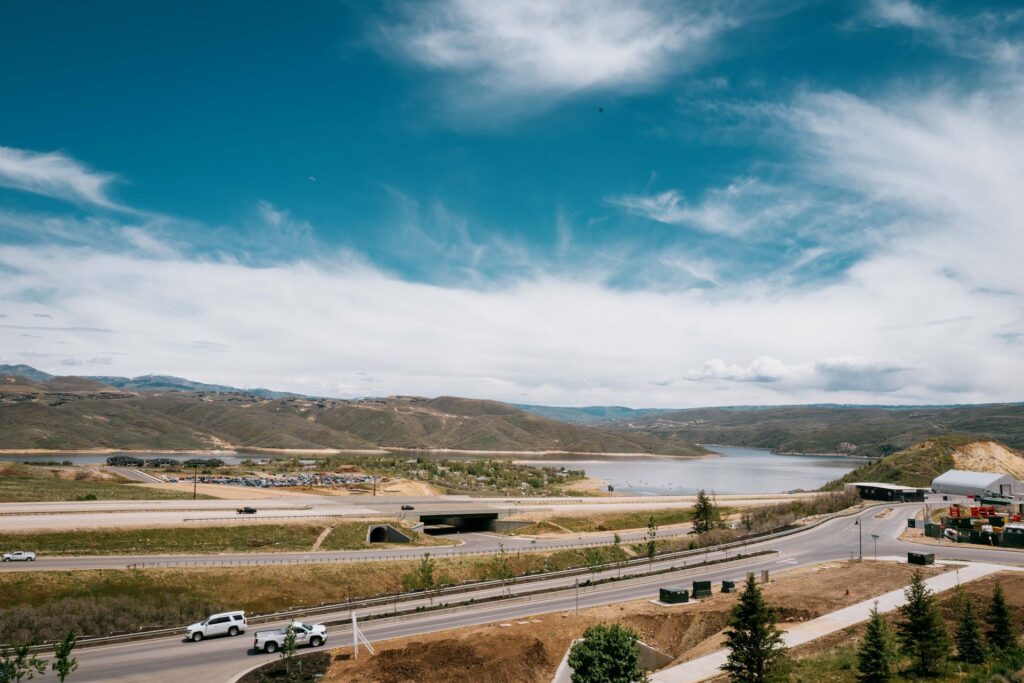
Energy resilience, the AI race and the “reshoring agenda” were top of mind at the Gigawatt Summit, a conference hosted by Gov. Cox for builders, policymakers, investors and industry leaders focused on “delivering energy abundance for the next generation of growth,” a few weeks after the Stratos announcement. The conference was held at the slick and glitzy Grand Hyatt Deer Valley — MIDA’s most recent endeavor — looking out over the half-full Jordanelle Reservoir, a white bathtub ring 20 feet up the hillside marking the high waterline that hasn’t been hit in a decade. The vibe was tech-bro Republican; more than one person was wearing a suit and a black trucker hat that declared “Make Nuclear Great Again.” The speakers list was stacked with developers, top state lawmakers and Trump acolytes.
During the banquet lunch, Cox sat down for a fireside chat with Lee Zeldin, the administrator of the Environmental Protection Agency. The two communed over President Trump’s generosity — he had recently pledged $1 billion to save the Great Salt Lake — as well as Zeldin’s fervor for accelerating the permitting process and cutting red tape for new developments around the country in his new, drastically scaled-back administration. On April 30, in the tense week before the Box Elder County commissioners voted to approve the Stratos project area creation, when a reporter pressed him on the speed of the project’s approval, Cox said, “I’m so tired of our country taking years to get stuff done. It’s the dumbest thing ever. We think that taking time makes things better or safer. It absolutely does not.”
When I asked Zeldin about the speed and scale of Stratos, and whether there should be guardrails on projects that could have regionwide consequences, he smiled and told me, “It’s all about three words … ‘follow the law.’” If guardrails needed to be put in place, that was a job for Congress, not him. (Days later, Utah’s local ABC affiliate would find that the area for the data center had recently been reclassified by the EPA to no longer sit inside a “nonattainment zone” — meaning it would now have looser standards for air quality and a higher threshold for pollution.)
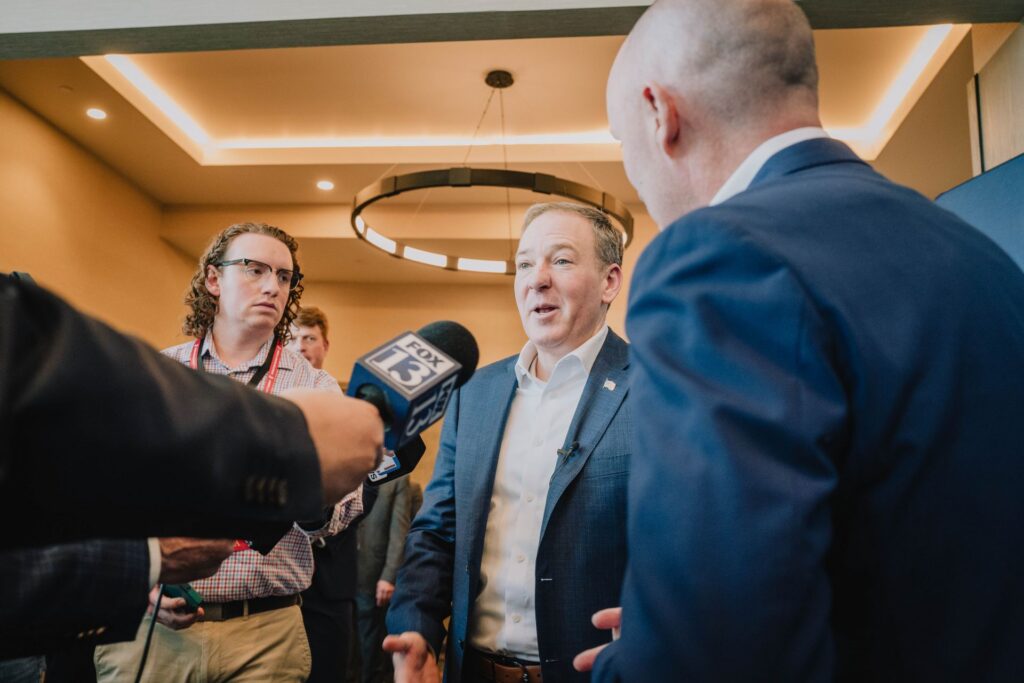
Vivek Ramaswamy, the biotech entrepreneur and one-time Republican candidate for president, gave what was essentially a rousing stump speech — he is now running for governor of Ohio — about the wonders of AI and America’s “manifest destiny to lead” the world into a future filled with it, powered by nuclear energy. “The movement of electrons on a chip is what produces intelligence today,” he told the crowd as they picked through their goat cheese salads. Yet there “are not enough carbon atoms in the world to combust to keep the U.S. competitive with China.”
That week, O’Leary had gone on Fox News and accused local activists of being paid agents of the Chinese Communist Party, which he claimed was attempting to undercut U.S. national security by tanking the data center project. (When I asked Brenna Williams if she’d been paid by anyone to file the referendum, she replied, “The only paid foreigner in this whole deal is Kevin O’Leary,” who is Canadian.) But at a conference buzzing with hype over “small nuclear” power as the energy of the future, Stratos was the 9-gigawatt gas-powered elephant in the room. “The developers are hitting the other angles — especially the AI race to beat China — as hard as they can,” Abbott, the BYU environmental scientist, told me, “but Stratos really looks more like a subsidy for the natural gas industry.” As Trump seeks to bolster the domestic natural gas industry, a project that creates demand for as much gas as two entire states would be a big win — even if the future of energy lies in renewables or nuclear.
Cox, for whom small nuclear power is a major pet project, was also keen to assure reporters at the conference that, despite what was written in the Stratos proposal, “this idea that there is going to be 9 gigawatts of natural gas power out there, that’s never going to happen, that’s just not a thing.”
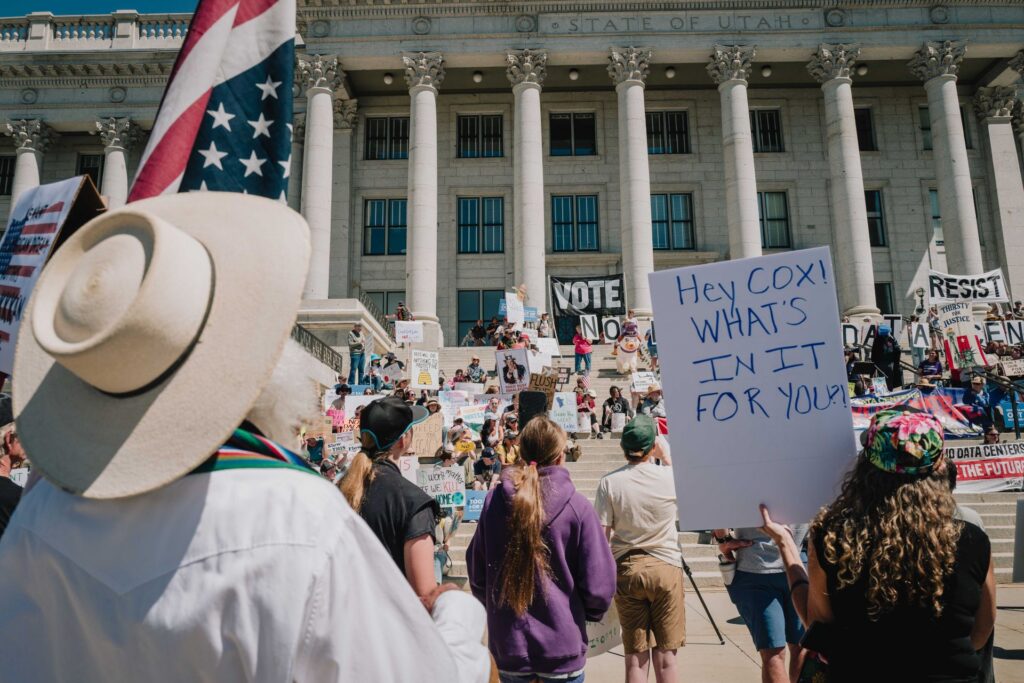
“They keep saying ‘It won’t be this or it won’t be that,’ but no one has produced a concrete report that said otherwise or put anything on paper,” a Box Elder County resident named Tamara told me the next day at a rally on the steps of the Utah Capitol building. (“I don’t want people calling me up saying I’m a communist spy,” she said when I asked her surname). The frustration with what people had begun deeming “a data center with no data” — no impact studies, no concrete plans — and the politicians who sought to push it through had been mounting for weeks. The data center was front-page news every day, the county commissioners had gotten death threats and several state legislators’ offices were no longer fielding press calls, thousands of Utahns had paid $15 to log complaints over the transfer of water rights, and a modest but surprisingly diverse crowd had come out on the Saturday of Memorial Day weekend to protest.
Brenna and Alan Williams were there (“this is my first ever protest,” she said, and when I asked what she thought, she replied dryly, “It’s about what I imagined”), along with other members of BEAR. I spoke with parents of young children worried about air quality, Republican retirees concerned about affording their property taxes, progressive politicians using the moment to push for visibility in a deep red state, and community organizers who were helping people write letters to constituents in Stuart Adams’ district and submit water rights protests to the state engineer. Just beyond the main crowd, perched in the bed of his gleaming black pickup truck, festooned with far-right flags and a “Federal Office of Fuck Around and Find Out” decal on its passenger-side door, was James Stambridge, a mechanic who rescues pitbulls in his spare time. He told me he was a longtime member of the Utah Patriots, a far-right militia group, but that “I stepped away from my brothers to work against this data center.”

“Our politicians are making me angry — they sit around and say we need more data centers to beat China, but we already have more than they do, so why do we need something that big and why does it need to be here? Who’s getting the money for it?” he said.
Shannon Barton, one of the “mama bears of BEAR” described the fight against the data center as “the most unifying thing I’ve ever seen. In a day of political division, regular people are coming together, regardless of who they voted for in the last election.”
Just before the protest ended, the crowd was led in a final cheer: “For our children, air, water and land, we’ll keep on fighting and take a stand!” As people began walking to their cars, some held their signs aloft and shouted, “Our land, our water!”
“That pissed me off, those kids shouting like ‘Our land, our water!’ No, it ain’t your land and it ain’t your water,” Tim Douglas told me as he leaned out of the cab of his green tractor. He’d been running a seed drill over a field on some of the 5,000 acres of farm and ranchland in Howell, a few miles away from the proposed Stratos site, that his family has been stewarding since 1914. His father, Arthur, and I had driven out in a side-by-side ATV ostensibly to see more of the farm, but in reality to track down Tim, who was highly skeptical about talking to a reporter. Arthur had warmed up to me early on when I told him my family were old Box Elder homesteaders; like a good third of the people I spoke to for my reporting, we had extended relatives in common — not surprising in a small area settled by polygamists, but a great social lubricant all the same.
Tim and Arthur were also at the County Commission’s meeting on May 4, and were shocked to see protesters up from Salt Lake waving signs and shouting down the commissioners. “I was pissed,” Tim told me. “They ain’t got shit to do with that land out there.” The Douglases had come to the meeting looking for answers about the data center; instead they found a fuming mob and enough commotion to shut down the whole process.
The kind of kumbaya “this land is your land” vision held by some of the opponents of the data center is at odds with the Douglases’ reality: the wide open stretches of rangeland, the rolling hills tinged violet by invasive cheatgrass, the verdant valley floors and the water that irrigates them in Box Elder belong, legally, to ranchers and farmers like them whose livelihood is intimately tied to the health and productivity of the land, and who have generations of investment riding on the thinnest of margins. If anyone knows what’s at stake if a data center pumping out 23 nuclear bombs’ worth of heat into Hansel Valley every day were to be built, it is the Douglases and their neighbors who live in the next valley over, just 5 miles as the crow flies. The elevated nighttime heat could cause the condensation ranchers rely on to keep their rangeland viable to evaporate long before it waters any grasses; new wells could lower the aquifer levels, reducing available water for irrigation; potential pollutants could contaminate their fields or poison their herds.
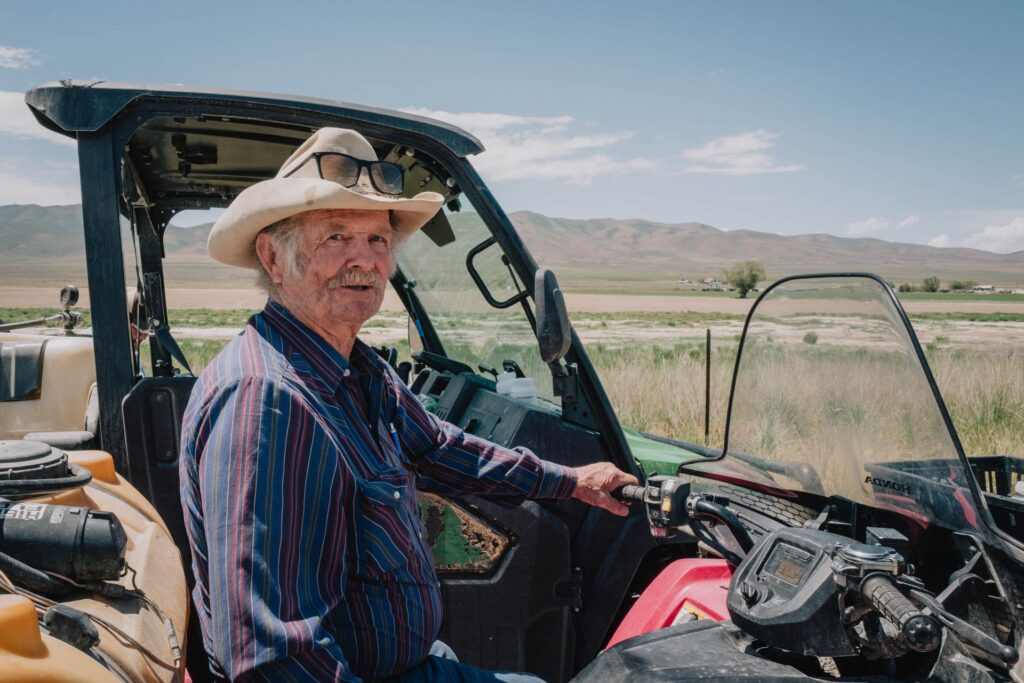
“It’s a ruination for the cattle industry and all the farming here,” Odell Rinderknecht, a wiry, weathered rancher who’d pulled up on his ATV to good-naturedly heckle Arthur for blocking the road, told me. “If they start pumping millions or billions of gallons of water, is that going to affect our spring? I think it will. And if it does, this valley’s done.”
As the three of them talked through the hypotheticals of water use, heat output, and the efficiency of natural gas with the authority of men who live their lives on calculations at the scale of thousands of acres, an acrid black cloud rose up at the south end of the valley — fumes from the incinerator at Northrop Grumman’s rocket test facility that sits a few miles away. “Four times a week they burn that shit, we don’t even know what it is,” Arthur said. Whatever is in the plume, cancer rates in the valley have soared and the cows have developed copper deficiency. They’re not naive to the fact that another massive development, strategically placed away from population centers and promising the jobs of the future, could have knock-on effects for their land and their lives.
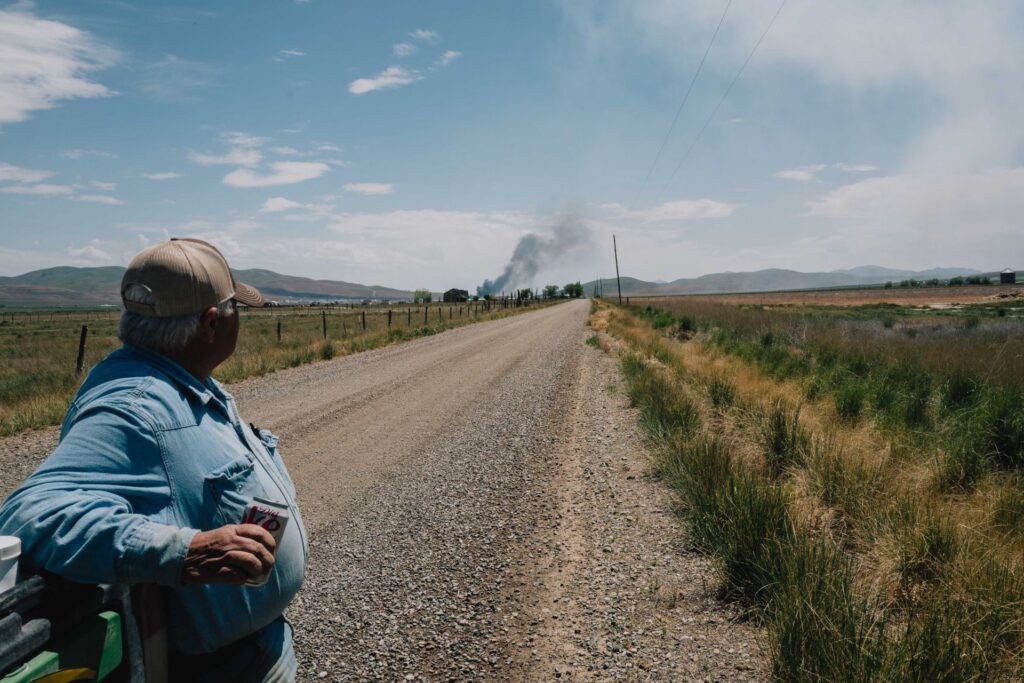
Yet Tim’s view of the Stratos project and the controversy surrounding it runs against the grain of such concerns. “If this does get shut down, we’re one step closer to people coming to tell me what I can and can’t do with my land,” he said. “Once other county residents or whoever start dictating on what I can and can’t do with my ground at any time, that takes away my private property rights.”
Tim and Arthur know they are some of the last of their kind. Fifty years ago, the protein-rich alfalfa that grew on their ranch fed thousands of dairy cows a few miles away in Tremonton. Today, most of those dairies are gone: bought up by a multinational, consolidated or closed. The hay the Douglases don’t feed their herd of 200 Black Angus cows in the winter is sold to dairies in California. Many of Utah’s farmers sell their alfalfa to Saudi conglomerates. Globalization has shifted demand for U.S. agriculture away from feeding local communities, and hitched its success to futures markets controlled thousands of miles away. Agricultural land gets rezoned and developed. Water once used for irrigation goes to flushing toilets, running washing machines and watering golf courses, “and you can’t eat a golf course,” Arthur said.
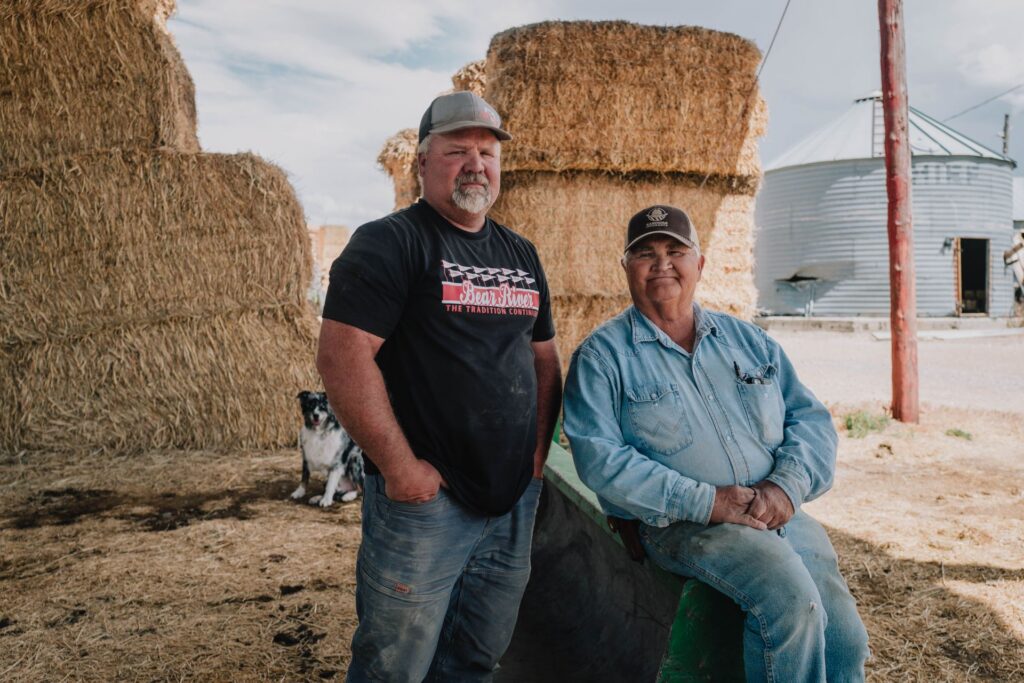
Tim told me, “I have a son who’d love to come learn how to farm with me, but I can’t afford to pay him to do it.” The margins are too slim, the debt too high. As we ride out to see the valley’s spring-fed reservoir and a new drip irrigation system they’ve installed — a massive investment to save water — I can hear how it weighs on him. “I’m what, fifth generation on this place that my ancestors worked their ass off to build. And so you have all that laying on top of you, to keep it going. And it’s like, you never want to be the one who loses the farm.” But every year the existential question of how much longer they can afford the way of life they’ve built, the freedom they enjoy, weighs heavier. One day, Arthur told me, he’s going to have to cash out. “The day will come when we can’t borrow ourselves out of debt and the best way we could do is sell it.”
Shane Holmgren, Arthur’s nephew, is trying to do just that. He’s the largest private landowner selling to Stratos. Public records show he holds 16,000 acres of the land for the proposed site. Though many opposed to the project would suggest otherwise, his land in the Hansel valley, which locals know as the Salt Wells, is far from pristine farm or rangeland, Tim told me. “The water is salty as shit,” which means the land is less productive; the Douglases run one cow for every 20 acres of range they have, “out there Shane can only run one cow for every 150 acres.” So when O’Leary came knocking, offering eyewatering sums of money, Tim said it made sense that Holmgren would cash out — he could buy a ranch in Idaho or Montana where he could run one cow per acre and keep his livelihood going. (Holmgren declined to talk to me for this story.)
“My personal opinion,” Tim said, “is I would rather see a data center out there than one more house built on prime farm ground.”
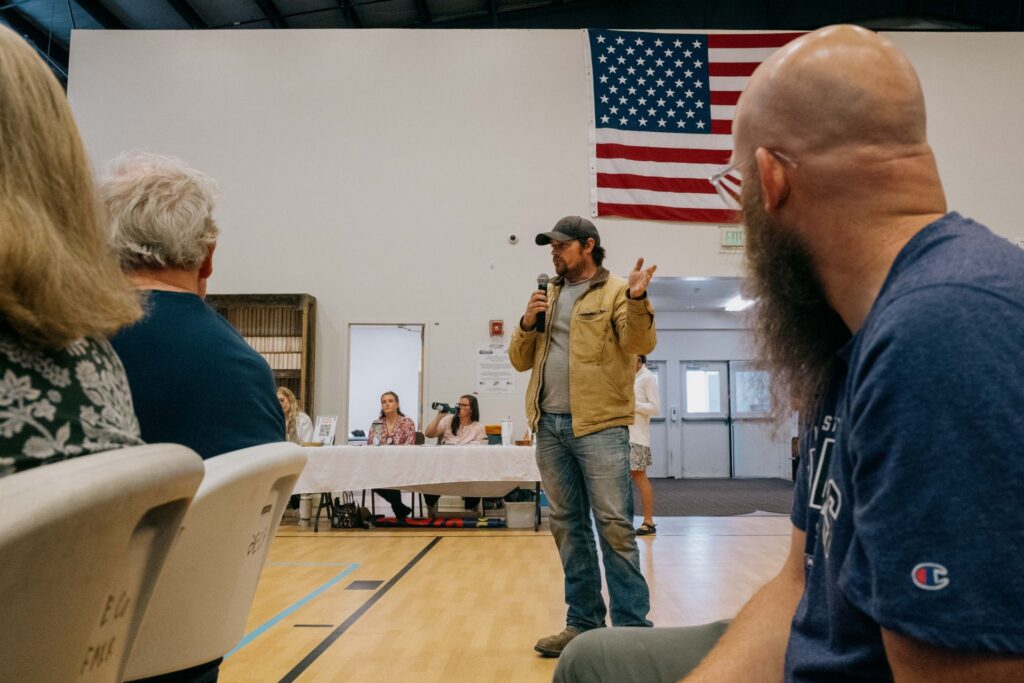
That night, around 150 people gathered in a gym at the Box Elder County Fairgrounds, where Brenna Williams and Ben Abbott were joined by others to field questions and hear people out. For nearly every question about the data center, the answer was the same: The scientists and policy advocates working on the issue could only make estimates because no concrete plans had been made public, and no impact studies had been produced. “We don’t know what the plan is,” Rhonda Lauritz, who owns land adjacent to the proposed site, told the crowd. “And the question is — do they?”
But the overall message was a kind of cautious hope. At every new community meeting or rally, more people were signing up to help collect signatures, or donate, or write a letter to their representatives. Rob Davies, the Utah State physicist, ended the meeting with the meditation that “the earth is not resource, the earth is relationship.” When the meeting ended, everyone dutifully folded their chairs and stacked them neatly on a cart.
Three days later, Box Elder County denied the application for a referendum. BEAR leaders filed an appeal and began preparing a lawsuit.
The day after I landed back in Tunis, Stuart Adams, the Senate president and MIDA board chair, had sent an open letter to Kevin O’Leary requesting that the project be scaled back by 75% and a number of environmental guardrails be implemented. Later that day, O’Leary, in typically blustery manner, told the Salt Lake Tribune that the 75% “haircut” was like “selling you a house, and you get to live in the upstairs toilet,” and that he wouldn’t back down on the deal. But by Friday, a month and a day since the project had been approved, O’Leary agreed to trim the project by half, admitting he’d “screwed up” its rollout.
Gov. Cox, meanwhile, had issued a new executive order “establishing a higher bar for data center development in Utah,” after admitting that the way the Stratos project was handled was “not good.” Mike Shultz, the speaker of the House, whose land purchase near the data center site caused an uproar, publicly gave his support to the referendum.
“It signals a sea change in the way elected officials are viewing this,” Abbott told me after Adams’ letter went out. He’d been planning to stake his reelection campaign on Stratos and now had to backpedal. It was proof that individual residents using their voices together could be heard.
But Brenna Williams wasn’t convinced. She’d been listening carefully all along as Cox, O’Leary and others said there was “no way” they’d use all 40,000 acres — O’Leary had said on Fox just days before the rollback that he’d perhaps only build on 10,000. “I think the whole thing is performance art,” she told me. “They’re trying to placate us, and they think we’re stupid.” Even at half-scale — and there was still no information on whether the data center itself would be cut to half capacity, or just the land for the development — it would still be 1,500 times larger than most data centers. (The developers did not respond to my detailed questions about the scale of the project after the proposed area cut.)
On June 10, Box Elder County commissioners voted unanimously to put a 180-day moratorium in place on new data center projects. The stay would not, however, affect Stratos. In the lengthy public comment period that came after the vote, many residents said it did nothing to allay their fears about the hyperscale project and its impact on their lives and communities.
The development of AI and the infrastructure needed to power it has outpaced the usual process of polarization in America. There’s no clear dividing line between parties about whether AI or data centers are a positive or a negative, and so they’ve become a kind of mirror for the communities where they land.
In Box Elder County, Stratos exposed the weakening of public trust as politicians have drifted from Romney Republicanism to the self-enriching ethos of MAGA. It gave a face to a looming environmental catastrophe with the Great Salt Lake. It raised existential questions about how long certain ways of life — alfalfa farming, cattle ranching, small-town living — could continue in a rapidly evolving world. But it also brought a community together and served as a reminder of what they stood to lose.
For Kathy Philpot of Brigham City, it is the feeling of freedom she gets flying down the ski slopes at Snow Basin. For Tamara Miner of Plymouth, it is the sense “that we still live in a land of ‘We, the people.’” For Peter Crosby of Logan, it is the ineffable connection to something beyond himself he finds in the wilderness just a few minutes from his home. For Brigham Daniels, it is “the belief that we actually are working together towards a future where we thrive.”
For Brenna Williams, it is “going down to the Spiral Jetty for barbecues and going out to the bird refuge to teach my kids to drive and a lot of little things, a lot of little memories coalescing into a life.”
“That’s what I think we’re going to lose, is all that simple stuff that Kevin O’Leary could never understand,” Brenna said. “There’s no way he’s been up here. And if he had been, I think he’d look at the land and just see it as dry sagebrush: Nobody’s doing anything with it; I might as well make money off of it.”
Whether the millions of server racks of the data center ever come online or not, perhaps the most salient thing that the mirror of the Stratos project revealed in Utah is that the kind of collective determination and working for a communal good that made these desert valleys “bloom like a rose” could still be found, two centuries on.
Become a member today to receive access to all our paywalled essays and the best of New Lines delivered to your inbox through our newsletters.