

Over the weekend, young officers from highly trained units of Niger’s army abandoned their posts on the front lines of their fight against a violent Islamist insurgency and rallied to the capital in what some described as a “mood swing” and others a “mutiny,” attacking an air base, the state broadcaster and the airport over the course of Saturday night. Dozens were killed, but the military junta, which has ruled Niger for the last three years, remained in place.
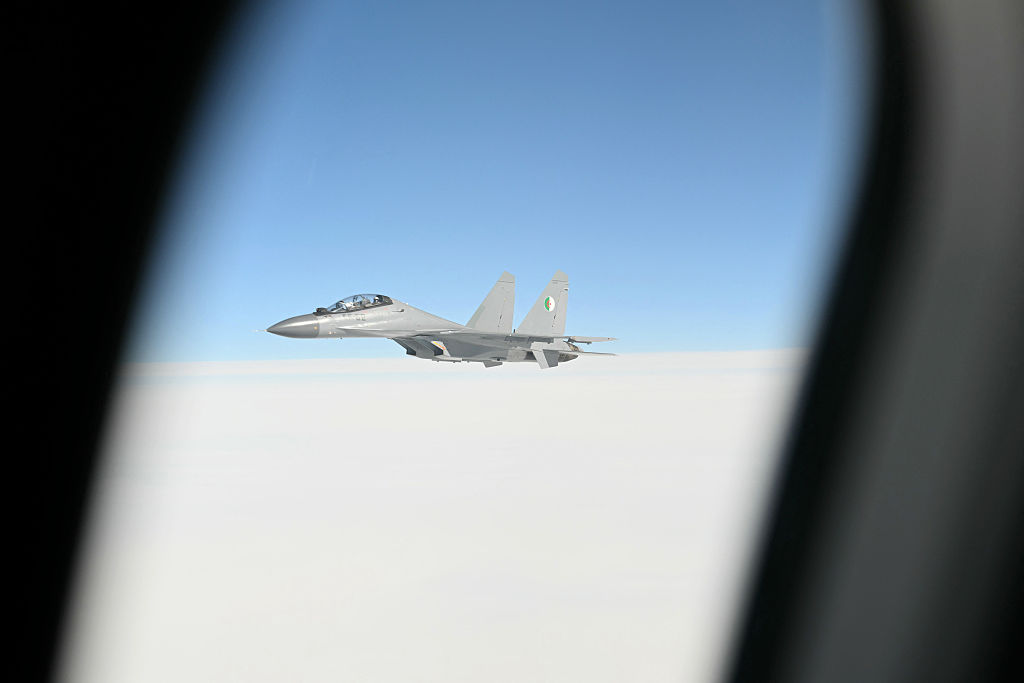
It was not the first such attack on the junta from within its ranks — soldiers have long complained of of patronage within the military and a lack of air support and proper equipment on the front lines, all of which has led to violence before — but it was the largest to date, and stood out because of who came to Gen. Abdourahamane Tiani’s aid to quash the potential coup: His staunchly noninterventionist neighbor, Algeria. President Abdelmadjid Tebboune sent four fighter jets and a fueler to Niamey to support the presidential guard, a small but astonishing move that signals a shift in the country’s approach to its southern neighbor.
When Tiani overthrew Niger’s democratically elected president in July 2023, it was under the pretense that the security situation in the West African nation had become untenable. Several Islamist insurgencies plague Niger and its neighbors in the Sahel, and the French military, which had partnered with the previous regime to support the armed forces in combating the militants, had failed miserably. Tiani promptly showed the French the door and ushered in a new partner to tackle the crisis: The Russian mercenary group Africa Corps. Their mandate was to stabilize the regime and help quell the insurgency. In return, the mercenaries were paid, but Russia also gained a strong foothold in the country, which holds about 5% of the world’s uranium.
The test over the weekend, which saw Africa Corps backing the presidential guard with firepower on the ground, proved that the Russians could prevent a coup — something their Western predecessors could not. But the mutiny exposed their impotence in the far more complicated task of tackling the insurgency, and left a window open for Algeria to make its move.
“Algeria’s Constitution restricts deploying troops abroad,” explained Kiria Borak, an analyst who focuses on the Sahel, but “the border is enormous, and state collapse in Niger is basically Algiers’ nightmare scenario.” The largest nation in Africa is already mired in a frozen conflict with neighboring Morocco, and has ambitions to build an energy pipeline from Nigeria up to the Mediterranean coast. Those ambitions are threatened by the instability in the three nations to the south of it that make up the AES, the Alliance of Sahel States — Burkina Faso, Mali and Niger — which broke away from the Economic Community of West African States (ECOWAS) after respective coups, and which are all fighting the same worsening battle with Islamist insurgencies. With Russia on the scene, Algeria’s influence was waning.
So Tebboune made a strategic move: Sending the fighter jets was “a demonstration of support and technically not an intervention,” Borak said. The help arrived without violating the Algerian Constitution, but to Nasser Weddady, another Sahel watcher, those planes landing on the tarmac in Niamey sent “a larger message to all of the three AES states: We can protect your regimes, we can help you, we can secure them, we’re not the enemy.”
“Part of the argument is that Algeria is a lot closer than Russia, and it’s not charging you money for this. They’re not asking for special contracts to take over your resources or interfering in your political affairs. So be nice, and Algeria will protect you,” he said.
Africa Corps may have been the firepower stopping the coup in Niger, but aiming at troops they’re supposed to be supporting is a losing issue. “Every time Africa Corps gets used against nationals, it risks becoming a nationalist grievance in its own right,” said Borak, who pointed out similar patterns already appearing in the Central African Republic and Mali, which also host Russian mercenaries.
In this instance, it appears the coup was Algeria’s, elegantly reasserting its influence without firing a shot.