

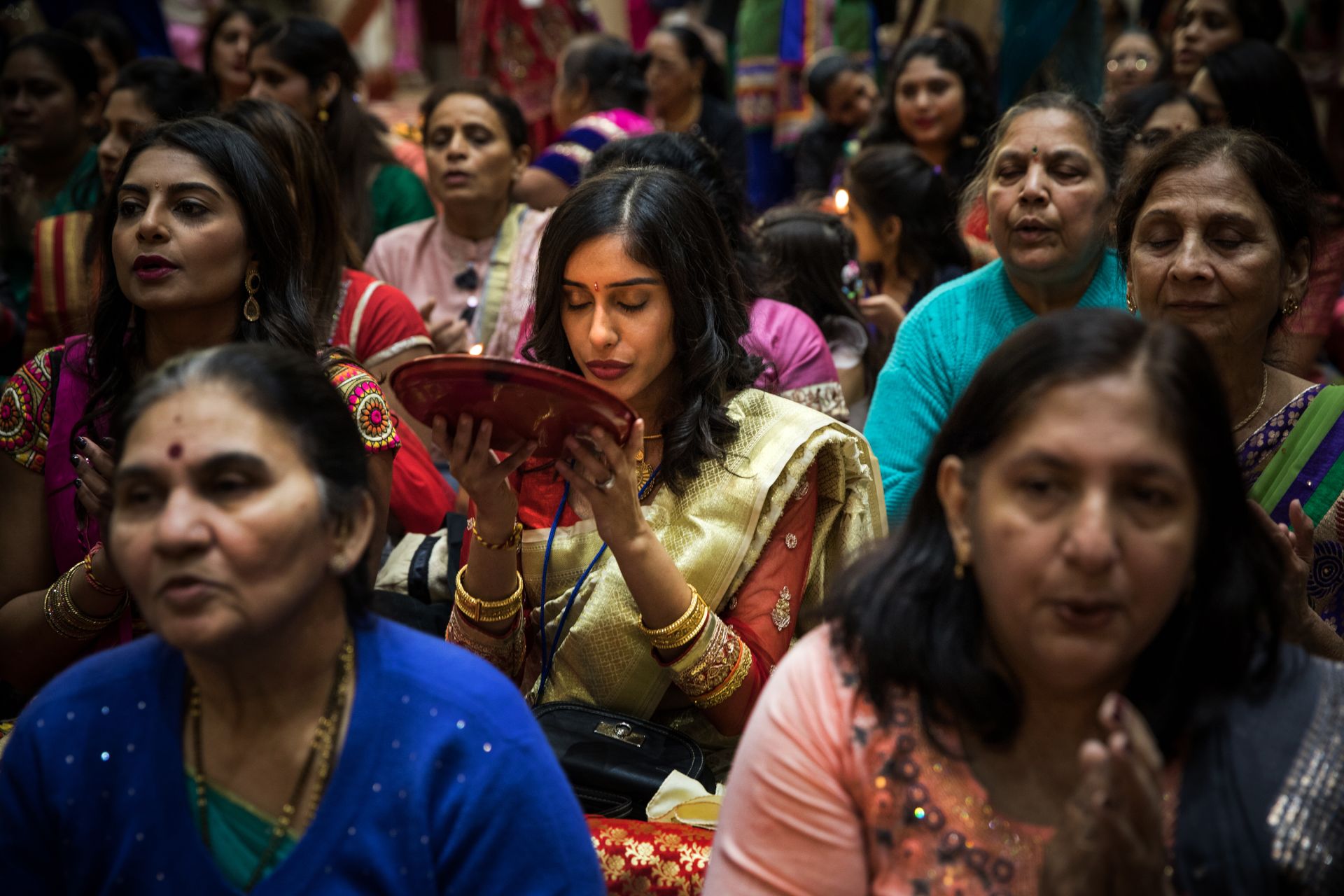
On Oct. 11, the first day of Navratri, a nine-day festival among the most important in the Hindu calendar, 19-year-old Alexandros Paporakis drove into the parking lot of the Sri Venkateswara Swami (Balaji) Temple in Aurora, Illinois, intending to carry out a mass shooting. He left soon after, when his rifle jammed. He was only arrested after he informed a co-worker of his failed plans.
The news shocked the Indian-American community, given how deadly the attack could have been if it succeeded. Rep. Raja Krishnamoorthi, who was at the temple with his family at the time, said he was horrified by the “white supremacist” attempt. Senate Minority Leader Chuck Schumer said that “anti-Indian and anti-Hindu rhetoric is at an alarming level in America, and we are seeing that hatred turn into violence.”
Ro Khanna and Rich McCormick, co-chairs of the Congressional Caucus on India and Indian Americans, asked Attorney General Todd Blanche and FBI Director Kash Patel to investigate the case as “a potential federal hate crime.” New York City Mayor Zohran Mamdani, whose mother, the filmmaker Mira Nair, is Hindu, also raised the attack while celebrating Navratri and Durga Puja with Hindu New Yorkers at temples in Queens.
Anti-Indian racism has been on the rise for almost two years, since the far-right MAGA movement turned on Indians, calling them “invaders” and “job stealers.” The flash point was the H-1B program that grants visas for skilled foreign workers, of which Indians receive roughly 70%. This hate has spilled over to affect other South Asian American communities. FBI data showed an increase in reported hate crimes targeting Sikh, Hindu and Buddhist communities in 2025. The Center for the Study of Organized Hate (CSOH) noted that anti-South Asian hate posts on X rose roughly 240% between January 2024 and June 2026. In the Carnegie Endowment’s 2026 survey, 1 in 4 Indian-American adults reported being called a slur since the start of 2025.
While anti-Indian hate has revolved around “great replacement” rhetoric, jobs, slurs such as “pajeet” and claims that Indians are “unhygienic and dirty,” it has also manifested as attacks on Hinduism. Before the Illinois incident, on Oct. 2, a Hindu temple in Ohio was vandalized while the priest and devotees were still inside. In June 2025, bullets were fired at the Sri Sri Radha Krishna Temple in Spanish Fork, Utah. Far-right MAGA figures and Christian nationalists have been calling Hindu gods “false gods” and “sand demons,” and Hindu worshippers “pagan” on social media.
In September 2025, Alexander Duncan, a Republican candidate for the Texas State Senate, posted a video of a 90-foot statue depicting the Hindu deity Hanuman at a temple in Sugar Land, saying: “Why are we allowing a false statue of a false Hindu God to be here in Texas? We are a CHRISTIAN nation!” The statue has since become a target, and there have been several calls for its demolition. Earlier in August, an Arizona-based pastor posted an image of the Swaminarayan Akshardham Temple in New Jersey, claiming “our 1700s Christian forefathers would have this demon temple leveled in 24 hours.”
In October last year, Kash Patel met with a barrage of abuse from MAGA supporters for posting a Diwali greeting. Far-right podcaster and pastor Joel Webbon told him, “Go back home and worship your sand demons. Get out of my country.” Videos of Vivek Ramaswamy have also circulated with similar comments. Second lady Usha Vance’s religion became a subject of public debate, especially after her husband JD Vance said he hoped she would one day be “moved by the same thing” that moved him in church.
Bloomberg reported in June that an Indian-American homeowner in Texas packed away a Ganesha statue, paintings of Hindu deities and other religious objects before showing his house to buyers. “Hindus in cities such as Frisco, Texas have been singled out for attacks on the basis of their religion, with racist hostility provoked by the presence of temples, statues of deities, and religious or cultural festivals,” noted a recent CSOH report.
Hindu-American politics have lately been defined by the reach of Hindu nationalist organizations and their funding, and by debates over laws against caste-based discrimination. Conservative groups have rallied behind the idea of “Hinduphobia,” while progressive groups argue that the term is used to deflect criticism of Hindutva. The Aurora plot created a rare moment in which Hindu organizations across the divide responded in unison. Progressives backed Krishnamoorthi, and conservatives praised Mamdani.
But it also raised questions about the shape Hindu-American politics might take from here. Progressives say that their fight is against Christian nationalism, Hindu nationalism and the weaponization of anti-Hindu hate for divisive politics. And it remains an open question whether conservative Hindu groups would join forces with Indians and South Asians of other faiths to resist new threats.