

Why Are Some Democrats Attacking Republicans for Being Too Soft on China?
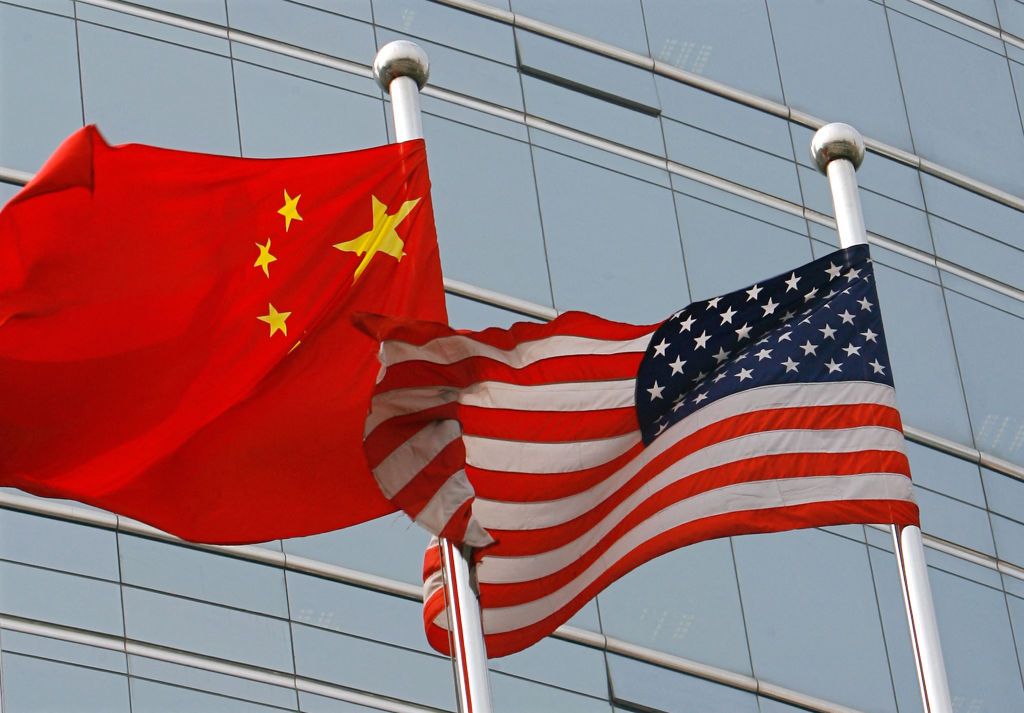
A week before Election Day, a Mandarin-language ad targeting Republican U.S. Sen. Cindy Hyde-Smith aired in Mississippi. The ad, created by a Democratic dark-money group called Government That Works PAC, is subtitled in English and Chinese and features a voice thanking Hyde-Smith in Mandarin for letting a “communist country buy acres and acres of Mississippi farmland” from her perch on the Senate Agriculture Committee. The ad ends with the slogan “China First, Mississippi Last,” implying that Hyde-Smith has used her position to sell off farmland to China at Mississippi’s expense.
Frowned upon by some progressive commentators as racist and xenophobic, the ad’s existence raises big questions about the future of the Democratic Party’s posture toward China. What role will China play in the party’s approach to the world? Will we see more Democrats oppose rapprochement with China or any efforts to slow the decoupling of the U.S. and Chinese economies? Will Democratic candidates join in the Republican effort to restrict immigration and investment from Chinese individuals in the name of national security?
For China observers, there are some parts of the 15-second spot that signal a lack of familiarity with the realities of contemporary China. For one, the ad features subtitles in traditional Chinese characters rather than the simplified characters actually used in mainland China. (It’s also worth noting that an insistence on the continued use of traditional characters has been an anti-China culture war touch point in Hong Kong and Taiwan.)
More importantly, it makes hay of Chinese purchases of U.S. farmland, which have become an increasingly salient issue among the Republican Party’s China hawks, despite a general consensus among foreign policy experts that concerns over these farmland purchases are overblown. They “do not represent a substantial enough portion of food production in the United States to threaten national food security,” in the words of Jamie Lutz and Caitlin Welsh of the Center for Strategic and International Studies.

That hasn’t stopped Democrats from joining in on the GOP uproar, with a recent bill restricting Chinese purchases of U.S. agricultural land picking up support from a handful of Democratic representatives, mostly from California. More often, these Democratic engagements with the Chinese farmland issue are in service of targeting Republican incumbents in deep-red states: Before the Hyde-Smith ad, Oklahoma Democrats ran a 2022 ad attacking Republican Gov. Kevin Stitt for allowing Chinese investors to buy up farmland in the state.
In other instances, Democratic campaigns have used the specter of China to attack Republicans independent of any specific issue. In 2025, an ad from Democratic congressional candidate Josh Weil, who ran an unsuccessful campaign against Randy Fine in the special election for Florida’s 6th Congressional District, featured Fine’s face with a Chinese flag superimposed over it; the ad, focused on Fine’s stances on Social Security and Medicaid, did not mention China in any other way.
We can think of this strategy as an attempt by red-state Democrats to meet voters where they are, part of what the writer Cameron Cummins-Smith has criticized as a bipartisan embrace of “falsehoods that have widespread public belief” in service of electoral goals. If voters in Mississippi, Oklahoma, Florida or elsewhere want a tough-on-China message, it would be foolish for Democrats to not give it to them, the thinking goes.
But we could also look at this ad as part of a larger contest over how Americans view the China issue in general, and what role Democrats might play in that discussion. China-related rhetoric has long lurked in the background of debates about America’s future, popping up occasionally in 2010s political ads like Citizens Against Government Waste’s “Chinese Professor,” a minute-long TV spot where a Chinese historian looks back from 2030 at two decades of American decline.
At a time when Americans are increasingly concerned about their country’s decline relative to China, the Hyde-Smith ad and its predecessors might signal a future in which Democrats proudly push China hawkishness. Democrats have already long attacked Republican candidates for their ties to big business and big money; a turn toward looking at GOP ties to foreign oligarchs or wealthy foreign governments — already presaged by the focus on Russiagate during Trump’s first term — might be a natural fit.
This, in turn, might splinter a Democratic coalition that has in some ways been generally unified in its effort to defeat Republicans. Asian-American groups like Stop AAPI Hate have raised concerns in the past about the increasing bipartisan prevalence of what they characterize as anti-Asian rhetoric on the campaign trail. A Democratic turn toward further anti-China messaging could easily heighten these concerns.
Democrat Scott Colom remains unlikely to prevail in the Mississippi Senate race, where polling shows Hyde-Smith with a relatively comfortable lead, despite the GOP’s woes nationally. Still, the tactics used in Mississippi might point toward bigger questions whose prospects, unlike Hyde-Smith’s reelection, are up in the air.