


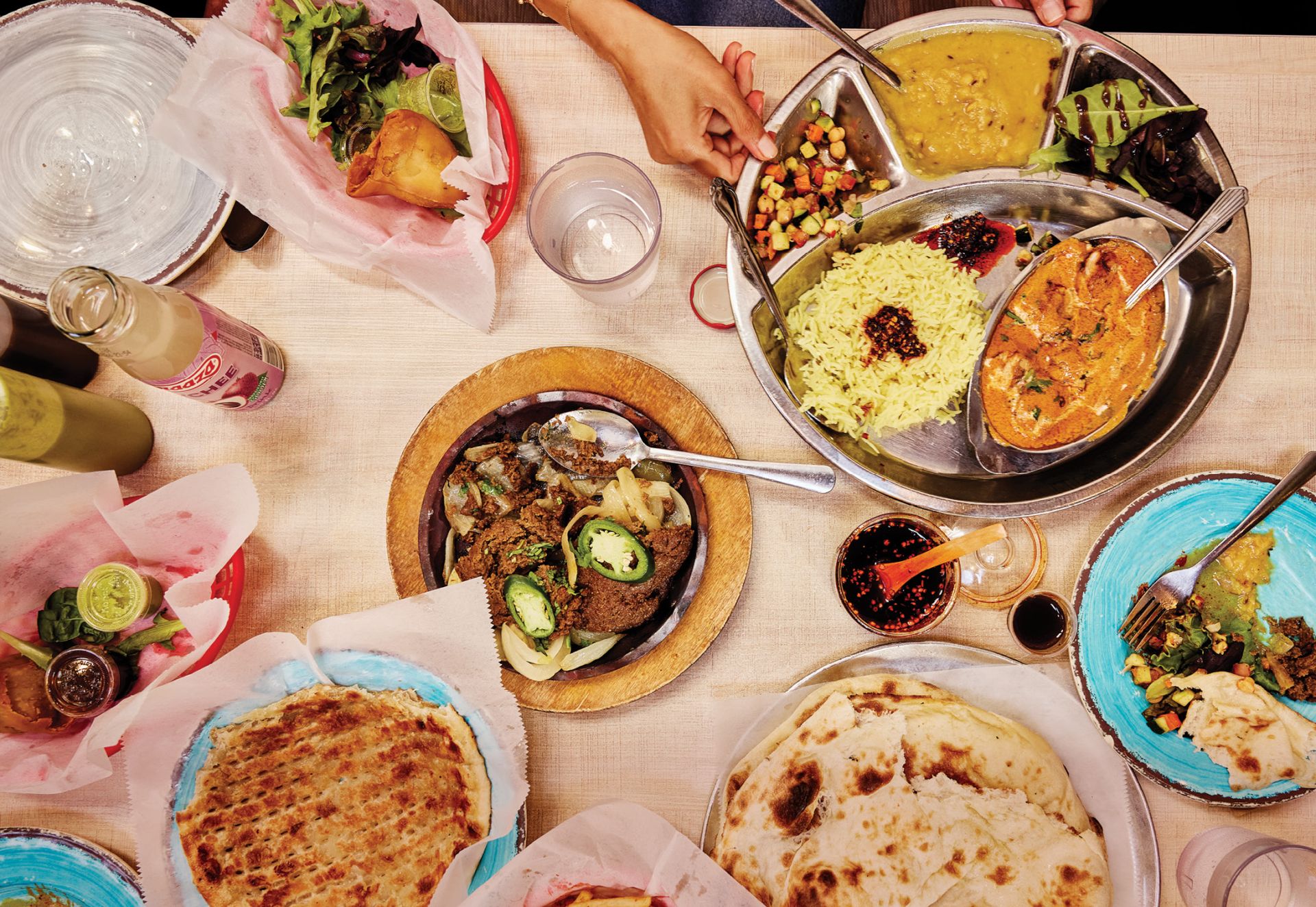
When my friends and I crave Pakistani food, we no longer have to trek all the way to Jackson Heights — the desi immigrant neighborhood in New York City — for late-night kebabs (even though the city’s first South Asian mayor, Zohran Mamdani, thoroughly spotlighted the neighborhood and its iconic Kabab King restaurant during his campaign). If we’re in the East Village, we often end up at Kolachi after a film or a show, unwrapping paratha rolls slick with oil and spices on the sidewalk. Bearing the old name for Karachi, Pakistan’s financial and cultural capital, the eatery stays open until midnight and turns out beef, chicken and vegan rolls — the kind of portable, late-night street food that anchors city life across Pakistan.
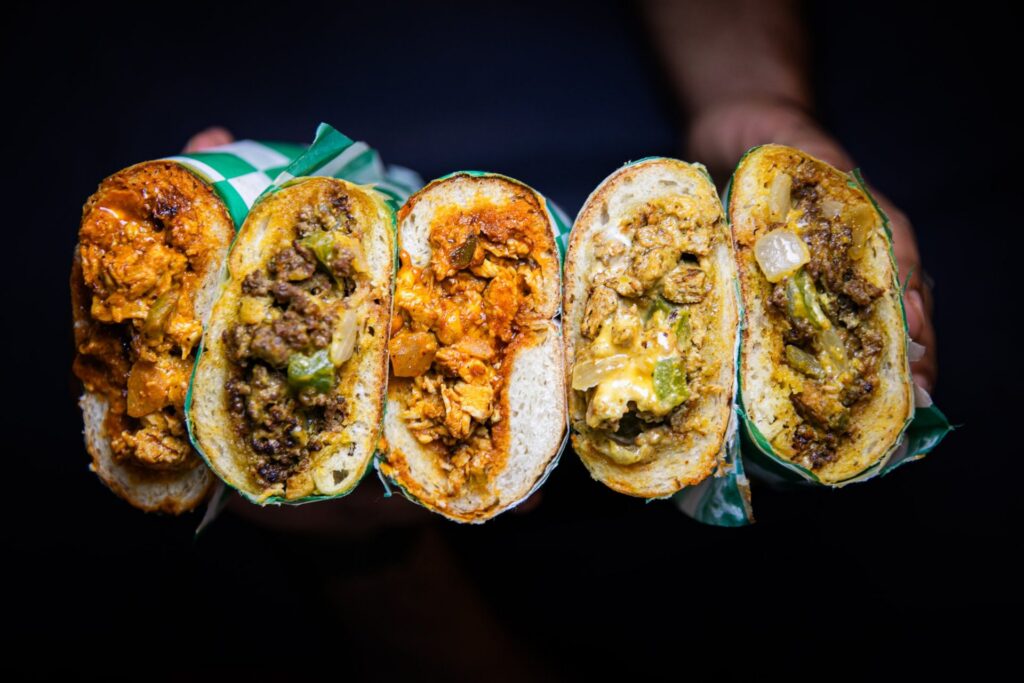
Recently, a new Pakistani restaurant, Nishaan, opened up just a few blocks from Kolachi, offering some friendly competition by putting a desi spin on New York City’s iconic chopped cheese sandwich, folding chapli kabab and South Asian spices into the bodega classic. Zeeshan Bakhrani, Nishan’s founder, has a flair for creating Pakistani fusion, and the menu includes dishes like elotes chat, which mixes Mexican corn and cheese with South Asian street food staples like tamarind sauce, and bhel, or puffed rice, as well as Bihari barbacoa tacos that use Bihari kebab spices, a chili-forward blend traditionally used to marinate beef tenderized with raw papaya. When I visited Bakhrani in December, he was also serving Thai chai, an orange-hued milky tea with hints of cardamom that blurred borders as easily as the food did.
In Harlem, Kaafi has become a go-to spot for chai (our favorite is the brown sugar cardamom or the Kashmiri chai), where they also serve “naanwich” sandwiches (made of naan stuffed with spiced meat or lentil fillings) and gulab jamun donuts, a marriage between the American pastry and the syrup-soaked South Asian sweet. The Brooklyn equivalent is Ruhani Cafe, along with BK Jani and Namkeen, which serve Pakistani-style burgers in the borough. While Karachi Kabab Boiz turns out kebab rolls that travel easily across neighborhoods, Halwa NYC, a pop-up, has been reimagining the iconic South Asian semolina-based dessert in cookies, croissants, pies and ice creams.
Clearly, a small yet burgeoning Pakistani food scene is emerging across the city and taking the cuisine beyond the traditional immigrant enclaves, as young entrepreneurs and chefs place Pakistani dishes on the same streets as pizza parlors, taco joints and late-night halal carts. Supper clubs — where hosts invite diners into homes or rented spaces — experiment with formats that extend beyond the limits of standard restaurants and, at times, reimagine the fine dining experience. Cookbooks, too, are quietly changing the landscape. They define Pakistani cuisine by documenting recipes long passed down orally and mapping the regional and cultural diversity of the country.
In doing so, these books and restaurants are asserting an identity distinct from the Indian one that has historically dominated South Asian dining and culture in New York and other immigrant hubs in the United States. Restaurants run by Pakistanis have previously been marketed as partly or exclusively Indian. But now, new eateries are branding themselves as Pakistani even if there are natural overlaps with Indian food — a trend that signals a shift within the community, away from the shadow of 9/11 and toward visibility rather than caution. These new spaces not only offer comfort to members of the diaspora but invite non-South Asians into a Pakistani culinary world.
During Ramadan, these spaces became hubs for young people to break their fast or enjoy chai with friends after evening taraweeh prayers at the Islamic center in the city. Cafes like Kaafi and Barzakh host qawwali nights, featuring the devotional Sufi performances of the Saami Brothers, a popular group visiting from Pakistan. (Mamdani was spotted at a performance with his wife, the artist Rama Duwaji, in February.) Meanwhile, Bakhrani at Nishaan launched a series called “Post-Taraweeh Moves,” collaborating with other Pakistani and Muslim chefs on Friday and Saturday nights.
In 2025, three Pakistani cookbooks were released, which included “Zareen’s Pakistani Kitchen: Recipes from a Well-Fed Childhood” by Zareen and Umair Khan, in which the authors share recipes from one of the most loved Pakistani restaurants in the San Francisco Bay Area, which has been repeatedly recommended by the Michelin Guide. Maryam Jillani’s “Pakistan: Recipes and Stories from Home Kitchens, Restaurants, and Roadside Stands” gathered regional recipes from across Pakistan while situating them within its layered histories and identities. “Sabzi: Fresh Vegetarian Recipes for Everyday” by Yasmin Khan features several Pakistani vegetarian recipes that often get overshadowed by their meat counterparts. Earlier in 2023, Sumayya Usmani released “Andaza,” a memoir-cookbook whose title refers to the intuitive, improvisational act of cooking by “estimation” in South Asian kitchens.
In “Pakistan,” Jillani writes about the narrow lens through which Pakistan cuisine has been viewed, with a focus on dishes — such as nihari, the thick, sharp meat stew with origins in Delhi, or biryani, the subcontinent classic — that either originated in Punjab province or during Mughal rule in the subcontinent. This small category of dishes doesn’t “present the complete picture of Pakistani cuisine,” according to Jillani. “This skewed focus has been part of a broader trend, in which the cuisine (and accompanying culture) of marginalized ethnic and religious communities has been subsumed by more powerful groups in Pakistan,” she writes.
Jillani situates Pakistani cuisine at the intersection of Afghan, Chinese, Indian and Persian cuisines, shaped by a history of migration and trade and drawing from all their flavors and ingredients. She also points out that even though Pakistan is often spoken of as a singular national identity, it is a mosaic of ethnic identities such as Sindhi, Baloch, Pashtun, Gilgiti and religious and cultural minorities like the Parsis, Bohra Muslims, Memons, Hindus and Christians. It also hosts one of the largest Afghan refugee populations in the world, many of whom have lived there for generations. But its diversity is not reflected in the media, and historical narratives and regional identities are often flattened.
In 2016, she began documenting recipes on her blog, Pakistan Eats, to better document the country and its food. She would crowdsource recipes and recreate them for friends and family. Yet over time, she noted a lack of context — and a dearth of writing on Pakistani food culture and history — which pushed her to explore the intersection of food and politics more deeply. So she began writing about the deportation of Afghan refugees by the Pakistani government and the internal displacement of Pashtun people caused by the war between the Pakistani Taliban and the army, using stories of Afghan food or the spread of Pashtun specialties in cities like Lahore and Karachi.
A decade ago, she writes, when a rising appetite for more sophisticated portrayals of international cuisine, especially South Asian food, led to a spate of bestselling and critically acclaimed books on Afghan, Indian, Persian and Sri Lankan dishes, she could not find a similar book on Pakistan. So she decided to work on one. In 2023, she visited over 40 kitchens in 16 villages, towns and cities in Pakistan to document recipes and write about the country through its food.
Writing about the diaspora in her book, she argues that one reason Pakistani cuisine has lacked visibility is its frequent conflation with Indian food. Many restaurants in the United States, owned and run by Pakistani people, have been marketed as Indian because customers had some understanding of the cuisine, but not of Pakistani food. This meant that their menus included Indian dishes such as butter chicken and chana masala (chickpea curry) and not Pakistani ones such as Lahori-style fried fish (coated in a spice blend of carom, cumin and coriander seeds) or haleem, a thick beef barley and lentil porridge topped with fried onions, julienned ginger and lemon juice.
Jillani acknowledges the overlaps between the cuisines due to the countries’ shared history, but argues that the overemphasis on their similarities came at the expense of Pakistani food from provinces and territories such as Balochistan, Khyber Pakhtunkhwa and Gilgit Baltistan, and underplayed the evolution of the cuisine since partition. For instance, there is little written about the salted lamb dish — skewered on a charcoal grill or fried in a massive blackened wok over a tomato base — which originates from the Shinwari tribe present in both Pakistan and Afghanistan, or the fishing communities in southern Pakistan that prepare crab, prawn and dozens of varieties of fish, grilled, fried or folded into richly spiced curries. In Karachi, Pakistan’s largest city, there is nihari, the slow-cooked meat stew, or countless varieties of biryani, which tell the stories of different migrant communities that call the city home.
Growing up, Bakhrani thought Pakistani and Indian food were the same. But later he realized that wasn’t the case. “There is also now an awareness even within Indian food that north Indian food is different from south Indian food,” he told New Lines. When I asked him what the differences were, he said Indian food featured more butter chicken, vegetables and lentils, while “Pakistani food includes ‘karahi’ [which has a tomato base], it’s not as creamy, grilled meat, and a lot of beef.”
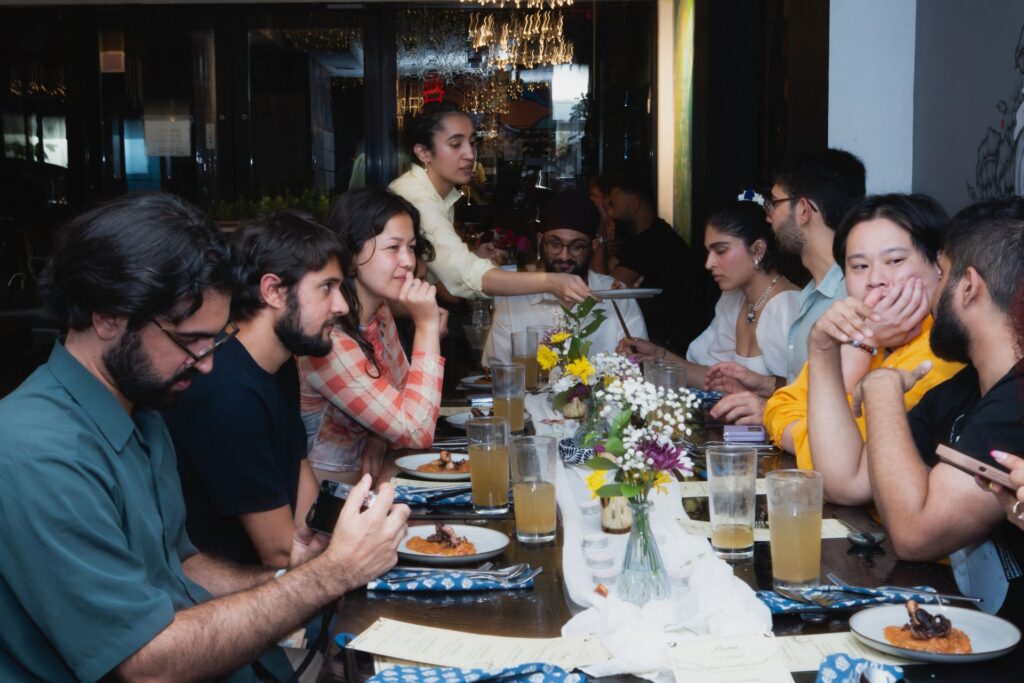
Zainab Sadia Saeed, a tech professional and content creator based in New York City, runs The Gathering Table, a supper club that has traveled with her to Vancouver, Karachi and Lahore. She has made it her mission to spotlight recipes from diverse communities in Pakistan that rarely appear in restaurants. “Growing up in Karachi, you’re exposed to a much less homogenous style of Pakistani food,” she told New Lines.
Hence, at dinners in New York and Karachi, she would serve patra ni machi, a delicacy within the Parsi community, a small Zoroastrian minority in Pakistan and India whose ancestors migrated from Persia centuries ago and whose cuisine reflects a blend of Iranian, Gujarati and regional influences. To prepare the popular dish, fish is coated with a paste of coconut, lime juice, coriander and chilies, then wrapped in banana leaves and steamed.
“What really moved me was the response online. I got so many messages saying, ‘Thank you for making this,’” Saeed said. “People don’t see this represented — not just in the West, but not even in Pakistani restaurants in Pakistan.” Even Jillani writes in her book about getting messages from readers of Pakistani origin who would routinely thank her for making them “feel seen” whenever she shared stories of Pakistani families cooking and eating. “There is a deep hunger among Pakistani Americans to read multi-dimensional stories about Pakistan.”
This was also the impetus for Mahnoor Tariq, a Pakistani-American designer in the city, to start her own supper club — to table dishes that she grew up eating in Rawalpindi but would not otherwise find in restaurants in the U.S.
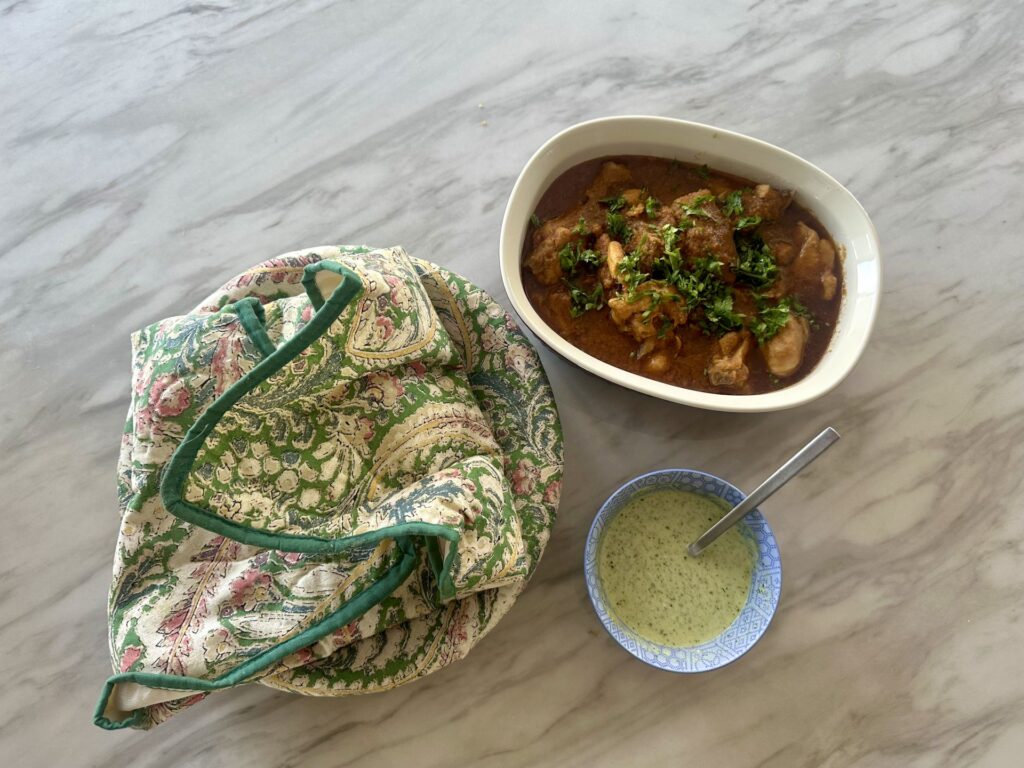
Last year, Saeed collaborated with Purana Pakistan, an online public archive, to crowdsource recipes of dishes that people cook in their homes across Pakistan. The project culminated in a zine titled Dastarkhwan, which literally means tablecloth in Persian but refers to the traditional dining space in South Asian homes, and featured recipes from a wide range of communities, such as Memon and Kutchi households, communities that draw roots in Gujarat, in present-day India, and in Pakistan’s Sindh province, as well as among Pashtun tribes in northwest Pakistan, the Sairiki and Sindhi communities in southern Pakistan and Hyderabadi families who moved from India after the annexation of the princely state in 1948.
This included kebabs made from pearl millet flour, an ingredient commonly used in Memon households, and lassan ke laddu — dough balls made with green garlic, pearl millet flour and butter by the Kutchi community. Maham Taj Afridi, a contributor to Dastarkhwan, explored the centrality of lamb and lamb fat in her Pashtun tribal community. “If Pashtun people had an option, they would cook anything and everything in lamb fat — and devour it in an instant,” she wrote. People shared several recipes from Hyderabad (in present-day India), including khubaani ka meetha, made of apricot compote, or khatti dal, a sour lentil dish. Fizah Tahir spotlighted the Mirpuri community, which has its roots in the Kashmir region and its biggest diaspora in Britain, through the recipe of “saunf” (fennel seed) curry. Prapu, a pasta-like dish made with walnuts, coriander and green chilies, spotlighted the mountainous region of Baltistan.
In her book, Jillani features a prawn curry recipe from a family that migrated to Karachi from Karnataka, a state in southern India, a Goan Christmas fruitcake recipe and a keema spaghetti recipe from her mother, challenging the notion of authentic Pakistani food and investigating the influences of diverse cuisines on people’s kitchens. In her cookbook, Zareen shares the recipe of khow suey, a noodle curry dish that Memon traders brought with them from Burma (present-day Myanmar) in the 20th century, and which is now a comfort food for many across Karachi. Saeed made her fusion version (which she calls her “deathbed meal”) by using the Mirpuri fennel seed curry as the base, in a bid to create unlikely combinations between Pakistani dishes.
Together, these efforts give a broader and more holistic definition of Pakistani cuisine, even though several of these dishes don’t yet feature in many restaurants in Pakistan or its diaspora. Some people have begun using these cookbooks to experiment with the recipes in their own homes, however. “Maryam’s book has made Pakistani cooking accessible to me, the recipes are so easy to follow,” said my friend Rameen Hayat, a Pakistani-Australian consultant living in New York. “People are cooking from it in ways we never expected,” Umair said. Someone used Zareen’s keema masala to make their Thanksgiving turkey, he added. “There’s a lot of hybrid cooking happening, which we love. We get photos constantly from dorm kitchens, first apartments, college kids making dal [lentils].”
The cookbooks have received an overwhelming response from the community. For instance, Umair shared that for “Zareen’s Kitchen,” the booksellers had placed 5,000 orders before the launch. “The first print run was 9,000 copies. Two weeks before launch, Amazon and others upped their orders given the interest in the book during the pre-order stage to 12,000, so we went into a second printing before release,” he said. As of December 2025, they had sold over 10,000 copies. “That’s huge in cookbook publishing. Our editor told us something sobering: that about 90% of cookbooks sell fewer than 100 copies. The average sale for a cookbook is around 1,000.”
Among the responses that moved the couple the most were parents giving “Zareen’s Kitchen” to their children as a wedding gift. “Their children could not cook, but they wanted to give them something that felt like home without getting intimidating,” Umair said. Parents are also giving it to their children who are going off to college. “Even if they don’t cook every day, it’s a way of carrying memories with them,” he said.
Chicago-born Bakhrani had been working in product management for nearly a decade when he moved to New York City with his wife in 2022. Little did he know that in a couple of years, he would be running a Pakistani fusion restaurant in the city. When he lost his job soon after the move, Bakhrani turned his attention instead to a passion project he had been nurturing for some time: creating online food content that explored South Asian fusion recipes. These included a mango lassi pie, inspired by the yogurt-based drink that has become a kind of national beverage for the South Asian diaspora (it’s more popular abroad than in India and Pakistan) or Parle-G cookie butter, using the iconic Indian biscuit made from wheat and milk, prized for its affordable price and most often eaten alongside a cup of chai.
Hoping to turn the project into something tangible, in 2023 he decided to host his own pop-ups where he would serve dishes that he now offers at Nishaan, which means “mark” or “sign” in Urdu. “I don’t like how often people play it safe — how they don’t want to rock the boat. … Why can’t Pakistani food exist the way Italian-American food does? Why can’t it evolve openly? Nishaan is about leaving a mark without hiding,” he said.
In my conversation with Bakhrani, he stressed the significance of claiming his Pakistani identity several times. “When we started doing pop-ups, people responded strongly — especially to the fact that we called it Pakistani food without softening it. People told me, ‘Thank you for not hiding that,’” Bakhrani said. “A lot of people my age grew up being told not to mention Pakistan, to blend in, to make it easier for others. I wanted to do the opposite.”
Now, as Nishaan has become an important landmark of the neighborhood for South Asians, who keep returning to the restaurant, often with their families, Bakhrani emphasizes how he keeps hearing over and over how much it matters to people that it says “Pakistani” on the sign. “For me, this isn’t just about food. It’s about preservation and permission. If one person does it openly, others feel like they can, too. We’ve hosted other Pakistani chefs, helped people test ideas, given space to things that might not otherwise exist. That’s the whole point. To show that our food belongs here not as a novelty but as itself.”
Saeed — who entered the social media feeds of several South Asians in New York last year and is among the growing group of Pakistanis in North America launching their own supper clubs — often teaches her young viewers how to make basic desi dishes such as dal, often eaten with rice or roti (flatbread), or khichdi, a porridge made of rice and lentils, a popular sick meal in South Asian households, to debunk the notion that foods like pasta and sandwiches are easy to make but desi food is complicated. “Once you see someone make it, you realize it’s not that hard,” she said.
She also spoke about the intuitive way of cooking that is the norm in South Asia. Precise measurements are not often given, and it is often by intuition that you add spices. “That intuitive way of cooking is such a gift in our culture, and I want to preserve it as much as possible,” Saeed said. “I always tell my friends who say, ‘I want to start cooking,’ that you have to cook like this to build that muscle. Eventually, you develop a sense for it. Otherwise, you become a slave to measurements — and where’s the fun in that?”
My numerous conversations with Saeed and others involved in the Pakistani culinary space revealed an urgency to document this food because, as Saeed told me, “our recipes were never written down.” “They were passed verbally and visually. … On top of that, there hasn’t always been respect for the people who’ve been making this food, though that is slowly changing. That’s why I feel an urgency, we need to put this on paper. Or in videos. We need to log it. Once it’s logged, it exists.”
Become a member today to receive access to all our paywalled essays and the best of New Lines delivered to your inbox through our newsletters.