


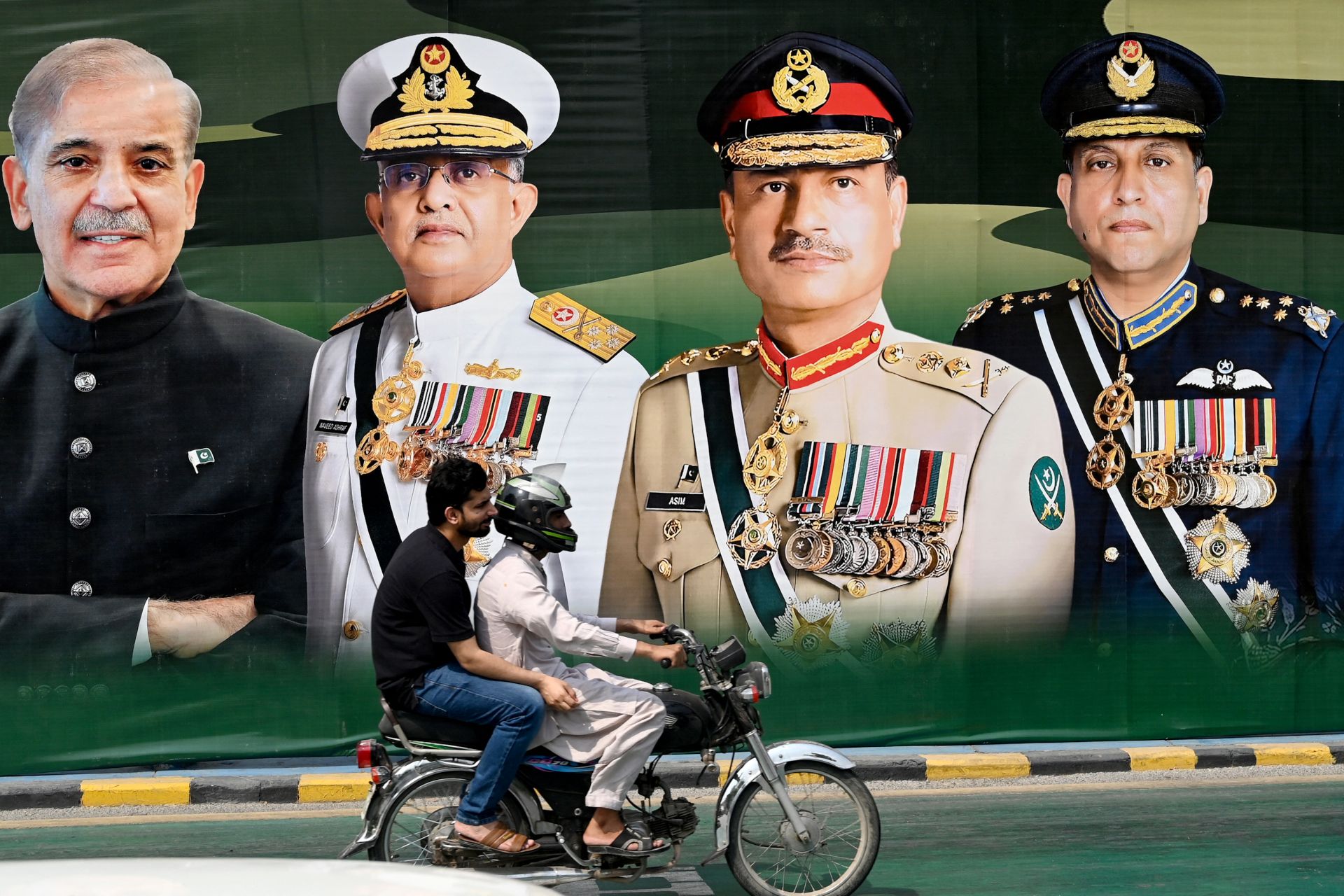
On April 11, as negotiations between the United States and Iran were underway in Islamabad, Pakistan deployed fighter jets to Saudi Arabia, in the first visible move under their mutual defense pact. In the week following the talks, Pakistan’s Field Marshal Asim Munir made a trip to Tehran, while Prime Minister Shehbaz Sharif set off on a four-day tour to Saudi Arabia, Qatar and Turkey. In addition, Saudi Arabia and Qatar extended a $5 billion loan to Pakistan, while the United Arab Emirates sought repayments on its own loan amid strained relations.
On April 15, as she confirmed that the second round of the U.S.-Iran talks would take place in Islamabad, White House spokesperson Karoline Leavitt praised Pakistan, saying it had been an “incredible” mediator and that the administration appreciated “their friendship and their efforts,” a point she noted was “important” to the president. Her words underscored the close ties the country has cultivated with the second Trump administration. On Truth Social and in media interviews, Trump has been showering praise on the Sharif-Munir duo, calling them “two fantastic people.”
Many were surprised by Pakistan’s wildcard entry as a peace negotiator in the Iran war. Yet even before this latest escalation, observers had begun to note the space Pakistan was carving out for itself in the Middle East.
Following the defense pact with Saudi Arabia, under which both countries are committed to treat any act of aggression against one as an act against both, speculation swirled about Turkey potentially joining a trilateral defense agreement — fueling talk of an emergent “Islamic NATO” anchored by Saudi Arabia, Pakistan, Turkey and perhaps Egypt. At the same time, Pakistan’s inclusion in Trump’s Board of Peace in Gaza had also signaled a willingness to extend its role beyond its immediate neighborhood.
Now, with speculations rife that Qatar could sign a similar defense pact with Pakistan, and despite Trump having recently canceled the American delegation’s planned trip to Islamabad, Pakistan’s position as a key security partner in the region is being consolidated.
Pakistan’s expanding diplomatic and military engagement across the Middle East, experts say, signals a reconfiguration of its strategic identity and expands its role beyond South Asia. It is now an emerging “third pillar” alongside Saudi Arabia and Turkey in southwest Asia — a shift that was accelerated by the standoff with India in May 2025 and further shaped by both the 12-day war between Israel and Iran and the current Iran war.
Until a year ago, Pakistan had been struggling to maintain its strategic relevance in the wake of the U.S. withdrawal from Afghanistan in 2021. But this position began to shift after the brief standoff with India last May.
“Pakistan has always had very high stakes in the Middle East and has long attached importance to its strategic partnerships in the region. This renewed interest we’re seeing is, in many ways, a response to the geopolitical developments that unfolded since the U.S. withdrawal from Afghanistan,” Fahd Humayun, an assistant professor of political science at Tufts University who has written extensively on Pakistan’s foreign policy, told New Lines.
“The biggest of these was the military conflict with India last May,” Humayun said, “where Pakistan was able to demonstrate a very high level of defensive preparedness, which took people by surprise.” Pakistan appeared “more level-headed and rational relative to the Indian side,” he said, in a conflict between the two nuclear-armed nations that carried “clear escalatory potential.”
Tughral Yamin, a defense expert and former Pakistani army officer, who has served in Saudi Arabia and in U.N. peacekeeping operations in Somalia, echoed this assessment. “The world started taking us seriously after the conflict because, according to our narrative, we were able to down a number of Indian jets and the nuclear deterrence also held,” Yamin told New Lines. Pakistan claimed it had shot down six Indian fighter jets during combat, which was initially denied by India and later partially acknowledged by its chief of defense staff.
Pakistan’s performance served as a reminder to regional players of its role as a stabilizer. “It was something that had been forgotten — and in some ways, neglected — when the U.S. was still involved in Afghanistan, because the dominant narrative at that time cast Pakistan as a source of regional instability,” Humayun said.
Kamran Bokhari, a resident senior fellow at the Middle East Policy Council, however, argued that the May conflict with India “helped create the moment, but it didn’t originate the shift.”
“U.S.-Pakistan relations were already improving before the conflict,” he told New Lines. “What the crisis did was accelerate that process, especially as India publicly contradicted President Trump on mediation, which created friction with Washington.”
As the U.S. rethinks its global strategy around “burden sharing” and “burden shifting,” the conflict underscored that India and Pakistan could not operate within the same regional security framework, said Bokhari.
“The U.S. has effectively divided roles: India is positioned within the Indo-Pacific, while Pakistan is being encouraged to play a larger role in the Middle East, Afghanistan and Central Asia,” he said. “The conflict reinforced Washington’s view that this division makes sense.”
It was in the aftermath of the India standoff that Saudi Arabia formalized its defense pact with Pakistan, experts said. “We already have strong ties with Arab countries, but this enhanced our stature as a country capable of defending itself, especially against a much larger adversary like India, whose air force and navy is much bigger,” Yamin said. “That created a sense that Saudi Arabia needed to act now,” Humayun said.
It was also just months after the 12-day war last June and days after the Israeli attack on Qatar.
Moreover, Pakistan’s participation in the Board of Peace and the defense pact with Saudi Arabia is not separate from the broader shift of “burden sharing” by the U.S, Bokhari added. “It is an outcome of it,” he said. “The U.S. has essentially told Saudi Arabia to take the lead on the Palestinian issue, given its position as a key Arab power.”
This prompted Saudi Arabia to recognize that it could or could not act alone and needed partners such as Turkey. However, wary of Turkey’s growing influence, Riyadh brought Pakistan into the mix as a balancing force against both Turkey and Iran. “That’s how Pakistan became part of the Gaza ‘Board of Peace’ and the broader regional architecture,” Bokhari said.
Saudi Arabia’s turn to Pakistan is also driven by the latter’s strong relations with Turkey and Azerbaijan, as well as a shifting balance of power, amid perceptions of growing Iranian weakness and Turkey’s rise.
“From Saudi Arabia’s perspective, having Pakistan aligned with them — while also being a friend of Turkey — creates a balancing effect,” Bokhari said. With Pakistan connected across both networks, the arrangement could function like an “insurance mechanism.”
Hence, Pakistan is consolidating its position as the “third pillar,” alongside Turkey and Saudi Arabia, Bokhari argued, within an emerging U.S.-aligned regional security architecture. “In this configuration, Islamabad is likely to remain an intermediary not only in managing Iranian geopolitics but in broader regional stabilization efforts.”
This expanded role, he added, also signals a shift in Pakistan’s strategic profile, from a primarily South Asian security actor to one increasingly embedded in the wider southwest Asian diplomacy and crisis management.
The presence of Pakistan and its military forces in the region, however, is not new.
Pakistani troops have been stationed in Saudi Arabia since the 1960s. During the Al-Wadiah War in 1969, Pakistani pilots, who were training the Royal Saudi Air Force at the time, helped the Saudis attack South Yemen to counter rebel forces. Pakistan again deployed its troops to Saudi Arabia in the aftermath of the Islamic Revolution in Iran in the 1980s and during the Gulf War of 1991.
In Jordan, during the 1970-71 civil war, known as “Black September,” Pakistan supported King Hussein against the Palestine Liberation Organization and its allies (which eventually led to the rise of Gen. Muhammad Zia Ul-Haq, the country’s most notorious military dictator). Decades later, during the uprising in Bahrain in 2011, the Fauji Foundation (a Pakistani energy conglomerate linked to the military) recruited at least 2,500 former Pakistani military personnel to assist security forces in suppressing Shiite demonstrators.
Pakistan-Saudi relations saw a rare moment of strain in 2015, when Pakistan’s Parliament voted against joining the Saudi-led military intervention against the Houthis in Yemen, opting instead to maintain neutrality. The decision was shaped by constraints that closely mirror those Pakistan faces today in relation to the Iran war: a volatile western frontier with Iran and Afghanistan, sensitivities surrounding its Shiite population at home, and ongoing counterterrorism operations against the Pakistani Taliban.
This new phase of Pakistan’s involvement in southwest Asia, however, is also shaped by a shifting security reality in the Gulf, where recent Iranian strikes have exposed vulnerabilities in existing arrangements. In particular, the presence of U.S. bases, long seen as a source of protection, turned Gulf states into direct targets during the conflict.
It had long been assumed that an escalation such as the Iran war would remain theoretical, partly because it was not expected that the United States or Israel would engage Iran directly. “But once that threshold was crossed, regional anxieties increased significantly,” Bokhari said.
For Gulf states, the recent war made previously “unthinkable” threats feel immediate and real, he added.
While Pakistan has long trained militaries in the Middle East, the relationship had plateaued over time, Yamin said, as the states started training their own militaries and acquired state-of-the-art equipment. “But after this recent war, Arab states are once again looking to Pakistan,” he said.
Regardless of the conflict’s outcome, experts believe America’s standing in the region has taken a hit. “This feels like an inflection point where older security configurations are shifting, and the U.S. role as a security guarantor is evolving,” Humayun said.
As states question whether they can provide their own deterrence, which can only be fully guaranteed by a nuclear capability, they are turning to external partners. “But the options are limited,” Humayun said. “U.S. credibility has taken a hit, and European and British roles as intermediaries have also been notably absent in this crisis.”
This has created an opening for Pakistan. “What we’re seeing is not a replacement of the U.S., but a complementary strategy,” Bokhari said. Countries like Saudi Arabia are building additional partnerships — Pakistan being a key one — to fill the gap as they develop their own capabilities.
With speculation that Qatar might sign a defense pact with Pakistan, it is possible that more Gulf countries could move in that direction.
Qatar already has a close military relationship with Turkey, including a Turkish base on its soil. “It may align symbolically, but it tends to pursue an independent strategy,” Bokhari said.
But countries like Kuwait and Bahrain are more likely candidates to be taken into the fold of the Pakistan-Saudi defense pact. Kuwait has long-standing ties with Saudi Arabia and is vulnerable to Iranian influence (because 30% of its citizens are Shiite), while Bahrain, given its demographics and proximity to Saudi Arabia, is also strategically critical. “I can see both being incorporated into this framework over time,” Bokhari said.
By contrast, Oman is less likely to join, he said, given its distinct geopolitical posture and ties with Iran, and the United Arab Emirates has become a more complicated case amid tensions with Saudi Arabia and the fallout from its normalization with Israel under the Abraham Accords after the Oct. 7 attacks.
More broadly, experts frame these developments as a shift in Gulf security thinking. Rather than a wholesale move away from the United States, regional states are diversifying their partnerships. Bokhari said, “The U.S. is telling Gulf states such as Saudi Arabia and the United Arab Emirates that this is fundamentally their region, and they need to step up.”
But what does a broader regional role mean for Pakistan itself?
Apart from opening an opportunity for Pakistan to make “more friends” and its leaders to show themselves as “trustworthy partners,” according to Yamin, this shift has also helped recast Pakistan’s image from a politically and economically troubled state to a credible geopolitical actor. “It will help again trust in regional and international circles and position it as a participant in major league geopolitics,” Bokhari said. Something that was “almost unthinkable” a year ago.
Experts also believe that this expanded role could create leverage for Islamabad, helping it to seek economic and strategic concessions, including investment and support from partners such as the United States, Saudi Arabia and Turkey, which could help address its chronic economic challenges.
Discussions are already underway on a proposal for Saudi Arabia to invest in a petroleum refinery in Gwadar, Pakistan’s strategic port on its southwestern corner. “If you’re able to make your region stable, people will invest in your country,” Yamin said.
This diplomatic turnaround has also fueled a rare wave of nationalism in Pakistan, with large sections of the public celebrating both its military performance during the India standoff and its emerging image as a global peace broker. Even incarcerated leader Imran Khan’s Pakistan Tehreek-e-Insaf (PTI) party expressed support for Pakistan’s mediation efforts.
“There is also a degree of public prestige attached to Pakistan being seen as a mediator in high-level negotiations, especially involving the United States,” Humayun said. “This carries historical resonance and contributes to a sense of renewed international relevance.”
Recent events have also reinforced the Pakistani military establishment’s legitimacy and sidelined criticism of its crackdown against Khan and his party. Khan has been in jail since May 2023, and his arrest led to unprecedented protests by his supporters across the country, who clashed with security forces and, in some cases, targeted state and military installations.
The sweeping crackdown that followed involved mass arrests of PTI leaders and supporters, along with extensive legal proceedings against them. During the 2024 general election, PTI candidates were forced to stand as independents after being stripped of their party symbol, amid widespread allegations of electoral manipulation.
Zahid Hussain, a senior Pakistani journalist who has written multiple books on Pakistan’s politics and security dynamics, including “Hybrid Rule in Pakistan” (2021), told New Lines that the country’s growing regional role has, at least in the short term, strengthened the current power structure, and “domestic politics have been somewhat eclipsed by foreign policy developments.”
The military is widely being seen as a “stabilizing force,” even among those who are uneasy about its political role, and recent developments have indirectly reinforced “its institutional authority and public respect,” Hussain said. It has also fostered support for the idea that perhaps a “hybrid regime” works better for Pakistan, involving a civilian government backed by the military establishment.
While the PTI remains popular in parts of the electorate, it has been struggling to translate that into sustained political momentum, reasons for which include the strong crackdown on the party, internal disorganization and an overreliance on Khan as its central figure. “The party lacks a strong grassroots structure and has not effectively mobilized around broader public issues,” Hussain said.
By citing the recent foreign policy developments as evidence of its effective governance, the current leadership hopes to consolidate public support for itself. “The message, as framed by this narrative, is that under their stewardship the economy has stabilized, Pakistan’s international standing has improved, and the country has demonstrated resolve in its confrontation with India,” Bokhari said.
And in this telling, there is also an implication that under Khan’s leadership, Pakistan had experienced economic mismanagement and near-bankruptcy. “The broader political goal, then, is to translate these external and economic gains into domestic legitimacy and reinforce support,” Bokhari said.
Observers note, however, that movements associated with Khan continue to remain a significant factor in Pakistan’s internal political landscape, and the underlying political sentiment has not disappeared entirely.
But Pakistan’s involvement in the Iran war risks triggering tensions with the country’s Shiites. Home to the second-largest Shiite population after Iran, the country has spent decades managing sectarian violence. That fragile balance was exposed after the killing of Ayatollah Ali Khamenei, when protests escalated into attacks on U.S. consulates, leaving more than 20 people dead.
When Munir convened leading Shiite clerics ahead of the U.S.-Iran talks in Islamabad, it was widely seen as an effort to contain further unrest. His earlier reported remarks suggesting that those who “love Iran” could go there had already stirred unease, with many interpreting them as questioning their loyalty to Pakistan. More recently, the omission of a front-page story on rising Shiite anger from the Pakistani edition of The New York Times was cited by critics as another sign of the establishment’s limited tolerance for dissent.
Meanwhile, regular life for Pakistani people continues to be defined by economic instability with rising inflation, regular power outages amid the ongoing fuel crisis, and persistent unemployment.
But is Pakistan’s current role in global geopolitics and the Middle East a temporary change, or does it represent a more fundamental shift? Yamin said that Pakistan’s current maneuvering between Iran and the United States has “ definitely elevated its position,” not just as a provider of security, but as “a net provider of peace.” This, he argued, has strengthened Pakistan’s diplomatic standing as a country that can act as “an honest broker and peacemaker.”
Other experts agree that this is not a short-term arrangement. Pakistan is in this for the long haul. With the region reshaped first by the Gaza war and the Iran war, there is no return to the previous order. As Bokhari put it, the country is now deeply tethered to an evolving regional architecture.
Become a member today to receive access to all our paywalled essays and the best of New Lines delivered to your inbox through our newsletters.