

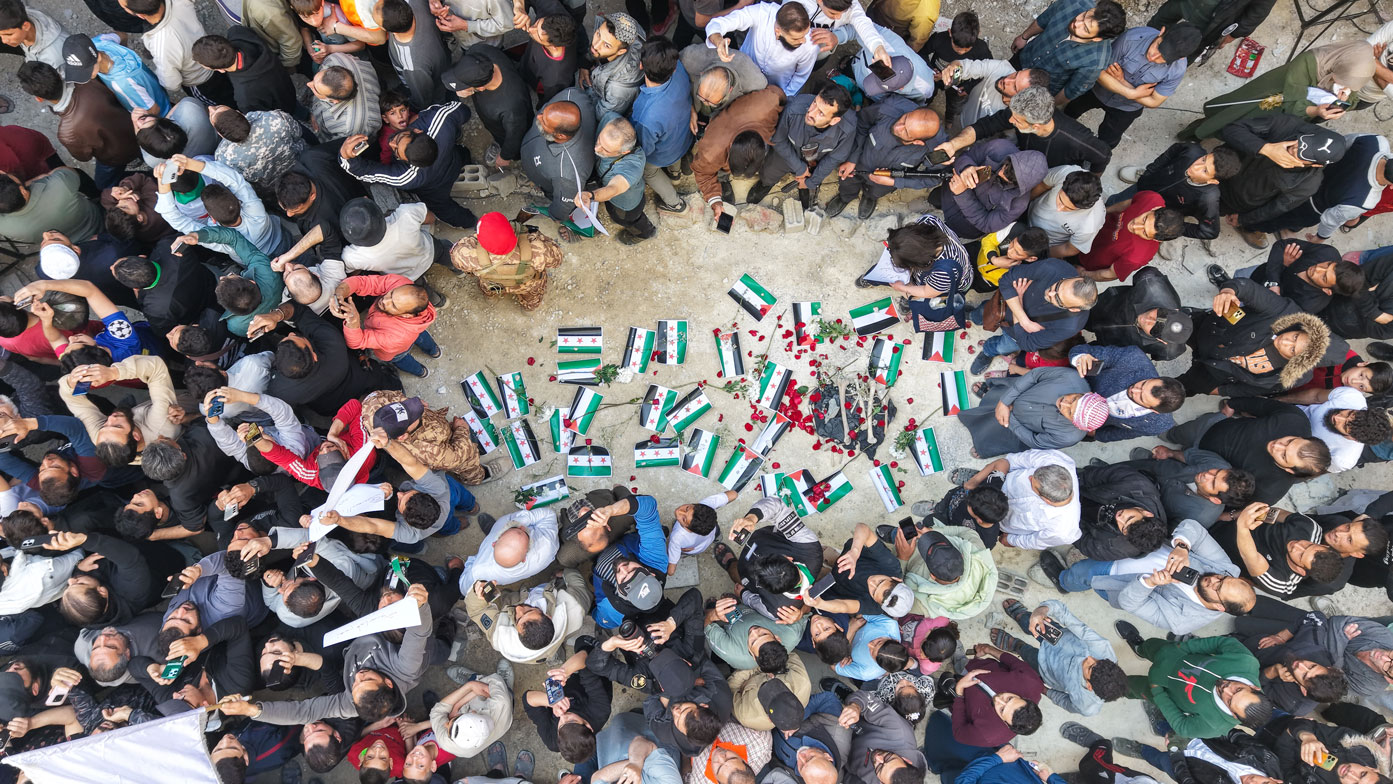
Hosted by Faisal Al Yafai
Featuring Robin Yassin-Kassab
Produced by Finbar Anderson
Listen to and follow The Lede
Apple Podcasts | Spotify | Youtube | Podbean
In his new book, “The Blood Between Us: Syria’s Revolutionary Transition,” writer and returning guest to The Lede Robin Yassin-Kassab is more than usually self-reflective. “I am a Scottish-Syrian. I’m somebody who’s been very wrapped up by the Syrian revolution and the splintering and destruction of Syria, vicariously through friends and family members who have been on the ground or have been expelled from the country, or one or two who disappeared,” he tells Faisal Al Yafai on The Lede. “I’m giving a personal perspective, but one that I hope is illuminating because it also gives lots of other people’s perspectives.”
Syria’s postrevolutionary moment, Yassin-Kassab explains, shaped by the cathartic relief of seeing the back of Bashar al-Assad, has been fraught with anger and violence. “Real revolutions are always messy. There’s never been a good one,” he says. “They are always necessary if they come about, if they’re genuine. They happen for a reason — because something is collapsing. There’s lots of wonderful creative behavior and selfless behavior and solidarity between communities, and there’s also all the horrors that you would expect of a situation in which people are being murdered and tortured and they’re losing everything and they’re terrified and they’re resorting into mini identities to protect themselves.”
“Real revolutions are always messy.”
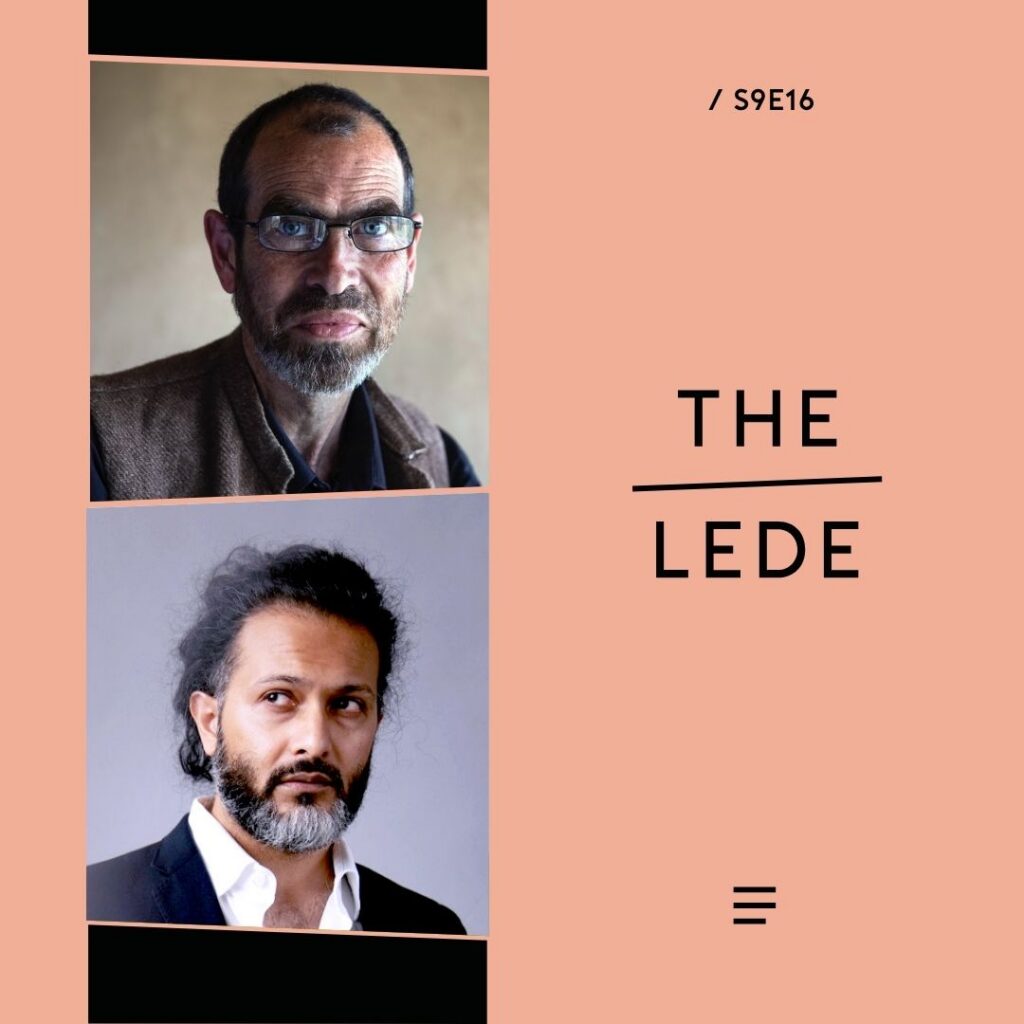
All that anger is preventing the country coming back together after 13 years of conflict, as suggested in the title of Yassin-Kassab’s new book. “You’ve got one community which is in rubble living next to another community where all the houses are intact, and that feeds into every other problem,” he says. “Sometimes it’s not even between sects or ethnicities. It may be between families, or between two different branches of the same family. One cousin informed on the other cousin, and the other cousin ended up in a torture chamber. And these people are angry with each other. In this sense, there is blood between us.”
Yassin-Kassab addresses the massacres of the spring of 2025 on Syria’s coast and in the city of Sweida. “There are signs that the government knows that it handled it badly, and it has arrested people,” he says. “But none of it’s been done in a transparent way, and what they haven’t done is make a clear apology and a clear explanation.”
There is a route, Yassin-Kassab argues, to a better future for Syria and its people. “We’ve had great moments in Syrian’s history where people have been able to work together, and I think most people want to get back there,” he says. “ If the pressure is kept up and if the government opens up and includes other parts of society in the process and does it more comprehensively, then we’ll get there.”