


Jan. 13, 2010, is a day that I will never forget. That Wednesday morning, I had several missed calls, text messages and notifications on my phone. I did not know it at the time, but the day before, a massive earthquake had struck near the capital city of Haiti, Port-au-Prince. As the child of Haitian immigrants who came to the United States in 1980, I have always kept up with events in Haiti, and this was, without question, the most devastating natural disaster that had occurred on the island in my lifetime.
Hundreds of thousands of Haitians died as a result of the magnitude 7 earthquake, and millions more were severely impacted. At that point, I didn’t know all this — I was concerned for my family. Many of my cousins, uncles and aunts were still in Haiti. Were they okay? What would they do now that the capital had been damaged so severely? Where would they find refuge?
On Jan. 15, in the midst of the chaos and confusion, the United States government extended temporary protected status (TPS) to Haitian nationals, giving them the ability to live and work in the United States without fear of deportation. Now, after 15 years of Haitians building their lives, integrating into their local communities and contributing to the economic and social fabric of the United States, the second Trump administration has abruptly ended TPS for Haiti and has plunged communities across the nation into a state of fear, anxiety and despair. Our industries, our hospitals, our nursing homes, our businesses and the entire U.S. economy will be harmed by this decision.
TPS was established with the passage of the Immigration Act of 1990. The law significantly reshaped our immigration system and provided additional pathways for immigrants to come to the U.S. It raised the number of immigrants allowed to enter each year from 290,000 to 675,000 and introduced various programs, such as the Diversity Visa lottery and the H-1B Skilled Worker Visa Program, to increase the number of diverse, skilled workers entering the country. Along with these changes to the U.S. immigration system, this law established the TPS program, which, in this instance, provided work permits and protection for Haitians living in the U.S. after the earthquake.
TPS designations are applied to countries that are experiencing extremely challenging circumstances, such as “on-going armed conflict, an environmental disaster, or extraordinary and temporary conditions,” as stated by the U.S. Department of Homeland Security. The designation can last for up to 18 months at a time, after which the secretary of homeland security must extend or terminate the designation. This designation was a much-needed resolution in 2010, allowing Haitians to remain safe in the United States after a devastating natural disaster. I did not know much about the TPS program, but I was thankful that it provided an opportunity for Haitians, including many in my family, to continue to forge a path in the United States, just like my parents did.
Since the initial designation, the secretary has consistently renewed the TPS designation for Haiti for the last 15 years — and for good reasons. For starters, the humanitarian response to the earthquake has been completely inept. Shortly after the earthquake, a cholera outbreak spread across the country, infecting more than 800,000 people and killing over 10,000. As a report by researchers from Yale University states, there is “overwhelming evidence” that United Nations aid workers were directly responsible for this outbreak during their “Mission for the Stabilization in Haiti.” Moreover, the earthquake damaged billions of dollars of infrastructure, and each year brought more natural disasters. These disasters included increasingly intense hurricanes and another massive earthquake in August 2021, which contributed to the inability of Haiti to truly recover from the initial earthquake in 2010.
On top of all these issues, there is also significant political unrest throughout the country. There was a recent upsurge following the assassination of Haitian President Jovenel Moïse by Colombian mercenaries in July 2021. Moïse had a long list of enemies, including corrupt and opportunistic Haitian elites who demanded new leadership, drug traffickers who feared prosecution by his administration and political opponents who were furious at his refusal to leave office after his term ended in February 2021. While the specific reason for his assassination continues to be litigated, his killing created a political and governance vacuum in the country, which has since been filled with violent gangs that have seized control of Port-au-Prince and have committed unspeakable human rights abuses as they exert control over neighborhoods in and around Haiti’s capital.
Yet despite these challenges, and despite continued support for the TPS designation for Haiti from human rights groups and humanitarian aid organizations, the Trump administration has ended TPS for Haitians. The administration initially attempted to end the program in June 2025, shortly after Trump returned to office, stating that the continuation of the program for Haiti would be “contrary to the national interest.”
Trump’s argument to end TPS for Haiti is perverse. The ultimate purpose of the TPS program is to provide temporary relief and to allow the conditions that led to the designation to improve, so that migrants can safely return to their home countries. However, instead of trying to convince the public that the situation in Haiti has improved (or will improve), his administration asserted that the deterioration of the country posed a direct risk to U.S. public safety and national security.
Although the TPS program is only available to Haitian nationals already in the U.S., the administration argued that the violence and lack of security inside Haiti have led to “uncontrolled migration,” which has compromised the U.S. government’s ability to properly vet Haitian migrants, thus posing a threat to national security. As a result, the argument goes, the program must end. While a federal district court judge issued an injunction that temporarily stopped the termination of TPS for Haiti, one year later, on June 25, 2026, the Supreme Court ruled that the Trump administration can officially end the program, paving the way for the detention and deportation of over 330,000 Haitians.
This ruling has caused fear and panic to sweep through the Haitian community. The lives that Haitians have made for themselves in the United States will be torn asunder. Haitian families in the United States may potentially be broken apart — families like mine, hardworking, dedicated people who simply want a better life. Since this ruling, many Haitians have fled to Canada and various countries in South America, and now they have to start over, rebuilding their lives in a new place. Many other Haitians, however, do not have the resources to take their families and leave for another country. They need to figure out a way forward. This is the struggle for so many in the Haitian community living in the United States.
I had the opportunity to speak to my cousin, Macollvie Neel, the special projects editor for the Haitian Times, headquartered in Brooklyn, New York. In her work with the Haitian community, she has seen new levels of fear and anxiety, along with other severe mental health issues stemming from the new reality that Haitians face. “We’ve seen and heard of people who have had panic attacks, anxiety attacks, and are ending up in the hospital. We’ve heard of domestic situations where people are lashing out. We’ve heard of folks who are, you know, threatening suicide or suicidal ideation. Effects that we hadn’t seen at that level,” she told me.
Many Haitians, including my family members, are working professionals — nurses, technicians, home health aides, mechanics, managers and accountants. They have built deep relationships with their employers and their communities. Now, they have serious questions about their future and that of their families. “People are making end-of-life types of plans,” Neel said. “They want to know what will happen to their children. Do I keep paying my mortgage? Can my kids continue to go to school? Haitians have to prepare, and so they are getting lawyers and asking these types of questions. They are documenting what should happen with their kids, with their homes, their cars, their assets, similar to establishing wills and trusts.”
Haitians, like many other immigrant communities in the U.S., have consistently lived under the specter of being apprehended and deported. But the end of TPS has been debilitating, and not just for Haitians living in the U.S. The companies, hospitals and homes in which Haitians work are also feeling the weight of this Supreme Court decision. For instance, over a third of Haitians in the U.S. work in the healthcare industry, with tens of thousands working as direct aides and caregivers. These home health aides and caregivers in nursing homes have developed strong bonds with their elderly patients and will be difficult to replace.
Meanwhile, the work done by high-performing Haitian employees in all sectors of society will be lost, and companies and municipalities will have a hard time filling those vacancies. For instance, Springfield, Ohio, a working-class Rust Belt city, actively recruited immigrants, particularly Haitians, to come and help rebuild its economy. Haitians responded by moving there, taking jobs in factories and warehouses, and building businesses. Now, the future of the entire city is in jeopardy, as the Haitian workers who performed critical jobs will no longer be allowed to stay.
Of course, this is not new for the Trump administration. The desire to end TPS is in line with its continued, unrelenting push to greatly reduce the flow of migrants into the country, regardless of the situations in their home countries. This push includes attacks on asylum processes and refugee programs, increased raids and warrantless detentions by Immigration and Customs Enforcement (ICE), and the current assault on the TPS program. Of the 17 countries that had TPS designations when Trump took office in 2025, he has either ended or attempted to end designations for 13 of them, with the most recent being Haiti and Syria.
These actions are the culmination of an immigration policy that completely disregards the dire circumstances, the worsening environmental and economic realities, and the severe political upheaval that have engulfed so many countries around the world.
It is easy to talk about how Trump’s immigration policies and practices are harmful, particularly the end of TPS for Haiti. They are harmful to those seeking refuge and protection. They are harmful to U.S. companies and businesses that rely on migrant labor. They are harmful to the U.S. economy, as economic activity and tax revenues are severely reduced. But simply enumerating those harms misses the point.
The driving force behind Trump’s current policies appears to be the constant animosity that the president has exhibited toward Haitians, as evidenced by the dehumanizing ways in which he speaks about them. The most recent, egregious example was during the 2024 presidential debates, where he falsely claimed that Haitians in Springfield were “eating the cats” and “eating the dogs” of the city’s residents. That was not the first time that he had made racist, anti-Haitian comments. In an Oval Office meeting in 2017, when Haitian immigrants were mentioned, he said that they “all have AIDS.” In 2018, he referred to Haiti as a “s—hole country.” Again, in 2021, he claimed that Haitians coming to the U.S. “probably have AIDS” and that their entry would be a “death wish” for the country. At a 2025 rally, he promised to permanently pause migration from “hellholes” like Haiti.
Haiti, of course, is not the only country about which he has spoken in such disparaging ways. He has said horrific things about other countries as well, most notably Somalia, calling residents “garbage,” “stupid” and “low IQ” and saying that they come from a “disgusting country.” However, the consistent vitriol aimed at Haiti suggests that the ending of its TPS designation was largely motivated by animus toward the Haitian people, as opposed to concerns related to national security and the public interest.
With rhetoric like this, we need to ask some serious questions. What do we make of this dehumanizing language toward Haitians? Why does this administration refuse to regard Haitians as human beings deserving of dignity and respect? How can a life be built in America when your legal status can be revoked by a single court ruling? More importantly, what type of country will the United States be? Will we be a country that welcomes those seeking refuge from extreme hardship in their home countries? Are we willing to extend the promise of the American dream to those from all backgrounds and walks of life? When placed in the broader context of immigration in the United States, ending TPS for Haitian nationals, a group that contributes significantly to American society, suggests that the future for migrants, and ultimately Americans, is bleak. The melting pot that is America is quickly becoming homogenized, undermining a crucial element that has made America great since its founding: the immigrant.
As I ended my conversation with my cousin, I was concerned about the future for our family members and other Haitians all across the country. I asked her how Haitians would feel about having to return to Haiti. Would they be scared? Would they dread returning to such an unstable reality? Surely, I thought, they would do anything to stay in America. Her answer not only surprised me, but it exposed my naivete regarding Haitians’ view of Haiti, as well as my own biased view.
She told me that Haitians are like any other group of people. Haitians love their country. Haitians miss their country. They are saddened by the state of their country. There is a common saying in Haitian Creole: “Ayiti — se la kod lonbrit nou antere,” which translates to “Haiti — this is where my belly button is buried.” Many Haitians want to return to their homes, their land, their families and their friends. While many in the U.S. have negative views of places like Haiti, Haitians ultimately would not mind being back home, as long as there is peace and security.
Neel summed it up like this: “The people that I have spoken with have said things like, ‘I don’t mind going back to my country. It’s a beautiful country. The only thing I ask for is security. If the American government would spend as much time actually cleaning up the gang issue as it does chasing people out of the [U.S.], I would be fine to go back to my home.”
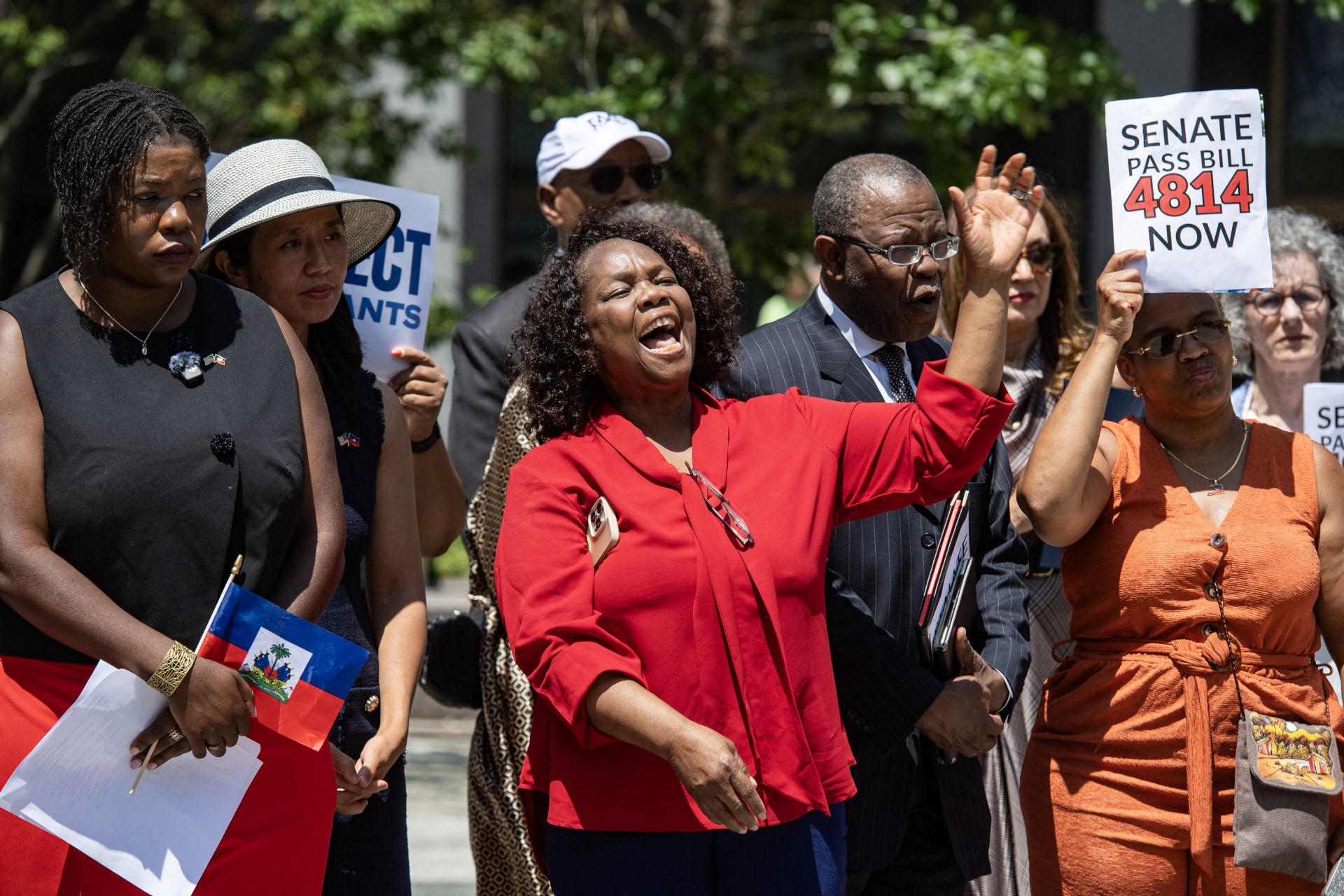
With this ruling from the Supreme Court, the end of TPS for Haiti is upon us. The federal judge in Washington, D.C., who initially issued the injunction blocking the end of TPS is now awaiting the Supreme Court mandate to lift her stay, thus determining the final fate of Haitian TPS holders. While there have been legislative attempts to preserve TPS protections for Haitians, such as Senate Bill S.4814, which would provide a three-year extension for current recipients, those attempts have failed. TPS for Haiti is now a thing of the past, and the lives of thousands of Haitians in the U.S. will be irrevocably changed. Our country, too, will not be the same.
Become a member today to receive access to all our paywalled essays and the best of New Lines delivered to your inbox through our newsletters.