


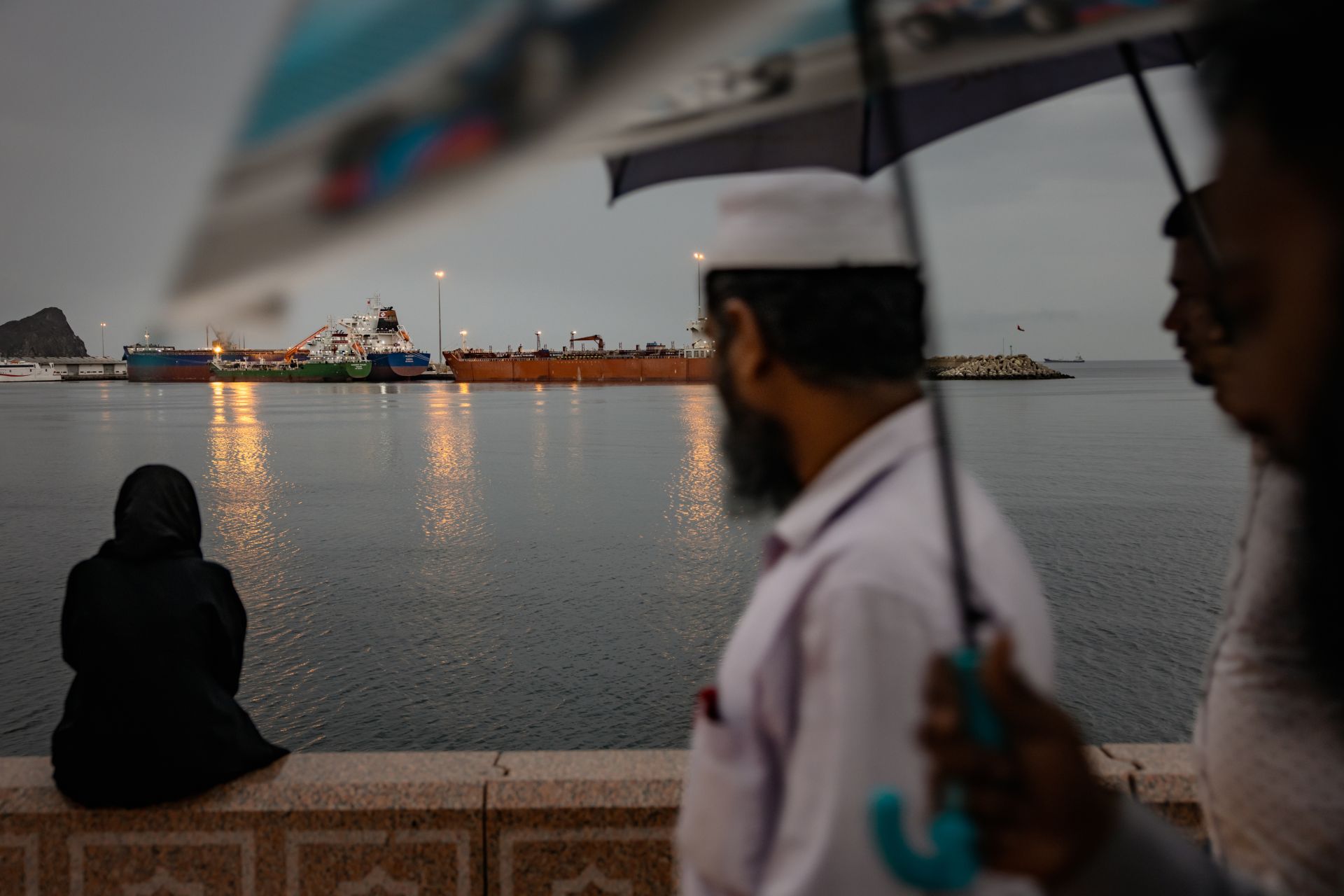
The Islamic Revolutionary Guard Corps (IRGC) does not need aircraft carriers, command of the sea or even a total blockade to threaten the global energy supply. In the Strait of Hormuz, it relies on something older, cheaper and, in some ways, more effective: the weaponization of geography. The corps does not need to destroy fleets or physically block every vessel to produce systemic disruption. It only needs to raise the risk of transit high enough that normal commercial operations begin to break down.
That is what the latest phase of the crisis in Iran reveals. Rather than imposing a uniform closure, the IRGC is using Hormuz as a selectively managed instrument of pressure, signaling which vessels may pass, which may not and at what economic cost.
Recent reporting by various news agencies indicates that Iranian authorities have signaled readiness to let Japanese-linked vessels transit Hormuz, while Indian liquefied petroleum gas (LPG) carriers were among the few ships permitted through earlier in the crisis. At the same time, emergency war risk coverage has been introduced to support ships attempting to navigate the strait. Hormuz is no longer merely a threatened choke point; it is already operating as a mechanism of differentiated access, commercial fear and geopolitical leverage.
That matters because it suggests Iran is not pursuing a purely uniform closure of Hormuz, but a politically selective one. In the words of Ali Mousavi, Iran’s representative to the United Nations’ maritime agency, the strait remains open to all shipping except vessels linked to “Iran’s enemies.” The pattern points to a strategy that keeps overall traffic constrained enough to sustain pressure on shipping and energy markets, while allowing limited flexibility toward vessels linked to countries still seen as diplomatically useful.
The passage of Indian LPG carriers, together with limited accommodation toward Japanese-linked shipping, suggests a differentiated regime of access rather than a fully indiscriminate shutdown. It also indicates that whatever mine threat exists in Hormuz has not made the entire corridor uniformly impassable. Had the navigational lanes been comprehensively and randomly seeded, such selective transit would have been far harder to manage. What emerges instead is a method of calibrated disruption: enough uncertainty to unsettle commercial confidence, but enough control to preserve political signaling and strategic leverage.
The Strait of Hormuz remains one of the central arteries of the global energy system. The U.S. Energy Information Administration says that roughly 20 million barrels per day move through it, equal to about 20% of global petroleum liquids consumption, while around one-fifth of global LNG trade also goes through the same passage. The dependence is especially acute in Asia: 84% of the crude oil and condensate moving through Hormuz goes to Asian markets, with China, India, Japan and South Korea accounting for 69% of total Hormuz crude and condensate flows.
The economic shock is no longer hypothetical. In recent days, oil prices have moved sharply with every military and political signal: Brent rose above $103 per barrel as Gulf supply fears intensified after President Donald Trump said on March 22 that the U.S. would “hit and obliterate” Iranian power plants if Hormuz were not fully reopened within 48 hours. It then dropped back below $100 after Trump postponed those strikes on March 23 for five days. That kind of volatility shows how quickly risk in Hormuz is transmitted into the world economy.
Its vulnerability is geographic as much as political. Although the strait is about 21 miles wide at its narrowest point, the actual shipping lanes are only about 2 miles wide in each direction, separated by a 2-mile buffer zone. That means a relatively small area of disruption can affect an outsize share of world energy trade. For Saudi Arabia, Iraq, the United Arab Emirates, Kuwait and Qatar, this narrow maritime corridor remains a critical outlet for exports. Alternative routes exist, but only partially. They do not erase the choke point; they merely reduce some of the pressure.
This is why the IRGC’s strategy in Hormuz fits the logic of asymmetric maritime warfare. Once insurers increase premiums, crews become reluctant to sail and escort missions cannot fully guarantee safe passage, the strait can become functionally constrained even without a formal blockade. The effect lies in generating enough danger and uncertainty for the market itself to react. Published accounts have tracked attacks on civilian vessels in the Gulf, reporting that at least 22 civilian ships — including tankers, container ships and other bulk carriers — were attacked after the U.S.-Israeli campaign began. That record reinforces the central point: The IRGC’s objective is not traditional naval victory, but the spread of commercial risk across the wider shipping system.
The IRGC’s current emphasis on Hormuz reflects a hard strategic reality: Iran has been aware for years that its air power cannot rival that of the U.S., Israel or other advanced militaries it might confront in a major war. That disparity helps explain why the Strait of Hormuz and the wider Gulf have for years occupied such a central place in Iran’s asymmetric doctrine. Rather than an improvised response to the present war, Hormuz has long offered the regime a domain in which geographic position can be converted into coercive leverage. What the current imbalance has done is make that preexisting option more central, shifting emphasis away from symmetric contestation over Iranian territory and toward the maritime and economic arenas. That is also why mines matter so much — not because there is solid public evidence that Iran planted thousands of them, but because even a limited mine threat in a corridor this narrow can generate strategic consequences far beyond the tactical level.
Iran has long invested in mine warfare as part of its asymmetric naval doctrine, including systems such as the Sadaf-02 and the Maham series. Reporting and defense analysis have linked these capabilities to Tehran’s long-standing effort to turn Hormuz into a low-cost, high-impact pressure point in any confrontation with the West. What gives mine warfare its geopolitical significance in Hormuz is not only the possibility of physical destruction, but its ability to reconfigure movement, delay transit and turn a narrow maritime passage into a space of uncertainty. Mines are valuable to Iran as low-cost instruments for magnifying fear, delay and economic pressure.
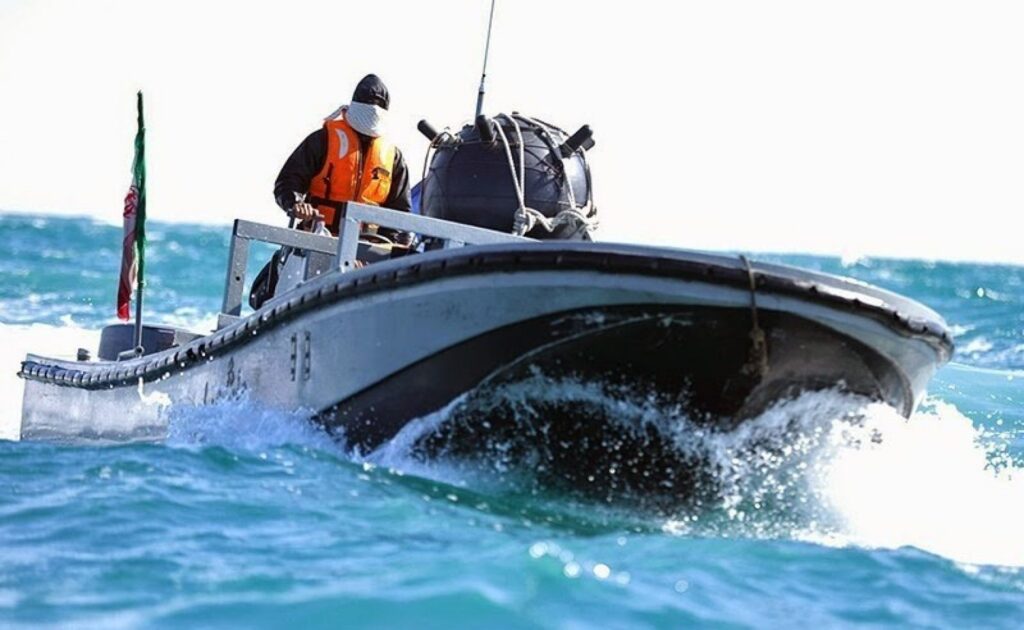
More than a regional flashpoint, Hormuz functions as a geopolitical transmission belt. A threat issued in the Gulf becomes a rise in oil prices in Europe, higher insurance costs in Asia and a diplomatic problem in Washington.
The latest developments only sharpen that reality: Selective passage for some ships, emergency war risk coverage for others and intensified international diplomatic maneuvering all show that the struggle over Hormuz is already radiating outward into the world economy. That is why every escalation around the Strait of Hormuz matters far beyond the ships currently passing through it. What is playing out there should not be mistaken for evidence of IRGC strength. It is evidence of how a weak actor can exploit a uniquely strategic geography to generate disruption far beyond its conventional military reach.
In Hormuz, the power on display is not the power of the IRGC. It is the power of geography.
“Spotlight” is a newsletter about underreported cultural trends and news from around the world, emailed to subscribers twice a week. Sign up here.