

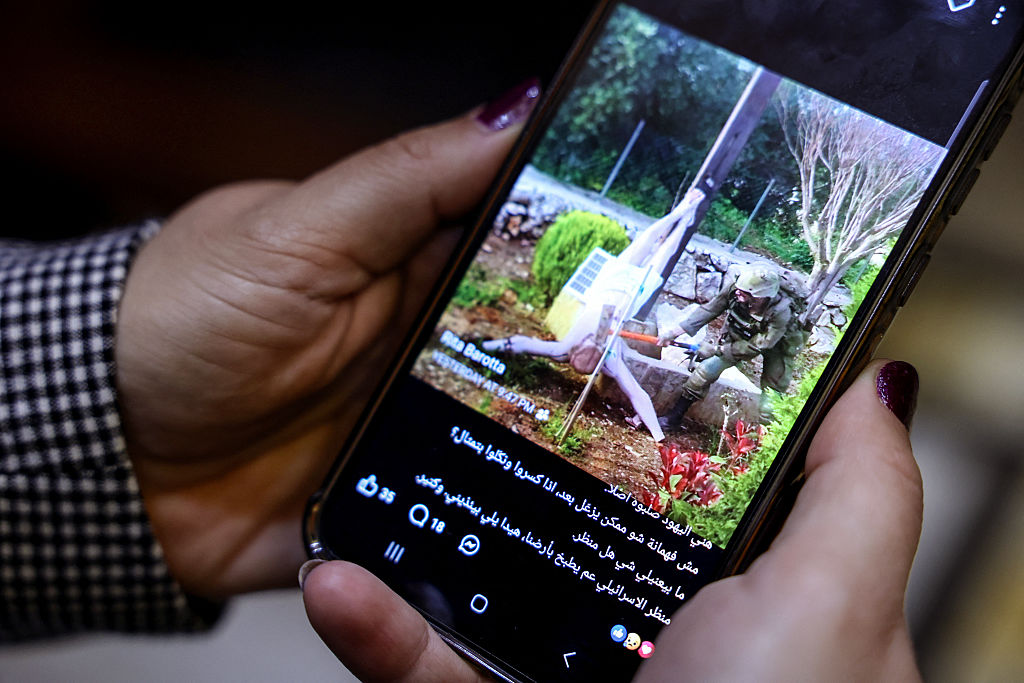
A photo of an Israeli soldier using a sledgehammer to destroy a crucifix in the Christian village of Debel in southern Lebanon made international news on April 20, after it was shared widely on social media. The incident provoked widespread condemnation, including from people identified as strong supporters of Israel, such as U.S. Ambassador Mike Huckabee. Notably, the Israeli government also issued official apologies.
Prime Minister Benjamin Netanyahu posted a condemnation of the incident on his X account, and a promise of “harsh disciplinary punishment” for the soldier who committed the act. Within two days, the army spokesperson’s office posted a photo on its own official X account that showed a replacement crucifix along with an apology and the assurance that the army was “working to ensure” that such an incident would not recur.
The strong condemnation and apology from official Israel might seem surprising to observers, given the death and destruction it has caused in recent months.
Since March 2, Israel has destroyed an estimated 1,400 buildings in southern Lebanon and displaced about 1.2 million people. A priest, Pierre al-Rahi, was killed in March when an Israeli tank fired a second time on a home in the Maronite Christian village of al-Qlayaa in southern Lebanon, while he was helping to rescue people who had been trapped in the rubble caused by the first blast. Data published by the U.S.-based Committee to Protect Journalists shows that Israeli military strikes have killed 16 journalists in Lebanon since October 2023. According to a February 2026 report published by The Lancet, a conservative estimate of the number of Palestinians killed in Gaza between Oct. 7, 2023, and Jan. 5, 2025, by military violence is 72,500, while the final tally could exceed 185,000. Israeli and international media have published many credible reports that Palestinians imprisoned in military jails since October 2023 have been subjected to torture, including sexual abuse.
In all of these cases, Israel has denied responsibility, doubled down on its actions or dismissed those who accused it of wrongdoing. In none of these cases did Israel apologize or try to make amends.
Nor is the Debel incident an isolated one. Israeli media has been reporting for years on religious nationalists spitting at churches, priests and Christian pilgrims in Jerusalem’s Old City. Type the Hebrew words “spitting on Christians” in Google search, and it will offer the auto-complete “in Jerusalem.” Israeli television and legacy newspapers have published many reports over the years, always with an angry and censorious tone. At the end of a report broadcast on Oct. 3, 2023, with footage showing religious Jews spitting in the direction of Christian pilgrims making their way along the stations of the cross on the Via Dolorosa, the journalist asks rhetorically: “This begs the question of what we would say if people spat on Jews as they made their way to synagogue anywhere else in the world.” Channel 13, a commercial network, broadcast a similar report in February 2025.
The tone of these reports in Israel’s legacy media reflects widespread revulsion among secular, centrist Israelis. Yet priests in Jerusalem tell Israeli journalists that these incidents are occurring constantly, with increasing frequency and violence, on a daily basis. Video footage disseminated yesterday on social and legacy media shows a religious settler, identified by his ritual fringes (tzitzit) and style of dress, physically attacking a French nun in Jerusalem, shoving her violently to the stone pavement and kicking her. An Israeli journalist who identified the attacker as Yona Schreiber, a far-right activist, describes the video footage as “difficult to watch.”
But Israeli television did not broadcast footage during the war on Gaza, which scholars and experts in international law have described as genocide, and only a very few on the far left condemned the mass killings. Nor have legacy Israeli media outlets criticized or asked questions about the killings of Lebanese journalists.
Given this background and context, why did official Israel and ordinary Israelis alike condemn and apologize for the incident of the soldier photographed smashing a crucifix?
The history of the Jews in Europe and in Israel specifically provides some insight.
Jews were, as is well known, persecuted for millennia by various churches — Catholic, Orthodox and, later, Protestant. The Catholic Church presided over the Inquisition, the Orthodox Church was associated with the pogroms against Jews in the 19th- and early 20th-century Russian Empire and Martin Luther, the theologian who was the seminal figure of the Protestant Reformation, prescribed burning the property of Jews and expelling them.
This history created a legacy among some Jews of unease toward and mistrust of Christians that sometimes manifested in revenge fantasies or practices like spitting. There were other, less violent practices that reflected the animus. Religious Jews in Europe traditionally refrained from studying the holy texts on Christmas, for example. Instead, they played cards on that day.
The Holocaust sharpened this unease and produced remarkable tensions during the 1948 war between the Zionist leadership, headed by David Ben-Gurion, and the soldiers who had survived the Nazi death camps. The survivors were angry at the church, which had failed to save them from the Nazis. But the Zionist leadership was anxious to preserve a good relationship with the Christian world, which is why Ben-Gurion, as Derek J. Penslar, the William Lee Frost professor of Jewish History at Harvard University, said in an interview with New Lines, issued a command that Jews in Jerusalem who defiled Christian or Muslim holy sites be shot. This followed several complaints from Christian leaders that holy sites had been desecrated by Israeli soldiers.
Despite Ben-Gurion’s concerns, there were many cases of the victims of European crimes becoming the perpetrators of crimes in Palestine. Alon Confino, professor of Jewish Studies at the University of Massachusetts, Amherst, writes about this at length in his 2015 essay “The Warm Sand of the Coast of Tantura: History and Memory in Israel after 1948.”
Just as Ben-Gurion failed to stop the first Israeli soldiers from committing violent acts against Christians and their property, so has Netanyahu failed to prevent contemporary soldiers from committing similar acts. The question of why Israel, with its extensive intelligence capabilities, cannot prevent these acts is unanswered.
The worldwide reaction to the incident of the destroyed crucifix is interesting, in that it seems to be louder and more extensive than the reaction to the genocide in Gaza or the displacement of more than a million civilians from southern Lebanon. Penslar pointed out that the reaction “sounds a lot like the old medieval myth that Jews desecrated communion wafers, which represent the body of Christ.”