

Syria Arrests Notorious War Criminal; Al-Sharaa Regrets Attending Sports Hall Concert
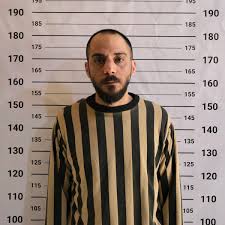
This past week in Syria has featured quite a bit of drama, but two particular incidents that have garnered a lot of social media attention shed some light on the challenges facing the country over a year after the fall of Bashar al-Assad’s regime, and the pitfalls on the road of transition.
The more dramatic event was the capture earlier today of former Syrian warrant officer Amjad Youssef. Youssef was one of the key perpetrators of a massacre of nearly 300 people in the district of Tadamon in Damascus in 2013. He was identified in a New Lines investigation back in 2022, one carried out by Annsar Shahhoud and Uğur Ümit Üngör, who obtained leaked footage (27 takes in total) documenting the massacre. Youssef featured in the videos, in which he is shown shoving blindfolded civilians into a mass grave filled with victims’ corpses and shooting them on camera.
Using “Anna,” a fabricated persona of a young Alawite woman from Homs that they had cultivated in pro-regime circles since 2018, the authors drew Youssef into months of interviews in which he eventually confessed to killings he’d carried out during the civil war, framing them as revenge for his brother’s death.
The Ministry of Interior announced that Youssef had been apprehended in a raid in the Sahl al-Ghab region of Hama. An image on the ministry’s account on social media showed a mugshot of Youssef, and several videos were posted showing snippets of the raid, with ecstatic security personnel shouting “God is great” as they held on to Youssef’s handcuffed arms. Spontaneous demonstrations broke out in various parts of Syria, including in Tadamon, where residents stood vigil around the location of the mass graves where Youssef shot his victims.
A ministry spokesperson said security forces had attempted to arrest him in September last year but failed, and had tracked him to the village of Nabe al-Tayeb a month ago. He said Youssef’s mother was from Qardaha, the birthplace of the Assad clan, and was part of the regime’s security apparatus.
One thing that had always been curious to me was Youssef’s willingness, indeed almost delight, in appearing in the gruesome massacre videos with his face uncovered, allowing himself to be filmed gleefully participating in a war crime. The massacre took place in 2013, just two years into the uprising, before the course of the conflict had coalesced and when its outcome was still uncertain. This was years before the regime took back Aleppo and Ghouta, and solidified its control over many of the rebellious provinces (before the military campaign that overthrew Assad in December 2024, few expected that the dictator would ever fall, including his enemies).
Youssef’s disregard for even the veneer of deniability showed the impunity with which the regime and its Iranian and Hezbollah allies behaved, an inexhaustible belief that they would never pay for their crimes.
While his arrest disproves this, it now poses a fresh challenge to Ahmad al-Sharaa’s government. Syria has yet to truly reckon with the crimes committed during the war. Many of the masterminds of the war’s atrocities, those in the top echelons of the military, intelligence service and presidency, have fled to Lebanon, Iraq and Russia. The government has avoided prosecuting foot soldiers who simply carried out orders, and has sought accommodations with the oligarchs who controlled much of the country’s wealth under Assad. Youssef will offer a test case for a country that has largely avoided a proper reckoning with its recent past.
In lighter news, al-Sharaa himself raised eyebrows when he was filmed earlier this week watching a ceremony reopening the al-Fayhaa sports hall in Damascus, quietly observing a dance number featuring men and women in leather outfits rocking to the tune of Missy Elliott’s “Work It.” Al-Sharaa later performed a few basketball shots to a cheering crowd as he announced the reopening of the hall, stressing the importance of sports in the new Syria he was governing.
The contrast of the conservative president who once led a militia linked to al Qaeda presiding over the performance drew amusement from many on social media, as well as consternation from his more conservative base, who argued that it was unbecoming and contrary to Syrian culture.
In an interview yesterday with a Syrian journalist, al-Sharaa expressed some regret. He said joining the ceremony was a last-minute decision, as he was preparing for a Gulf tour, and that he was not aware of the event’s program.
“We weren’t aware of the program, and I found the performance strange, because these ceremonies ought to have an aim that matches the traditions of the region, and delivers a message,” he said. “I have respect for these reactions and directed [organizers] that such national events in the future ought to have an aim and be linked to the traditions and culture of Syria.”
This balancing act is not new. Just yesterday, al-Sharaa secured the release of one of his former nemeses in the Damascus area, Issam Bouweidani, who was jailed in the United Arab Emirates after he traveled there with a Turkish passport in April 2025 (sporadic protests have demanded his release). Al-Sharaa said he tried to negotiate his release before, but the attempts failed. This time, UAE President Mohammed bin Zayed approved the release, following what Emirati media described as Syria’s “honorable” position during the Iran war, when it unequivocally took the side of its Gulf allies against Iranian attacks.
Al-Sharaa has long had to balance the expectations of the liberal section of the population that rose up against Assad in pursuit of democracy with those of a larger, more traditionalist base. The international community, for its part, is frequently ready to pounce on perceived missteps, while regional allies that support Syria expect it to take an anti-Iran line after Tehran’s long backing of the Assad regime. Al-Sharaa’s government has often had to walk back measures that drew backlash for being perceived as too restrictive, such as the recent ban on alcohol sales in certain parts of Damascus and an attempted ban on bikinis at public beaches. This time, on the sports hall concert, al-Sharaa acknowledged frustrations in more conservative quarters of the population.
It won’t be the last time.