

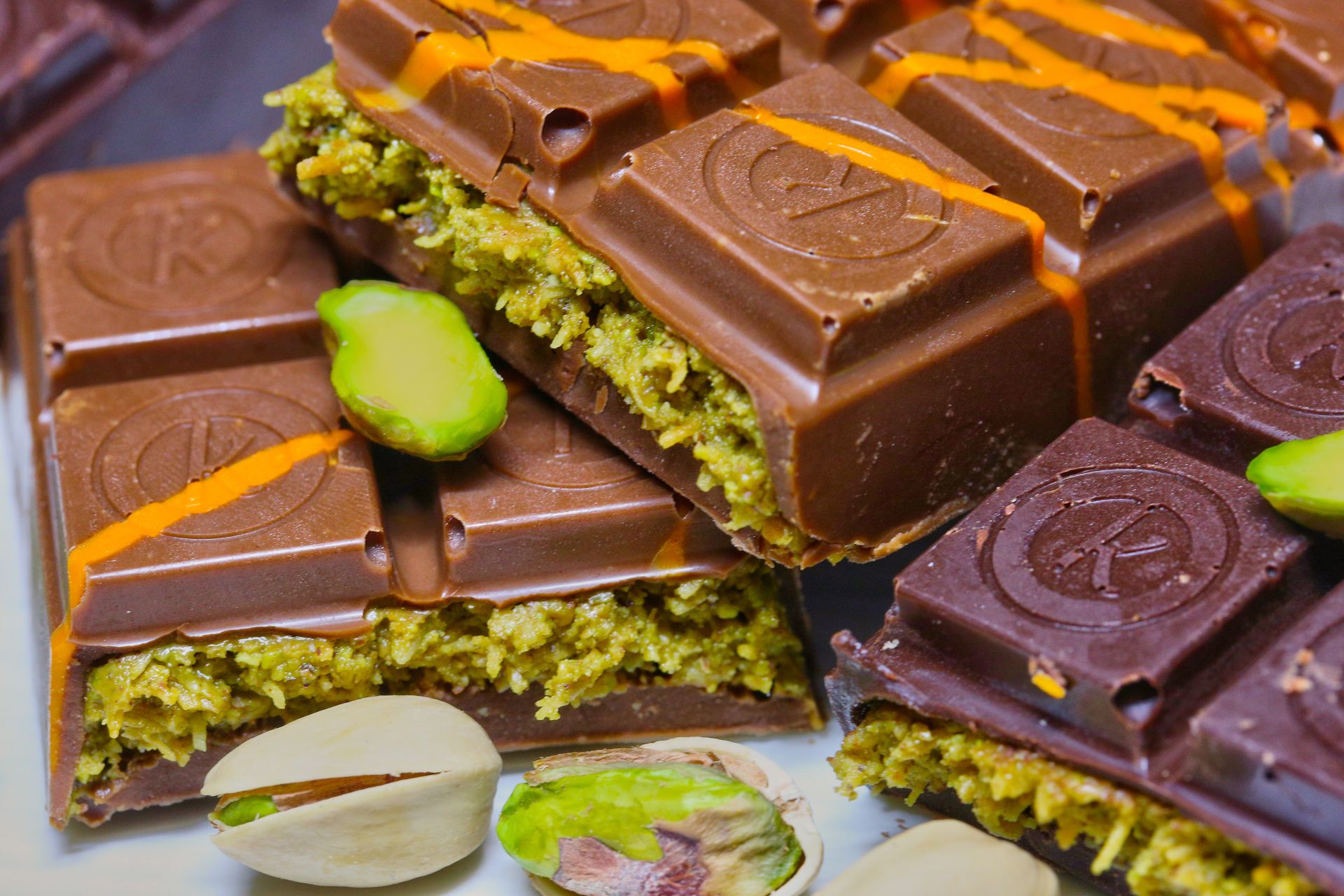
Dubai chocolate, synonymous with luxury, may be in danger. Invented in Dubai, the pistachio- and phyllo-filled chocolate bar has spread from the city’s boutiques to London’s bakeries (and beyond), thanks largely to TikTok. The viral Dubai craze has also turned the Middle Eastern confectionery into a status symbol like matcha or truffles, and stimulated intense demand for pistachio products around the world. From Lindt chocolates to Starbucks, global brands have gone nuts for the versatile green kernels.
Dubai chocolate arrived in 2023 and became a cultural phenomenon overnight. Influencers and celebrities like the Kardashians were spotted slicing open molten green centers for millions of viewers online. But having risen with help from social media, Dubai chocolate is now threatened by the closure of one of the world’s biggest maritime choke points: the Strait of Hormuz.
The disruption of the waterway — first by Iranian threats and now escalating American military pressure — has stopped the movement of a key ingredient: Iranian pistachios. The Iranian Pistachio Association says that, “due to hostilities and the halt of shipments,” exports to the United Arab Emirates and other Gulf countries have remained “subdued,” and are likely to remain so unless the strait is fully reopened. Financial reports show prices surging to an eight-year high as shipping routes tighten and traders begin hoarding stock. Importers say wholesale prices have risen from roughly $22 per kilo to nearly $25 in recent weeks alone.
Iran produces roughly a fifth of the world’s pistachios, and its kernels are prized across the Middle East for their higher oil content and richer flavor. Chocolatiers in Dubai cannot simply switch to American pistachios, which many consider drier and less suitable for confectionery.
The supply pressure is spreading beyond pistachios. Raisins and saffron — staples of Middle Eastern sweets — are also becoming more expensive, threatening an important cornerstone of Middle Eastern cuisine: baklava itself, the syrup-soaked dessert underpinning much of the region’s confectionery economy. Gulf traders who stockpiled before Ramadan have temporarily shielded consumers from sharper price rises, but few believe this can last indefinitely.
On the streets of London, particularly in areas frequented by Middle Eastern consumers like Edgware Road and Knightsbridge, there is already concern that prices will have to rise soon. Others, like the sweet shop chain Mahmut Efendi, which relies on Turkish pistachios, remain largely unaffected.
And therein lies the irony. The closure of the strait, combined with the fact that American pistachio supplies are already heavily committed to existing contracts, has left Turkish and Syrian growers in an unexpectedly advantageous position. Producers in Gaziantep and northern Syria are filling gaps left by Iranian shortages, turning regional instability into commercial opportunity. As a result of war and sanctions, a dessert built on Gulf luxury and Iranian exports may ultimately enrich these farmers in Turkey and Syria.