

Arabian Gulf observers often have the thankless task of trying to discern the region’s policy priorities and relationships by trying to read between the lines of official announcements — an omission here, an unusual word there that could signify subtle shifts in rhetoric.
So it can be quite helpful when figures like Hamad bin Jassim Al Thani, the former prime minister of Qatar, or Prince Turki al-Faisal, the former long-serving Saudi intelligence chief, emerge as proxies to lay out some of the behind-the-scenes thinking that could be guiding leaders in Arab capitals as they navigate the war with Iran, the targeting of their homelands with missiles and drones, and the closure of the Strait of Hormuz, long a lifeline underpinning their prosperity.
The insights of these Gulf elders are particularly pertinent because of the unprecedented nature of the challenges facing their countries and the taboos that have been broken. As the Gulf states have absorbed endless salvos of missiles and drones dispatched by the Iranians from across the sea, they now appear willing to go further than they ever have in their retaliation. Today, and over the weekend, the Wall Street Journal and Reuters reported that the United Arab Emirates and Saudi Arabia carried out covert strikes on Iranian territory in response to attacks from Tehran.
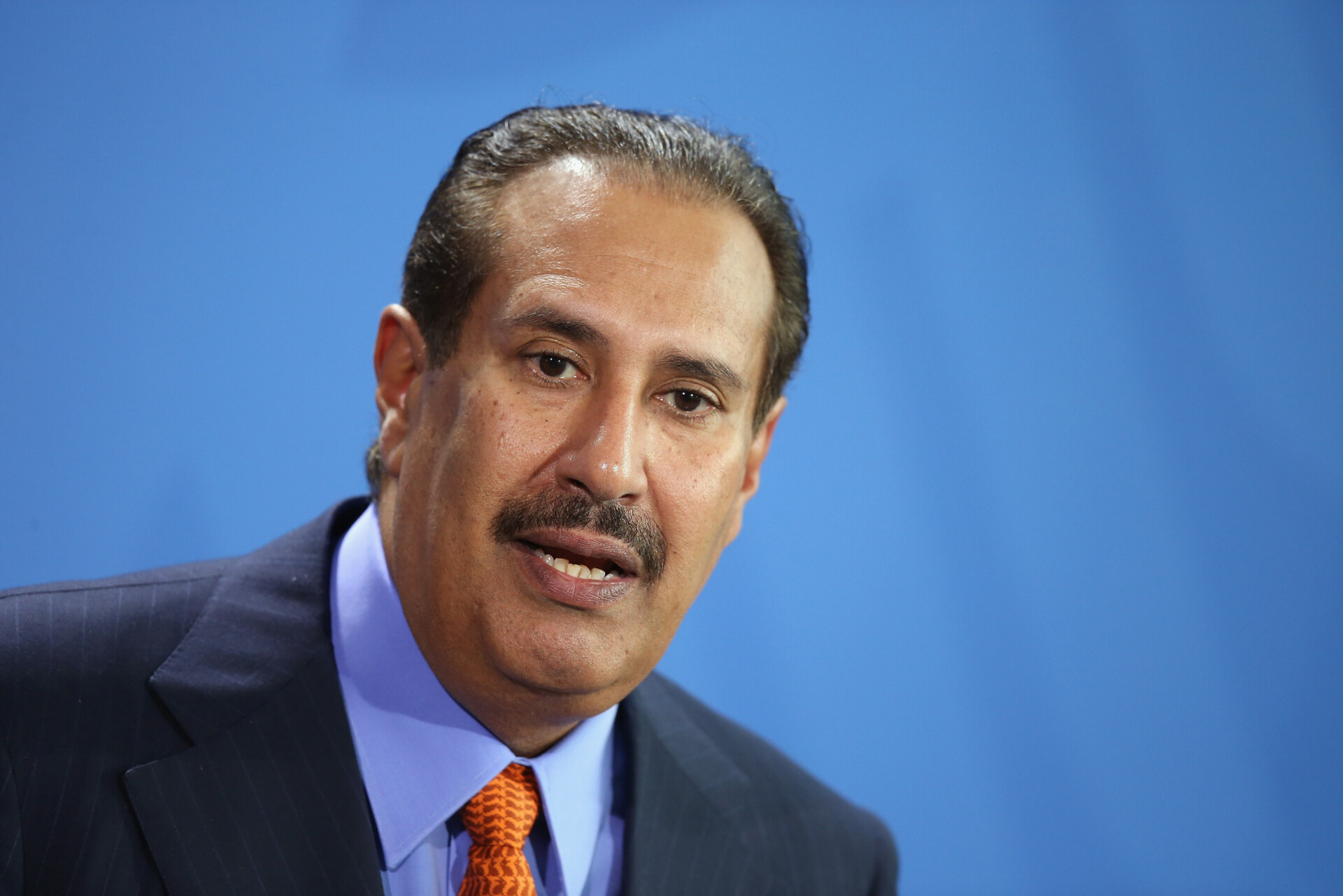
HBJ this week sat down for a long interview with Al Jazeera, the Qatari-owned broadcaster. It was the latest in a string of media appearances that have continued throughout the war, including with BBC Arabic and Russia Today, and followed a long thread on X offering thoughts on the conflict and its evolution and implications. His public statements perhaps indicate that the former prime minister, who holds no official positions, is acting as a surrogate of the Qatari government (the country’s current ruler, Emir Tamim bin Hamad bin Khalifa Al Thani, has made no media appearances).
There are three major interesting takeaways from the interview.
First, HBJ discussed Iran’s approach to closing the strait, saying Tehran had essentially created a de facto situation in which the waterway is part of its sovereign territory, and that the Gulf states ought to take the matter to the United Nations to codify freedom of access to it internationally.
“Iran is now closing the strait — which belongs to the Gulf — and is now speaking about it as part of Iran, not an international strait. Here you have created a new situation for discussion that did not previously exist,” he said. “This is, in my view, political thuggery. You take the strait hostage as an international waterway, and at the same time you say you want international law to protect you. You have not complied with international law.”
He added: “Hormuz is an international passage, an international responsibility and a Gulf responsibility before it becomes international … this strait must be addressed through a U.N. treaty to remain an international passage.”
Second, HBJ equated Israel and Iran in terms of the threat they posed to the region. Significantly, he pointed out the open secret that Qatar had long had relations with Israel by saying he had been involved in normalization talks long before the Abraham Accords, but that Doha had ultimately abandoned them because they were “empty” (he also said he was the first intermediary between the U.S. and Iran on the nuclear file back during the Clinton administration). HBJ said that Israeli Prime Minister Benjamin Netanyahu had exploited the differences of opinion in the Gulf on how to handle Iran to convince the American administration to launch its latest war, and pointed out that Qatar had been attacked by both Israel and Iran.
“Two qualities in Israel and Iran: They are the only two entities that have aggressed against or expanded outside their territory,” he said, a stance that conflicts with that of the UAE, which has sought closer relations with Israel since the start of the war and has expressed disappointment with other Arab countries in the region for not standing more closely in solidarity as it bears the brunt of Iranian retaliation.
This view was mirrored in a column over the weekend by al-Faisal, who also argued that Israel had sought to plunge the region into a wider war that would have had devastating consequences. The column underlined the rift with the UAE on Israel and its designs.
“Had the Israeli plan to ignite war between us and Iran succeeded, the region would have been plunged into ruin and destruction,” al-Faisal said. “Thousands of our sons and daughters would have been lost in a battle in which we had no stake. Israel would have succeeded in imposing its will on the region and remained the only actor in our surroundings.”
This ties in to the last significant takeaway, which is HBJ’s call for a Gulf NATO. The term itself, which he used, is somewhat misleading: What he appears to be talking about is something more akin to a Gulf version of the European Union, which includes some version of mutual protection as well as closer economic and political ties.
This is an unusual statement from a Gulf country that only a few years ago was blockaded by its ostensible partners, the UAE and Saudi Arabia, over its relationship with Iran, with talk of potentially toppling the emir. Gulf military cooperation in the past, personified in the Peninsula Shield force, has had little use outside of quelling the Arab Spring uprising in Bahrain in 2011. Saudi Big Brother-type hegemony has always been a concern, and so have the differences in Gulf views toward Iran, which include Oman’s historic relationship with it and Qatar’s willingness to maintain diplomatic relations at the height of tensions with the Gulf.
Moreover, given Emirati apprehension toward neighboring Arab states and its close-knit alliance with Israel, such a pact may seem dead in the water. Still, HBJ said that a Gulf agreement mirrored on the EU does not necessarily need to include all Gulf Cooperation Council member countries at the outset; it could begin with a core of three or four countries and expand as others see fit to join, an arrangement that may ultimately isolate the UAE.
“When Europe built the European Union, it didn’t start with 27 countries,” he said. “It started with six or seven countries. Start with three or four Gulf countries on a sound basis — because, after a few years, they mustn’t go back to fighting each other — and the rest will join at any time they see fit. They are part of the GCC; any member can join whenever they see it appropriate.”