

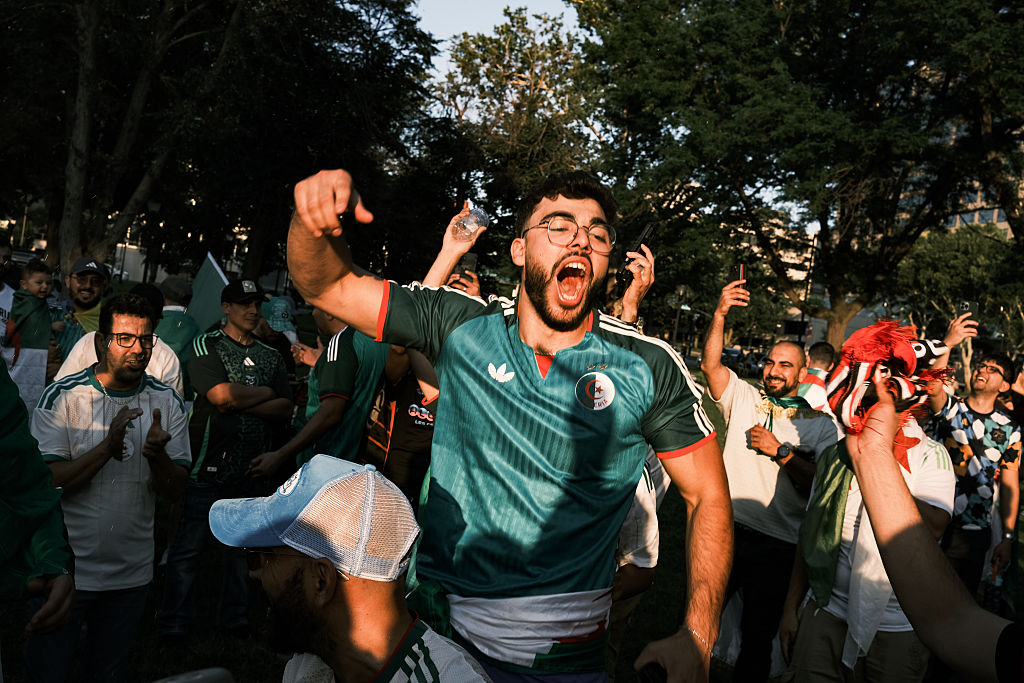
One of the most wholesome and viral storylines to emerge from the first week of the World Cup is the unlikely love affair between the city of Lawrence, Kansas and the Algerian national team, which is based there for the duration of the tournament. The internet has been alight with charming videos of corn-fed Kansans enthusiastically welcoming the Fennec Foxes, learning their chants, packing training sessions and sporting the team’s kit on their way to becoming certified ultras. The land artist Stan Herd, a Kansas native, even created the world’s largest Algerian flag in a field. A clip of one Lawrence resident who attended the unveiling saying he walked the perimeter of it rather than walking over it — so as not to disrespect the flag — had Algerians on the internet beaming with love.
At first blush, many saw it as a tale of opposites attracting, but some Algerians found a deeper connection to the Sunflower State than just its warm hospitality: The two locales share a deep, rebellious current and a history of freedom fighting.
In 1854, the U.S. was careening toward civil war, with the debate about slavery raging in both the established states and territories that hoped to join the Union. The fate of Kansas lay in the balance — Congress had passed the Kansas-Nebraska Act, which allowed residents to decide by popular vote whether the territory would enter the Union as a free or slave state. Thousands of pro-slavery Missourians streamed over the border to settle there, and they held control of the official territorial government. But abolitionists from New England soon cottoned onto the scheme and arrived in Kansas. Their counter-capital? Lawrence.
Two years later, an attack on abolitionist printing presses and buildings throughout the town was a key moment in an extended, bloody battle in the territory. Bleeding Kansas, as the period would be known, also saw the famous abolitionist John Brown wield the violent tactics that he believed were the only way to defeat slavery.
Algerians know the sense of dread and determination that comes with revolutionary conflict in the service of freedom. After decades under French colonial rule, Algerians fought back in what would become one of the most brutal wars for independence of the 20th century and emerged victorious. Once they secured their freedom, Algiers became the capital of a different kind of Free State alliance — that of African nations expelling their colonizers. Over the coming decades, Algeria hosted revolutionary movements, supplying training, weapons, diplomatic support and solidarity across the continent, from South Africa to Cape Verde. Algiers was Nelson Mandela’s first stop when he got out of prison.
And in 1969, Algiers welcomed a group of American revolutionaries — the Black Panthers — continuing the fight for racial justice for which Lawrence, Kansas had once been a battleground.
Whether or not Algerians and Kansans know each other’s history, their shared rebel streak has brought a delightful energy to the beautiful game — and to an underdog’s run in the American Great Plains.