

As National Arab American Heritage Month comes to an end, the question remains: What is the right way to react to Arabness when it appears in public? An iconic children’s show, a pop star’s concert and a viral interview response (and the red carpet moment it inspired) offer some answers.
During a press interview last week, actor Anne Hathaway dropped an “inshallah” (“God willing”) into an otherwise unremarkable answer to a question about aging. The clip quickly went viral, prompting a wave of reactions from Arabic speakers online. The next day, at the London premiere of “The Devil Wears Prada 2,” Hathaway was recorded being handed a copy of the Quran by a male fan on the red carpet, who can be heard saying, “I got this Quran for you. I saw the video where you said ‘inshallah.’ … I love you so much.” In the same effortless style as her inshallah moment, she responded by accepting the gift and thanking the fan.
If Hathaway’s reaction suggested a kind of rare openness, the responses elsewhere revealed a much narrower bandwidth for Arab expression.
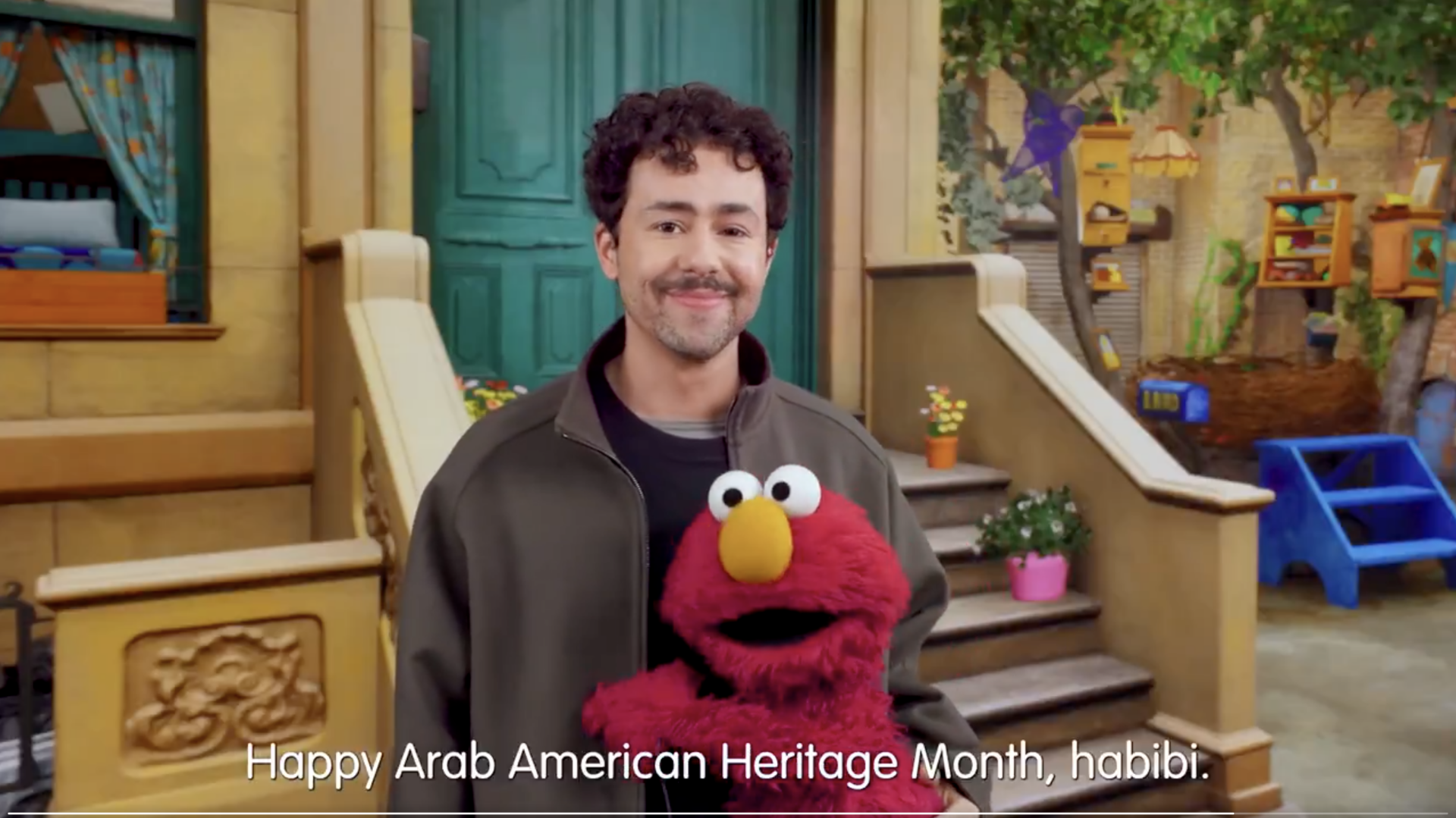
On “Sesame Street,” Egyptian-American comedian, actor and producer Ramy Youssef joined Elmo for a segment marking Arab American Heritage Month. Youssef introduced himself with a “Salaam alaikum, everyone,” explaining that “salaam means peace, and it’s a way to say hello in Arabic.” Youssef goes on to say that he’s proud of his heritage, before teaching Elmo how to use the word “habibi.” The playful exchange, which was widely viewed and shared on social media, may have been simple enough for a children’s program, but for many Arab and Muslim viewers, it registered as a small, overdue recognition on one of the most recognized platforms in America. The Wisconsin Muslim Journal praised the moment, saying it “showed that Arab culture can exist in mainstream American life without apology, without translation, and without fear.”
Unfortunately, the video also drew a predictable backlash, some of it overtly hostile and alarmist. In some of the slightly less racist invective, right-wing influencer Nick Sortor posted on X: “Shut down PBS. It’s time.” MAGA-aligned Rob Finnerty ran the headline “Islam Invasion Hits Sesame Street” on his show Finnerty Files. “I didn’t realize that Elmo is Arab,” Finnerty said. “Arab American Heritage Month is not a real thing. It was invented by the Biden administration because they were letting so many people from Arab countries into this country illegally. That is a fact.” “Elmo might be turning your kids into Jihadis,” proclaimed conservative political commentator Michael Knowles to his 1.4 million X followers, before breaking into a 20-second impression of the beloved children’s puppet.
It’s worth noting that Youssef’s own work, particularly his semiautobiographical, Emmy Award-winning show “Ramy,” has been touted for its representation of Muslim Americans and for allowing Arab-American life to exist without constant annotation. Youssef later joked about the MAGA backlash. “I feel for them, right? I think they’re worried, saying Arabic immersion, and it’s got to be tough, because I think they’re supporters of the president. So imagine your president on Easter is tweeting ‘Praise be to Allah,’ and now Elmo saying ‘habibi.’ Feels threatening.” The “Praise be to Allah” part alluded to a recent post by Donald Trump in which he used the phrase while issuing an aggressive late-night warning to Iran.
And then there was Zaghrouta-gate.
During an opening set for Coachella earlier in the month, pop star Sabrina Carpenter’s reaction to a fan who performed a zaghrouta — a high-pitched ululation common across the Middle East and North Africa and used to mark joy at weddings, celebrations and other moments of intensity — went viral. Carpenter offended many when she referred to it as yodeling, then doubled down and called it “weird,” even after being told it was cultural. What complicates this moment further is that Carpenter is not typically aligned with the politics of MAGA figures like Knowles and Finnerty. In December 2025, she publicly condemned the Trump administration for using her song in a video on immigration enforcement, calling it “evil and disgusting,” and rejecting its association with an “inhumane agenda.” Overnight, the Coachella clip had been shared thousands of times, with many versions on X taken down, allegedly by Carpenter’s team, for copyright infringement. But the damage had already been done. One observer on X called Carpenter’s reaction “nasty” and “xenophobic.” Many shared GIFs and short clips of scenes from popular films and TV series featuring zaghroutas. Carpenter later apologized, citing confusion, and said she had since learned what a zaghrouta is.
Taken together, these moments show a spectrum of reactions. On the one hand, we have Hathaway’s ease with using an unfamiliar Arabic word or encountering a gesture like being gifted a Quran on a red carpet, and allowing it to stand without immediate judgment. Yet Youssef’s Elmo appearance and the reactions to it hint at a conditional acceptance, a representation that cannot overcome either the suspicion that marked the post-9/11 era or the reflexive misinterpretation and even ridicule that we saw in Carpenter’s reaction to a fan’s zaghrouta.
For Arab Americans, recognition is now formalized, both through a month and as a census status. This Arab American Heritage month, however, has exposed the limits of that recognition.