


Hassan Saadeddin Mohammed scrambles out of a yellow tractor as I approach the plot of land he farms in his home village of Jubata al-Khashab in the southern Syrian district of Quneitra. He goes by Abu Saddam — father of Saddam. Every time someone calls out to him, he is reminded of his firstborn, snatched away by foreign forces on home soil.
Saddam Hassan Ahmed was only 16 years old when the Israeli army forcibly took him from his father’s farmland in Quneitra in April 2024. Abu Saddam hasn’t seen his son since.
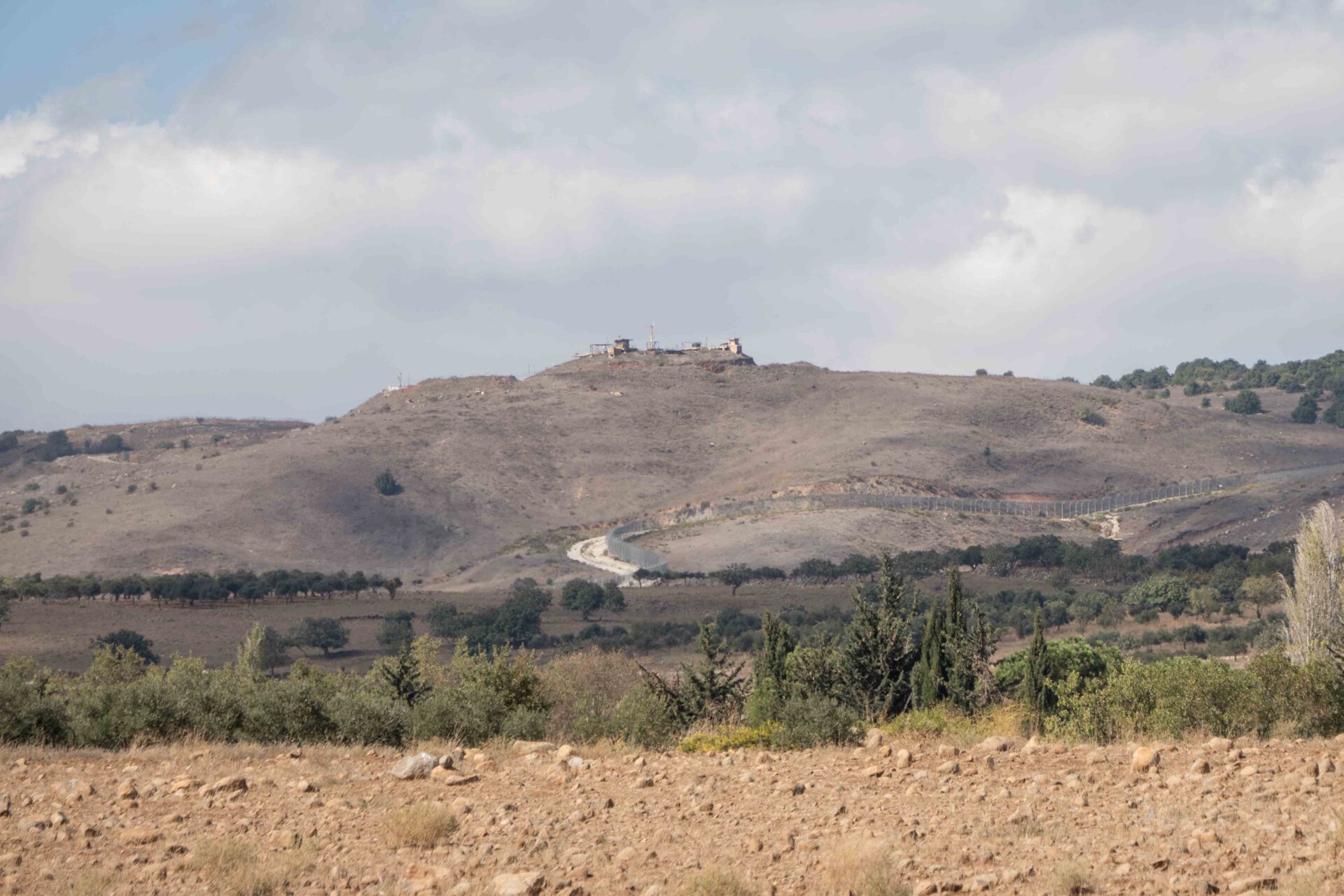
Abu Saddam climbs up a rocky hill to point toward the exact place where Saddam was taken, and I see a distant bit of empty land. That morning, the teen was working the field when Abu Saddam received news that the Israeli army had entered his land. Abu Saddam approached the area and stood near the Alpha Line, certain that the soldiers wouldn’t cross it. They took Saddam and, two days later, razed his land.
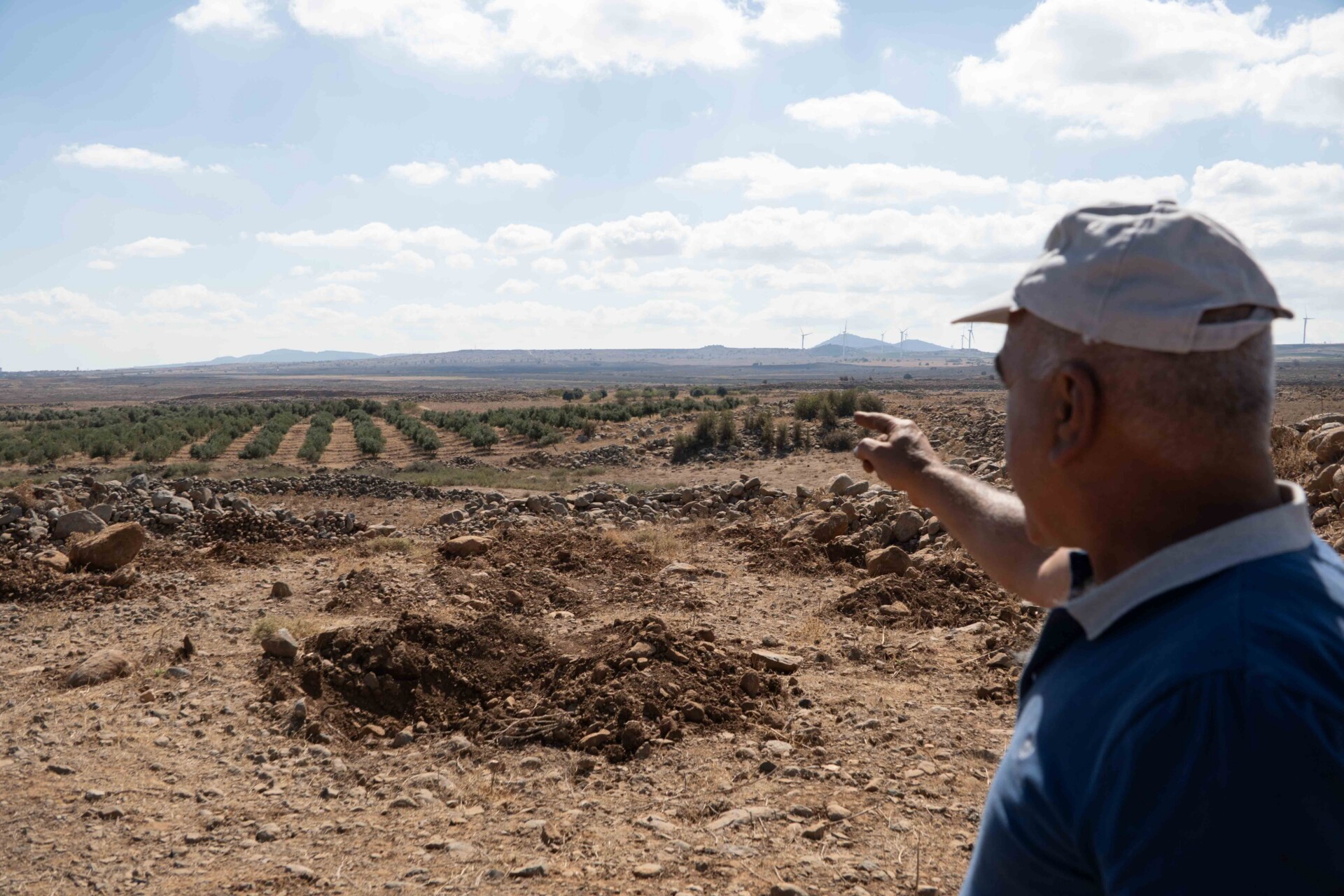
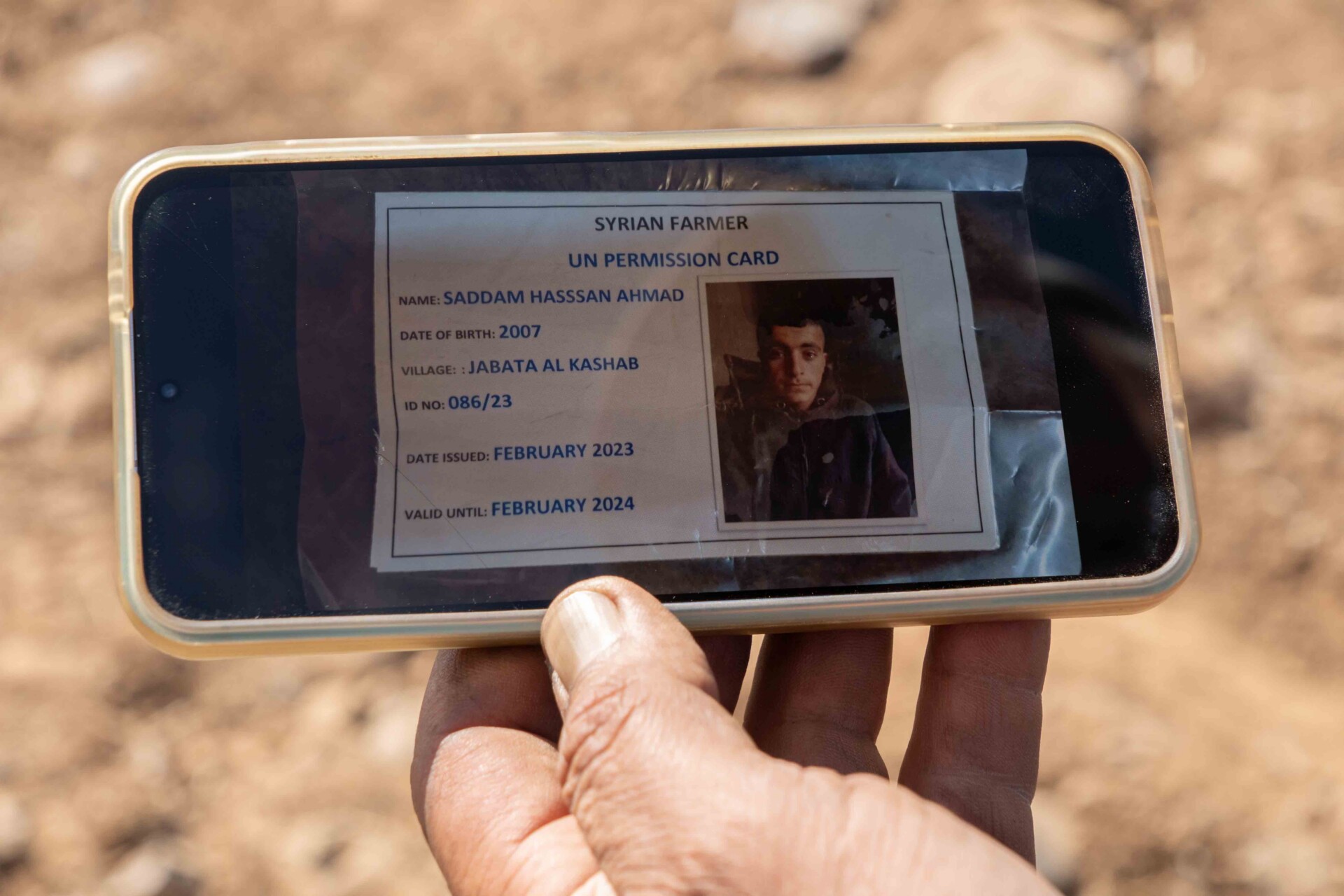
“I asked them why they were taking my son, and they said Saddam was working land belonging to Israel,” he says. “I told them it wasn’t Israel’s land, it was mine, and told them about the U.N. permission Saddam held to work the land. They said the permit meant nothing.”
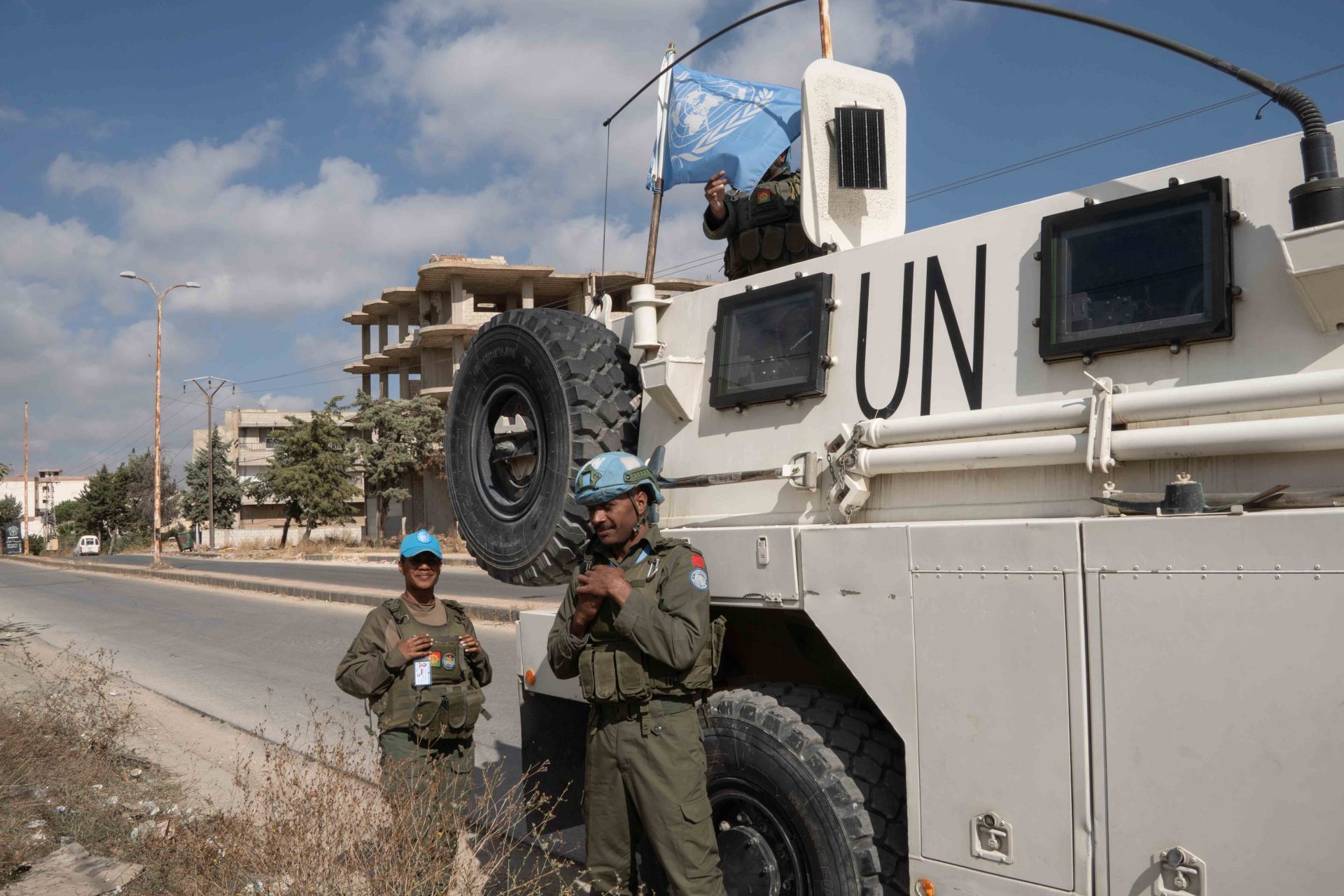
Syria and Israel have long maintained hostile relations, with Israel occupying part of Syria’s Golan Heights. In 1974, the two countries agreed to a disengagement agreement with the establishment of a buffer zone, monitored by the United Nations Disengagement Observer Force (UNDOF). The agreement set out an Alpha Line, which Israeli forces largely couldn’t cross, and a Bravo Line, which the Syrians couldn’t cross. Until the fall of the Assad regime, those conditions were generally respected, though there were occasional violations.
Saddam is one of 40 Syrians who remain in Israel after a forcible transfer across state borders, considered a war crime under the Geneva Convention. His case is unique in that the kidnapping occurred in early 2024, before the fall of the Assad regime in December that year. Since then, Israel has adopted a largely aggressive posture toward the new government, moving into the buffer zone and invading Syrian territory. It now conducts regular raids in Quneitra and Daraa, setting up “flying checkpoints” and kidnapping Syrian citizens into Israeli territory.
On Oct. 21, Israeli forces conducted an incursion into the village of Jamla in Daraa, also a site of regular violations in the south of Syria. According to locals, Israeli soldiers were setting up a checkpoint when Muath al-Baair was walking through the area. The young man, who had Down syndrome and was allegedly hard of hearing, was detained and shot, and his body was handed over to UNDOF.
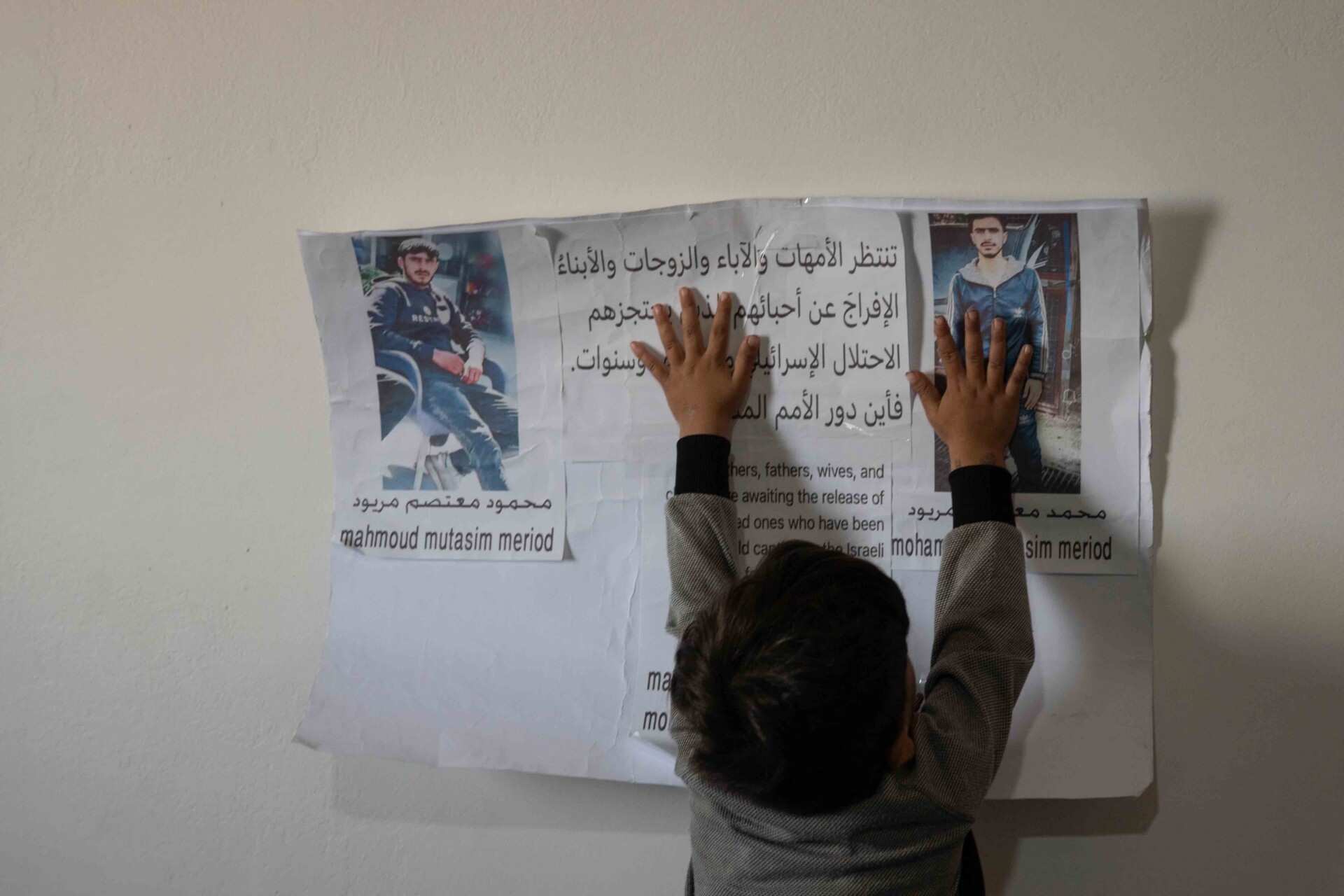
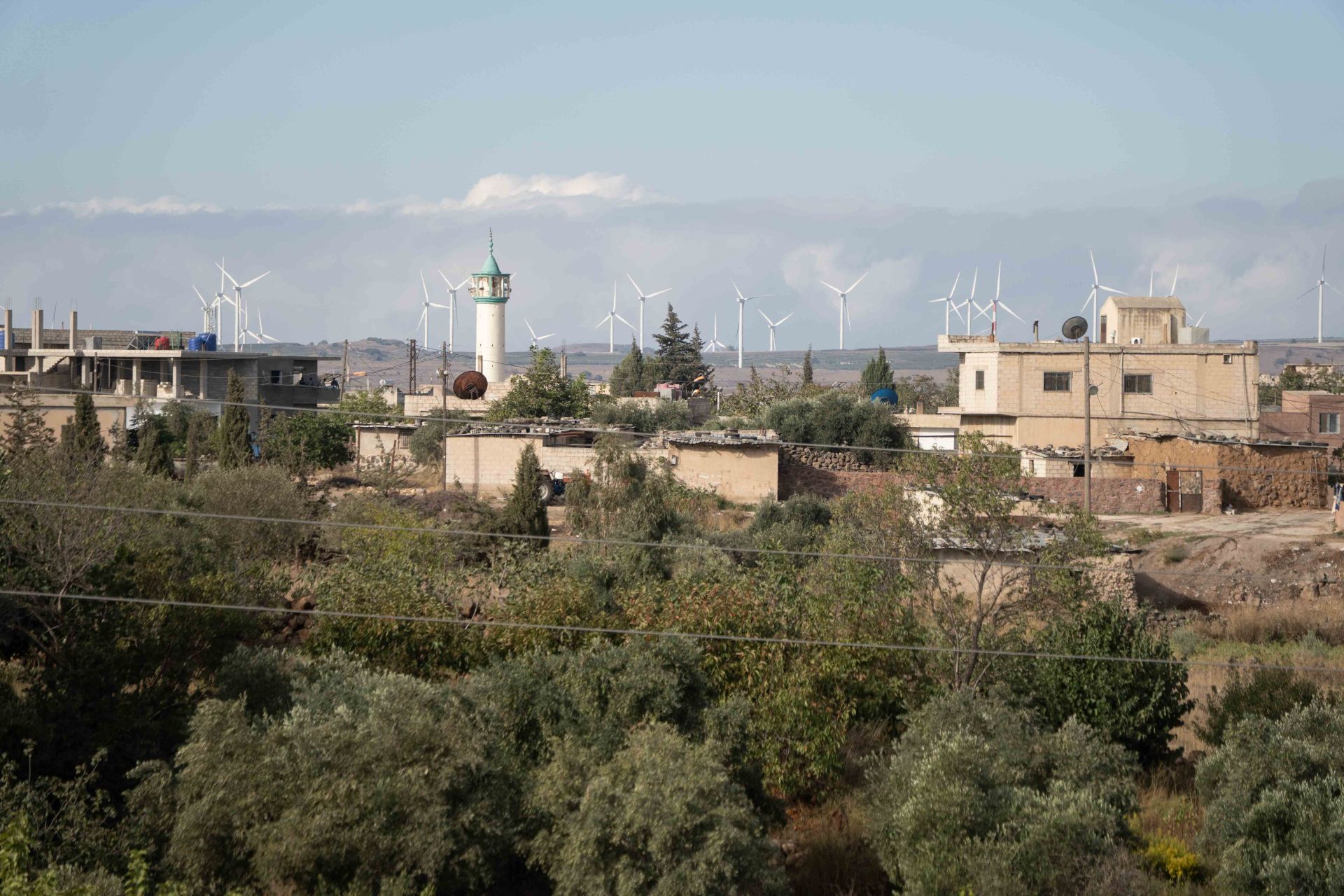
Among those who have been kidnapped are 16-year-old twins Mahmoud and Mohammed Moatasem Mreywad. Their mother, Rasha Hassan Zeitoun, sits with her 3-year-old child, Qassem, in a living room in Khan Arnabeh. Her husband puts out a cigarette in an ashtray, near a window overlooking wind turbines built by Israel in the occupied Golan Heights. Rasha married her husband a few years after the twins’ father was forcibly disappeared by the Assad regime in 2011.
“We stayed here throughout the civil war, and now they’re accusing [my sons] of being Islamic State or Hezbollah? What can a child of 16 years old even do?” she says, her eyes wet with sorrow and rage.
Behind her is a poster bearing photos of Mahmoud and Mohammed, the two almost indistinguishable. They are framed by the words “Where is the role of the United Nations?”
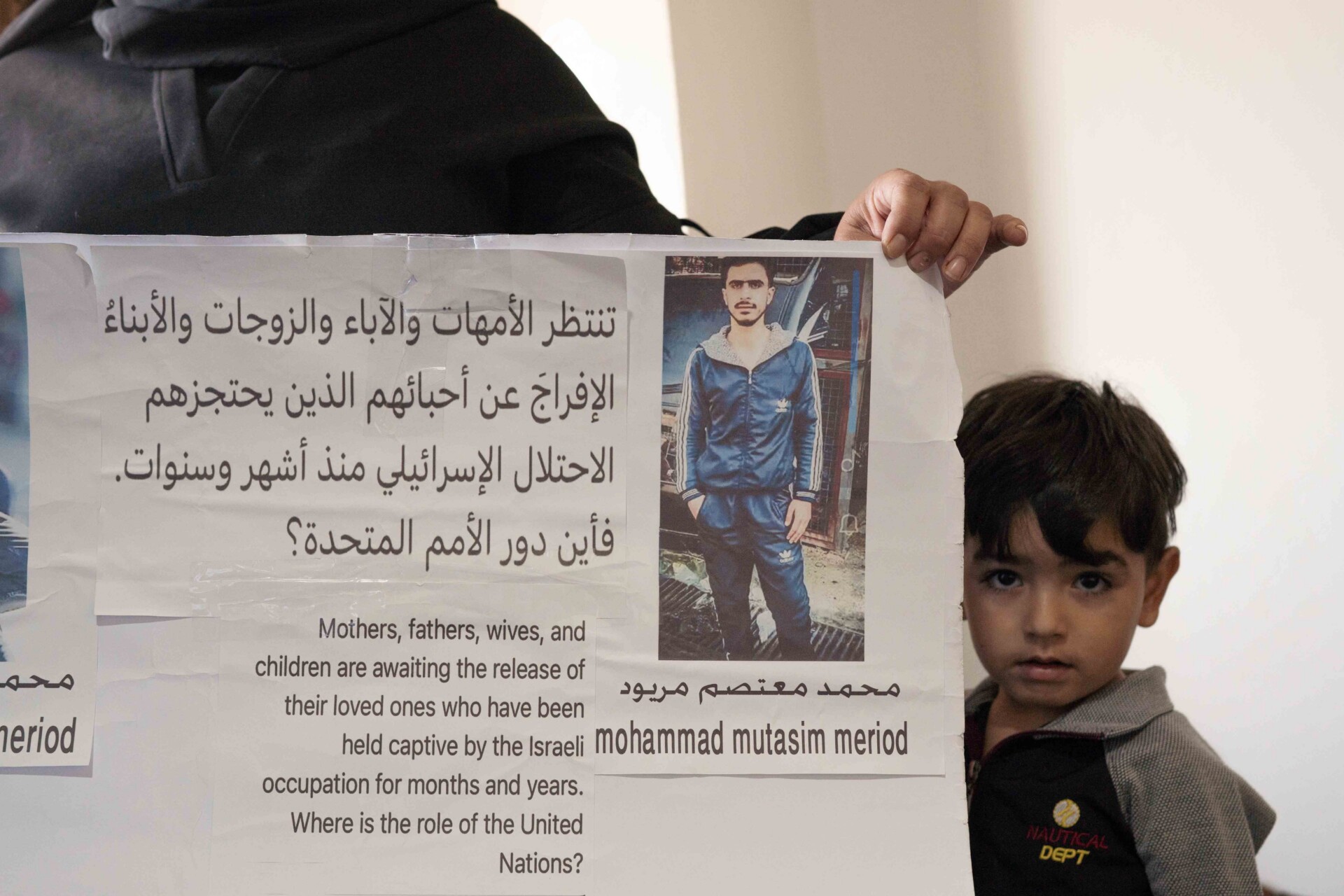
She explains that her younger son, Mazen, had been in a motorbike accident in their native village of Jubata al-Khashab earlier that week, and was resting at his grandfather’s house. At 3 a.m., he was woken up by an Israeli soldier gruffly shaking his shoulder, asking for Mahmoud and Mohammed Moatasem Mreywad, who were at their mother’s family home.
“If you don’t bring your brothers here, we will take you both,” the Israeli soldier said to the boy and his grandfather, who agreed to call the brothers. Mahmoud and Mohammed gave themselves up.
The twins were hooded, handcuffed, bundled into a car and taken away, according to accounts Rasha received.
“They were initially taken for two hours. Those two hours have turned into a year and a month,” she says. “It’s been a year and a month, and I know nothing about where my children are.”
Since the children were taken away, Rasha has tirelessly been campaigning for their release. According to Quneitra’s Media Directorate, 15 hostages have been released in recent months. Eventually, she received a message from them, delivered via a Syrian who was released back into Syrian territory from Israeli territory: “Your sons asked you to ask President Ahmad al-Sharaa to release them.”
“I tried, my loves, I went up to the palace, but they didn’t let me enter,” she cries, bursting into tears. Qassem tugs at her hijab and holds her hand.
“There’s no door I haven’t knocked, no place I haven’t been to,” she says, between violent sobs.
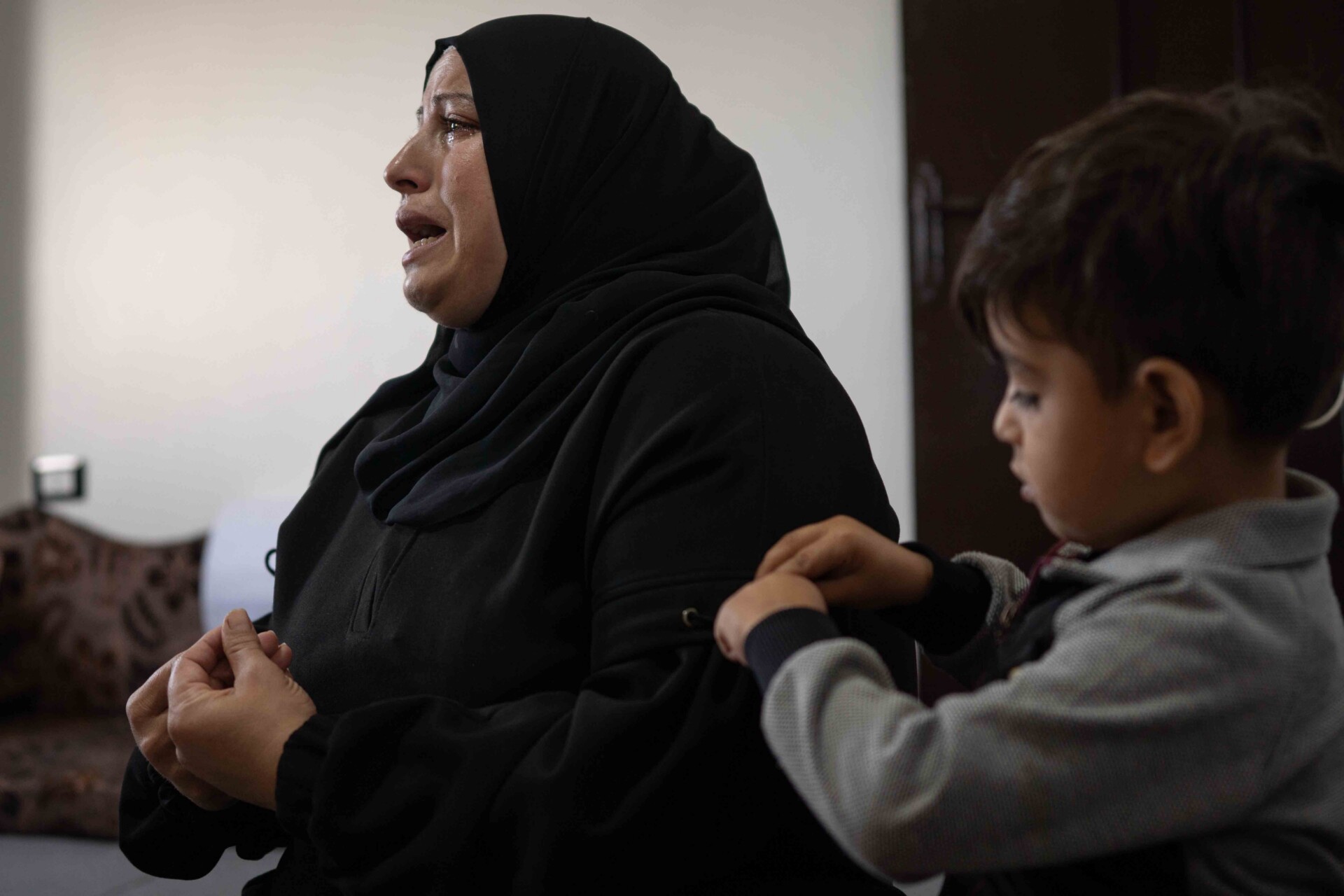
Rasha says that she visited the Foreign Ministry in Damascus with other families many times, often holding up the poster that she got printed, but was never allowed to enter, nor had a representative spoken to her.
She has placed her trust in Ahmed Mousa, a German-Syrian lawyer from the Golan Heights. Mousa explains that he is working with international bodies including the International Red Cross and the U.N.’s Working Group on Enforced or Involuntary Disappearances, to raise the families’ cases, though the actual options available are currently limited.
“We are currently unable to take action before the International Criminal Court, as neither Syria nor Israel is a signatory to the Rome Statute,” he explains. “The case cannot be referred from the U.N. Security Council to the ICC due to the U.S. veto, which is exercised in alignment with Israel.”
In Abu Saddam’s case, he reached out to a lawyer in Palestine, Khaled Mhajneh. Under the Assad regime, it was a major crime to reach out to anyone in Israel or anyone in the occupied territories, but Abu Saddam took the risk for his son. Mhajneh responded that Saddam hadn’t been charged, making it much harder to defend him or get him out.
“I used to see in the news that there were Israeli incursions, but I didn’t imagine there were Syrian detainees,” says Mhajneh in a Facebook video dated May 2025. Though Mhajneh was unable to visit Saddam in prison, Abu Saddam says a lawyer from the Israeli legal aid organization HaMoked was able to visit Saddam one time. Neither Mhajneh nor HaMoked replied to New Lines’ messages.
Rasha says that some released hostages were reluctant to pass on information to other hostages’ families for fear that their families might be attacked again. Similarly, families told me they weren’t able to speak freely, afraid that Israel might mistreat their loved ones still in prison.
Khaled Hmade was one of them. He refused to be photographed. His son, Ali Hmade, and son-in-law Nael Mishaal are among those still in Israeli prisons. Their house in Jiba, Quneitra, was surrounded by Israeli forces one morning at 4 a.m. in December 2024. The soldiers spoke over a loudspeaker and asked the family members to exit their homes.
“They asked us one by one what their names were. They had come specifically for Ali,” he says. When he tried to protest, the soldier snapped at him to “shut up.”
“At the same time, they took my son-in-law from Somdaniyeh [another village in Quneitra].”
He has no idea of the reason, but the accusations generally involve affiliation with “external groups,” mainly Hezbollah or the Islamic State group.
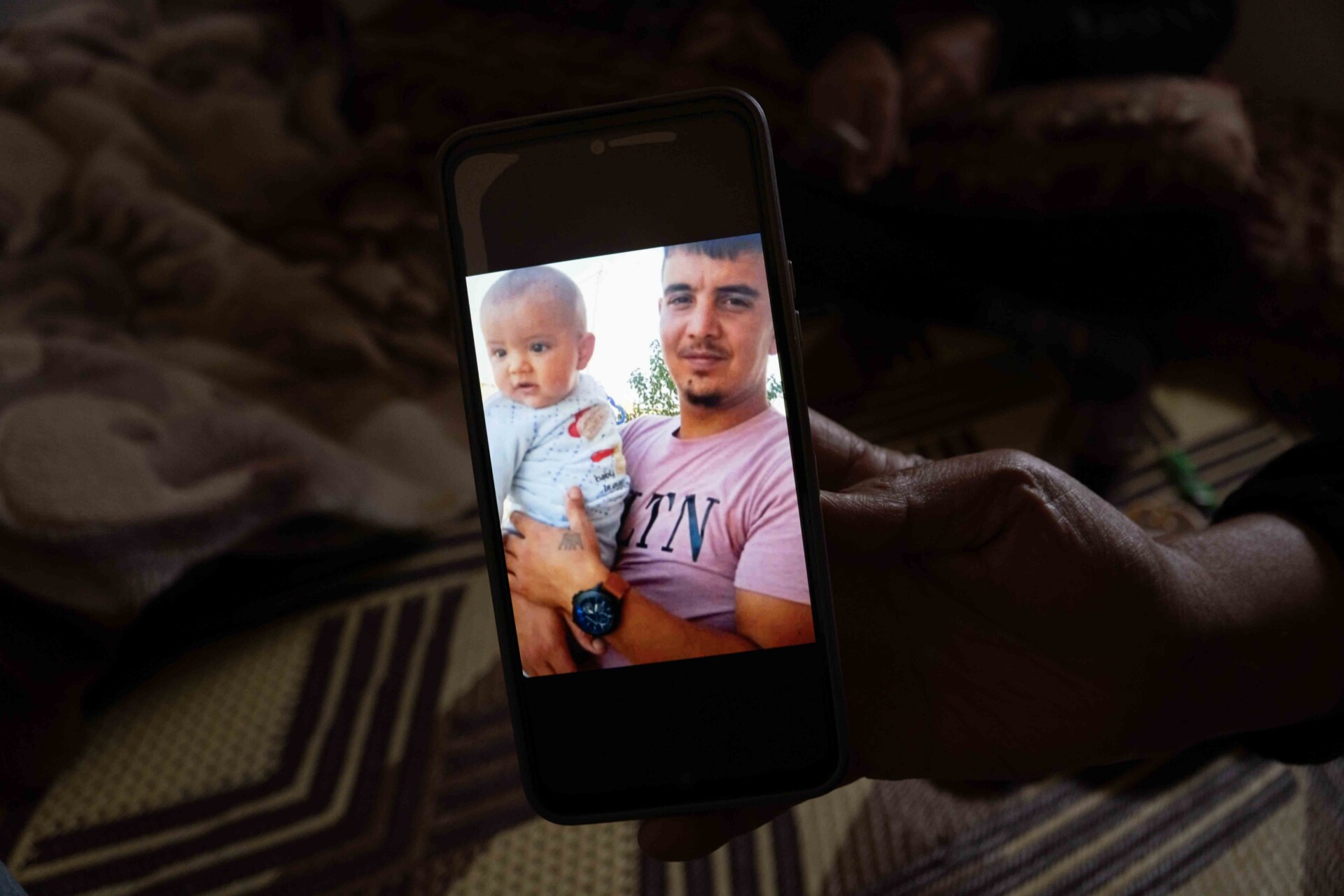
Nael’s wife gave birth to a baby boy months after he was taken. The child has never seen his father. A released Syrian told the family he had seen Ali and Nael at some point, and that they were well.
“It’s been a long time that they’ve been gone, it’s not easy,” Khaled says. “The first time the Israeli forces entered, we didn’t expect they’d start taking people. They could take anyone, and this is very worrying.”
Sana, the mother of Hameed (both of their names were changed for security concerns), still shares this worry, days after her son was returned to her after a year and four months in Israeli prisons. Hameed’s eyes gleam with life as he delivers a firm handshake to the Ministry of Information member accompanying me for multiple interviews. He explains that his role is not to censor, but to ensure safety for journalists who aren’t familiar with Quneitra’s geography. He recounts cases of journalists being detained by Israeli forces.
There is a slight swagger in Hameed’s step, and a satisfied smile on Sana’s face.
“It’s been 17 days since he got out,” she says.
Hameed’s wrists are still scarred from the plastic ties and handcuffs Israeli soldiers used on him. In his time in captivity, he was moved from facility to facility — from Sde Teiman in the Negev desert, notorious for systemic torture, to Ofer prison in Ramallah, back to Sde Teiman for over eight months, and finally to Megiddo prison.
“For me, the treatment was the worst at Sde Teiman. … You can’t move or talk to people next to you, and sometimes [the soldiers] would set dogs on us,” he explains.
“They’d use sound bombs at the windows or inside, and often they’d come in suddenly and make you get on your bellies or sit up and raise your arms.”
He explains that there were “rules” inside, and that if prisoners disobeyed these, the soldiers would beat them, often inventing reasons to bully them.
Hameed didn’t have a lawyer representing him. When he was in Megiddo prison, a judge spoke to him via video call, saying that his case had been postponed indefinitely because no charges had been brought against him yet.
“How long does an ‘indefinite’ period last in their system? Six months. And once those six months are up, if the person hasn’t been released, they just extend it again.” The practice, known as “administrative detention,” has been commonplace for Palestinians living under Israeli occupation.
Hameed is unsure of the circumstances of his release. On that day, he thought he was being transferred to another detention facility. Eventually, Israeli soldiers let him out of a car near the border of the occupied Golan Heights and told him he was free to leave. Once he returned home, he was flooded with questions from the families of other Syrians being held in Israel.
“I even got questions from Lebanon. People would reach out asking if I had seen so-and-so; some I had, others not.”
Hameed’s nightmare has ended, but Abu Saddam is still living his.
“We are for any solution that doesn’t lead to bloodshed, whether it be a peace agreement or normalization,” he says.
“But if war is imposed upon us, we will fight back.”
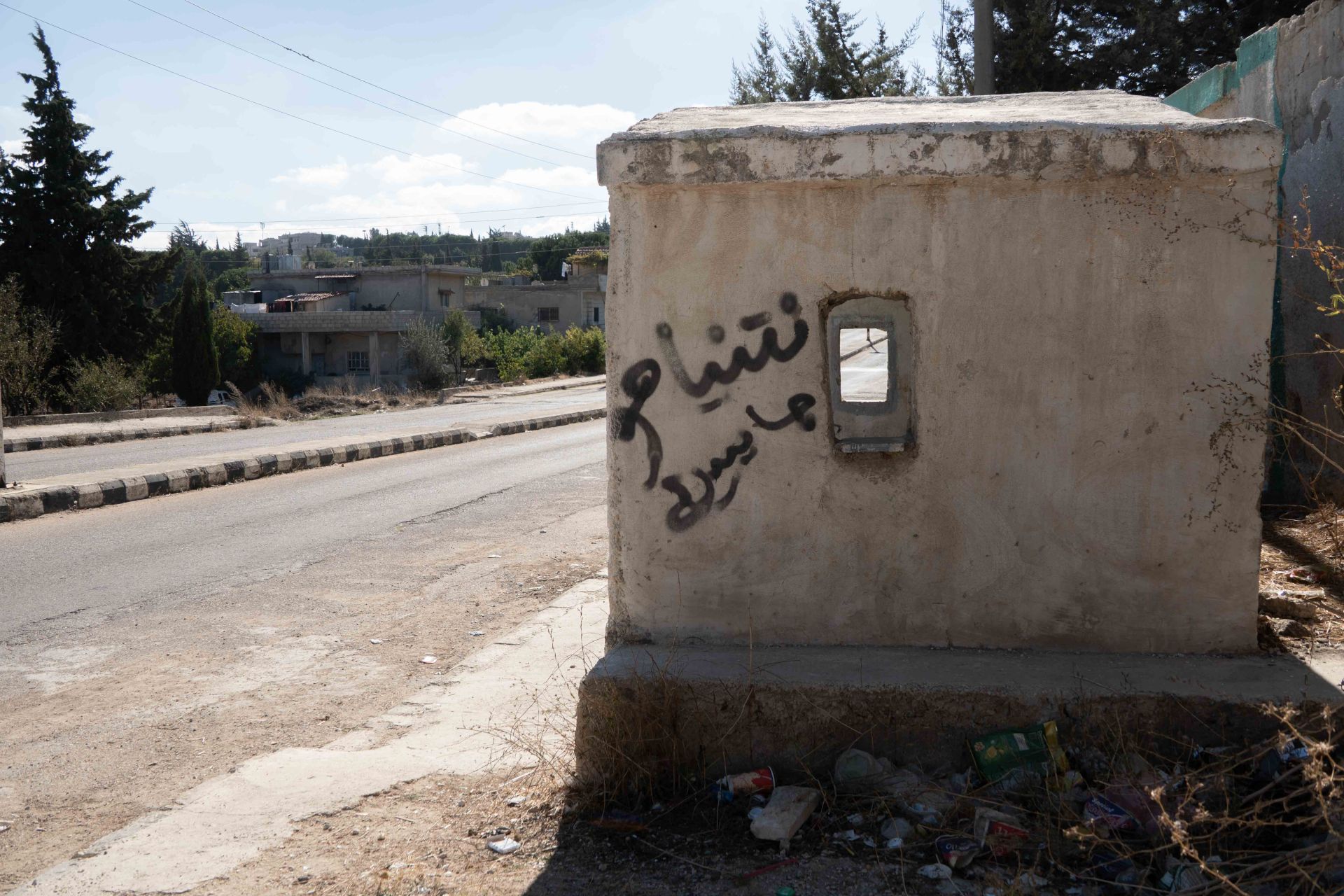
When the regime fell, Abu Saddam rejoiced, knowing that when his son was returned, he wouldn’t be walking straight into the jaws of Assad’s killing machine.
“I’m sad about him. I want him back, but whenever he comes out, I know he will fall into trustworthy hands,” he says earnestly, his eyes wet and red. “He used to help me a lot in my fields, respectful, kind with friends, and a gentle boy.”
He shows me a photo of a younger Saddam, staring at the camera.
“This was taken near the olive grove that Israel razed, near where they took him.”
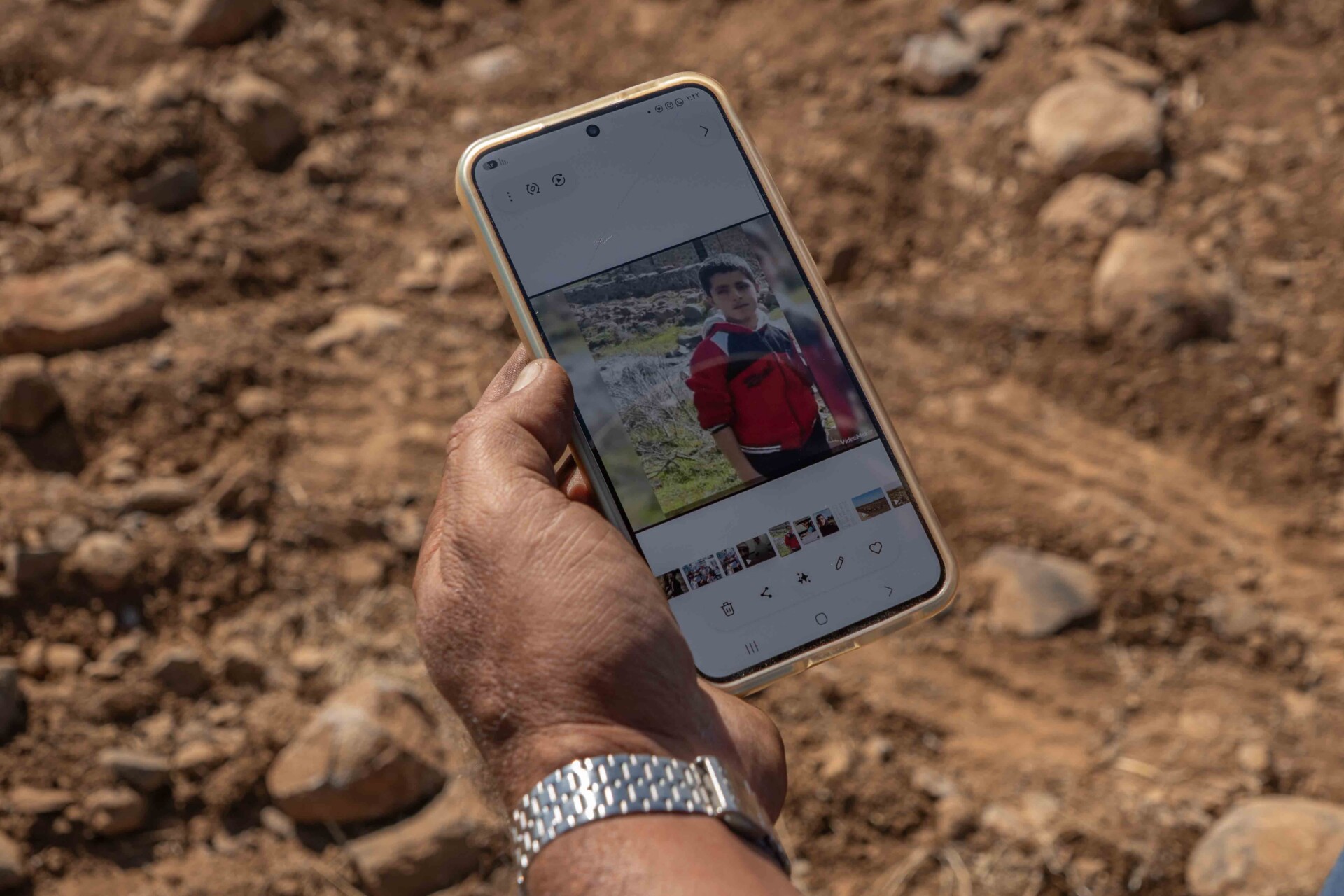
The boy hasn’t been seen in over a year. Abu Saddam says the last update he received was thirdhand information that his son was seen in Ofer prison.
The grove is now along the Sufa line, an Israeli project in southern Syria to expand its military presence by digging trenches and razing orchards.
“We used to have only the Alpha and Bravo lines back in the day; now we have the Sufa line too,” Abu Saddam says.
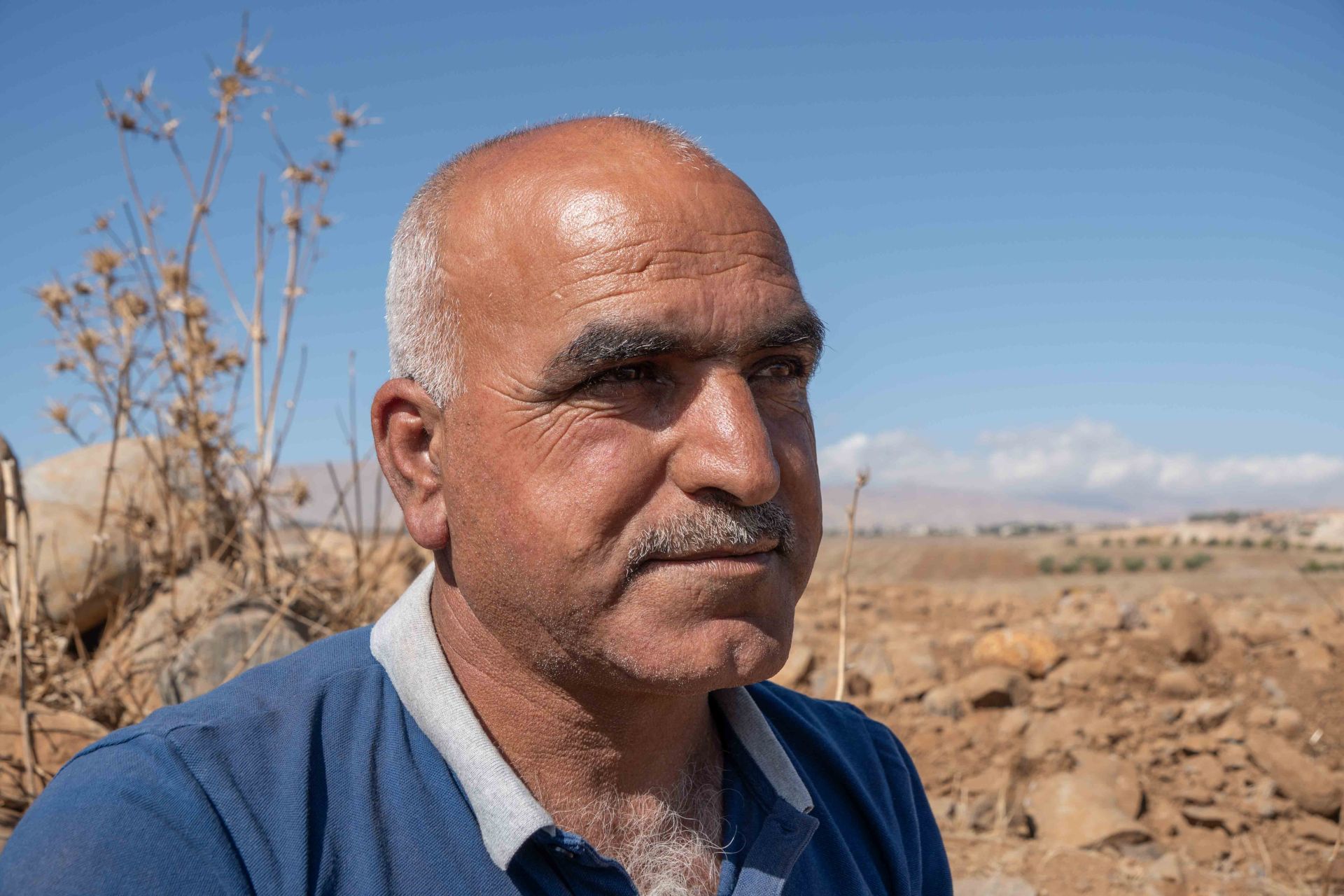
The Ministry of Information member told me that Abu Saddam always cries when Syrians return home from Israeli prisons. He is one of the few family members who speak freely to journalists like me, considered in the community as the representative of the families of hostages. He truly believes and hopes that every step he takes is a step closer to having Saddam back.
“He imagines Saddam coming home, when he sees the others return.”
Become a member today to receive access to all our paywalled essays and the best of New Lines delivered to your inbox through our newsletters.