

Hosted by Kwangu Liwewe
Featuring Aboubakr Jamaï and Gedion Onyango
Produced by Finbar Anderson
Listen to and follow The Lede
Apple Podcasts | Spotify | Podbean
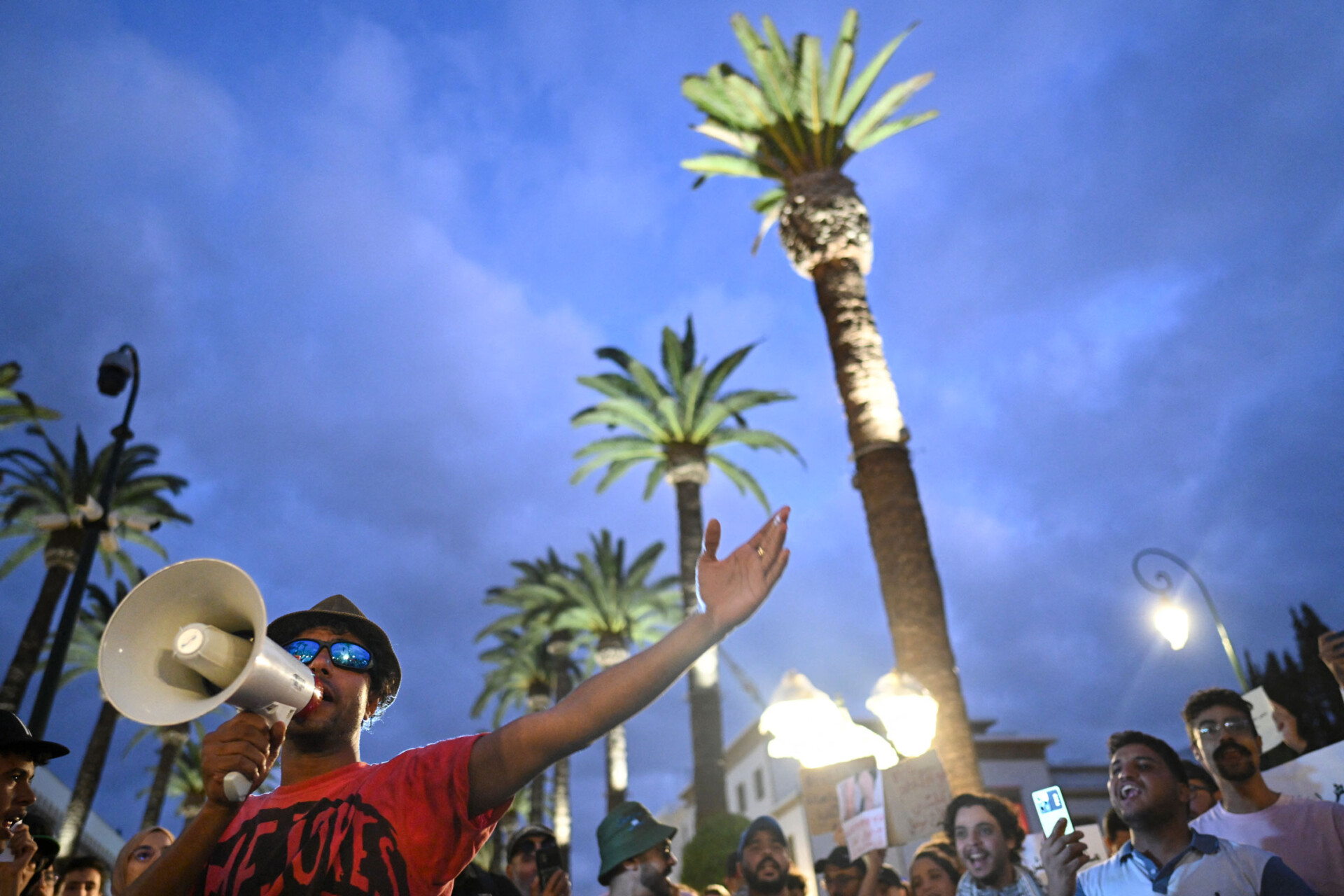
According to Aboubakr Jamaï, nationwide youth-led protests across Morocco “were bound to happen at some time.” The journalist and political expert explains to Kwangu Liwewe, host of Global Insights on The Lede, that “we have the conjunction of the unhappiness and disgruntlement of [Gen Z] wedded with a projected image of Morocco as being modern, as being advanced, with a lot of infrastructure projects, and people feel alienated. They see a Morocco that they’re not benefiting from.”
Protests led by the younger generation have been gathering increasing momentum worldwide, and took off in Morocco in September 2025. For Jamaï, the trigger may well have been Morocco’s decision to secure soccer’s World Cup in 2030. The ruling authorities needed to pledge a minimum of $15 billion in order to co-host the tournament with Spain and Portugal — an insult to young citizens who felt like their socioeconomic needs were being overlooked.
“The usual channels through which citizenry ask for change are not working.”

Young protesters may well have felt that taking to the streets, despite the severity with which protest is often handled by the ruling authorities, was one of the only options available to them, argues Jamaï. “The usual channels through which citizenry ask for change are not working in Morocco,” he says. “There is no more independent press. We have dismal rates of participation in elections, especially in urban areas.”
Nevertheless, he notes, “Moroccans don’t want Morocco to descend into some kind of civil war, but at the same time they realize that the system needs some serious changes.”
Following Jamaï on the podcast, Gedion Onyango, a Kenya expert and research fellow in public policy and governance at the London School of Economics, says that protests in Kenya are described as being dominated by Gen Z, but actually have widespread support. “All other generations have been giving moral support,” he says. “Parents have been encouraging their children to go out and fight for change.”
While the details of the protesters’ demands differ from their Moroccan counterparts, Onyango explains that they share a widespread belief that the existing social contract has failed. “This social contract is being defeated by the lack of public accountability and the manner in which resources are being used by the government,” he says. Exacerbating the issue, institutional corruption means that “money stops somewhere in the middle without trickling down to the programs that are in place that the government is seeking to implement.”