

Hosted by Faisal Al Yafai
Featuring Barbara Matejčić and Jasmin Mujanović
Produced by Finbar Anderson
Listen to and follow The Lede
Apple Podcasts | Spotify | Youtube | Podbean
“I have been a journalist for many years now and I care deeply about my profession,” investigative journalist Barbara Matejčić tells Faisal Al Yafai on this week’s episode of The Lede. “I consider war reporting as a part of my own professional legacy.”
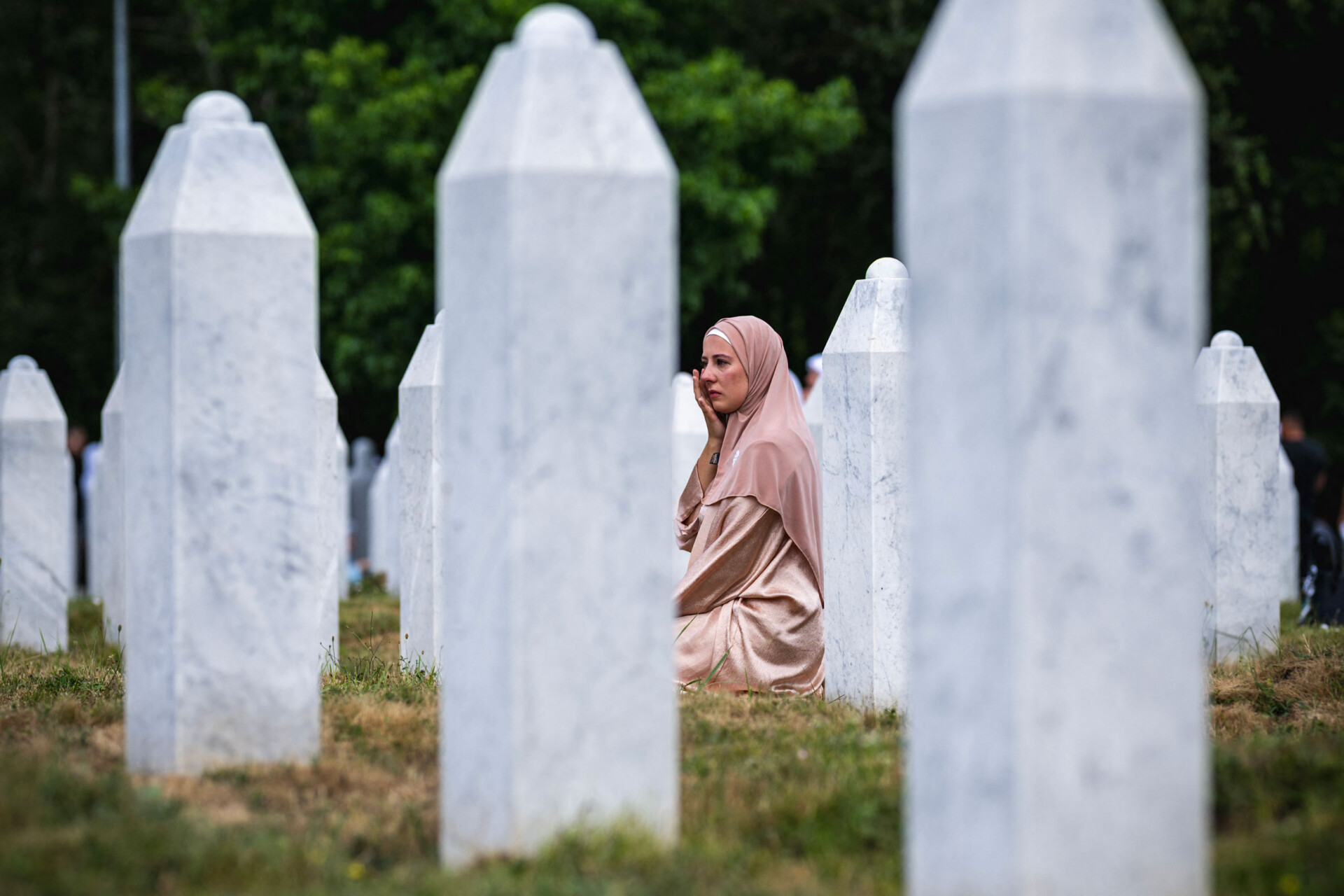
Matejčić and Al Yafai discuss Matejčić’s in-depth investigation, recently published by New Lines, which provides compelling insight into an execution of two Bosniak Muslims that took place in Brcko, in modern-day Bosnia and Herzegovina, in 1992. Images of the murders, taken by a Reuters photographer, were widely celebrated as standout examples of photojournalism capturing the moment of a crime. Yet Matejčić’s investigation reveals that the photographers involved may have influenced the killer’s actions.
“When a society shatters, it shatters in a million shards.”
Her commitment to journalism drove Matejčić’s years-long investigation, through which she wanted to make sure that her colleagues were held to the high standard the profession demands. “This entire research is my love letter to my profession and to the ethical boundaries that must never be crossed,” she says.
Matejčić is clear that she doesn’t see her work solely as digging into lost stories from the annals of time. “ What happened then in Bosnia can still happen today, and it’s likely happening right now in some of the ongoing wars,” she says.
Al Yafai turns to returning guest Jasmin Mujanovic, author of “The Bosniaks: Nationhood after Genocide,” to situate the massacre in its historical context and consider how it continues to affect the Bosniak community up to this day. Matejčić’s article, says Mujanović, reminds him of some of the worst elements of the war, not least “the idea of how cheap and valueless Bosnian lives were.”
Mujanović and Al Yafai, in a sometimes emotional conversation, discuss how Bosnia and Herzegovina continues to be a proving ground for far-right conspiracies, which have echoes today in the rhetoric of Christian nationalists as far away as the United States, such as Secretary of Defense Pete Hegseth.
“ We’ve seen a radical ascendancy in this extremist rhetoric that has been picked up by large segments of the media, has been normalized, has been mainstreamed, has been platformed. And sure enough, once you give these people an avenue and a means of communicating with the public, they will find an electorate,” Mujanović says.
Mujanović stresses that he does not see the aftereffects of actions like this only in the former Yugoslavia, but recognizes them in conflicts around the globe. “When a society shatters, it shatters in a million shards,” he says.
Further reading: They Photographed an Execution in Bosnia. Did They Influence the Killer? by Barbara Matejčić