


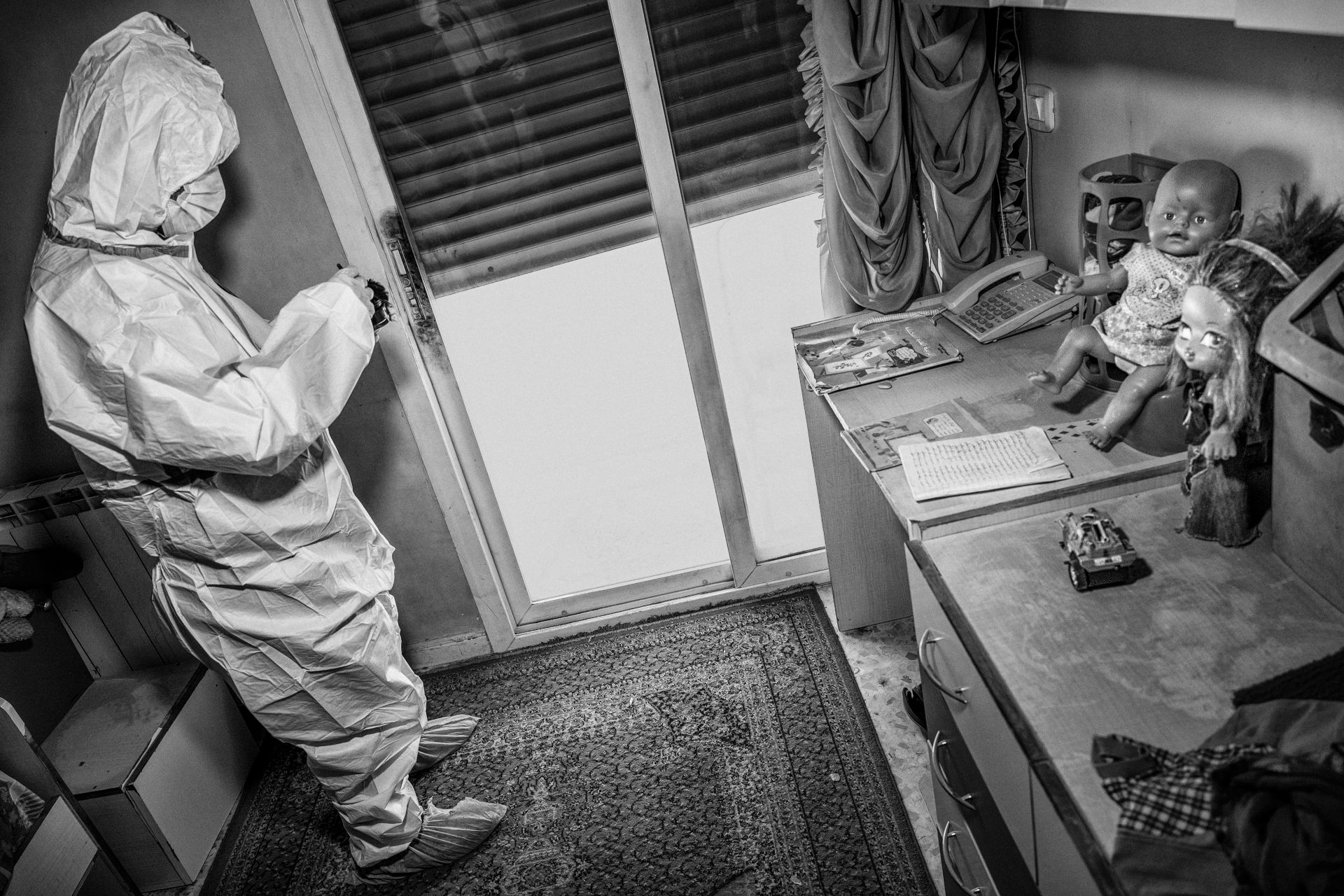
For more than 13 years, the children of Rania al-Abbasi lived in the space between memory and death.
Their faces remained fixed in the photographs that had traveled across human rights campaigns and family appeals, six children suspended at the ages they were when Bashar al-Assad’s intelligence officers came for them in March 2013. Dima was 14, Entisar 13, Najah 11, Alaa 8, Ahmed 6 and Layan, still small enough to be carried by Rania down the steps of their Damascus apartment, only 2. They vanished with their mother after the mukhabarat, the secret police, descended on the family’s home two days after arresting her husband, Abdulrahman Yassin.
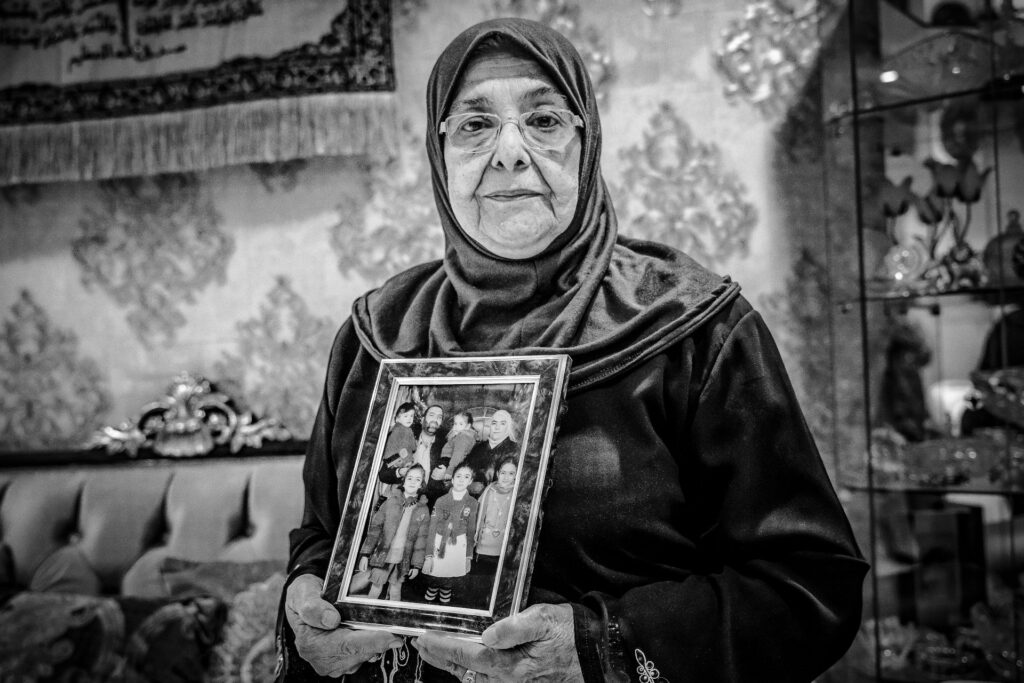
Their absence became one of the most haunting open wounds of the Syrian war; childhood offered them no protection. For more than a decade, their uncle, Hassan al-Abbasi, searched for them with the exhausted devotion of someone who had never been allowed to mourn. He held on to fragments, testimonies, rumors, sightings, possible traces. In a country where the deceased were often denied even the dignity of a confirmed death, uncertainty became its own form of punishment.
Now, that uncertainty appears to have ended.
Syria’s National Commission for the Missing announced over the weekend that it had made reliable and corroborated findings allowing it to conclude, with a high degree of professional certainty, that Rania al-Abbasi’s six children are deceased. The commission said its conclusion followed multiple verification and analytical procedures conducted in coordination with national authorities, and that efforts to locate the remains are still ongoing. Relatives confirmed the announcement to Arabic media after identifying the children based on newly discovered footage.
Although the case was from the early years of the Syrian conflict, the revelations sparked nationwide demands for a more stringent pursuit of transitional justice against former regime figures. This crime now seems fresh, reopening old wounds and hinting at the breadth of the Assad regime’s atrocities, many of which have yet to be uncovered.
The body that reached the conclusion regarding the children’s fate is itself only a year old. The National Commission for the Missing was established in May 2025 by presidential decree under the interim president, Ahmad al-Sharaa, alongside a separate National Commission for Transitional Justice, more than five months after Assad’s fall. Its mandate is to investigate the fate of the missing and forcibly disappeared, build a national database, and support the families left behind. It has been widely regarded as the most active of the new justice institutions, though by early 2026, observers still described it as operating at an experimental stage, its full investigative team and working plan not yet settled. That a relatively new commission could speak with such certainty about six children, in the absence of recovered remains, is itself a measure of how unusual the evidence in this case has been.
The evidence behind the killing of the al-Abbasi children did not arrive in isolation. It emerged alongside renewed scrutiny of the 2013 Tadamon massacre and material connected to Amjad Youssef, the former intelligence officer implicated in the killing of civilians in the Damascus suburb.
Tadamon was, for years, one of the regime’s best-hidden atrocities. On April 16, 2013, in a southern Damascus neighborhood that had become a front line beside the Yarmouk camp for Palestinian refugees, officers of Military Intelligence Branch 227 led blindfolded, bound detainees one by one toward a pit packed with tires, told them they were being run to safety across a snipers’ alley, then shot them as they fell and burned the bodies afterward. A single clip, recovered and published abroad in 2022, captured some 41 killings; researchers Annsar Shahhoud and Uğur Ümit Üngör, who later assembled the wider footage and published their findings in New Lines, estimated that close to 300 civilians, women and children among them, died in the same place.
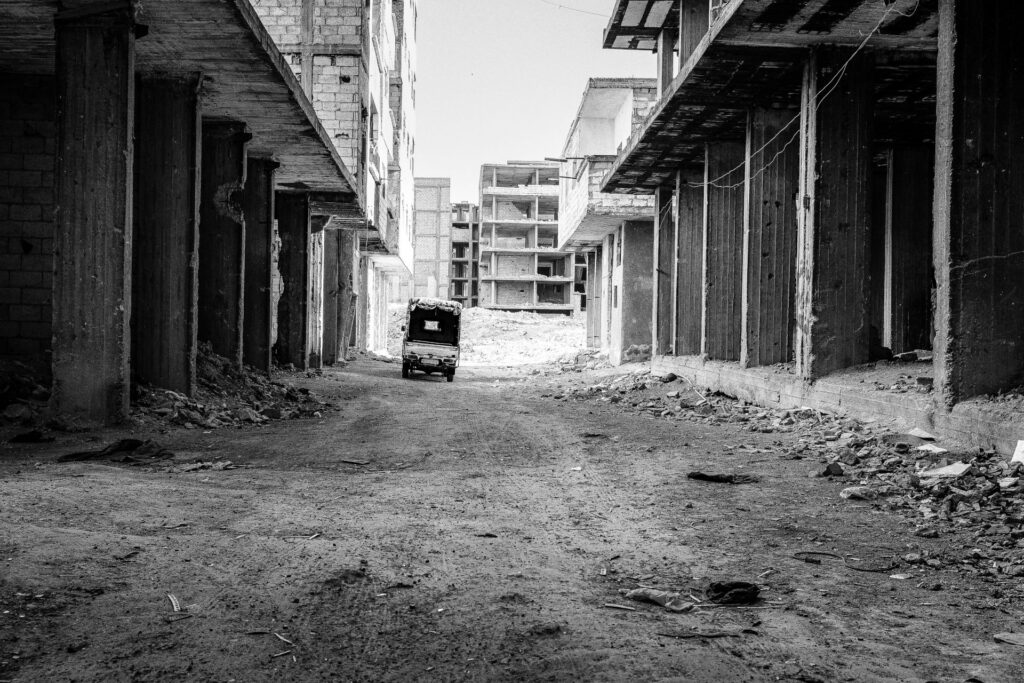
What set Tadamon apart was the vanity of the perpetrators. The men filmed themselves, on duty and in uniform, performing for the camera. The warrant officer at the center of those frames, directing and laughing, was Youssef, an interrogator at Branch 227 who became internationally notorious once the videos surfaced.
In a video posted to Facebook, Hassan al-Abbasi said the family had been allowed to view footage linked to Youssef. In one recording, children are shown in a dark room and described as major financiers of terrorism and told they’re to be condemned as punishment.
“They turned out to be our children,” Hassan said, referring to the footage shown during an identification process facilitated by the U.N.’s International, Impartial and Independent Mechanism. “We finally saw them, but they were martyred.”
Hassan told me he was spared from watching the moments his nieces and nephews were killed, but he confirmed their deaths nonetheless, via footage taken after the brutality had ended. “I saw their fragile bodies on the ground, blood coming from their faces,” he said. “This is where their stories ended. They were labeled as terrorists and killed.”
There is something almost unbearable in the simplicity of that sentence. For years, Hassan had searched for signs of life. Instead, the first legitimate glimpse came as evidence of death. The children were not found in an orphanage, not recovered from a prison register, not returned as young adults with altered names and damaged memories. They appeared, at last, inside the regime’s own theater of accusations, cast not as children, but as enemies of the state.
This is the difficult ground on which the commission’s certainty rests. There is no grave, not yet. Neither are there remains to test. What there is, instead, is a convergence: the footage Youssef’s case has brought to light; the family’s own identification of the children within it; the total absence of the six from every prisoner release, registry and reunification that followed Assad’s fall; and the testimony, gathered during my earlier reporting, of those who saw the children pass into the regime’s hidden custody.
The conclusion is an inference built from these, and the commission has been careful to call the search for remains unfinished. But the absence of a body is not, in Syria, the absence of proof. It is the regime’s intended condition. The recovery of the dead here is among the most daunting forensic undertakings anywhere; one transitional justice coordinator in Damascus has called it possibly the most complex missing persons case in modern history, complicated by composite mass graves shaped by multiple overlapping forces operating across the same terrain, with as many as 200,000 Syrians still unaccounted for. To wait for a body in such conditions is, often, to wait forever. The commission’s finding is an attempt to give a family the truth that the regime designed to be unrecoverable.
That distinction matters beyond the al-Abbasi household. The fate of these children is not only a family tragedy, nor merely a grim update in the long ledger of Assad’s crimes. It bears directly on the mechanism I sought to expose in my earlier investigation for New Lines in March: the way the regime disappeared the sons and daughters of detainees through a network of intelligence branches, courts, orphanages and juvenile facilities, and how the language of terrorism was extended from parents to children until innocence itself had been administratively erased.
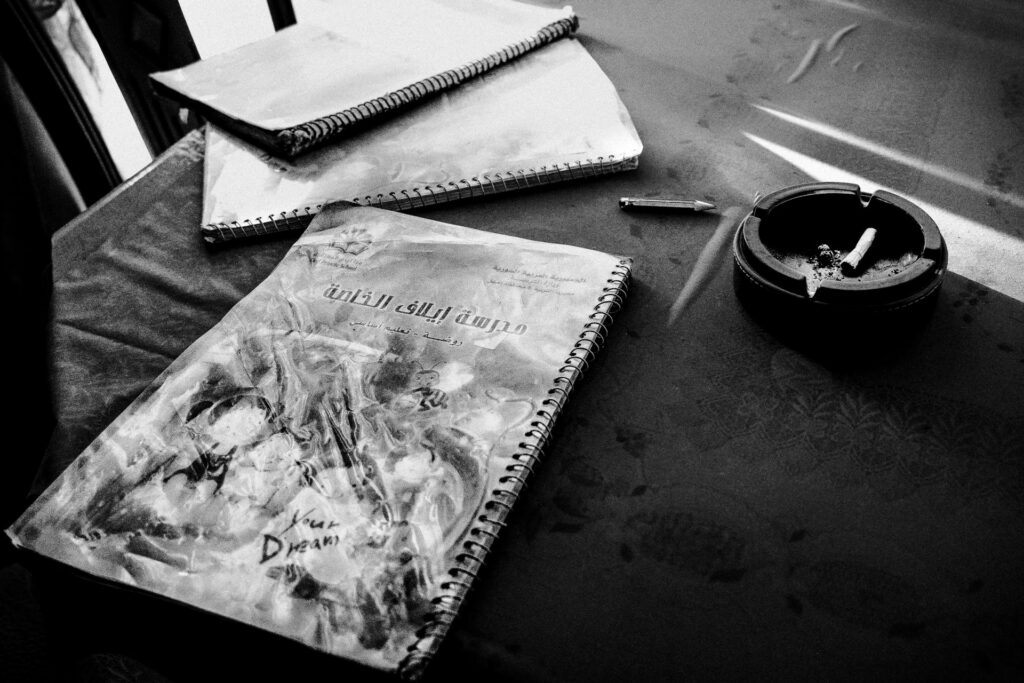
In the documents I reviewed earlier last year, the disappearance of children was not presented as the result of chaos or as isolated incidents. It had procedures and signatures. It had instructions. Air Force Intelligence officers directed the Ministry of Social Affairs and Labor and local governorate offices to transfer children from detention into orphanages, while ordering that their identities be kept secret for national security reasons. No details were to be disclosed. No action concerning them was to be taken without explicit permission from the security services.
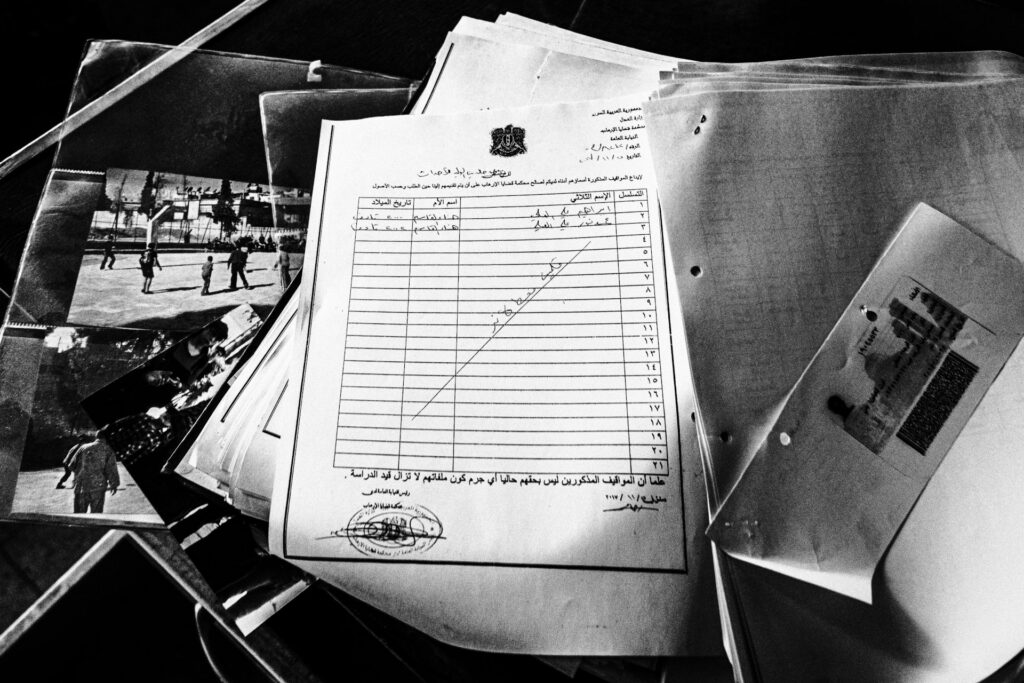
This was the genius of the regime’s violence. It was designed not only to kill. With bureaucratic precision, it classified, transferred, concealed and renamed the children of its supposed dissidents with the aim of disappearing them before the world even knew where to look for them.
At first, some of these children had a function: They were leverage. One Air Force Intelligence document from January 2015 that I reviewed described the case of two detained women and their seven children held at the notorious al-Mazzeh prison. Intelligence officers had concluded that the women no longer held value after months of interrogation and should be released. A senior commander overturned the decision, ordering that the families remain in custody so the regime could “benefit from them” in exchange operations and negotiations with opposition groups. In that file, the children’s condition is laid bare. They became assets, their lives stolen to be utilized as seen fit. Their worth lay in the pain their captivity could inflict on their parents.
During my investigation in Damascus, I met families that had narrowly escaped death, having been released, fortunately, after their incarceration. It is finally confirmed now that the al-Abbasi children did not have that good fortune. Their father was tortured and killed within a month of his arrest, his face later surfacing among the 50,000 photographs of the dead smuggled out by the defector known as Caesar. Their mother’s fate remains unknown to this day. Leverage has a lifespan. Once a parent was condemned, folded into the list of tens of thousands killed in Assad’s dungeons, the child became something else: a remainder, a witness, the last living trace of a family the regime had marked for destruction.
It is here that the new evidence around the al-Abbasi children becomes so significant. The footage described by their uncle Hassan does not simply show children in captivity. It shows the regime’s justification for what could be done to them. To call these young children financiers of terrorism is grotesque, but it was not a random incident. It was the same logic and language that appeared in the juvenile prison archives and intake records I examined in Damascus.
At Al-Ghazali and Khalid Ibn al-Walid, juvenile detention facilities that held boys on the edge of the city, ledgers recorded children referred by Syria’s Counterterrorism Court, the exceptional tribunal established in 2012 as the uprising against Assad widened. Officially created to prosecute terrorism, it became one of the regime’s most efficient tools for converting dissent into criminality. Its proceedings were opaque, its verdicts often built on confessions extracted under torture and illegitimate proceedings, and its reach extended far beyond armed men.
Among the files were boys as young as 11 and 12 accused of financing terrorism, the same charge Youssef used to justify the murder of the al-Abbasis. Others were condemned to incarceration on equally implausible charges: taking part in military operations, providing weapons training, committing acts that led to the deaths of Syrian soldiers. The charges were absurd in relation to their age, but they carried a familiar shape. They resembled the accusations routinely leveled against adult political detainees. It suggested that children were not charged for what they had done, but for who their parents had been made out to be, falsely, by the state.
The child inherited the accusation. The accusation justified the disappearance.
That same court is now, belatedly, an object of scrutiny rather than an instrument of it. The National Commission for Transitional Justice has reportedly opened investigations into 87 former Counterterrorism Court judges and issued arrest warrants for a handful of former Assad officials. It is the first official acknowledgment that the institution was not a court at all but a conveyor, and that the men who signed its verdicts share in what those verdicts produced. Yet the early assessment of these efforts has done little to inspire confidence.
Rights monitors have described the transitional justice process as slow and the gestures toward accountability as largely symbolic, more announcements than investigations. This was a frustration I confronted throughout my own investigation last year, particularly after uncovering evidence that demanded urgency and watching it drift instead into bureaucratic delay. The danger is plain here: that the same court whose paperwork helped send children toward their deaths may now be examined too slowly, or too narrowly, leaving the machinery behind those disappearances only partially exposed.
The man at the edge of the Tadamon pit is, at least, no longer beyond reach. In late April, Youssef was tracked across several days and arrested in the Ghab Plain in Hama province. In his recorded confession, Youssef claimed the killings were his own doing, a narrowing of responsibility for an atrocity that bore all the marks of an organized state crime. He admitted to killing roughly 40 people brought to him as alleged supporters of terrorism. This language mattered in Tadamon, just as it mattered for the al-Abbasi children and the other young victims of Assad’s regime.
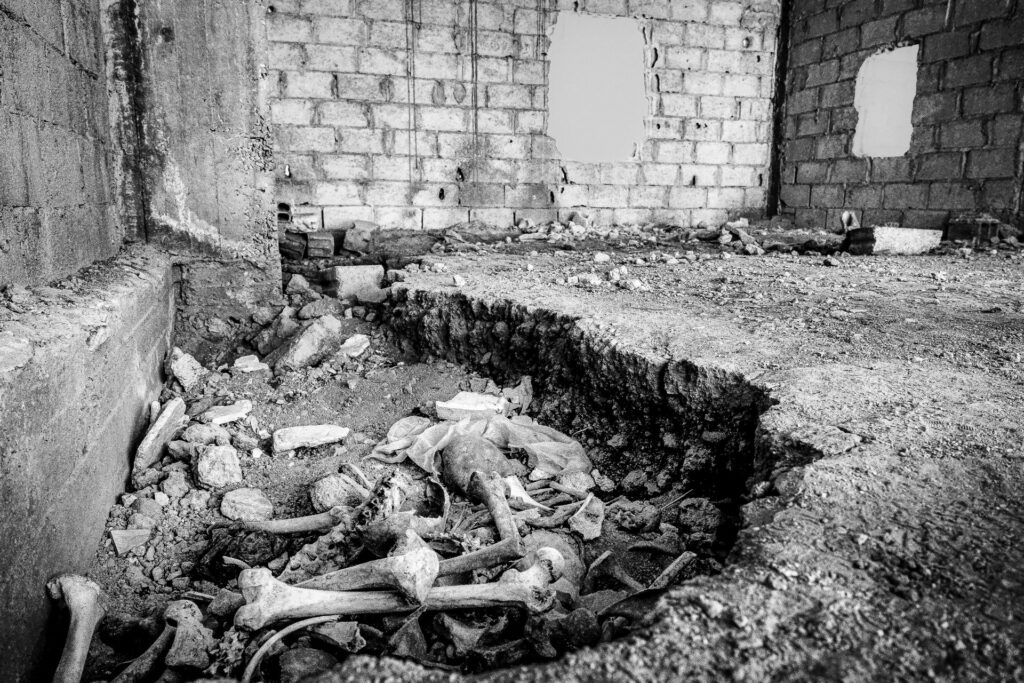
Before the victims were killed, they were first named as enemies. That accusation was the regime’s permission structure, and the evidence uncovered in my March investigation, now sharpened by the commission’s determination regarding the al-Abbasi family, shows that it was extended to children.
This is why the al-Abbasi footage carries such terrible weight. It appears to show that logic, stripped of its paperwork. The children are not spoken of in the language childhood demands, but through the vocabulary of counterterrorism. They are transformed, by the voice of a murderous intelligence officer, from the innocent sons and daughters of Rania into enemies the state could claim it had reason to destroy.
For Hassan, this transformation must be almost impossible to reconcile with the children he knew. Najah was not an abstraction in the machinery of Assad’s state. She was, as he once told me in our usual correspondence, “the most outgoing of Rania’s children. Full of life. She could make friends with anyone, and that’s why everyone who met her loved her. She was our little jewel.” A little jewel, recast as a financier of terrorism. A child remembered for her warmth and instinctive pull toward others, condemned by a system that treated her family’s alleged sympathy for the revolution as an inherited crime.
During my earlier reporting, several leads appeared to suggest the children may have passed through SOS Children’s Villages, the Assad regime-run facility where other sons and daughters of detainees were known to have been held. But the new evidence now gives the al-Abbasi case a different and more brutal clarity. In a recent conversation with Hassan, I suggested that the confirmation of the children’s deaths must feel like the end of a long and punishing search for him and his family. He corrected me. “I will keep fighting,” he said. “SOS Villages cannot be allowed to walk away from this smiling. Even if our children did not pass through there, countless others did, and many of them are still missing.”
Hassan’s insistence is important, because the correction of one lead does not erase the wider system it pointed toward. In the al-Abbasi case, the strongest available evidence now points conclusively to a final passage through the regime’s security apparatus itself, where the same counterterrorism fiction I found in the juvenile prison archives appears to have been used to justify their fate. But clarity in their case shouldn’t discount how much remains obscured about the system that consumed so many others.
The Syrian Network for Human Rights has documented thousands of children forcibly disappeared by the Assad regime. Its earlier count of at least 3,700 children is likely conservative; during my own reporting, the network’s director, Fadel Abdulghany, told me that improved access and survivor testimony may bring the figure closer to 5,300. Each number represents a separate uncertainty inflicted on a family. Each may conceal a different path through the same system.
This is why the archive rooms of Damascus’ juvenile prisons are so crucial to clarifying these mysteries. The files at Al-Ghazali, Khalid Ibn al-Walid and Bab Musalla, which held young girls, are not dead paperwork. They are maps of disappearance. They can expose how children moved from intelligence custody into juvenile detention under false accusations, from detention back to the mukhabarat, from recognizable identity into administrative fog and, finally, into disappearance. From what I saw in the archives, the scale is impossible to dismiss: hundreds of names referred by the Counter Terrorism Court, marked with accusations no child could plausibly bear.
The danger now is that the deaths of the al-Abbasi children become a conclusion rather than a beginning. A commission statement may confirm what happened to one family, but it cannot substitute for the full clarity of the machinery that made it possible. The officials who ordered transfers, concealed identities, falsified lists, denied relatives access and returned children to intelligence custody must be named and held accountable, alongside the judges who lent these acts all the costume of law and the officers who carried out their sentences. For Syria’s new authorities, the task is long and daunting, but unavoidable.
Hassan al-Abbasi spent 13 years searching for proof that his nieces and nephews were alive. He was finally shown proof that they were not, delivered in the regime’s own words, in its own footage, in the obscene grammar of a charge impossible to apply to a child. The photographs that once traveled the world in appeals for their release will now have to do different work. They will have to keep six faces from settling back into the silence the regime built for them, fixed forever at 14 and 13 and 11 and 8 and 6 and 2.
Become a member today to receive access to all our paywalled essays and the best of New Lines delivered to your inbox through our newsletters.