


The U.S. Department of Government Efficiency, which went by its internet meme-ified acronym DOGE, officially concluded its formal operations on July 4, 2026. At its launch, Elon Musk, who headed the agency for a time, promised to cut $2 trillion of spending from the federal budget. Even by its own accounting, which many experts say is largely inflated, DOGE failed to meet that target by at least $1.8 trillion.
Though the overall impact of DOGE on the U.S. budget was relatively minor, elsewhere in the world, Musk’s chainsaw-wielding enthusiasm for slashing government spending has been felt profoundly. That is because one of the few successes of DOGE, at least in its telling, was the weekend Musk spent “feeding USAID into the wood chipper.” Almost overnight, thousands of programs funded and administered by the U.S. Agency for International Development were forced to stop or dramatically scale back work, including hundreds of programs that provided lifesaving medical care for everything from malaria to HIV in some of the poorest places in the world.
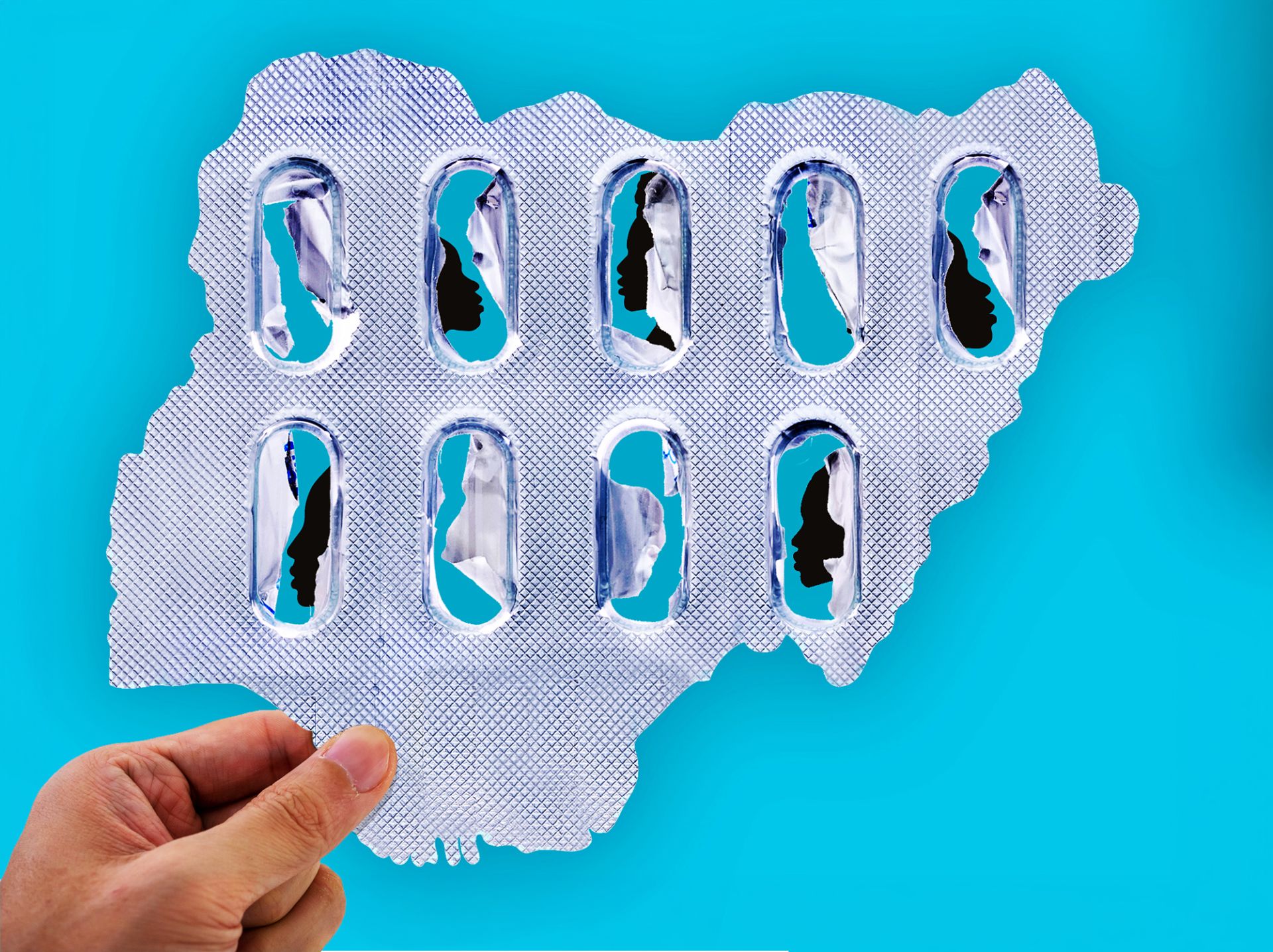
One of those places is Nigeria, which, according to the U.S. Centers for Disease Control and Prevention, has the fourth-largest HIV epidemic in Africa, with an estimated 2.5 million people living with the virus at the start of 2024. While more than 1.6 million people were receiving treatment as of 2023 — the most recent year for which data is available from the National Agency for the Control of AIDS — the country still had over 75,000 new infections and 45,000 AIDS-related deaths that year.
For more than a decade, U.S. funding, primarily through the President’s Emergency Plan for AIDS Relief (PEPFAR), has been the backbone of Nigeria’s HIV response. Created in 2003 under President George W. Bush, PEPFAR is a multipronged governmental program and represents the largest ever public health commitment by a single state to combat a single illness. Its overseas response has been largely administered by USAID. UNAIDS, the United Nations body that oversees the global AIDS response, has called the program a “lifeline,” noting that it supported HIV testing for more than 84 million people and treatment for over 20 million worldwide. In Nigeria, PEPFAR funded nearly all — 99.9% — of the national budget for medicines used to treat and prevent HIV.
In Borno State, the epicenter of the Boko Haram insurgency in the country’s northeast, this assistance sustained clinics embedded within the vast camps that are home to close to 1 million people displaced from their homes by the conflict. The medicine and basic healthcare provided kept many people alive and virally suppressed in conditions of intense instability. In early 2025, after the cessation of most U.S. foreign aid under the Trump administration, including PEPFAR and USAID, HIV care support throughout northern Nigeria collapsed, including at clinics within these camps that were the primary source of antiretroviral medication for thousands of patients.
Despite independent research projecting that over 780,000 people had died as a direct result of aid cuts, Elon Musk, in a recent interview with The Economist’s Zanny Minton Beddoes, asserted that “zero” people in Africa had died because of the dissolution of USAID. This echoed an earlier claim by U.S. Secretary of State Marco Rubio, who defended the suspension of foreign aid, insisting that the shutdown had not led to fatalities. “No one has died” because of USAID funding cuts, Rubio said during a congressional briefing, claiming that emergency lifesaving services that were removed would be replaced through alternative mechanisms.
New Lines went to northeastern Nigeria to test these claims. We spoke with rural health workers, aid providers and residents of camps who painted a grim picture: antiretroviral drugs impossible to find, people rationing medicine before abandoning their treatment altogether, the deteriorating health and untimely deaths of some who had previously been virally suppressed.
Camp populations lack alternative public health infrastructure to absorb the shock of the funding cuts, contradicting assurances by U.S. officials, including Rubio’s claim that emergency lifesaving services would continue through alternative mechanisms despite the aid suspension. The situation is being compounded by ongoing insecurity that disrupts access to hospitals in Maiduguri and surrounding areas. As drug supplies dwindle and monitoring breaks down, the risk of viral rebound and new infections is rising sharply — threatening to undo years of progress in HIV control in a region already devastated by conflict, poverty and neglect.
For displaced women living with HIV — already at the margins after years of insurgent violence and sexual abuse — the collapse of care has hit particularly hard, turning a manageable condition into a looming death sentence.
Nusaiba Abubakar had already been displaced and was living in a camp in Borno State when the attack that changed her life happened. It was June 2022. She was out at a market with some other women when Boko Haram fighters descended on her camp, wreaking havoc and taking several hostages — her husband, Muttakkah Omar, among them.
After weeks of negotiation, they agreed on a ransom that would have to be delivered in person by the men’s wives. “When they told me I had to go to the forest with the other three women whose husbands were also kidnapped, I cried every day,” Nusaiba said.
When they reached the meeting point deep in the forest, three armed men with their faces wrapped in turbans emerged from the trees. The women handed over the ransom. Instead of releasing their husbands, the men ordered them to follow deeper into the forest, where they were blindfolded and beaten.
“After we cried for a long time, one of them asked if we wanted to eat,” Maryam, one of the other women abducted that day, said. “Then the others came. They tore our clothes and forced us to lie down.”
The women were released the following day and eventually returned to the camp, unaware that their traumatic rapes would leave a much deeper wound: They had been exposed to HIV.
Nusaiba’s husband was eventually released, and the couple resumed their lives. She became pregnant. But her husband soon fell ill. According to his older brother, Abubakar Issa, he developed fever and a persistent sore throat and often took unprescribed medication that brought only temporary relief. Over the next year he grew weaker and lost significant weight.
When he was finally taken to a government hospital, doctors tested both him and Nusaiba. The results showed they were both HIV positive, having likely contracted the virus after her rape in the forest. Within a few weeks, her husband died.
After several other people fell ill in the camp, a local, health-focused nongovernmental organization, AIDS Prevention Initiative in Nigeria, which was funded by USAID, came and screened residents. Some 21 people had contracted HIV. They were put on antiretroviral drugs, delivered every other week by the health workers — “until we did not see them again,” Issa said. That was early 2025.
In 2015, as Boko Haram intensified attacks across Borno State, thousands of families fled their villages on the outskirts of Maiduguri and gathered on open stretches of land. The refuge became a large settlement of tents and dirt shelters, with no sanitation and limited access to healthcare. State authorities and aid organizations set up emergency health services, but could not fully address the situation on the ground — particularly for women who were facing high levels of sexual violence. Many displaced victims depended on irregular food distributions and overstretched clinics.
Those living with HIV in northeastern Nigeria have long contended with additional problems caused by stigma and displacement. In Borno State, surveys conducted by public health researchers show that fewer than half of people are willing to share food with someone who is HIV-positive, and only 55% declare they might take care of an infected relative. These reactions are most common in displacement camps, where HIV-positive people already face starvation, trauma and heightened vulnerability. Many women contracted the virus through sexual violence during Boko Haram attacks and returned to communities in which disclosure can lead to isolation or abandonment.
For years, the Achieving Health Nigeria Initiative, a local aid organization in the country’s northeast, filled the gap left by Nigeria’s overstretched public health system in the region, including in the camps for the displaced. Umar Shamza, a program officer with the initiative, described how its operations providing antiretroviral therapy, testing and counseling inside the camps were almost entirely underwritten by PEPFAR or other grants from USAID. He said the funding covered drugs, staff salaries and temporary workers hired to help identify and enroll new patients. These services were often the only consistent source of care for women who had contracted HIV during captivity under Boko Haram. After the stop-work order from Washington in early 2025, many of those activities were halted or sharply reduced.
“Gender mainstreaming, capacity-building trainings and cervical cancer screening for women have all stopped,” Shamza said in November 2025 when we first spoke. “We can no longer go into the communities to test or identify new clients because we don’t even have testing kits.” Within months, they were no longer able to supply lifesaving antiretroviral drugs.
Shamza said that his organization is scrambling to secure alternative funding from the federal government and other donors to prevent a total collapse of services for patients in the camp, but that “for now, anything community-based around HIV has stopped.”
Zainab Abdullahi, a health worker who previously supported HIV programs in several displacement camps, said that interruptions in treatment can create serious risks for patients who depend on consistent medication. She explained: “Once treatment stops, the virus can quickly regain strength in the body. In places like these camps, where people already face poor nutrition and other infections, the consequences can appear very quickly.”
Abdullahi added that many patients who were once stable are now living without regular monitoring or follow-up care. “HIV is manageable when treatment continues without interruption,” she said. “But when that chain breaks, people begin to fall sick again, and some do not survive.”
Ismaila Usman still keeps the small clinic card that once belonged to his wife, Bilikisu. She received HIV medication through a mobile health program that visited the Muna Kumbri camp every month. When the outreach teams stopped coming, her supply of medicine ran out. After hearing that the health workers would no longer return, she tried to stretch the remaining tablets by taking them once a week instead of daily. Within months, her condition worsened.
“She was trying to manage the illness despite the pain,” Usman said. Shaking his head, he recalled how she struggled to maintain daily life. “Even while breastfeeding our second child, she refused to let the sickness stop her. She cared for the children, cooked meals and handled the house chores. But a few weeks after the drugs finished, everything changed.”
He explained that late last year Bilikisu began complaining of fever and chest pain. By the time he managed to borrow money to take her to Maiduguri for treatment, she had grown too weak to walk. She died on the back of a motorcycle while they were on the way to the hospital. “I probably would not have lost my wife if the health workers had continued bringing the medicines and treatment like before,” Usman said.
On the morning of June 12, 2025, dozens of women formed a line outside Muna Kumbri’s primary health center after hearing that an aid convoy might deliver HIV medication. Their destination was a small pharmacy window built from plywood and wire mesh. Many clutched ragged health cards and empty pill bottles as evidence of enrollment in health programs. By midday, the doors remained shut.
Fatima Modu, a mother of four who has lived in Muna since 2017, stood near the entrance as a volunteer medical expert explained that the shipment was delayed due to clearance and delivery issues, which have been compounded since the aid freeze. “Every drug, including HIV treatment, must get approval or even escorts before movement,” explained Kingsley Iroka, a specialist in humanitarian access and security, “but many roads remain dangerous or blocked. Aid workers face abductions, illegal checkpoints and rejection from communities.”
The announcement from the health worker brought about murmurs of frustration from most of the crowd lined up for medication. Some women had walked for more than an hour in the sun to reach the clinic. “Last year, we take our drugs without any issues every month,” Modu recalled. “Hence, they tell us not to come for drugs anymore, and there’s nowhere to go.” She told New Lines that several of them had been sharing drugs and decreasing doses. “Last year, we accumulated our tablets every month without worry,” Modu said. “Now they tell us to wait or come back next week.”
Modu and the other women waiting at the clinic that day knew that stopping their medications meant heavy consequences, but traveling to Maiduguri for treatment was beyond their means — and was no guarantee of finding the drugs, either. They gathered a group of neighbors who agreed to chip in for transport so that one person could go to the city and buy medicine for the rest. To their chagrin, even the hospital in the city was out of drugs.
For people living in camps, the price of transport into Maiduguri has turned into a metric of survival. Ibrahim Lawan, 56, watched his wife Fatima struggle with HIV after she tested positive during a free medical checkup in El-Miskin camp on the outskirts of Maiduguri in 2022. For years, her treatment and routine monitoring were provided by visiting aid workers. When the program stopped early last year, she was advised to continue treatment at a government hospital in Maiduguri.
“We tried to go once, but the transport fare alone was more than what we had planned to use for food,” Lawan said. “We kept hoping the health workers would return to the camp to treat her like before.”
After several months, Fatima’s condition deteriorated sharply. According to her husband, she began losing weight rapidly and suffered frequent infections. One evening she collapsed inside their shelter. Neighbors rushed her to a nearby clinic in the next community, but her condition did not improve. Two days later, she died.
“The nurse told me her body was already very weak,” Lawan said. “If she had continued taking her medication, maybe she would not have reached that stage.”
Last week, UNAIDS reported that worldwide funding for the prevention and treatment of HIV had dropped 25% in the wake of the USAID cuts and warned that, without concerted action, the world faced a resurgence of the HIV epidemic in places that had made incredible progress in the preceding decade toward eliminating the virus as a devastating health threat.
“We have the tools, the knowledge and the evidence to save lives,” said Tedros Adhanom Ghebreyesus, the director-general of the World Health Organization. “The challenge now is to sustain the commitment, investment and solidarity needed to reach every person who needs prevention, testing, treatment and care, and to finish the job.”
Out in the camps on the margins of Maiduguri, that solidarity feels like a fever dream that has broken. The precipitous decline of so many women in the camps who had previously been stable on their drugs has everyone worried and wondering when their own bodies will give out.
“Now all of us live with tension,” said Aisha Ibrahim, a displaced resident in Muna Kumbri. “We escaped the fighting to survive, but without treatment, sickness is becoming another enemy inside the camp.”
Become a member today to receive access to all our paywalled essays and the best of New Lines delivered to your inbox through our newsletters.