


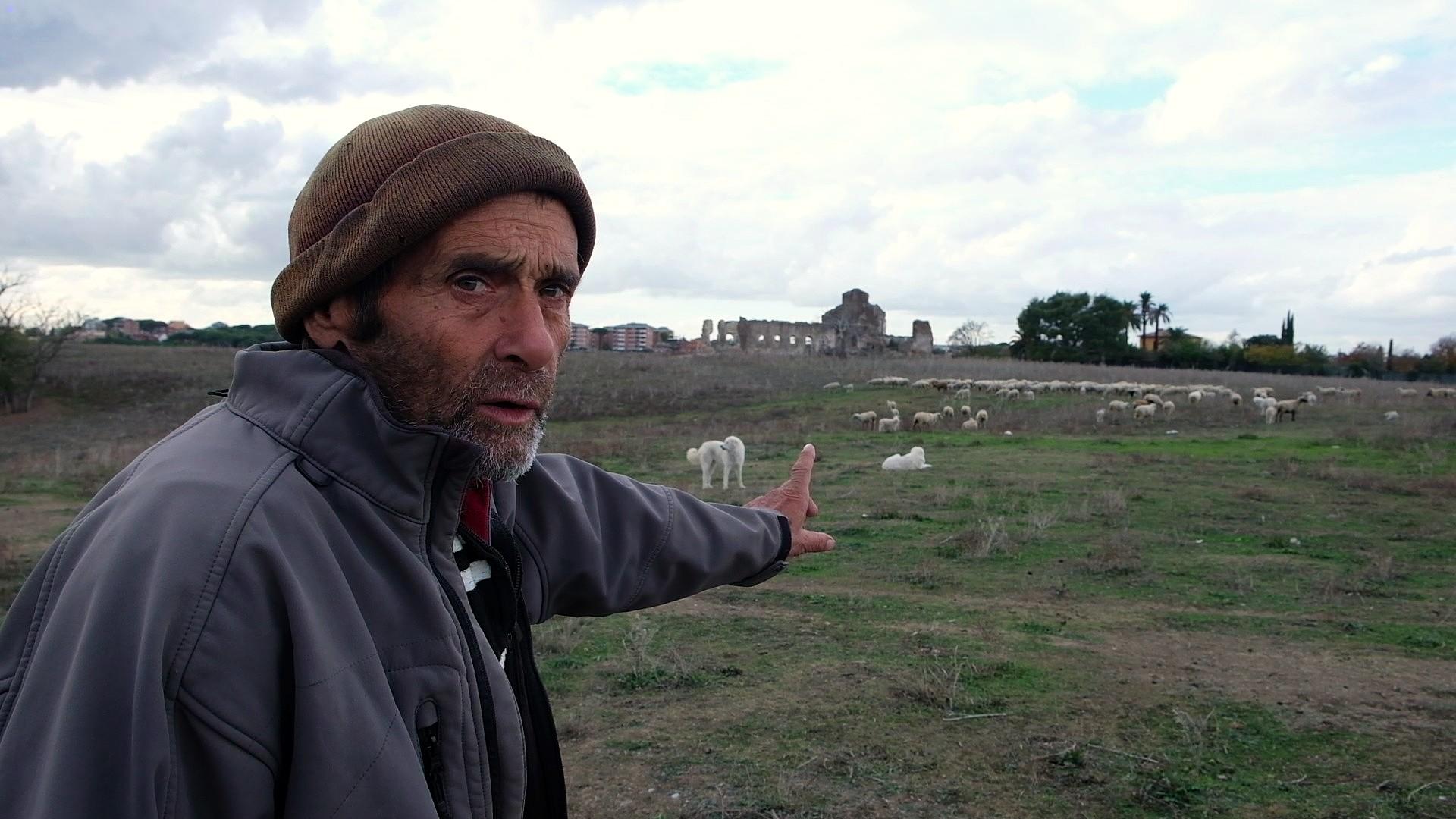

As the sun sets over the Castelli Romani in the distance, Antonio herds his sheep back toward the fold. We are on the hills of Monte Cucco, on Rome’s southern outskirts. Here, hemmed in by the concrete buildings of the working-class district of Trullo, Antonio’s father once fought as a partisan in the Italian resistance. On the horizon looms the “Square Colosseum,” Mussolini’s monument to fascist grandeur, a reminder of Italy’s architectural integration of this part of its past rather than its total erasure.
The sheep, it seems, pay it no mind: They have grazed and resisted change in this land for centuries, in the least expected places. In the Italian capital, sheep have always been part of the metropolitan landscape. It’s estimated there are roughly 50,000 of them spread all over the city. In Monte Cucco, Antonio’s 200 or so animals can be seen grazing.
Later, after these interviews but before the time of writing, the flock will be removed to make way for a so-called requalification project that doesn’t envision their presence: a modern park. Most of the sheep will be sent to slaughterhouses. Others will be sold. And as a result, because there are no sheep to tame it, the grass on the hill of Monte Cucco will grow tall, reaching more than 6 feet high, and fires will break out.
Rome (and, by extension, perhaps other cities in Italy) has to contend with a fundamental question: What to do with such ancient traditions?
Some residents can picture coexistence with the animals, while others fear that “children will get too close to the droppings,” as one resident says. Chiara Visentin, scientific director of the Emilio Sereni Library-Archive at the Alcide Cervi Institute, explains that the legacy of the Enlightenment period can be seen today in people’s repulsion at living alongside the animals, which was once considered normal but is now automatically associated with unpleasant smells, disease and inconvenience.
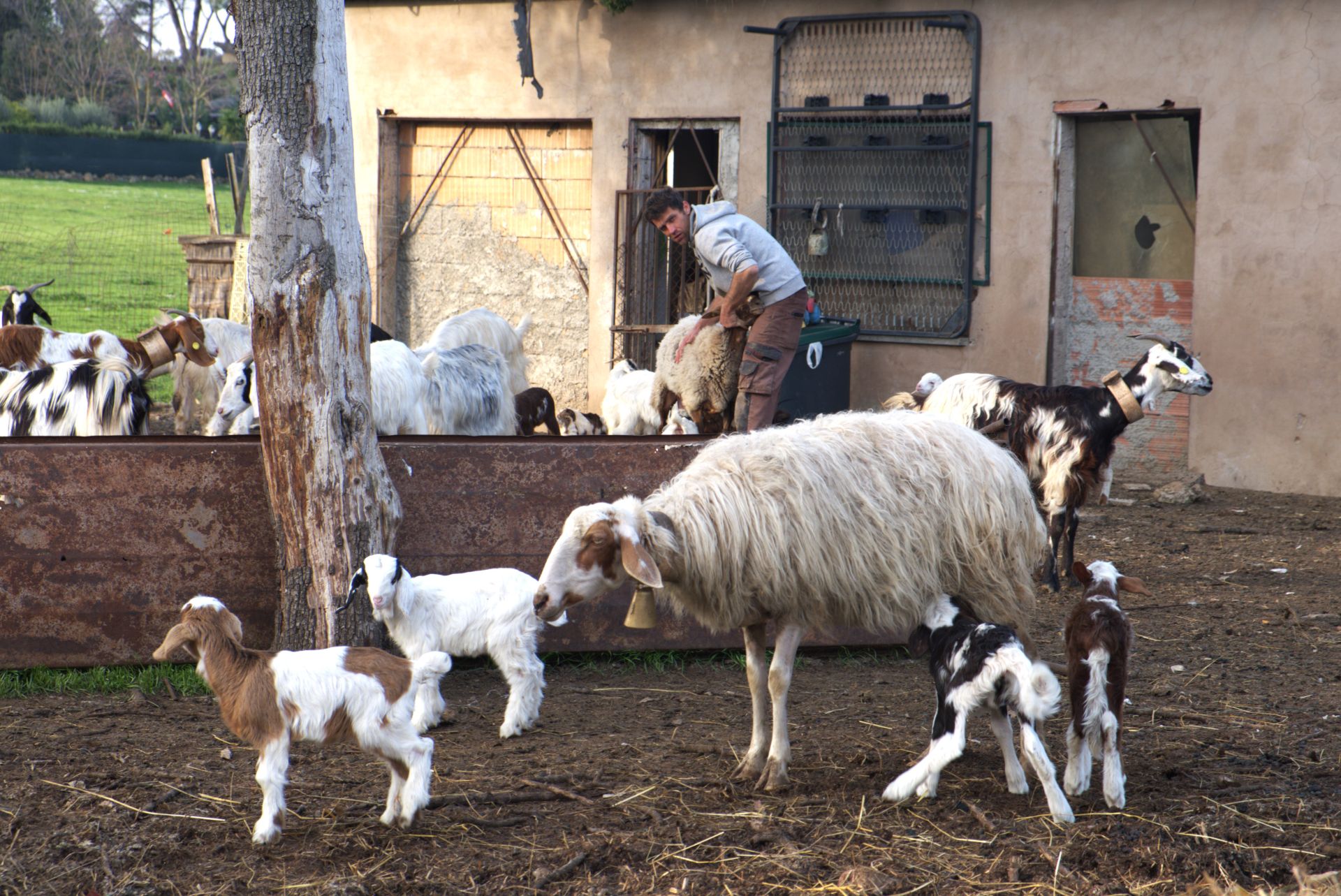
And although the tradition is challenged in Rome, it remains visible. Pasquale, another shepherd, grazes his flock in Caffarella Park, just a few miles from Antonio. “If there’s no passion, there’s nothing. It’s just a waste of time,” he says while he points to his sheep. Each one has a name: Bianchina, Carolina, Graziella. “I put bells on all of them because I like the sound. And I think they like it, too,” he says, fondly. “I came to Rome from the countryside as a boy. My father told me the animals wouldn’t earn me a living, and I was going to become a barman. Then I met an old man who was starting to build up a flock. I felt I needed to follow him. I never would have thought I could cultivate this passion in the city, but 20 years have gone by now.”
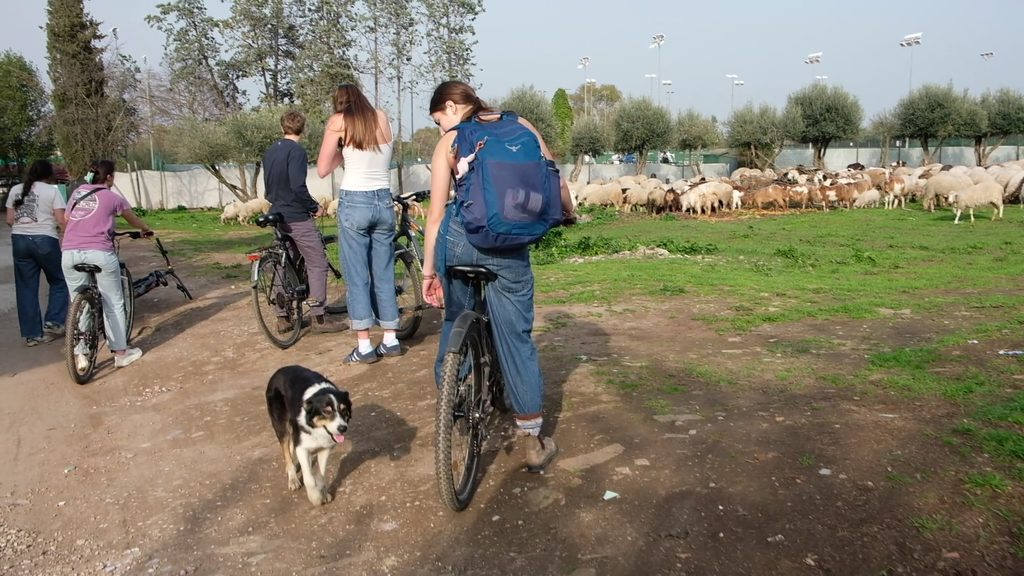
The shepherding trade is built on the relationship between a shepherd and their flock. Antonio understands this well, and as he walks his sheep on long strolls — through what was the set for Pasolini’s famous film “Uccellacci e Uccellini” (“Hawks and Sparrows”) — he maintains that they know the way home, and they always come back. “We treat them well, and they know it. They should be treated like members of the family. Full stop,” he states firmly.
The shepherds’ stories and their tending of the sheep are about movement through time. Antonio recounts traveling all the way to northern Europe to get a specific breed of sheep, which he then crossbred with others. The animals at Trullo are the great-grandchildren of that northern flock. “I chose the males one by one, and the crossbreeding worked. German, Spanish, even Australian. They even have four lambs at a time, which I sometimes sell at the markets,” he explains. “We’re country folk, a bit rough around the edges. I can’t talk science, but the rules of blood and breed are always the same. A sheep’s lineage, even after generations, comes out in the end.” He says this with satisfaction, as if his work on the crossbreeding made him something of a father figure.
“If people heard this story they’d send me to the madhouse, but it was a wonderful journey,” he recalls. It was in the 1970s that Antonio loaded the sheep onto a truck bound from Belgium, the Netherlands and Germany for Trento. Once he arrived there, he decided to follow in his ancestors’ footsteps, and started walking. This is the practice of transhumance, the moving of animals between summer and winter pastures. Just Antonio, and a flock of sheep following him all the way to Rome, with a few encounters along the way. “It was memorable. Years later I even went to the wedding of people I’d met on the Via Francigena: Shepherding means passion, spirit and willpower,” he says.
He brought the sheep to the same land where the Battle of the Magliana had taken place, just next to his current home, back on Sept. 8, 1943, to stop the Germans from invading Rome. “Sheep were essential — ammunition for the resistance was hidden among their wool. My mother and grandmother would sew three or four cartridges into the sheep’s wool,” he says.
The sight of sheep, along with their shepherds and dogs, walking carefree among the tall concrete buildings shatters the mental images we have of large cities, and forces us to reflect on our relationship of coexistence with other animals and with nature in public space.
It’s been this way since the time of the Romans, or even earlier — sheep have lived alongside humans and played a fundamental role in shaping society and the economy. Back then, the flock represented the greatest source of wealth. The word “pecunia” (money) derives from the Latin “pecus” (livestock). It was a form of investment: One might say that owning a sheep back then was the equivalent of owning stock in a company today. Buying a sheep today can cost anywhere from 100 to 500 euros ($112 to $560).
During the early Middle Ages, with the abandonment of cultivated land, before the evolution of large feudal estates, the flock became a way of preserving the landscape, via what the renowned landscape historian Emilio Sereni calls the “saltus” — open, uncultivated land that could be used for pasture, intermingling with wooded areas and more intense human activity. Visentin explains that “the saltus was a structured resource that sought to reorganize an economy during a dark period, especially in the cities.”
During the Enlightenment, with the demonization of communal land use and the rationalization of agricultural activity, borderless open pastures diminished. “The spatial fluidity of the flocks came to be seen as an enemy of private property. Today, a negative image of the world of transhumance and its nomadic ways still lingers,” Visentin explains.
This practice happens mainly in the parks, though not all green spaces can host flocks. The land must, in fact, be designated for agricultural use. Urban parks, by contrast, are usually reserved solely for public recreational use.
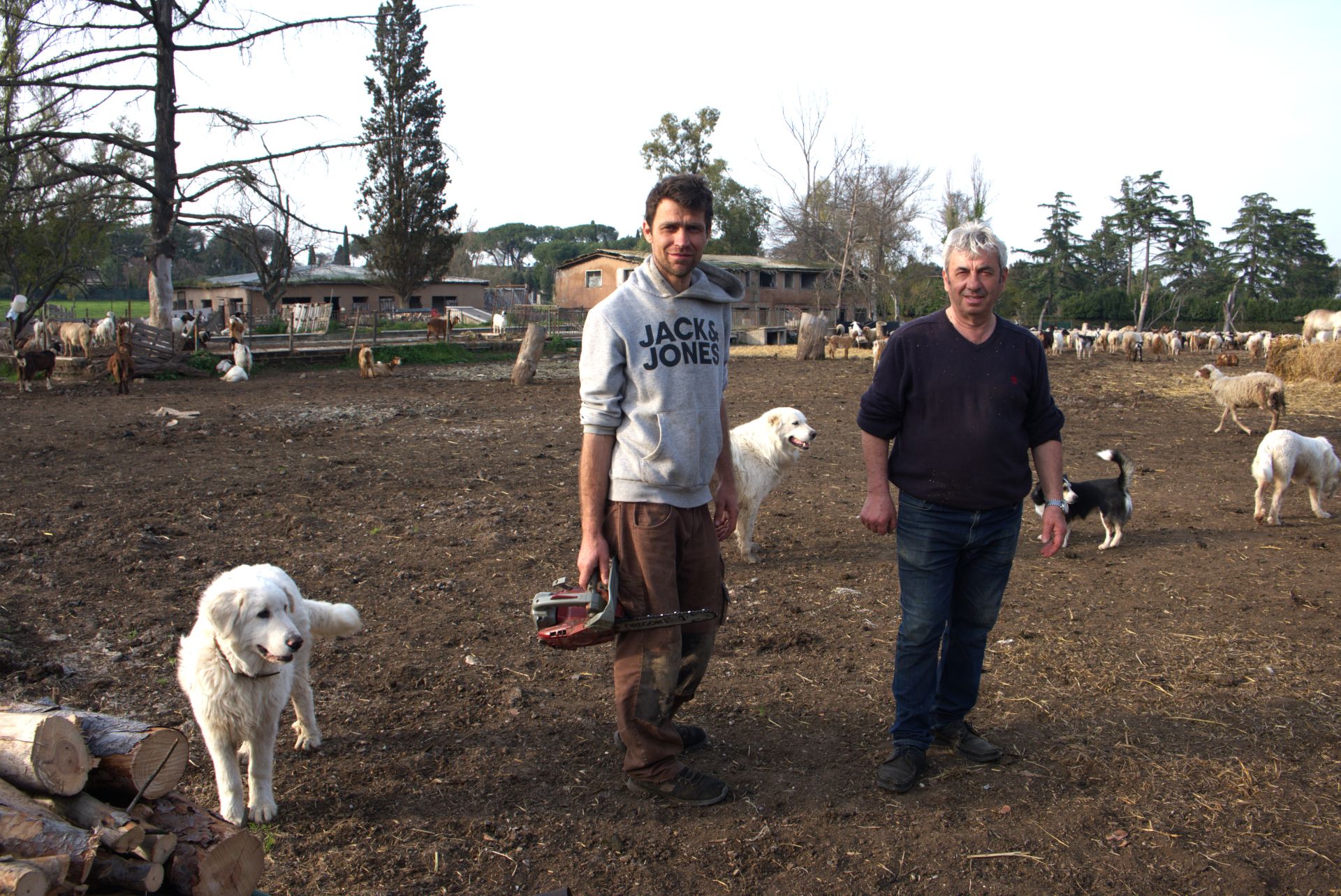
Anna and her husband have each worked with sheep in the Caffarella Park for generations. Shepherding has been taking place in the park since it was still privately owned by the noble Gerini family. Once the park was expropriated to become one of the biggest green spaces in modern Rome, the sheep stayed and adapted to the changed times. “Nowadays the sheep have become urbanized, and they’re less fearful. People enjoy being close to them, too. Sheep, people, bicycles, ruins. It’s all mixed together.” Anna is keen to stress, however, that “just because it’s an open, free place doesn’t mean we shouldn’t manage the coexistence with the animals and with the people who use the space.”
Shepherding, in fact, is known as “extensive farming,” which differs from intensive farming — where animals are confined in enclosed spaces to maximize production — in that it relies on natural grazing, in a “free-range” state. Here the animals require minimal human input, feed mainly on natural grasses, and are a powerful force for maintaining biodiversity.
Nunzio Marcelli, president of the Central Italy Lamb Consortium, which designates sheep as having “protected geographical indication,” or IGP, and president of Rete Appia (a nonprofit network founded by a group of shepherds who came together to overcome the challenges of the profession), says: “On the Appia this became an imperative. People understood that keeping certain flocks was part, not only of the landscape, but of the environment, too — because all the areas taken away from grazing have become degraded, either by concrete or by monocultures like wheat, which cause a loss of biodiversity.”
“The sheep doesn’t pollute, because it has a different digestive transit from other animals — so when it releases the result of digestion, it doesn’t emit methane, but instead restores fertility to the soil,” Nunzio adds.
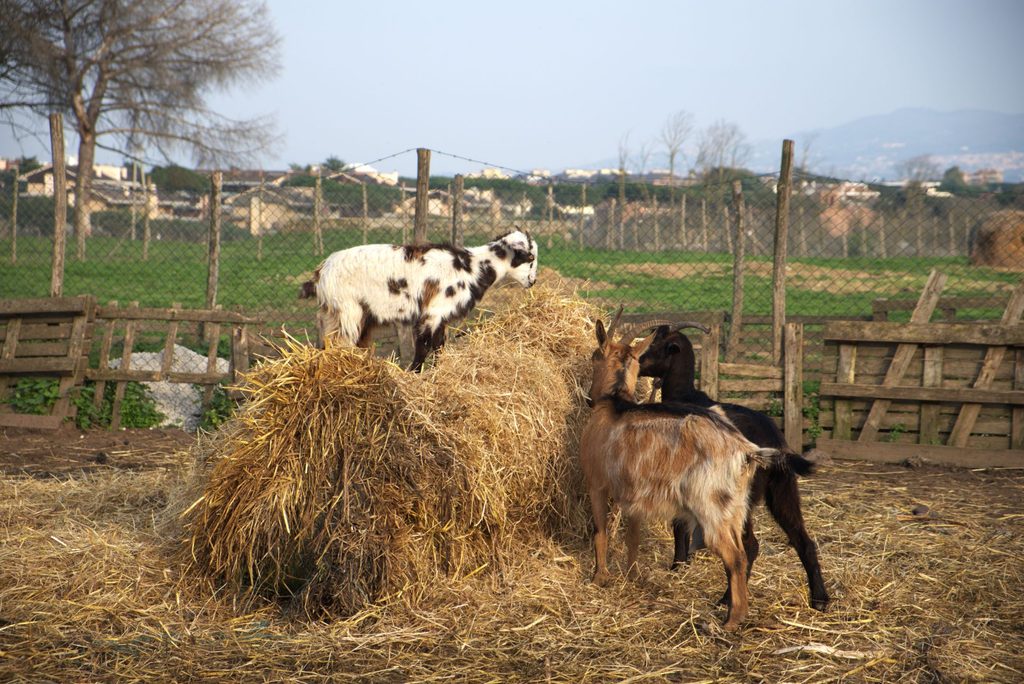
In the past, shepherding was based on transhumance: The flock walked and grazed across mountains, crossing regions and the Apennines, to ensure fresh grass. With the option of buying feed remotely, it’s no longer necessary to travel vast distances with the animals. This has allowed many Roman shepherds to cut down on time and costs, and settle more easily within the boundaries of the various parks.
Local administrations benefit, too. Sheep are referred to as “lawnmowers,” since they graze on short grass and keep the meadows low, as opposed to goats, for example, which rip plants out by the roots. Sheep offer an “eco-mow,” as some call it. This “free labor” is one of the most effective ways within Rome to prevent wildfires, a win-win for humans and animals.
The important role a sheep plays within green areas has led to urban planning policies that encourage this activity. During the administration of former Mayor of Rome Virginia Raggi in 2016, there was a proposal for an “eco-pasture” scheme that would introduce 50,000 new sheep. The plan, however, was seen as reckless and eventually abandoned.
“We have specific agreements with the Parks Authority,” Anna says. Their farm is responsible for creating the firebreak line within the park — known in local jargon as the “rostra” — and ensuring the meadow is short enough to prevent fires. Anna’s sheep are entrusted with this job, and in the areas they can’t reach to graze, she runs the lawnmower equipment.
But transhumance is slow to die out. And there are still those who practice it, even in the capital.
At the agricultural business where Anna works, the 2,000 head of livestock are managed on a “rotation” basis — meaning the different groups of sheep are divided according to the task they’re meant to carry out. About 500 of them undertake the transhumance to the Gran Sasso mountains: “Young, nonpregnant sheep go there; they need to be free and young. There they get vitamin E, which is useful for when they later give birth.”
The rest of the sheep stay in Rome. Still within the Appia park, Anna’s farming business rents spaces for sheep to graze on Via Ardeatina, at Tintoretto, on Via Appia Nuova, and at the Parco degli Acquedotti. These are the busy streets of the city on its southeastern side. Some tourists stop and take pictures. Residents ignore the sheep and walk alongside them. Cars give the right of way to the sheep and wait without honking. Rome has a flavor of rural life, and most people seem unbothered by the presence of the animals.
“Some are about to give birth. We regulate the births so as to have lambs around Christmas or Easter.” Others are lactating, for about four months, as a way of regulating their pregnancy cycle. “The goal is not to overwork them all year round,” she explains.
How can an activity so delicate be managed in a metropolitan setting? An ancient trade based on a direct relationship with the land and nature, made up of relationships and connections among farmers, herders and other shepherds, now finds itself, in this new, globalized world, having to face a number of challenges.
Modernity is pushing young people away from this kind of work. As Nunzio puts it, “Being a shepherd is a generational commitment and duty — if we don’t think about it, the few of us who are left, this way of using the land’s resources will disappear.” Antonio thinks the same way: “We definitely have a great future ahead, but we’ve also had a great past. Why destroy something that has always existed?”
Starting to manage a flock and sustaining it over time is anything but simple. On the legal side, settling in a park requires taking part in a public “eco-pasture” tender. The animals must then all have the vaccinations required by the local health authority, known as ASL, kept up to date over time. Specific regulations cover grazing codes, indoor and outdoor space requirements, types of fencing, shearing methods (for example, for some years now it has been forbidden to dock tails) and microchipping.
“With the checks the tax police carry out nowadays, not having your ASL certificates in order is like pulling the tail of a sleeping lion. Here everything’s in order; there are no sick sheep. I treat them myself. One by one. You couldn’t do better than that,” says Antonio, who complains, however, about there being too many new regulations.
Nor are the financial costs small. A bale of hay costs around 50 to 60 euros ($56 to $67), and a mid-sized flock like Pasquale’s gets through around 100 of them every two or three months.
Demand for products has also shifted. In the past, the main economic activity generated by sheep was wool sales, which accounted for around 70% of income. Today, demand for wool has collapsed, dropping to nearly zero. Shepherds have had to reinvent themselves over time as a result. “We practically give it away,” Pasquale says. “We don’t shear for the wool itself, because nobody wants it anymore. It used to be a source of wealth.” Milk, cheese and meat are the main products a sheep offers today. Much of the IGP sheep’s milk, or the pecorino romano carrying the similarly protected DOP designation and the Roman ricotta found on shop counters, comes from the sheep of the Caffarella.
“Every now and then the foxes eat the lambs. Or they even come and steal the sheep. But that’s part of the job,” says Pasquale, matter-of-factly. “There used to be just the animals, you and the fields. Now you always have to be on alert — checks, vaccines. Those are expenses, too, but we keep the whole thing running, even if it means sacrifices,” he concludes.
Given the limited income, some like Pasquale choose not to make a living from it at all, grazing the flock purely out of passion while supporting themselves with other jobs. With the same philosophical outlook, he also mentions that he might soon have to move on, because a restaurant is set to open in the building where the sheep are currently kept. “We’ll move further down, or further up. We’ll see.” He doesn’t seem worried. After all, grazing is by nature a mobile activity.
Expanding cities face increasing demand for land, and much of the old Roman outskirts are now urbanized, with 13-story apartment blocks and elevated highways. The transformation of wild parks into paved infrastructure — such as malls, parking lots or even green but manicured parks — is a major challenge for shepherding in Rome. “The big change shepherds in Rome have to face is land consumption,” Visentin says. “So what is often seen as an issue of decorum and safety, if looked at from another angle, reveals a different phenomenon instead: a past trying to resist change. It’s as if shepherding is reorganizing itself within modernity.” As is the case in Trullo.
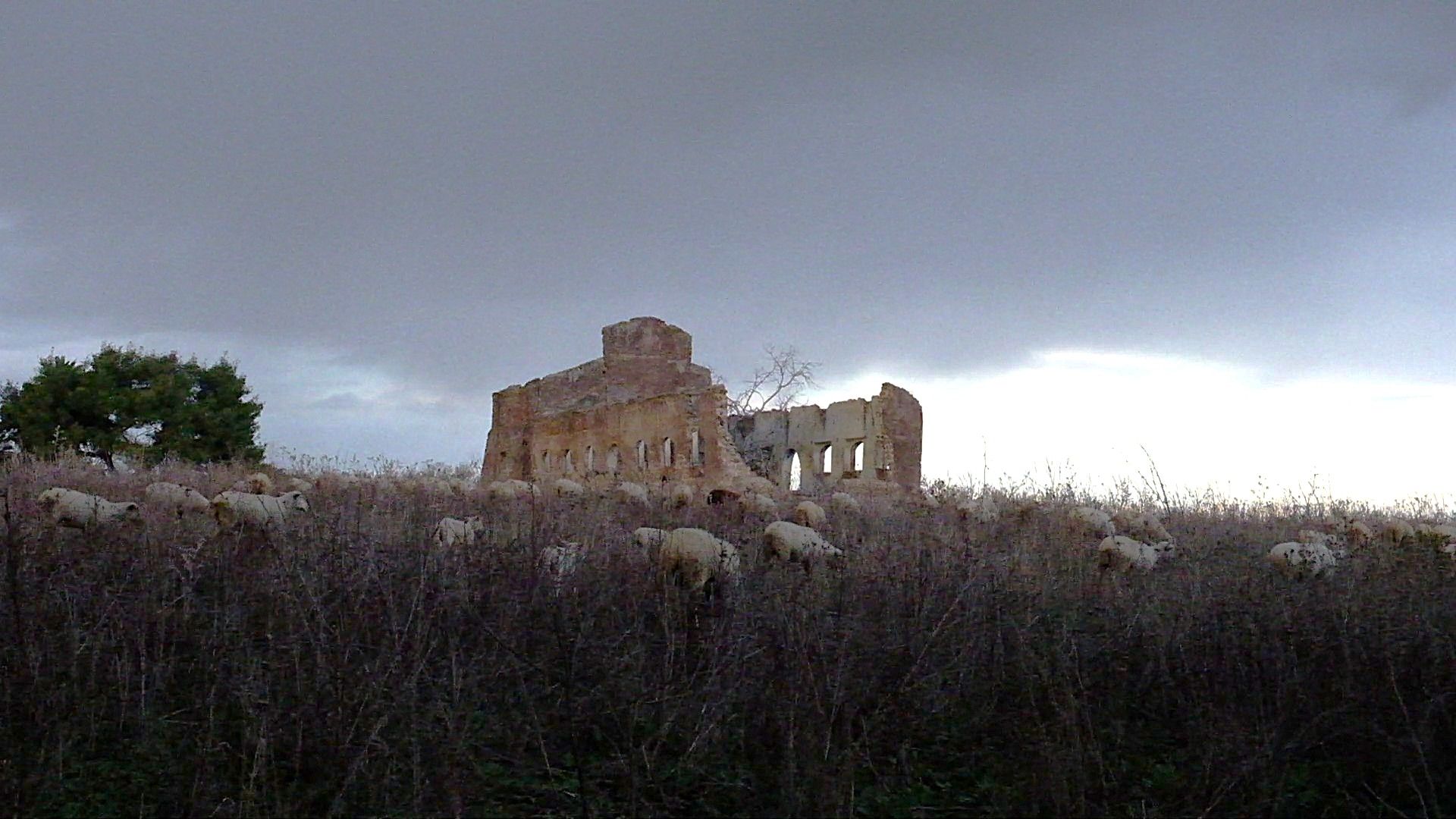
“I was born in that farmhouse right there, the old villa of Count Baccelli,” says Antonio, pointing to the skeleton of an old structure. At the center of the meadow stands Torre Righetti, an old hunting lodge where the sheep now shelter from the heat during the summer months.
The area where he grew up — where his father fought in the resistance — will be dedicated to a redevelopment project including public housing, urban gardens and a public park, something that the neighborhood has been awaiting for years, according to local residents’ committees. Antonio has already stopped grazing sheep in that area, and construction work is under way. No solution has been negotiated between the agricultural business and the authorities to preserve both the shepherding activity and a park, as happens, for instance, in the Caffarella, where some areas are designated agricultural parkland and others urban parkland.
“I’m the first one in favor of the park,” Antonio says, “but I want to keep my sheep. Here they’re threatening to have them all put down if we don’t leave, but the land they’ve offered us to move them to isn’t suitable.”
The green spaces in the city are shrinking, and all the activities tied to them — whether shepherding, children’s playgrounds or fruit tree cultivation — end up vying for the few remaining patches of land. Whether coexistence will once again become a priority remains to be seen.
Become a member today to receive access to all our paywalled essays and the best of New Lines delivered to your inbox through our newsletters.