

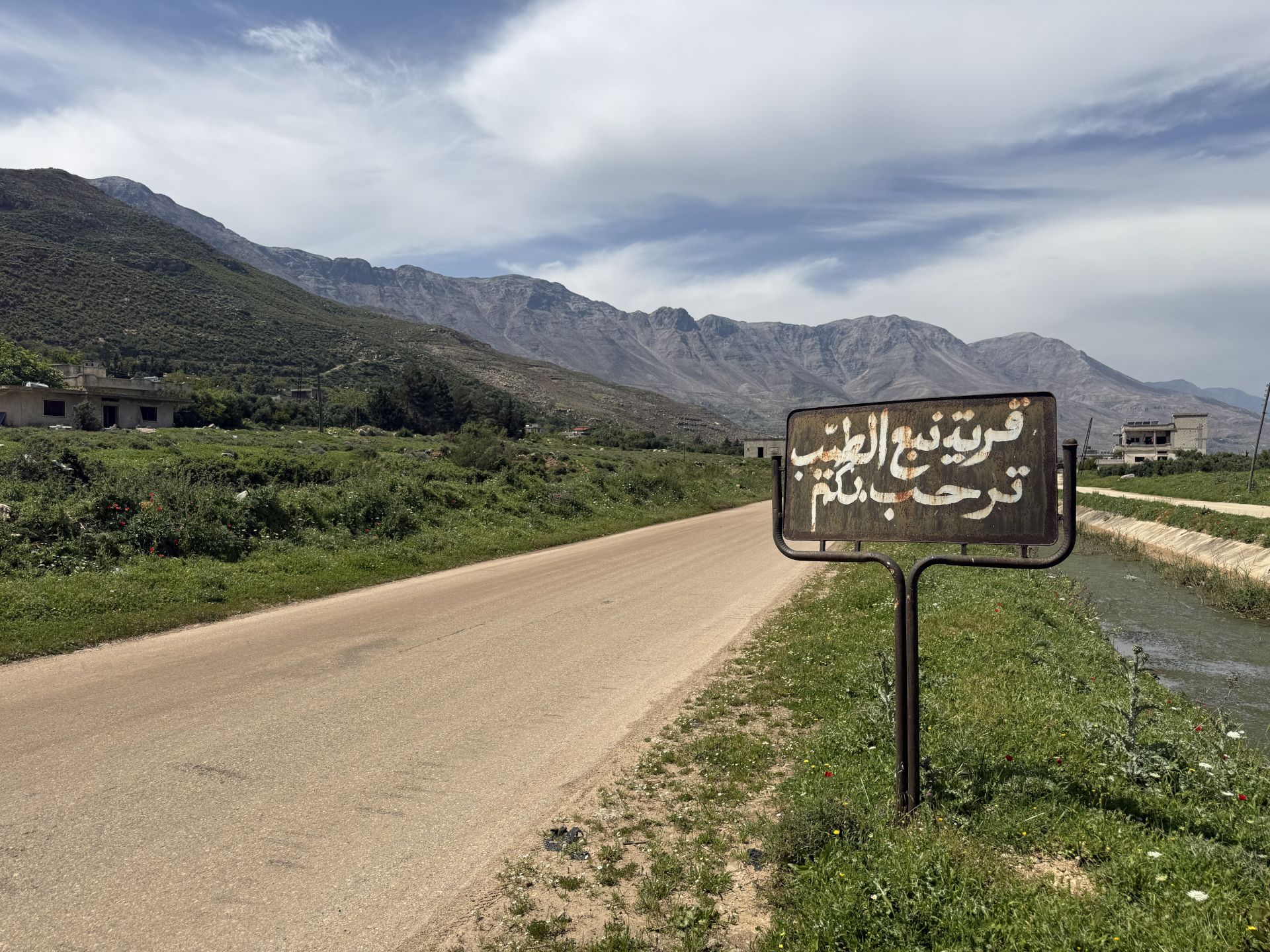
Threading between the houses of the village of Nabe al-Tayeb in the Ghab Plain, in the western, rural part of the Syrian province of Hama, a dry watercourse running below the level of the surrounding land leads to the rugged peaks of the Syrian Coastal Mountain Range around Beit Yashout. The path connects directly to the countryside of Latakia, the province that was once a stronghold of Bashar al-Assad’s regime.
This was the safe passage that Amjad Youssef relied on to remain in hiding in the aftermath of Assad’s fall, as he evaded capture for over a year.
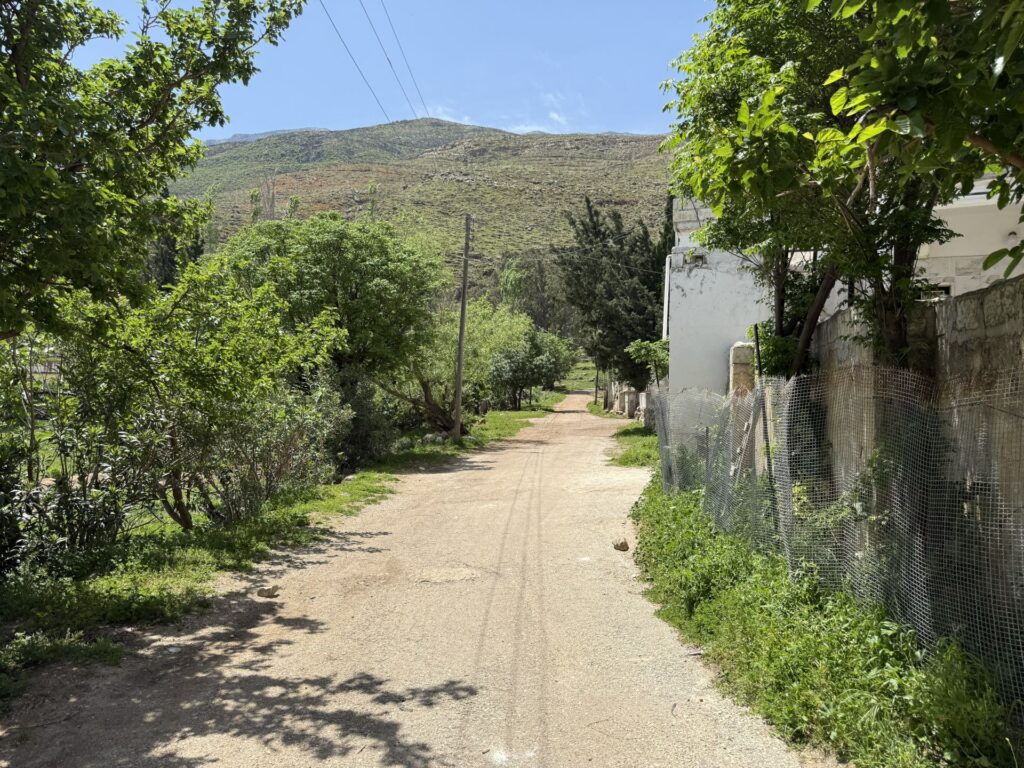
Syria’s Internal Security Forces (ISF) apprehended Youssef, known among Syrians as the Butcher of Tadamon, at his family home in Nabe al-Tayeb.
His name first came to prominence following an investigative report published by New Lines and The Guardian in April 2022, which brought to light footage filmed nine years earlier of a horrific massacre carried out on Nisreen Street in the Tadamon neighborhood on the outskirts of Damascus. At the time, Youssef was serving as a volunteer with the rank of first warrant officer in the District Branch of Assad’s Military Intelligence Directorate, also known as Branch 227.
Approximately 41 civilians, among them women and children, all residents of Tadamon, were executed by gunfire and their bodies thrown into a pit dug within the neighborhood. Not content with this, Youssef set fire to the bodies in an attempt to conceal the evidence of his crime.
Local residents have also spoken of numerous other atrocities carried out by Youssef and the men under his command, including the rape of women, enforced disappearances and arbitrary detention.
Where did Youssef hide after Assad’s fall, and how did he move around?
The Beit Yashout range is considered a particularly suitable refuge for those evading pursuit, owing to the elevation of its peaks, its inaccessibility, the dense tree cover and the overall rough topography, all of which make movement and hiding relatively easy for those familiar with the area.
Following intelligence reports indicating Youssef’s presence in the Ghab region, the ISF placed him under surveillance for 30 days. After tracking his movements between the mountains and his family home, the ISF captured him in his bedroom, according to Khaled Mardaghani, head of internal security in the Ghab region.
A field trip to document the routes that Youssef used revealed that it was approximately 100 yards from his home on the main road at the entrance to the village to the place where the mountain path begins, passing through the rear of 16 houses along the way.
From there, he would move through the trees and along the dry watercourse, using it to reach the far side of the mountains, crossing into the Latakia countryside.
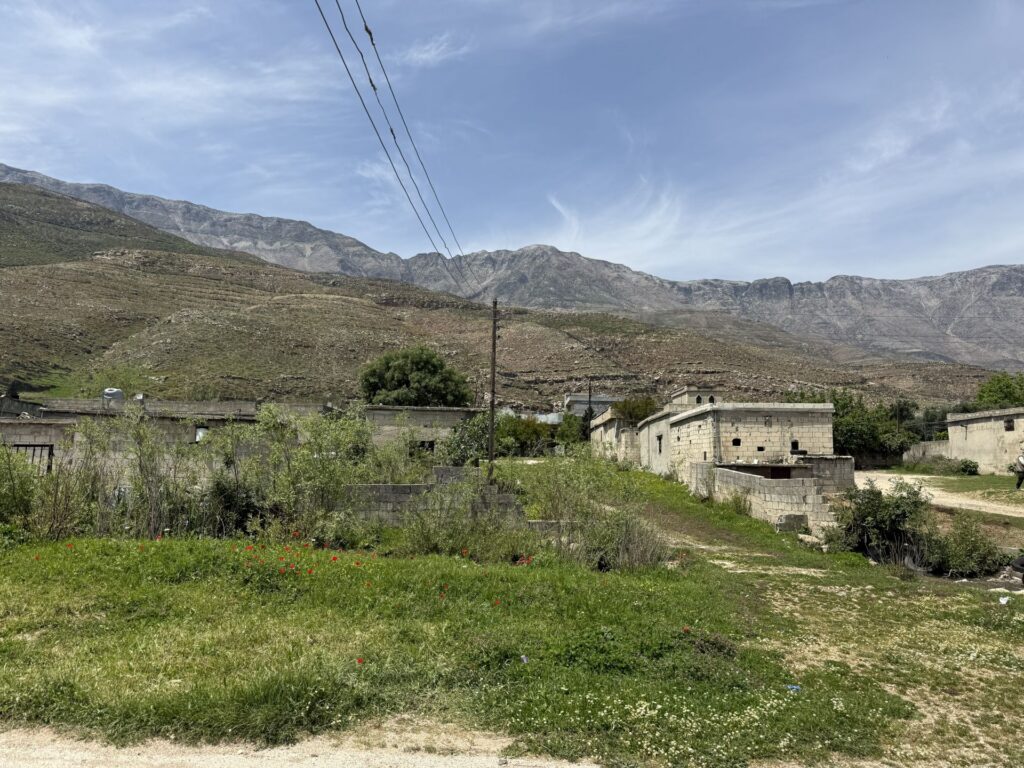
Security sources confirmed that this same route was one Youssef used regularly to return home from the mountains, entering the property from the rear.
The village’s terrain and position next to the mountain range made it a secure corridor for Youssef to move between the Latakia countryside and his home in rural Hama, particularly under cover of night.
Mardaghani, the commander of the operation, disclosed that the security forces had held information confirming Youssef’s presence in the Ghab region for several months. “We worked to gather and cross-reference intelligence through the directorate’s information division to intensify the monitoring effort,” he said. “Within a month, we were able to map his movements across the area, every trip between the mountain and the house. We had also been monitoring him leaving the house for the mountain for some time before that.”
“We arrested his father and several individuals who had been sheltering him, as provided for by the law, and they are currently under investigation,” he said.
Mardaghani said that Youssef was arrested without any resistance, owing to the element of surprise and the fact that he was caught in his bedroom. The operation was tightly coordinated across three groups: a wide outer ring around the area, a closer inner ring, and a dedicated raiding unit. The speed of the operation was a decisive factor in the arrest.
Village residents confirmed they had no knowledge of his presence in the area or inside the house. According to Saqr al-Youssef, a resident of Nabe al-Tayeb, they only learned he had been in the village later that day, after his arrest, from his family. “We were all blindsided to find he’d even been in the village,” Saqr said.
“Ninety-nine percent of the village had no idea Amjad was even inside Syria, as the family had put it about that he had fled the country after Assad’s fall and was living in the Netherlands,” he added.
With residents indoors by the late hours, there was no way of knowing when he came and went at night.
The village mukhtar, Youssef Shamma, backed this account, saying they had had no idea he was there and had not seen him more than a handful of times before Assad’s fall.
Another resident, Abd al-Munim Ali, described a statement issued by the community declaring that they had no knowledge of Youssef’s presence, and thanking the ISF for the precision of the operation and for shielding the area from the fallout of this case. They also demanded the harshest possible penalties for Youssef and those who sheltered him.
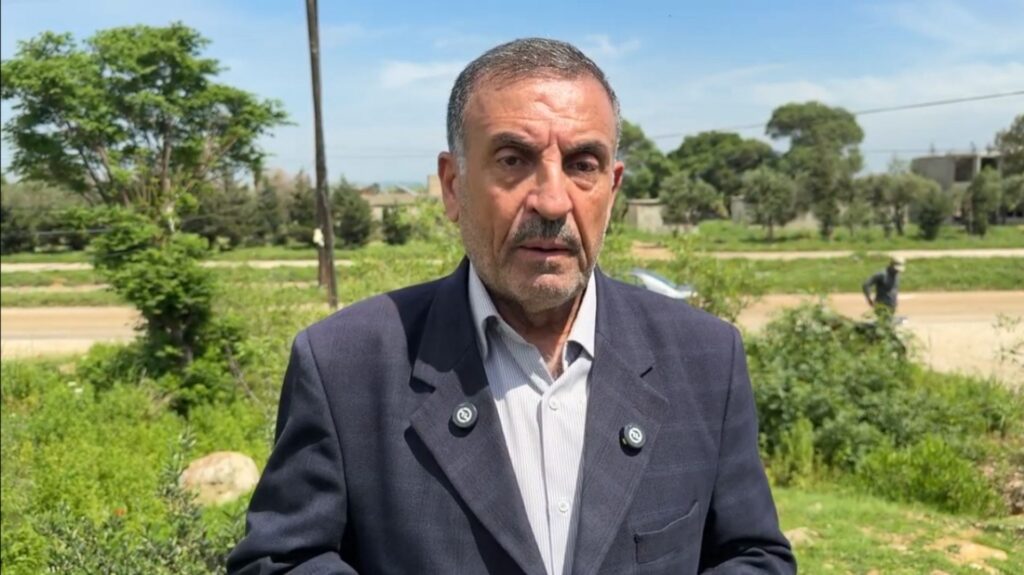
He said villagers were ready to hand over anyone who had cooperated with him or facilitated his movements during his time in hiding. He also noted that most residents would not even recognize Youssef’s face, as he had been based in Damascus and rarely visited his family.
Asked whether the village had known about Youssef’s criminal record before Assad’s fall, Ali said they had heard of the massacre in general terms but had no idea Youssef was among those responsible until after the regime collapsed. “We in this village condemned it outright,” he added.
He flatly denied the presence of any figure called Umm Ali in Nabe al-Tayeb, whose story of hiding Youssef in her home for months had spread widely on social media. He also noted that Amjad’s wife and daughter had been in the family’s house throughout, and had not left it from the time of Assad’s fall until the moment of his arrest.
What Syrians cannot stop talking about is the state in which Youssef was found: a fresh haircut visible in the arrest footage, the ease with which he had been sleeping in his own bedroom, the bottles of cologne found in the room. All of it points to a man who had been coming home regularly, and corroborates the security account that this was far from his first visit.
Security sources confirmed he has been transferred directly to Damascus to stand trial. Syrians celebrated across multiple governorates, with the largest gathering at the pit in Tadamon itself, the very site of the massacres of civilians. Mothers of the victims held up photographs of their children amid chants and ululations, rejoicing at the capture of the man responsible for those crimes. Some have called for a public trial in Tadamon, right at the spot where he killed dozens of innocent people.
“Spotlight” is a newsletter about underreported cultural trends and news from around the world, emailed to subscribers twice a week. Sign up here.