



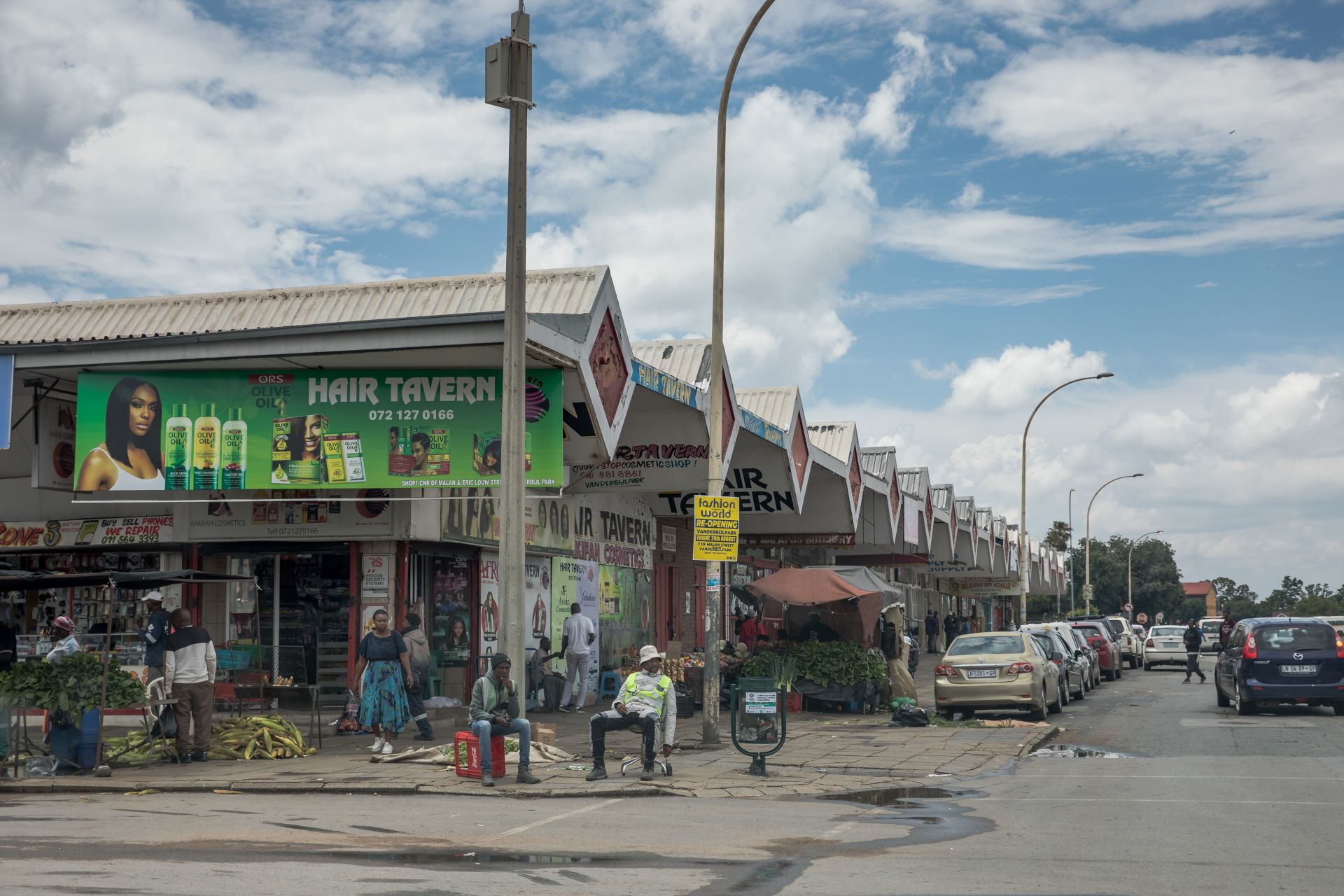
Built on steel and state planning, the Vaal Triangle once symbolized South Africa’s economic future. Today, its residents are living through the long aftermath of deindustrialization.
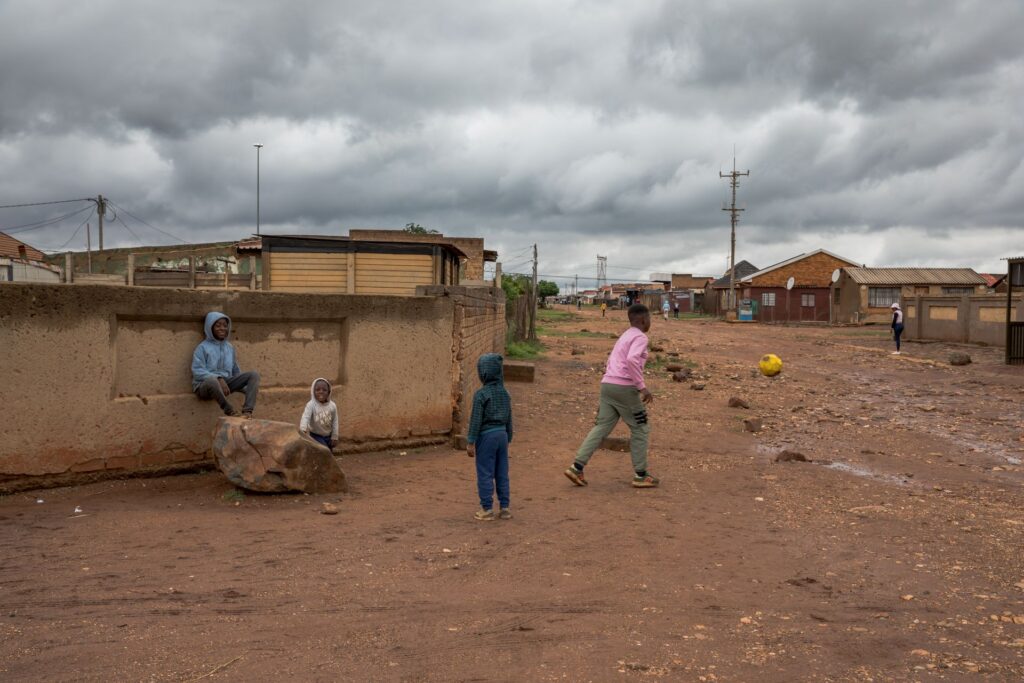
Cold November rain turns Toto Street in Sebokeng township into mud. The road, like most here, is unpaved. Diluted sewage seeps between the small houses behind brick walls and sagging fences, past a general dealer under a corrugated roof, through scattered rocks and loose rubble. Children kick a soccer ball while cars carefully pick their way past.
Inside a backyard house (an informal dwelling built on an existing property), Maselo Lemphane sits wrapped in a red bathrobe. The room is dark — electricity is expensive. A pot of pap, a thick maize porridge that is a staple in South African homes, simmers on the stove. Her baby daughter stares from the doorway of a small bedroom.
“Can’t say it was a nice job,” Lemphane says, remembering her work as a valet at a panel-beating company. “You’re working with water 8-to-5. It doesn’t matter which season it is. You see the weather conditions, it’s raining. But if the clients want the car, they’re like, ‘Gou, gou. Kom, kom! Roer julle gat!’” (“Hurry up, come on! Move your ass!”)
In 2024, the company went bankrupt, and Lemphane was laid off. “Everything changed,” she says. “The food, the insurance. My policies lapsed. Then my mother died. Afterwards, we even struggled to give her a simple dignified funeral. Like, yoh, it strained a lot. Everything changed. Everything.”
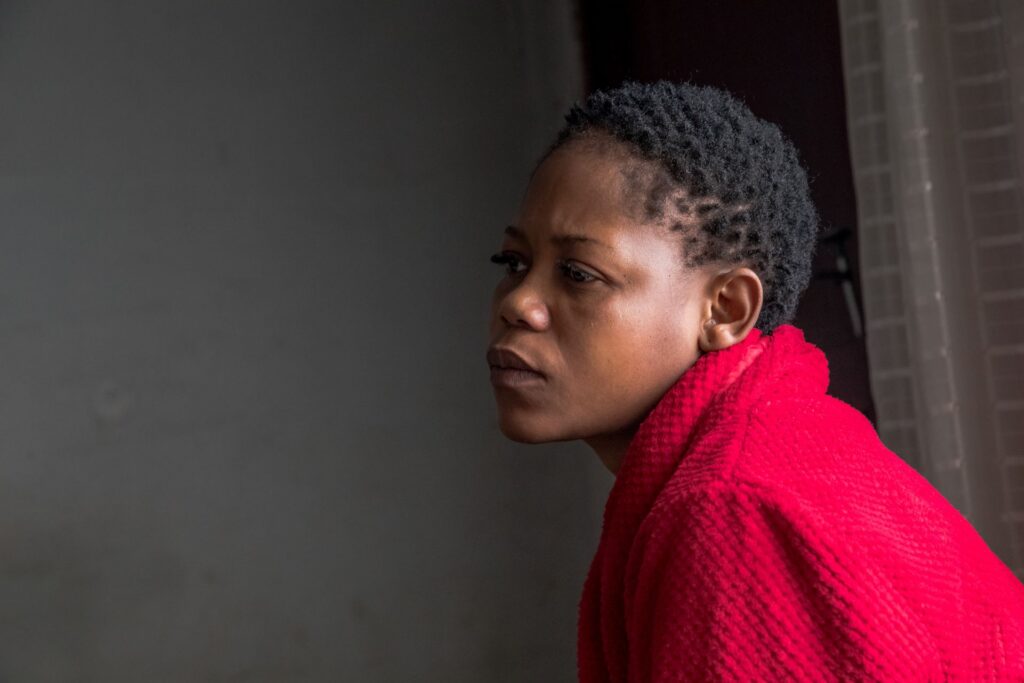
At almost 30, Lemphane now raises two children and three siblings while searching for work in South Africa’s rusting industrial heartland, the Vaal Triangle, which consists of three cities — Vereeniging, Vanderbijlpark and Sasolburg — an hour south of Johannesburg.
Her struggle reflects a broader transformation of South Africa’s postapartheid economy. After 1994, the country dismantled the industrial model that had built places like the Vaal. Under three decades of rule by the African National Congress (ANC) party, liberalization and privatization were not matched by the investment and institutional discipline required to sustain heavy industry. Since 2008, more than 560,000 manufacturing jobs have disappeared nationwide.
The Vaal epitomizes that trend. Built around factories that once sustained entire communities, it now faces the compounded effects of industrial decline and a weakened state. In 2011, unemployment in Emfuleni stood at 35%. Today, it is 56% — with youth unemployment far higher — reflecting a decade of deepening labor market collapse. Nearly 28 million South Africans now receive some form of social assistance, including millions who survive on the Social Relief of Distress grant of 370 rands (equivalent to $23) per month.
“It assists,” Lemphane says. “But it can only afford a portion of food. That cannot even take up to the whole month till we wait for another payment.” She looks around the small room. “Yoh, there’s a lot of social problems here,” she says. “People are struggling, especially here in Sebokeng. There’s a lot of struggles behind closed doors.”
Lemphane was born after apartheid ended. Her generation came of age with promises of opportunity — just as the industrial economy that had shaped the Vaal for decades was beginning to unravel.
The region’s industrial rise began in the early 20th century, centered on steel production in Vanderbijlpark and Vereeniging — the triangle’s two main cities in Gauteng province — and petrochemicals in Sasolburg, just across the border in the Free State. Behind much of this was the engineer Hendrik van der Bijl, who helped establish key state institutions such as the electricity utility Eskom in 1922 and the South African Iron and Steel Corporation (ISCOR) in 1925, laying the foundations for an economy driven by cheap electricity and heavy industry.
Under apartheid, that system served political power as much as economic growth. Protective tariffs and subsidies consolidated white — particularly Afrikaner — wealth, while Black workers supplied labor without access to political rights. Townships like Sebokeng, where Lemphane lives, housed workers close to factories, preserving inequality and solidifying it in a new geography.
For those employed in steel and petrochemicals, the system did offer stable and unionized jobs, though those would later prove fragile. The exclusion of Black workers from skilled labor was structural and profound. But the industries themselves were strong, and for decades underpinned the local economy.
The ambition of that era survives in remnants, in unexpected places. At the end of a tree-lined driveway off Beethoven Street in Vereeniging stands the Vaal Teknorama museum. Rusting artillery pieces, an ancient tank and a steam engine from 1938 sit on the massive front lawn. Opened in 1990 by apartheid President F. W. de Klerk, the museum was meant to celebrate South Africa’s industry. Today, it is in shambles — dim lights, a photo archive in disarray and abandoned, dusty displays.
In the years after apartheid, the foundations of the model altered. Trade liberalization accelerated. Privatization reshaped ownership. Factories faced new competition as technology changed and global steel markets shifted. ISCOR was absorbed into the global steel giant ArcelorMittal in 2004, and the industry increasingly answered to market logic rather than state mandates.
The consequences filtered through the region. Electricity became less reliable and more expensive. Rail infrastructure deteriorated. Imported steel — particularly from China — intensified pressure on local producers, even as export markets grew more volatile. South Africa once benefited from preferential access to the United States under the African Growth and Opportunity Act. But successive rounds of U.S. trade measures — including steel tariffs imposed in 2018 and new 30% reciprocal tariffs announced in 2025 — narrowed that advantage, adding uncertainty for manufacturers reliant on overseas markets.
The strain extends beyond steel. Sasol’s operations in nearby Sasolburg — once a pillar of industrial expansion — now face strategic uncertainty as the company restructures debt and scales back investment. The state-owned PetroSA refinery has closed. A proposed deal involving Gazprombank fell through amid political and financial turbulence. In Durban, Shell and BP sold their refinery to the government for a nominal sum, but it remains shut. Three decades after liberation, much of the industrial energy infrastructure built in the 20th century is shrinking, stalled or for sale.
A former local mayor recalls warning the national government about rising unemployment in the early 2000s, but large-scale investment never followed.
“The firms are closing down. The companies are liquidated,” says Lemphane. “There’s always retrenchments in the firms, in the companies. So, we’re going to struggle more. This unemployment thing that we’re crying about now, it is definitely going to get worse.”
Vincent Ndemande, born in 1981, also lives on Toto Street with his granddaughter and wife. A black-and-white photograph of his father hangs on the wall of his small living room. He works as a chef, but the job is precarious — his employer recently lost a major client. Around him, people work fewer days or shorter shifts. Salaries no longer stretch to the end of the month, and debt piles up quickly.
“We are asking ourselves,” he says, “when we wake up in the morning and go to work — what will happen?” He shifts in his chair. “I want to tell you straight up. You see all of this. This is torment, guys. I don’t want to look like someone who’s just going to work … and ends up with nothing. There’s never been enough.” He pauses, then adds: “But there’s enough in our government. They told themselves there’s never been enough in their pockets.”
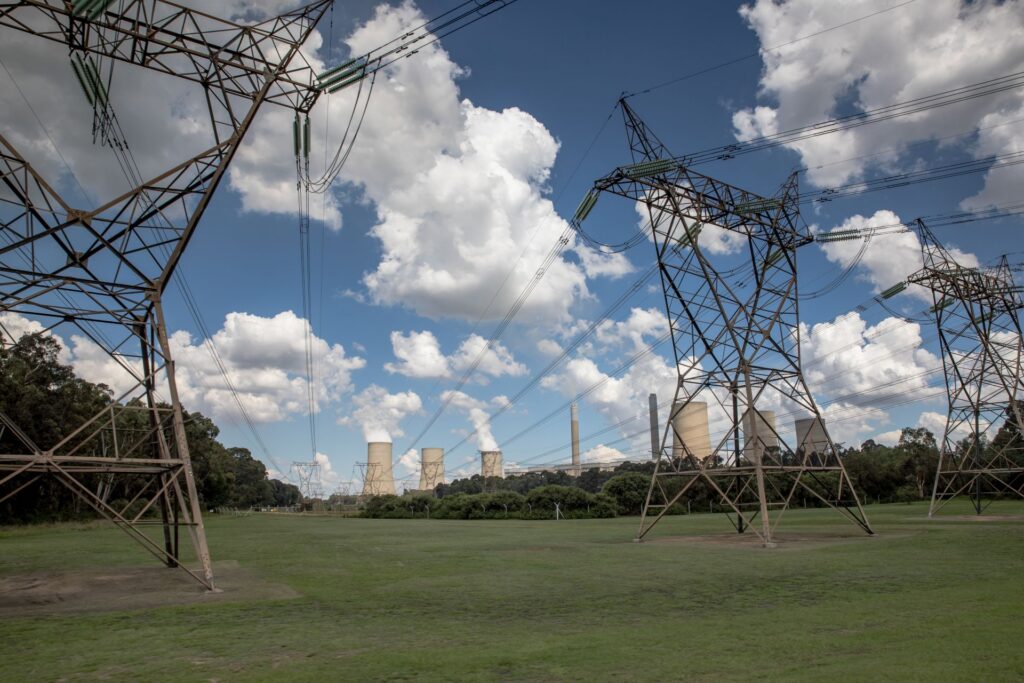
Seven miles away, the cooling towers of the Lethabo coal-fired power station rise above Vereeniging, visible long before you reach the city itself. For decades, electricity from Lethabo fed the steelworks that shaped life across the Vaal. ArcelorMittal’s mill was set to close at the end of December 2025, losing around 3,500 jobs. The Samancor manganese alloy smelter, used in steelmaking, shut down in 2020.
A few blocks from the city’s crumbling main drag stands Delta Marine. Inside, recreational fishing boats loom out of the shadows. A generator throbs in the workshop; the municipality cut the electricity after a dispute over meter readings.
Sonja Theron, 68, stands behind the counter with paperwork spread before her. She has spiky black hair, nail art and a tattoo around her wrist. Her hands cut through the air as she speaks. “I’ve come to a point,” she says, “where I want to say to the municipality, you know what, stick your stuff up your, wherever. … I feel they are still stealing. … I just think that the corruption is sky, sky, sky high. Sky high, the corruption.”
She and her husband bought Delta Marine in 1996, when orders flowed. Their son now designs the boats. Business has been slowing for years. She frequently has panic attacks. “We are,” she says, “literally living from hand to mouth.”
The decline began in the 2000s, when sewage spills into the Vaal drove recreational boaters away. COVID-19 made things worse. Before the pandemic, the company employed 25 people. Today, it’s 15.
“If we make it, I don’t know,” she says. “We’ve sold our caravan, we’ve done this, we’ve done that, to try and just keep going for our son’s sake. But we are going to come to a point where we haven’t got much more to sell.”
She pauses. “I say my knees have got patches on already from praying and asking God, please just give us an outcome. Give us an outcome on this whole situation that we are in. It’s gone down to ground level.”
The generator hum continues behind her, mocking the dream of cheap electricity. Rolling blackouts — known as loadshedding — began in 2007 after years of underinvestment in electricity generation. The state utility Eskom had been earmarked for partial privatization in the early 2000s, and expansion plans stalled just as demand rose.
Later, corruption and state capture hollowed out the utility further. Supply declined while prices rose sharply. Industry groups say the average tariff jumped from about 20 South African cents per kilowatt-hour in 2008 to more than 165 cents in 2024 — another cost absorbed by businesses already fighting to stay open.
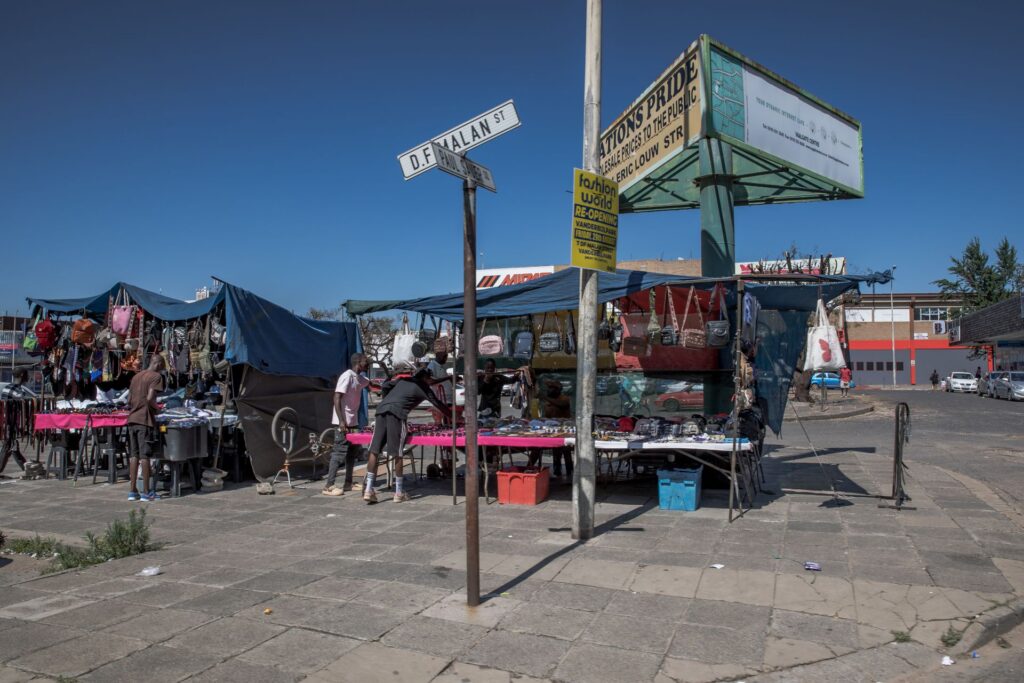
Beyond the factory gates, the crisis spreads. On Union Street in Vereeniging, the effects are visible at street level. Potholes scar the road, dirt obscures what remains of the tarmac. Once-thriving shops now struggle to survive.
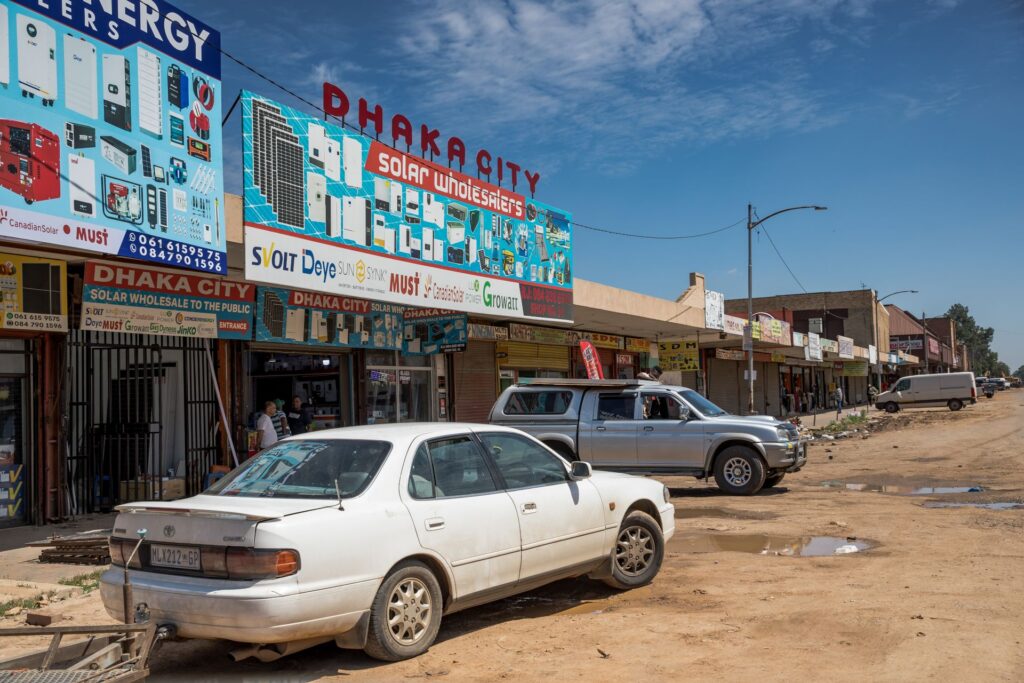
Inside Taxido Chemist, Faatema Patel, 44, a pharmacist and mother of three boys, works behind the counter, often chatting with regulars. Many once worked in steel or in the industries that depended on it. “January used to be busy,” she says, because that was the month when medical aid benefits reset and people collected prescriptions. “Now we worry.”
Job losses often mean treatment is delayed. Chronic illnesses go unmanaged. Patel says many former industrial workers will end up relying on the public health system, which she describes as already overstretched. “We see patients coming to us looking for medication that just isn’t available there,” she says.
Some antiretroviral medicines are among those facing shortages. A month’s supply in the private sector can cost roughly $22 — almost the same as the 370-rand Social Relief of Distress grants on which many unemployed South Africans depend.
Some arrive with prescriptions they cannot afford to fill all at once. Others ask for smaller quantities, hoping money will stretch a little further. “When socioeconomic circumstances worsen,” she says, “it shows here.”
The pharmacy has ceased selling codeine-based medication to stop a constant stream of teenagers looking to get high: another sign, Patel says, of strain spilling into everyday life. “You already have children seeping through the cracks,” she says. “That’s where your drugs come in.”
Patel lives in Roshnee, a suburb on the edge of the Vaal developed under apartheid as a segregated area for Indian South Africans. The community fixes potholes and looks after its own security and education. Within its boundaries, Roshnee has zero crime.
“I always tell my husband that living in Roshnee sometimes feels like you’re living in The Truman Show,” she says. “You’ve got cameras in every street, access control, and the kids can ride around. But it’s utopian. It’s utopian because the moment you drive out, that’s where the real world begins.”
From township to suburb, residents talk about drugs and how they are tearing apart the social fabric — especially nyaope, a cheap street drug widely smoked in South Africa, containing low-grade heroin mixed with cannabis and often cut with a variety of household chemicals such as pool cleaner and rat poison.
On Toto Street, Selina Marilitsi has watched the change up close. She has lived in the same small house for all her 44 years. She has not had steady work since the Samancor smelter closed in 2020, and has survived on government grants and by selling snacks outside her home.
Like many former industrial workers, she speaks less about factories now than about what happens after they close: long stretches without work, young people with too much time, alcoholism and families stretched thin. Her greatest concern is her two sons, both still at school.
“We don’t want drugs,” she says as damp seeps through the roof. “Drugs are killing our kids. We want our kids to go to school and get education and work for their parents.”
A few blocks away, Kgokare Secondary School stands behind a concrete slat fence topped with broken razor wire. The buildings are worn. Some classrooms have digital teaching aids, but the walls and corridors show years of neglect.
Jeanette Vis is part of the Community Policing Forum, a volunteer patrol group formed by residents in Sebokeng’s Zone 7. She has two children and receives a monthly stipend of $90 for her work at the CPF. In addition to night patrols, she helps guard the school. Crime reaches here too. Some break in to steal copper piping. Others come for food from the storeroom.
“First thing we do every morning, we search to make sure that children are not carrying weapons and drugs in their school bags,” Vis says. “If there was no CPF, these kids would carry the knives to school to stab each other or teachers. It would be really bad.”
Once, unions organized political life here, much as community patrols do now in places such as Roshnee and Sebokeng.
At the regional office of the National Union of Metalworkers of South Africa (NUMSA) in Vanderbijlpark, Kabelo Ramkgathadi traces the arc of the industry through his own career. He started as a general worker 25 years ago after completing high school, later becoming a drill operator and shop steward at MacSteel before moving into local organizing. Since 2019, he has served as NUMSA’s regional secretary.
“When I joined the industry in 2001,” he says, “the rate of unemployment was very low. You would resign or be dismissed from one company and get a job next door.” Back then, factories competed for workers. Union membership was strong because the industry felt permanent.
Now, Ramkgathadi spends much of his time managing retrenchments. ArcelorMittal has cut operations, coking ovens are shutting down and workers have been pushed into working shorter shifts. NUMSA’s regional membership, he says, has fallen from about 25,000 before COVID-19 to roughly 17,500.
“ArcelorMittal now, their main objective is to maximize profit,” Ramkgathadi says. “So they have moved away from that objective of ISCOR.” He says that the company had been expected to stabilize the industry and support surrounding communities, but privatization has created a new reality. “ArcelorMittal does not care about if the community is going to benefit.”
For him, the argument is no longer only about wages or working conditions. It is about whether South Africa still has an industrial strategy at all. “Because while they are wasting time,” Ramkgathadi says of the government, “the moment they wake up, there will be no ArcelorMittal. Because the speed that ArcelorMittal is moving is actually more than 100 kilometers per hour, while the government is moving at 10 kilometers per hour.”
“The problem,” he says, “is that decisions are made far away from here — but the consequences land here.”
Six miles away, the trade union Solidarity describes the same problem in different words. This union — historically aligned with white workers — has also watched its membership collapse as mills downsized. Organizers now help long-time steelworkers write their first CVs and, in some cases, provide food support.
“If I do my part and government does not do theirs, then I feel betrayed,” says deputy general secretary Willie Venter. “People paid their taxes. They trusted government to find solutions.”
The two unions may not agree politically, but they do when it comes to the future of steel. Politicians still speak about reindustrialization, local manufacturing and renewal. Municipal plans tout a new international airport as a “gateway to global markets.” In the Vaal, these promises sound all too familiar, especially around election time.
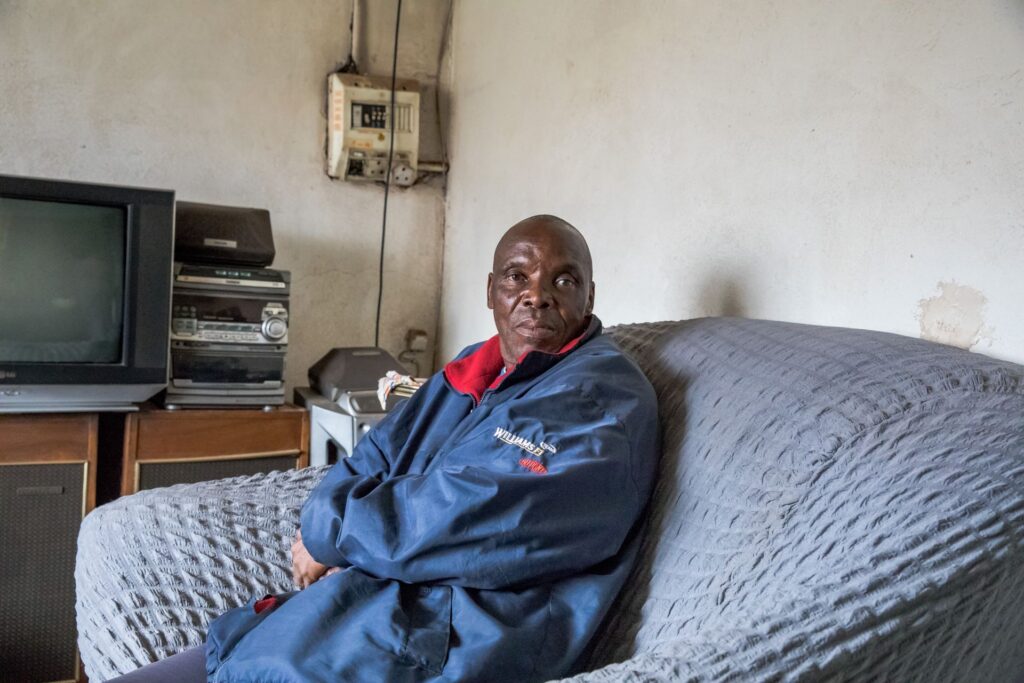
Pizzo Rapudungwane, 68, spent much of his life involved in ANC politics. He joined protests against racial segregation in education in the 1970s and took part in stayaways and boycotts in the 1980s. His last job was with a garden services company, which maintained the grounds of the steel manufacturer Cape Gate.
He believed in the promise of “jobs, jobs, jobs” in 1994. “Yes, I did believe that they can make jobs. But when time goes on, I see that, no, these people, they are playing with people. There are no jobs. In terms of jobs, we get this thing of retrenchment, company of retrenchment,” he says.
Many older residents still vote ANC, he says — out of loyalty, for grants, for housing, for what the party once represented. “I tell them those things are supposed to be there,” he says. “They are not gifts.”
In 2010, he left the ANC. Rapudungwane explains that he was “talking too much,” being too vocal in his criticisms. “I was an activist who was making strikes at the company, then I saw them killing people inside. But it was an internal thing that they didn’t want people to see. So I said, no, let me get out from this.”
Now he votes for the Democratic Alliance, a party historically associated with white and middle-class voters. Asked what it feels like to leave the movement he once fought for, he pauses. “I feel lonely,” he says.
Lemphane leans forward when politics comes up. She once served as deputy secretary for the Economic Freedom Fighters in her ward, but stepped away after deciding that activism was not changing her circumstances. “I saw myself running for nothing,” she says. “There’s no better change at all.”
She says young people follow politics closely through social media. They see corruption scandals. They watch leaders attack one another. Many no longer take elections seriously. “Whenever a person goes and votes,” she says, “we only vote for a better future. Is it happening? No.”
Asked whether she will still vote, Lemphane nods. “I haven’t given up on voting. What I gave up [was] being an active member of politics. But I’m always practising my right, which is to vote.” Her voice firms. “That one I will never, never let go.”
Lemphane’s insistence on voting comes less from optimism than from resilience. In the Vaal, industry is shrinking and political loyalties are shifting, yet people still turn out to vote. Whether that faith can withstand prolonged economic decline is an open question — not just for this industrial heartland, but for South Africa itself.
This story was supported by the Henry Nxumalo Foundation and the Pulitzer Center.
Become a member today to receive access to all our paywalled essays and the best of New Lines delivered to your inbox through our newsletters.