

Hosted by Faisal Al Yafai
Featuring Jason Burke
Produced by Finbar Anderson
Listen to and follow The Lede
Apple Podcasts | Spotify | Youtube | Podbean
Jason Burke has spent much of his career trying to understand political violence. He finds himself frustrated, then, when radicals or extremists who carry out such acts are dismissed as simply mad or bad.
His new book, “The Revolutionists: The Story of the Extremists Who Hijacked the 1970s,” is an effort to “put the revolution back into the project of extremist violence at the time,” Burke tells Faisal Al Yafai on The Lede.
“There were these people who believed absolutely in the idea of revolution.”
Starting in the 1980s, he explains, “A new narrative emerged that became extremely powerful in the West, which was that revolutionary violence had nothing to do with ideology. It wasn’t, in fact, revolutionary. It was terrorism — a cancer that could be cut out. If it wasn’t the USSR and the KGB, terrorists were mad, bad or misled, and listening to their ideas or their grievances was not just counterproductive, but actually immoral.”
That narrative gained momentum and plenty of adherents, Burke explains. Nevertheless, debates over its validity raged among both American and British intelligence services, where the narrative’s proponents would forego nuanced understanding of the motivations of plane hijackers or the Baader-Meinhof Gang in favor of grand geopolitical machinations. “They’re picking up stuff like ‘Carlos the Jackal was a KGB agent,’ which he never was — the CIA and British intelligence often said he was and pushed that into the media. It was complete rubbish, and they knew it,” Burke says.
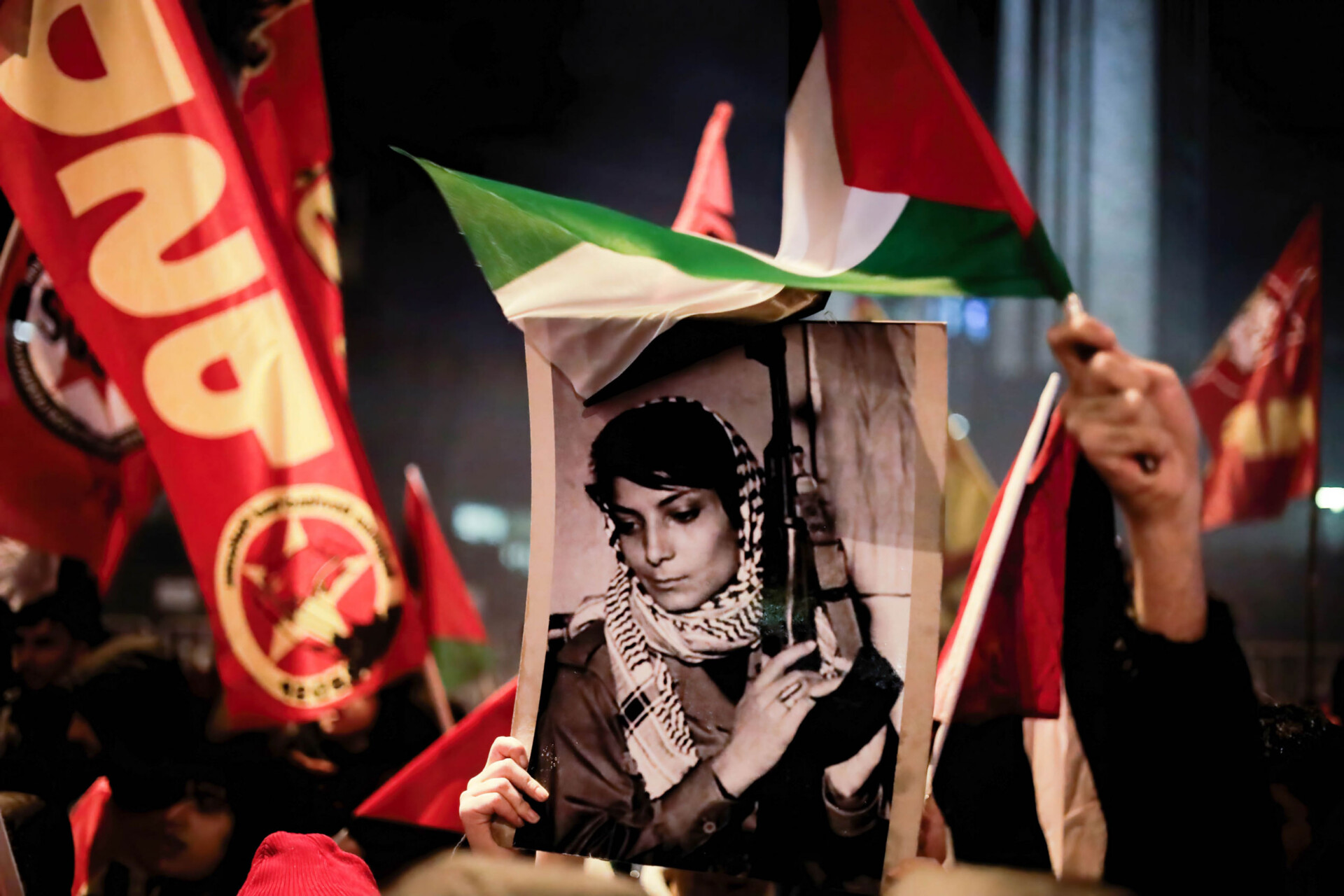
Burke is particularly interested in the rise of a secular, leftist form of political violence with its origins in the Middle East in the late 1960s. Its adherents, he says, actively sought spectacle as a means of furthering their revolutionary project. Political radicals such as Leila Khaled and Carlos the Jackal pulled off headline-grabbing attacks, combining violence with glamor.
The excitement of the movement spread to Europe, with many aspiring radicals joining training camps in countries like Jordan. “There was a huge cultural gap,” Burke says. “There was an Algerian veteran of the Algerian War of Independence running the camp, and when they told him they wanted men and women to sleep together, he was totally nonplussed — let alone when some of those women wanted to sunbathe topless. And Andreas Baader [of the Baader-Meinhof Gang] was just being an idiot, refusing to take his purple velvet trousers off to go on the assault course and demanding lots of ammunition.”
Burke sees a continuum from the secular leftist “revolutionists” of the 1970s to the political violence, dominated by political Islam, of subsequent decades. Those who supported the first movement were “repressed, and they get nothing,” Burke says. “It seems to be self-evident that if you have a huge vacuum, having destroyed one broadly revolutionary ideology and set of organizations, and you don’t change any of the grievances that led to them attracting people in the first place, you’re going to get another one. And that’s exactly what happens.”
Burke tells Al Yafai that despite the many decades he has spent reporting on political violence, he retains a love for journalism and believes it can have a positive impact on the world. “You try honestly and professionally to apply intellectual tools to the material you’re looking at, and then you tell people about it, and you hope that in so doing, you inform them, they can make better decisions,” he says. “I also still think it’s the most interesting possible way that anybody could spend their lives.”