

Hosted by Faisal Al Yafai
Featuring Anand Giridharadas
Produced by Finbar Anderson
Listen to and follow The Lede
Apple Podcasts | Spotify | Youtube | Podbean
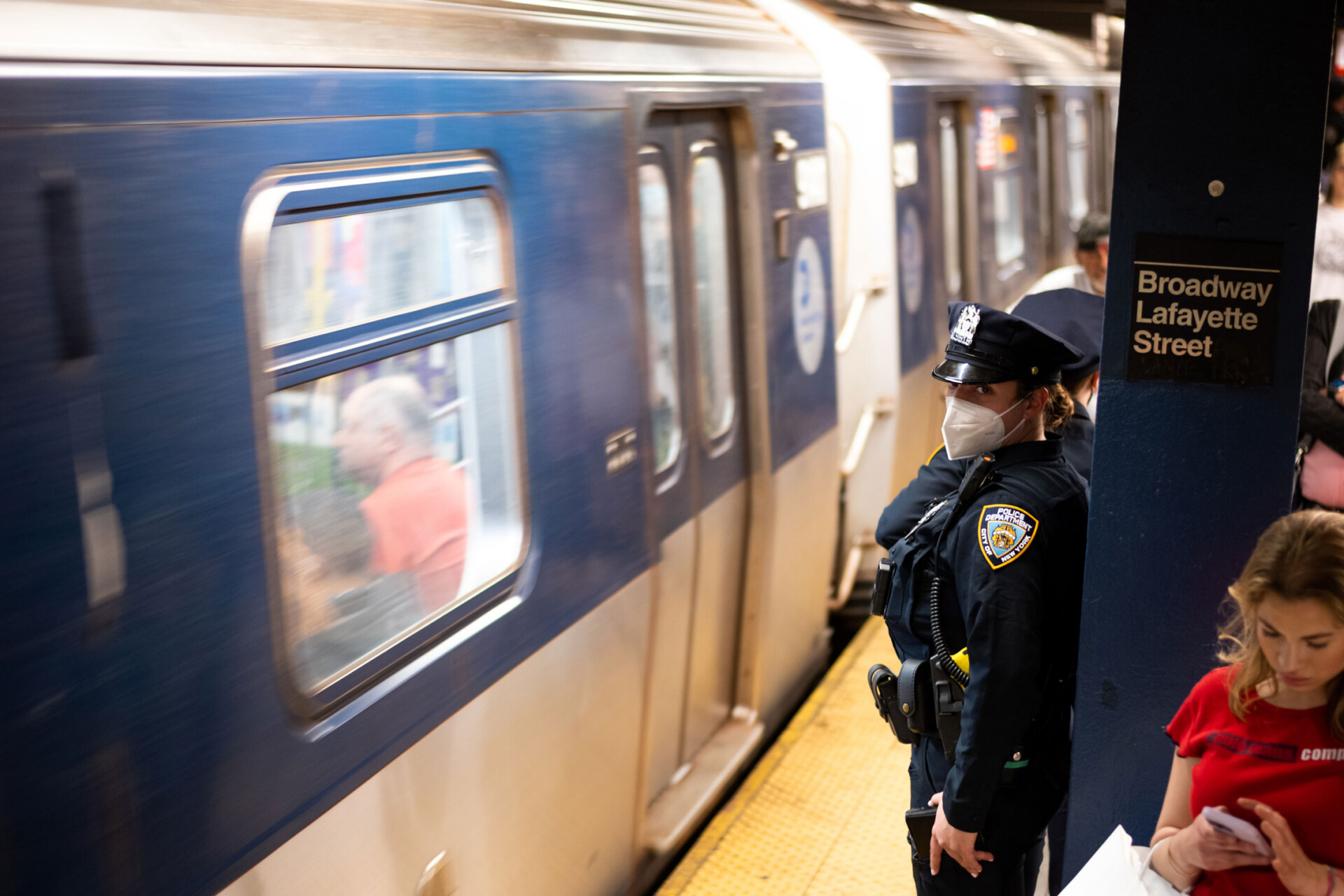
Anand Giridharadas remembers the fallout from the May 2023 killing of a young homeless man on a New York city subway train. “From the moment that Daniel Penny put Jordan Neely in a chokehold and killed him on the floor of that F train in New York, it immediately was an American Rorschach test,” he tells Faisal Al Yafai on The Lede. “You were either looking at an act of heroism by a Marine who stood up to defend an endangered public, or you were looking at a white supremacist vigilante in Trump’s America.” The case was widely discussed across the United States, and the trial that followed the killing was followed closely by audiences on both sides of the political spectrum.
In that subway car, Giridharadas saw “a microcosm of the country.” As such, he says, “the conditions in the country influence how that situation goes down. If you have appropriate levels of care for folks going through homelessness, people who are mentally ill, you probably wouldn’t have had that situation. … In other words, when the doors close, the country still is in that subway car.”
“We live in an age in which no one wants to understand anybody’s experience of the world except their own.”

Against the backdrop of this compelling allegory for modern America, Giridharadas, an acclaimed writer and former New York Times columnist, set out to write his recently published book, “Man in the Mirror: Hope, Struggle, and Belonging in an American City.” In it, he tells Al Yafai, he has endeavored to avoid pronouncing judgment on the killing itself. “I think this book will do something that’s actually much harder than making an argument. I think anyone who reads this will understand the experience of people, several types of people, they have completely dismissed until now,” Giridharadas says. “If you have no idea who lives around you, it’s actually very hard to win arguments. It’s actually very hard to build movements. You have to know deep in your bones and be able to even imagine what it’s like to be your neighbors.”
On a previous episode of The Lede’s “American Experiment” series, Giridharadas and Al Yafai discussed how much of contemporary America feels abandoned by traditional political parties. Echoing those thoughts on this episode, Giridharadas notes: “There is a feeling that I think was common to a lot of people in that subway car, which is the feeling of abandonment. Jordan Neely felt it. Daniel Penny claims it’s what motivated him when the police were not there. One after another, the passengers who testified in the trial felt abandoned by authority, power, anybody who was there to help. And this is the central political emotion of our time, I think.”
His own motivations for writing this book, Giridharadas says, come from a feeling that Neely’s death was ultimately unnecessary. “I think there’s a kind of quiet grief that I feel, that so many of us feel, about it just not having to be like this,” he says. “It’s so stupid to leave so many people in such pain. We don’t have to. It’s so stupid to deprive so many people of the rudiments of a calm, enjoyable, thriving life.”