

Hosted by Faisal Al Yafai
Featuring Kim Ghattas
Produced by Finbar Anderson
Listen to and follow The Lede
Apple Podcasts | Spotify | Youtube | Podbean
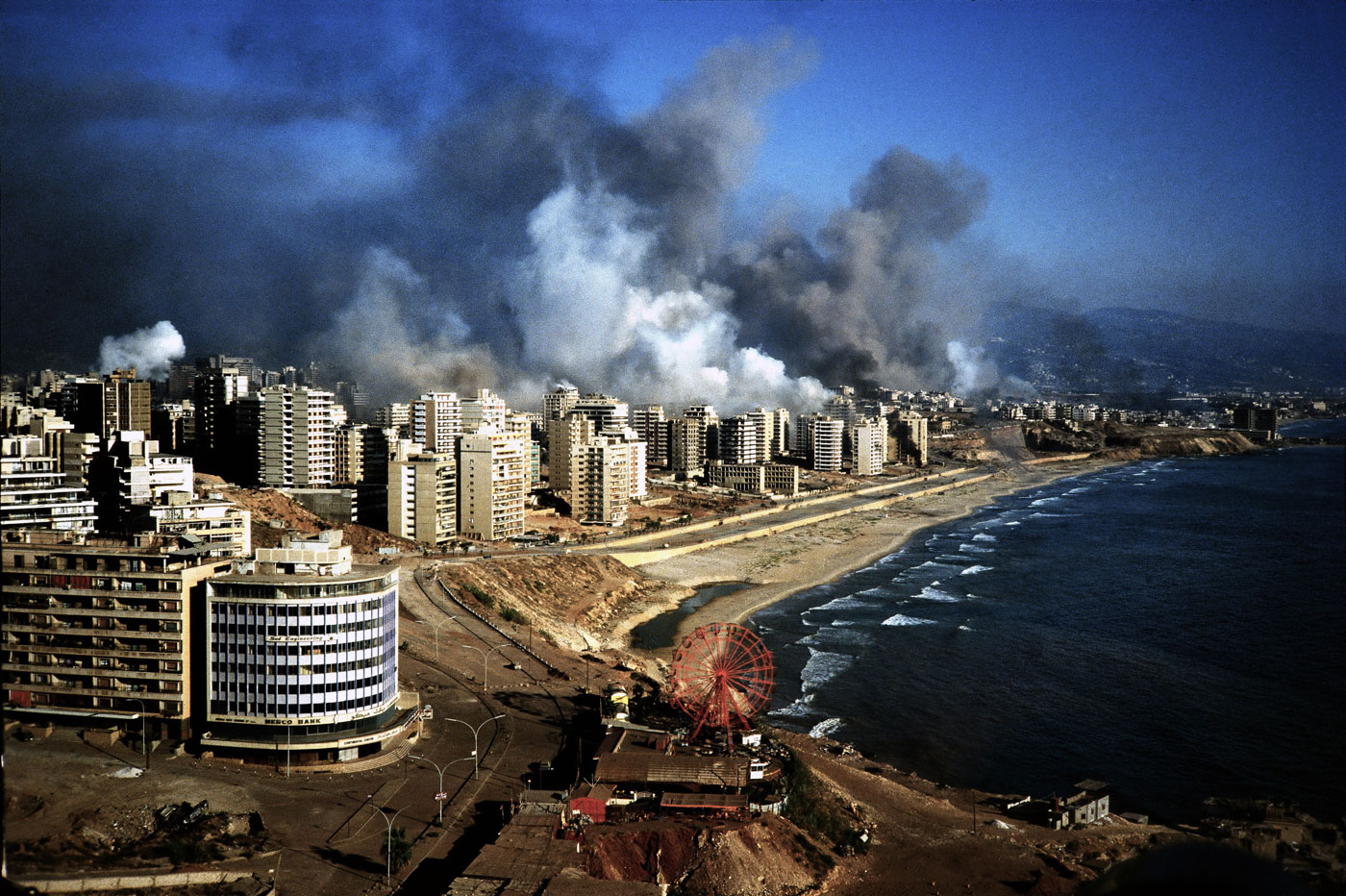
“I’ll never forget watching Beirut burn at night from the north, in what I came to understand were ‘saturation bombings’ by the Israelis,” Kim Ghattas tells Faisal Al Yafai on The Lede, recalling her personal memories of the Lebanese Civil War. “I remember going to school in the morning in this slightly moonlike landscape and watching an Israeli tank roll in and round up men, blindfold them, tie their hands behind their back, put them in the tank and drive them away. Those are searing memories for a 5- or 6-year-old.”
Ghattas has recently returned to 1980s Lebanon in a book, “The Best Kind of American: A True Story of Murder, War, and America’s Undoing in the Middle East,” that describes the 1984 assassination of Malcolm Kerr, president of the American University of Beirut. The story of Kerr’s assassination has lost none of its relevance today, Ghattas argues. “It was difficult to realize that we’re still living through this vortex of the 1980s, that we’re still trying to get out of this confrontation between the U.S. and Iran, between Iran and Israel — this sort of triangle between them that is holding back the region still to this day,” she says.
“It was difficult to realize that we’re still living through this vortex of the 1980s.”
This book, Ghattas explains, is a follow-up to her 2020 book “Black Wave,” which charted the emergence of the rivalry between Saudi Arabia and Iran. This latest book, she says, considers in more detail the development of the regional contest between Israel and Iran. “Saudi Arabia and Iran and their rivalry and how they changed society, culture, religion. The book begins with what happened to us, and the parallel trajectory is how that Iranian revolution also collided with Israeli ambitions in the region. And it leads us to the question, you know, how the hell did we get here today?”
For Ghattas, there are moral failures from all the major foreign powers in the story of Lebanon at the time of, as well as following, Malcolm Kerr’s assassination. “For me, it’s very important to be able to hold two thoughts in your head at the same time,” she says. “We have to be able to hold Israel to account, and America, because it supplies the weapons, the foreign aid, the military aid. But we also cannot, out of a reflexive sense of anti-imperialism, condone or forgive or absolve the horrors inflicted upon the region by the Assad regime or the Iranians.”
Those moral failures have metastasized gradually in the years since Kerr’s murder, Ghattas says. “I think that generally we have an erosion of norms, civility, integrity, morality around the world, where it is OK for an American president to say, ‘We’ll annihilate Iran. We’ll annihilate their civilization.’ When was that ever permissible?”