


The last 12 months have been a boon to the Latin American right. Last October, Argentina’s libertarian president, Javier Milei, secured an important victory in the country’s midterm legislative elections. His party, La Libertad Avanza (“Freedom on the March”), took 40% of the vote, picking up key seats in the Chamber of Deputies — giving Milei enough support to sustain presidential vetoes. Chile soon followed. In December’s presidential runoff, José Antonio Kast, an ultraconservative lawyer who supported Augusto Pinochet’s military dictatorship (1973-1990), defeated Jeanette Jara, the candidate of the center-left governing coalition. Kast had run for president twice before, promoting bans on abortion and same-sex marriage. This time, he largely eschewed these issues and campaigned instead on curbing crime and immigration.
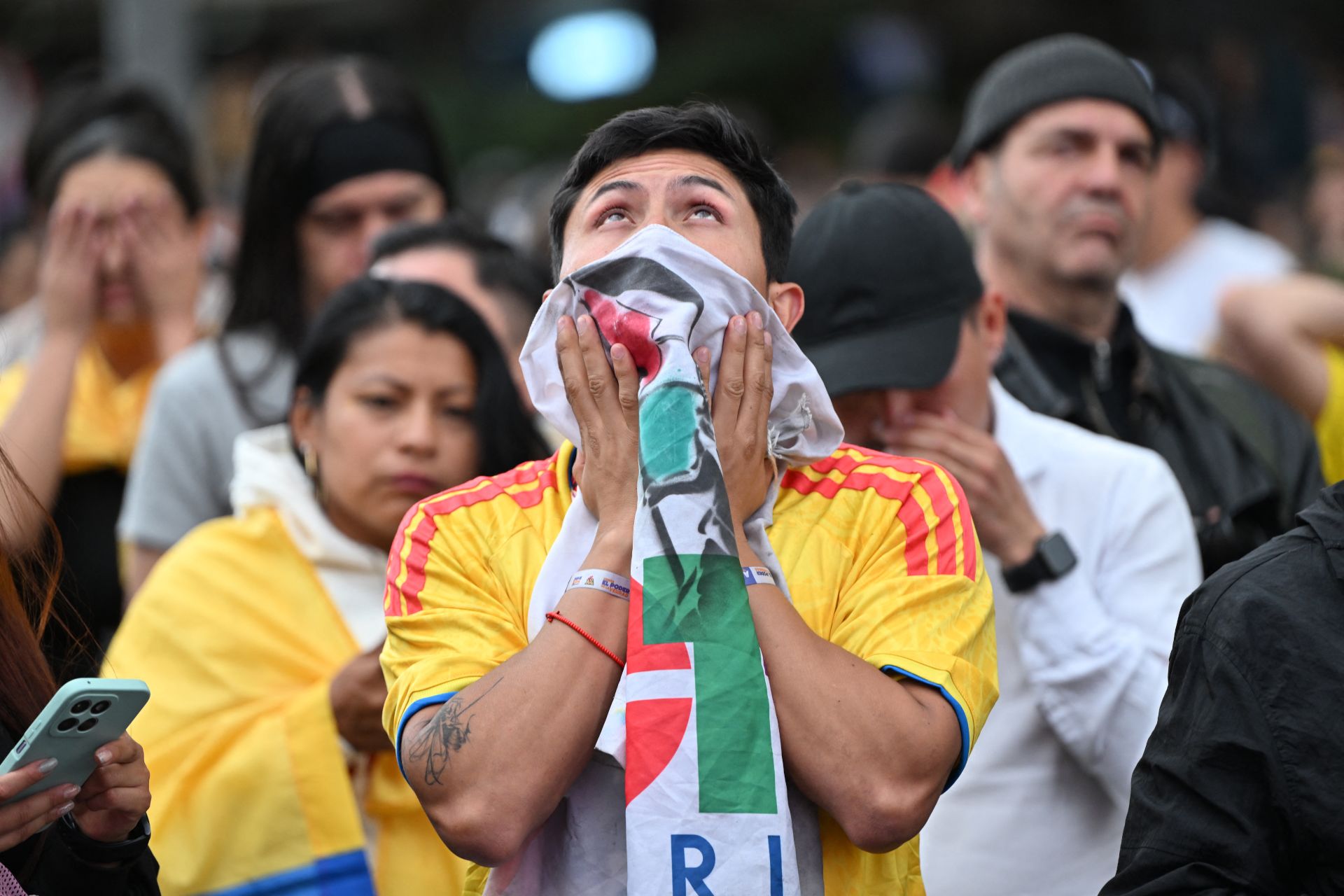
The first signs of the shift in 2026 came from Costa Rica. In February, voters elected Laura Fernández, the tough-on-crime heir to outgoing president Rodrigo Chaves, who was constitutionally barred from seeking reelection. Then June arrived with two successive bangs. Keiko Fujimori, daughter of the late president Alberto Fujimori — convicted of crimes against humanity for creating and authorizing death squads that targeted civilians — was elected president of Peru. Then, in Colombia, Abelardo de la Espriella, a flamboyant businessperson, former defense lawyer for paramilitaries and antiestablishment libertarian, defeated Iván Cepeda, the senator who was supposed to carry Gustavo Petro’s progressive agenda forward. It was no longer just the Southern Cone; the Andes now belonged to the right as well.
These governments join a growing trend across the region: Daniel Noboa in Ecuador, Nayib Bukele in El Salvador, José Raúl Mulino in Panama, Santiago Peña in Paraguay and, to some extent, Rodrigo Paz in Bolivia. Although these leaders are not united around a distinct ideological core, they all lean to the right to varying degrees. Brazil may follow in October this year, when Luiz Inácio Lula da Silva (“Lula”), the veteran leader of the Brazilian left, will face Flávio Bolsonaro — son of former president Jair Bolsonaro, who was convicted last year of plotting a coup to remain in power after losing the 2022 election.
What explains this shift to the right across the region? Commentators offer two answers, and both, I believe, are incomplete. The first looks north and seeks to explain this wave — the mirror image of the “pink tide” that swept the region’s left into power over the last 25 years (“pink” suggesting a more moderate version of red, the color commonly associated with communism) — as a direct result of Donald Trump’s influence on the region. The second blames the left for squandering its moment in power. Each holds some truth, but each, taken alone, explains very little. What both miss is that the region’s rightward turn is less the expression of a decisive ideological shift in voters and more the political expression of a very real anxiety.
Just days after de la Espriella’s election victory in Colombia, The Economist published an article with a telling headline: “Latin America has turned Trumpy.” The British magazine was hardly alone in its claim that Trump’s influence has been decisive in the region’s rightward shift. Indeed, this narrative is ubiquitous in the mainstream press. On Bloomberg’s Odd Lots podcast, the analyst James Bosworth described the region’s turn to the right as an “Orange Drift.” Le Monde, too, followed the same line, though it framed the phenomenon as an apparent paradox in world affairs: U.S. power is waning everywhere, and yet, as the paper put it, “there is one region where the ideas championed by the US president have aligned with those winning at the ballot box.”
My problem with these explanations is that they take Latin America’s history as a footnote to U.S. history. And they overstate Trump’s influence on the region, all while confusing correlation with causation. It is certainly true that, just like Trump, the new wave of right-wing politicians in Latin America espouses a tough-on-crime line, and true that some of them have virulently pushed an anti-immigration agenda. Because Trump has hammered away at both, commentators are quick to leap to a causal link.
But crime and immigration are ultimately not what make Trumpism a distinctive ideology. On the contrary, they are intrinsic to nearly every right-wing party in the world. Nor has their weight been uniform across the region. Immigration was a central theme in Chile’s election, but much less so in Argentina — and even less so in Colombia, where it was, if anything, a marginal concern for voters (it is particularly notable that Colombia has absorbed the bulk of Venezuela’s migrants). Crime, moreover, preoccupied Latin American voters long before Trump reached the White House. To credit him as the originator of these concerns is ahistorical. And to assume that Latin America’s right-wing voters are driven by the same anxieties as Trump’s is to erase the region’s specificity altogether.
What can be credited to Trump is the style right-wing leaders across the region have adopted — confrontational, boastful, lambasting “elites,” relentless in discrediting opponents, heavy on nationalist rhetoric and scapegoating. It is everything that the figure of the dignified politician — poised, measured, stately — is not. The Latin American right adopted the register wholesale. Argentina’s President Javier Milei brandished a chainsaw and denounced the political establishment as “la casta” (the caste). In Colombia, de la Espriella flaunted his fortune, all the while making shocking statements about animal torture and his taste in women. They trample the norms of political decorum and go viral for their outbursts and insults. Some, like Trump, claim to be outsiders, and yet, once in power, they make peace with the same insiders they once railed against.
A second line of reasoning will be far more familiar to anyone who follows the region’s politics from the inside. The electoral success of right-wing candidates in the region — so this reasoning claims — is primarily the left’s fault. Some blame the left’s failures and incompetence; some blame its supposed radicalization. In any case, the sequence of political events is offered as proof: Because right-wing figures have so frequently been elected on the heels of leftist governments, responsibility must ultimately lie with the incumbents. The regional record appears to confirm this. Argentina, Colombia, Chile and — to a lesser extent — Bolivia: Each replaced a leftist government with a right-wing one in their most recent presidential elections. And, as noted above, this possibility is very much alive in Brazil, where Lula’s Workers’ Party could lose the presidency to Flávio Bolsonaro in October.
There are, to be sure, plenty of grounds on which the region’s leftist governments can be faulted for their time in office. For starters, countries like Venezuela and Nicaragua have descended into full-blown authoritarian regimes after electing nominally socialist presidents. The consequences of the Venezuelan catastrophe — political repression, economic collapse, a record exodus — are well known. Nicaragua is set on the same path. This past July, its leader, Daniel Ortega, announced that the country will stop holding elections indefinitely. The actions of these regimes reverberate as symbols across Latin America; their specters perpetually shadow the reputation of progressive movements among Latin American voters.
The track record of other leftist governments in Latin America is nowhere near as terrible, but it is not beyond criticism. In Colombia, Petro’s security strategy, named “total peace,” was arguably a major failure, because it led to the strengthening of the dozen or so criminal groups operating in the country. Moreover, several of Petro’s officials were caught up in corruption scandals no better than those of the right-wing politicians they had campaigned against. In Argentina, Alberto Fernández never managed to control inflation, which reached 94% by the end of 2022 (roughly double the rate he inherited from Mauricio Macri’s government). In Chile, Gabriel Boric could neither rally voters behind his effort to replace the Pinochet-era constitution nor convince them that his policies effectively mitigated crime. And in Bolivia, nearly two decades of rule by the Movement Toward Socialism (MAS, the party of longtime president Evo Morales) ended with fuel shortages, loss of gas revenue from years of mismanagement and runaway inflation.
This brief account is a gross oversimplification; it is also far from being exhaustive. Yet despite all the criticisms one might level at the left for its record in power, I believe they provide only a partial explanation: why the left lost. They don’t explain why the far right is currently gaining ground. After all, there are plenty of alternatives in Latin America to the ascendant far right: center-left parties that kept their distance from the ruling left, and center-right and establishment right-wing parties that have held power before. In country after country, these alternatives courted the very same anti-incumbent sentiment now mobilized by the new cohort of far-right politicians — and yet they got nowhere. Those who claim that the region’s left was rejected by voters should also acknowledge that the establishment right’s failure is more glaring still. Right-wing parties such as Macri’s Juntos por el Cambio in Argentina and Álvaro Uribe’s Centro Democratico in Colombia suffered heavy defeats despite possessing everything the newcomers lacked — an organized base, a party structure and regional machinery.
In fact, one could argue that the Latin American left is not in a dismal state, as some commentators have suggested, and that its ideas remain competitive across the region. Although this is less true in the cases of Argentina and Chile, the recent presidential elections in Colombia and Peru were extraordinarily close. De la Espriella beat Cepeda by just over 250,000 votes, the narrowest runoff margin in the country’s history. In Peru, Keiko Fujimori’s margin over the leftist Roberto Sánchez was even thinner: roughly 49,000 votes out of 18 million. This pattern is expected to recur in Brazil, where October’s contest is likely to be so tight that polling has been deemed to have lost any predictive value. That the right has prevailed by the barest of margins in some of the region’s most consequential elections puts real strain on the idea that this “wave” to the right is decisive or durable. We might even see a new cohort of leftist (or centrist) politicians taking power across the region in less than four years.
A full analysis of how the past year’s elections split by class across every Latin American country is more than an essay of this length can handle. Still, I believe that it is worth dwelling on how Colombia fared, because what happened there may illuminate a wider pattern in the region. An analysis by the news outlet La Silla Vacia found that Colombian voters were more or less divided along income lines: The poorest brackets skewed heavily to the left, and the wealthiest to the right. Unsurprisingly, the contest was fiercest in the middle. De la Espriella made decisive gains among the upper-middle classes. Conversely, the Pacto Historico — Cepeda’s and Petro’s political party — gained ground in the urban lower-middle brackets, where Cepeda drew 46% against the 39% Petro had won there in 2022.
Simplistic as class analysis can be, I believe a few lessons follow. The first is that the Colombian left remains strong among the poorest voters, in big cities like Bogota and Medellin and across the rural departments of the Caribbean and Pacific coasts alike. So whatever the Petro administration did (or failed to do), the left remains very popular among the most economically disenfranchised. I underscore this fact because many were prone to find parallels between the Latin American left and the progressive parties of the U.S. and Europe, claiming that the reason why so many elections have been lost in Latin America is that the left is catering to the sensibilities of a cultural elite at the expense of blue-collar workers and their concerns. For example, writing for UnHerd magazine, Juan David Rojas said that the region’s leftist parties had embraced a progressivism that “appeals only to credentialed cosmopolitans.” This was the same charge that many leveled at the U.S. Democratic Party after their 2024 defeat, and not without reason. But when applied to Latin America, the charge assumes that the left was abandoned by the poor because its progressive culture war issues alienated them. In Colombia, however, those below the poverty line overwhelmingly voted for Cepeda. If anything, then, it is the north that has something to learn from the south on the question of wooing the poorest voters.
That support from the bottom of the economic pyramid, however, was not enough to win. As La Silla Vacia suggests, the key to de la Espriella’s victory lies in a specific and often overlooked demographic: not the metropolitan elite and not the rural poor, but the lower-middle class of Colombia’s intermediate cities — the midsize towns along the Andes that are neither major urban centers nor deep countryside. These places are mostly urban, though not overwhelmingly so (roughly two-thirds to one-third). These voters tend to be small-business owners, resellers and smallholding farmers. They generally live in planned neighborhoods — as opposed to the self-built settlements associated with poverty and crime. They do not consider themselves rich, but neither do they consider themselves poor. They have access to certain goods that mark a certain status (a car, a small plot of land). They, too, have more access to education and formal employment than those below them.
This demographic is also a vulnerable one, liable as they are to fall into poverty at the first shock. With the social stigma and genuinely precarious living conditions that come with poverty, it is difficult to overestimate the pull that this fear of falling exerts on voters. In an article for the Spanish newspaper El Pais, Felipe Cala Buendía, a special adviser on Latin America and the Caribbean for Open Society Foundations, analyzed the political consequences of this fear by describing the current situation in Latin America as one dominated by a “politics of vertigo.” Since the turn of the century, the Latin American middle classes have grown steadily, and that ascent, as Cala Buendía points out, brought new values and expectations, but also the acute fear of losing ground. Far-right politicians such as Milei, Kast and de la Espriella were more perceptive than their rivals in diagnosing that fear and converting it into durable support.
It should be no surprise, then, that a rhetoric promising to miraculously eradicate corruption overnight and to restore public order by antidemocratic means (in the style of Bukele’s mega prisons) resonates strongly among some voters — those who simply want a semblance of stability, enough to work and get ahead with peace. Cala Buendía writes that the Latin American left, with partial exceptions in Brazil and Mexico, has failed “to build a convincing narrative for the middle class.”
But what would such a narrative have contained? What values would have structured it? While the left has for years articulated a compelling message about equality, economic justice and the public good, it has paid little attention to issues such as security, liberty and personal wealth. And these terms are central to the way the aspirational lower-middle class — a constituency that has been voting for the far right in recent elections — understands itself.
Many will dismiss the promises of this “right-wing international” (in the words of Milei) as an unsavory form of populism or, simply, manipulation. Its rhetoric is certainly antidemocratic and authoritarian, but it’s also anchored in material conditions that can’t be merely wished away: rising insecurity, deteriorating public services, economic instability and a generalized sense of existential uncertainty. It doesn’t matter, for these purposes, that many of these ills were caused or worsened by previous right-wing governments themselves. Nor does it matter that the discontent of the Latin American voter seems to clash with a historical trend. As the forthcoming book “The Social Underpinnings of Political Discontent in Latin America,” edited by Gabriel Kessler and María Victoria Murillo, argues, this is a genuine paradox: Citizens are increasingly disillusioned with democracy, even as all social indicators have improved in the past decades. I see this in my own circle. Almost no one I know expects the future to be better than the present, irrespective of their political leanings.
This paradox is another reason why the parallels with the U.S. and Europe begin to falter. In Latin America, there is no widespread sense that some foundational social order has been lost. In the U.S., we might call that thing “the American Dream.” In Europe, it is the postwar settlement of a strong welfare state that was able to provide its citizens with universal healthcare, secure pensions and functioning public services. Is such a life within reach again? This is a question that a vast number of American and European citizens ask themselves today. Latin America — beset with economic crises, dictatorships, internal armed conflict and aggressive inequality — was never on that road. And yet the disillusionment is no less piercing. It is not the heartache of decay, but the grief — and rage — of betrayal.
A very illustrative place to watch this play out is the informal economy. In Colombia, as of mid-2026, informal workers represent 54.7% of the employed; in Peru, the figure runs above 70%. Countries like Chile and Uruguay have managed to keep informal work comparatively low, but elsewhere it’s trending upward. In Argentina, even with its long tradition of salaried work, informal employment is on the rise and has never been higher. A great many workers, in other words, draw no steady wage, accrue no pension or health coverage and have neither real workplace protections nor real vacation time. Most of these workers may have never experienced the benefits that strong labor laws are supposed to guarantee; they have never belonged to a union and never seen what a proper retirement plan looks like. This is why I wrote above that many lower-middle class workers just want a semblance of stability and security. They want it because they increasingly distrust that another kind of order is possible. By this, I mean a social order with functioning social security, efficient government and public institutions that actually deliver.
In a 2025 article for the magazine Nueva Sociedad, the Argentine political scientist José Natanson described this feeling in similar terms. For many Argentines, he wrote, the idea of a state that is present, that guarantees rights and holds back exclusion and poverty “sounds like the distant echo of something that may have once existed but that they themselves never knew.” Natanson is referring to the strong, welfare-oriented state built around the model of import-substitution industrialization. Its dismantling, beginning with the 1976 military coup and running all the way through the 2020s, steadily undid Argentina’s egalitarianism and its welfare provisions. For this reason, by his account, people today don’t encounter the benevolent face of the state (protection, education, public services) but only its uglier one: corrupt, inefficient, obstructive.
If a present, protective state is a “distant echo” for Argentines, for Colombians it is something closer to Bigfoot. For this reason, Natanson’s argument is even more applicable to Colombia. Here, for the aspirational middle class, the ideal state is not the Scandinavian model but something far narrower, something akin to the referee in a football match — a state that hardly intervenes, one that does nothing more than guaranteeing the minimum conditions under which the game can keep on going without devolving into savagery. That anyone would demand more protection than this is unthinkable, since the politicians and services these citizens encounter are inefficient and corrupt in equal measure. The state can’t be the guarantor of collective goods. It is into this vision that the rhetoric of the Mileis and de la Espriellas of Latin America fits so neatly.
On Aug. 7, 2026, de la Espriella takes office. Gianni Infantino, the embattled president of FIFA, is expected to attend the event alongside a lineup of the region’s far-right presidents: Milei, Kast and Noboa, to name a few. Outgoing President Petro will not participate, and his party has called on supporters to take to the streets in protest. To say that the country is deeply divided along political lines is a cliche, but that doesn’t make it any less true. De la Espriella might find his favorable winds changing if he moves to dismantle the public services Petro built — the direct cash-transfer subsidies for the elderly, for example — without delivering on his promises. For now, he seems more interested in waging a culture war, outdoing even the caricature of the “woke” leftists he loves to deride (he pledged to enshrine “family as the nucleus of society,” while his party is promoting a mandatory “anti-communist” week in schools). In Argentina, Milei is dreaming of turning the country into a testing ground for Silicon Valley’s wildest utopias. What could go wrong?
Become a member today to receive access to all our paywalled essays and the best of New Lines delivered to your inbox through our newsletters.