


“Not a dumping ground.”
That was the message from protesters in Kinshasa in the Democratic Republic of the Congo on April 24, who had gathered under the banner of the opposition party Alternative 2028, led by Ados Ndombasi Banikina. Within minutes, police moved in, broke up the crowd and arrested several people. Yet while the demonstration ended, the frustration remained.
That anger is tied to a plan from the United States to send more than 1,000 vetted Afghan allies who worked alongside U.S. forces to the DRC instead of resettling them in America. For many in Kinshasa, it feels like their country, already dealing with conflict, displacement and insecurity, is being asked to carry even more weight.
The proposal is one aspect of broader cooperation between the United States and the DRC as they deepen a strategic partnership shaped by the war in eastern Congo, where Rwanda-backed M23 rebels remain active.
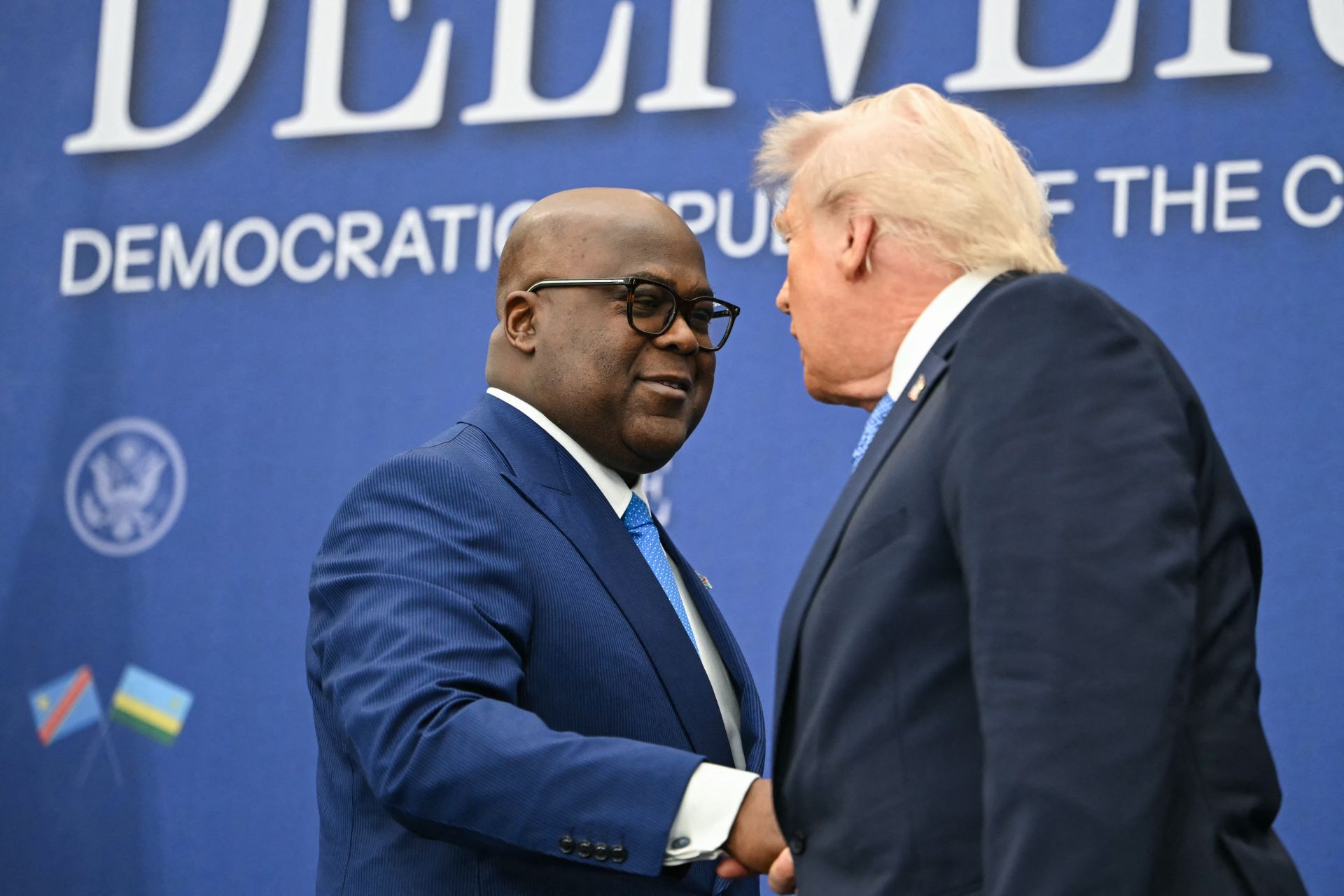
In December 2025, U.S. President Donald Trump reached a “minerals-for-security” deal with Congolese President Félix Tshisekedi, linking U.S. support against the rebels to greater access for American companies to critical minerals used in the tech and automotive industries. The agreement was meant to help stabilize the conflict, but fighting in the east has continued.
Jason Stearns, senior fellow at the Center on International Cooperation and founder and chair of the Congo Research Group Advisory Board, told New Lines that the different elements of the arrangement should be seen together.
“This is a larger package and a larger deal, and everything’s linked to the strategic partnership that they agreed on last year,” he said. “What the Congo is trying to get out of the United States is pressure on Rwanda … security guarantees is one way of putting that, but more bluntly they want the U.S. to strong-arm Rwanda to back out of the eastern DRC and stop supporting the M23 … and, in return, the DRC is willing to give the U.S. access to strategic minerals.”
M23 is a rebel group fighting in the eastern DRC. Rwanda has been widely accused by the U.N., the Congolese government and other countries of supporting the group with troops, weapons and logistics.
Stearns added that the migrant arrangement fits into this same exchange, even if it was not originally part of the agreement.
For the Afghans at the center of the plan, the debate in Kinshasa and the policy discussions in Washington feel very distant.
One Afghan refugee, Kamil (a pseudonym), is 20 years old and asked to remain anonymous for security reasons. In a telephone interview with New Lines, he said he is living in a transit camp in Qatar. It is difficult to reach people inside the camp because of restrictions, and he was the only person New Lines was able to speak to.
He described the camp as prison-like, with people stuck in temporary rooms and spending most of their time waiting, without knowing what will happen next.
Life in the camp, he said, has no real structure. People cannot move freely, and many are dealing with stress and mental health problems. “We have women, kids, teenagers. … Many of them have mental issues, stress, they take medication from the clinic,” he said. “They don’t know what they are doing in this camp.”
Most people, he said, want to leave and reach safety. “They just want to skip this step and go to the United States or somewhere safe.”
Then their options took a totally new direction when they heard about a new proposal to move them to the DRC. “Two weeks, three weeks ago, we heard the Trump administration wants to send some of us to the Democratic Republic of the Congo,” he said.
Before that, Kamil said he had never even heard of the country. He only looked it up after seeing it mentioned in the news.
For Kamil, who said that his family worked alongside U.S. forces in Afghanistan, the plan feels like a broken promise. “We feel cheated,” he said. “Cheated for Afghans who stood by the U.S. army. … They want to break the promise they gave us.”
For people in Kinshasa, the details of the arrangement remain unclear, and that lack of information is shaping how it is understood. Jacques Mukena, a senior researcher in the governance program at the University of Antwerp and a Congolese national, says the absence of communication has created confusion rather than clarity.
“There’s an information vacuum because of the lack of communication from the government,” he said. “So they’re linking them to terrorism, they’re linking them to jihadist movements … and this leads to a lot of fearmongering, speculation, stereotypes about Afghans.”
He added that this is happening while the DRC is already dealing with large-scale internal displacement, making the idea of hosting new arrivals difficult to process for many people. Without clear information about who is coming, why they are coming or how long they will stay, uncertainty has spread quickly. “No one knows their status, no one knows where they’re coming from, no one knows how long they’re going to stay,” he said.
For Mukena, the problem is not only the deal itself, but the silence around it, which is shaping public understanding in ways that are hard to control.
The debate also raises broader concerns about precedent. Shawn VanDiver, founder and president of AfghanEvac, a U.S. nonprofit organization, said the plan to relocate Afghan allies to the DRC instead of resettling them in the U.S. raises serious ethical questions.
“The entire country’s under a level-three travel advisory. … Some provinces are under level four,” he said. “These folks have no connections to the DRC.” For him, the issue goes beyond geography. “It sends a message that our promises are temporary and conditional,” he said, adding that these were people who were promised protection for their service alongside the U.S. military. “We’re breaking that promise,” he said.
In the end, the two sides of this story are far apart, even though they are tied to the same deal. The DRC is a country already under pressure, with no clear sense of what it is being asked to take on or what it will get in return. Talk of minerals, security and migration sits alongside daily realities of displacement and conflict, while the links between these issues are still unclear.
The situation the Afghan refugees find themselves in is defined by choices made far away, without their voices being heard. Many are still trying to understand what it means for their future, or whether the promises made to them will still stand.
What connects both sides is not clarity, but the fact that neither is fully part of the decisions being made about them.
“Spotlight” is a newsletter about underreported cultural trends and news from around the world, emailed to subscribers twice a week. Sign up here.