


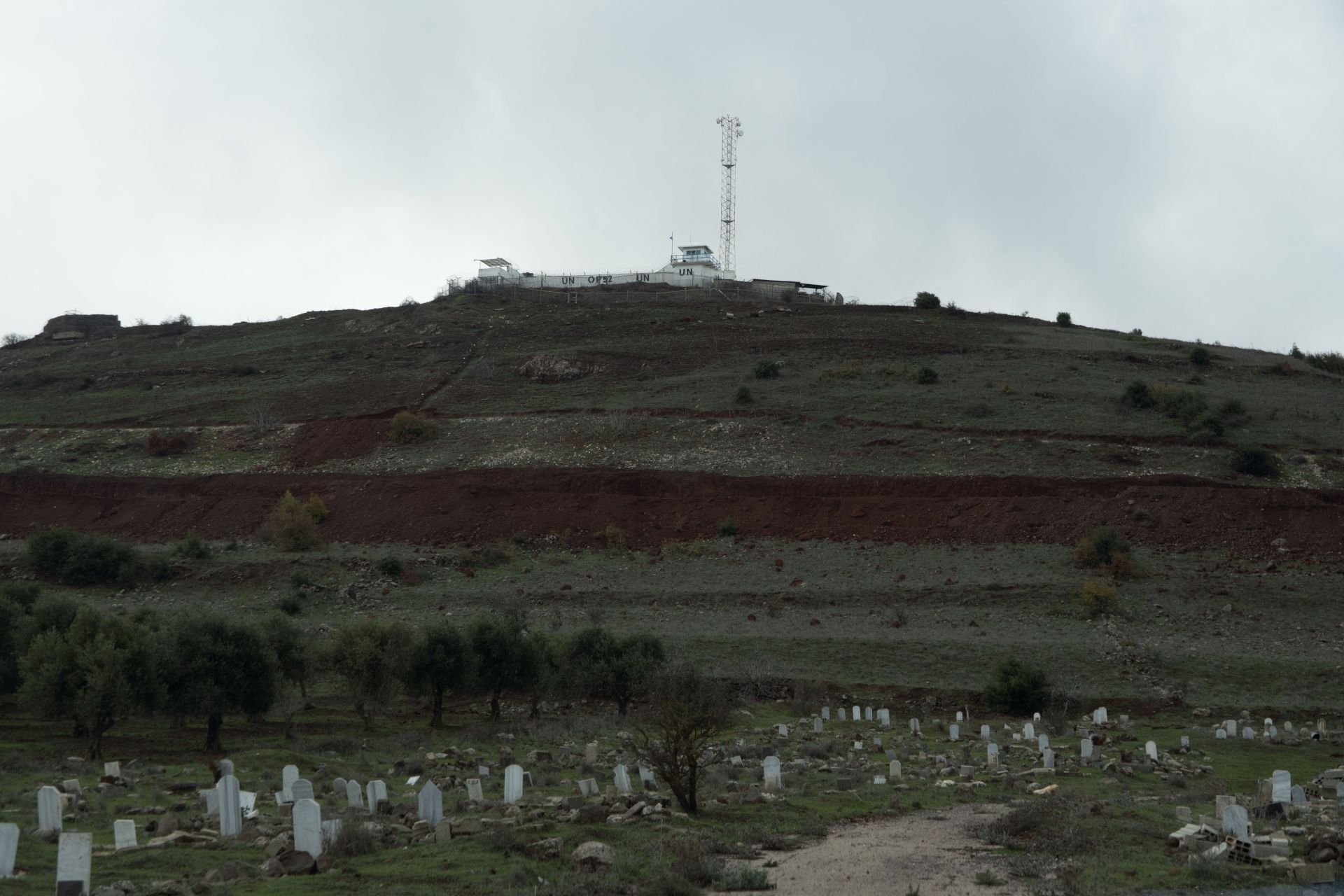
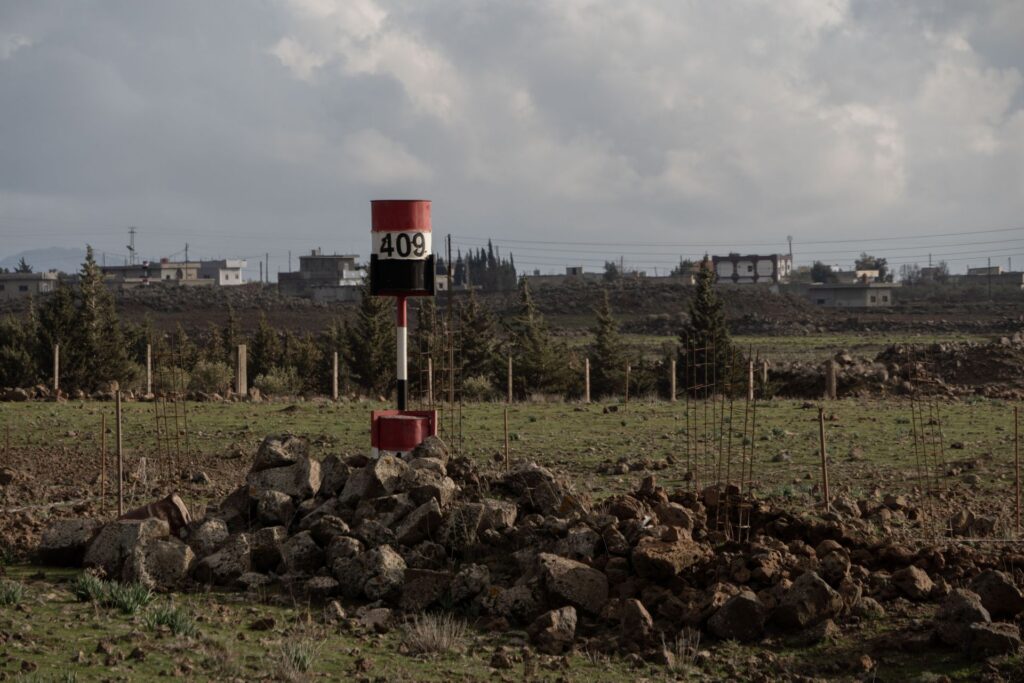
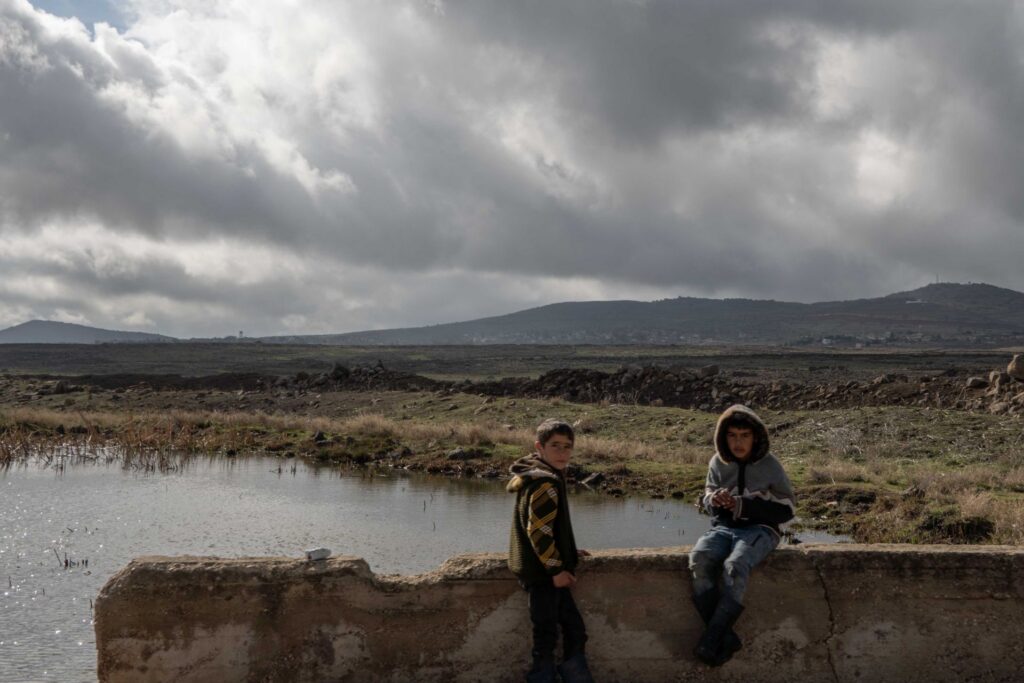
Less than an hour away from the bustle of Damascus lies Quneitra, one of Syria’s smallest provinces. Its landscape of flat fields is dotted by shepherds grazing their cattle, and dams stretch across the land, grayish-brown with hints of blue water standing out against the endless green. The fields are hugged by hills, often home to United Nations outposts, and more frequently now, Israeli military bases.
Though Israel seized Syria’s Golan Heights in the 1967 war, which it unlawfully annexed in 1981, the two countries have maintained a fragile peace since a U.N-brokered disengagement agreement was established in 1974. This agreement specifies a demilitarized buffer zone between two lines. All Israeli forces were mandated to be stationed to the west of the Alpha Line, except in Quneitra, with Syrian forces east of the Bravo Line. The area of separation is less than 50 miles long and ranges from 200 yards to 6 miles wide. The United Nations Disengagement Observer Force (UNDOF) was deployed in the buffer zone between the lines to help monitor the implementation of the agreement.
After the fall of Bashar al-Assad’s regime in December 2024, Israeli forces declared the disengagement agreement “void until order was restored,” and have moved deep into the buffer zone, even crossing beyond the Bravo Line, and acting at will in the region.
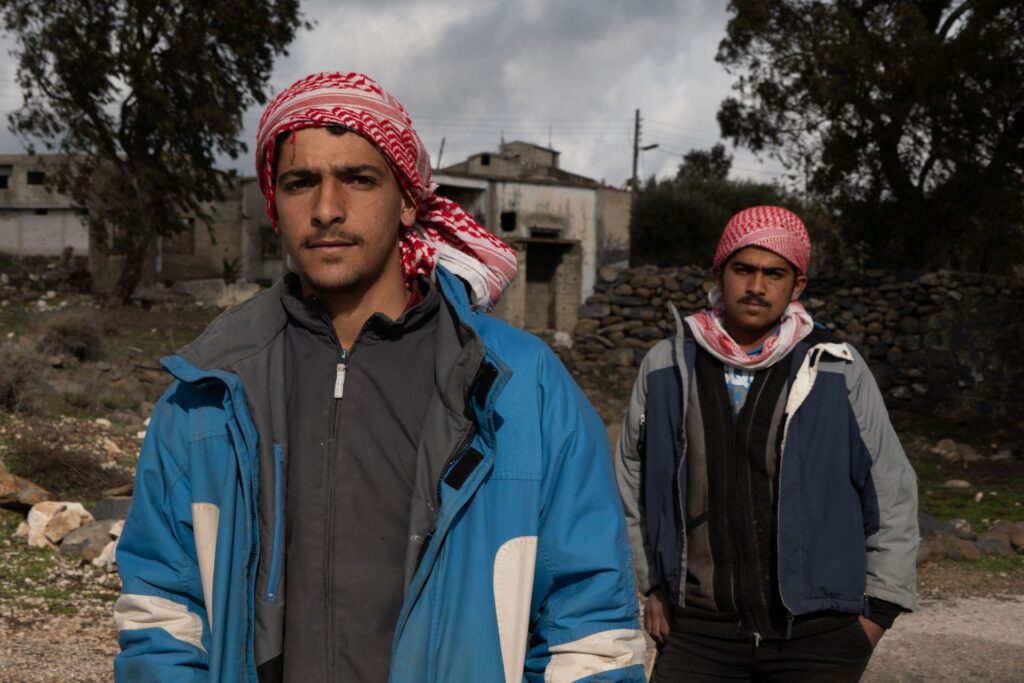
“It wasn’t like this before,” says Ahmed Rahayyin, 17, a shepherd. “I’m horrified when I work.” He stands on the edge of the road to Rohaina village, holding a wooden staff in his right hand. He and his 16-year-old brother, Mustafa, each wear a red and white “shmagh” (traditional head covering).
New Lines visited the southern province to get a sense of life under the Israeli occupation and speak to residents of the area. Many of them live in fear of the unknown, with Israel carrying out raids and arrests at will. Most feel like their soldiers’ presence is an unwelcome imposition that they have no choice but to live with.
Reporting in Quneitra presents its own set of challenges. In January 2025, Israeli forces detained French journalist Sylvain Mercadier in Syrian territory and confiscated his equipment. I’ve heard firsthand reports from other media workers (some foreign) and locals about their detention in the province, in less high-profile cases.
The air in the southern province is laced with tension. It seems to be common knowledge among locals that there are informants among them who report to the Israeli forces. It is difficult to plan reporting as Israel often installs “flying,” or mobile, checkpoints at village entrances. On the road, we regularly asked locals about whether there were patrols on the path ahead, to take alternative roads or change our route to avoid confrontation with Israeli soldiers. With them, my accreditation from the Syrian government to work within Syrian territory would likely have no value.
“The situation is tense, [the Israeli soldiers] enter almost every day and search homes and mobile phones,” Ahmed says, adding that they often detain people. He explains how he was once stopped and interrogated by an Israeli soldier for about half an hour.
“He hit me with the butt of his rifle,” he says, pointing to his shoulder. “He was trying to speak to me in Hebrew, and I don’t speak Hebrew, just Arabic; so he hit me to make me understand him and asked me to follow him.”
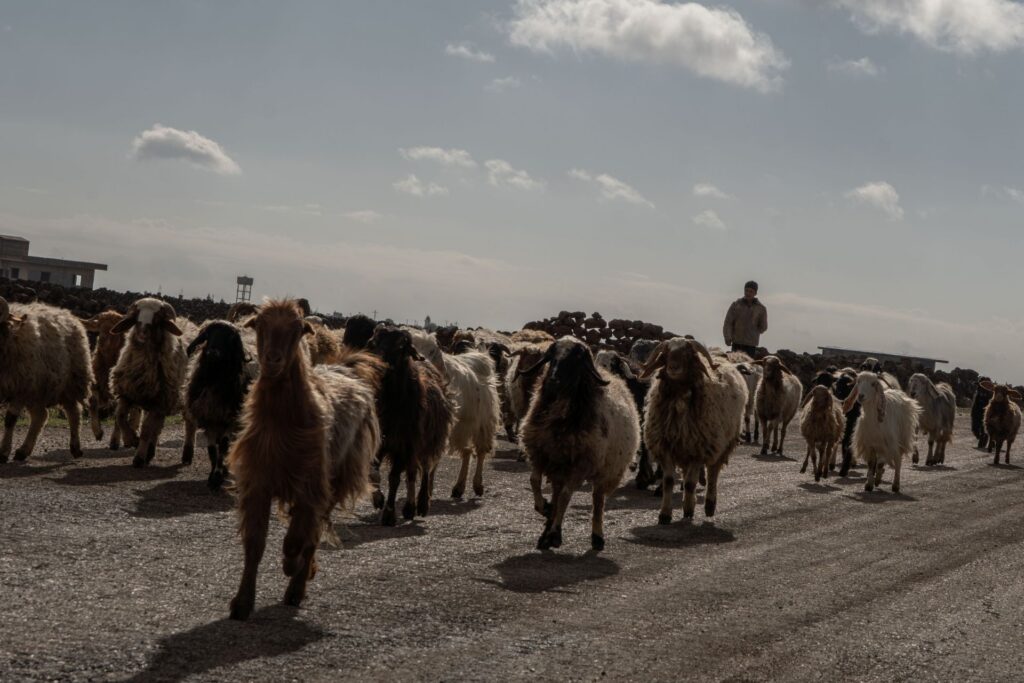
Though violations against livestock breeders in the region were prevalent in the past, the situation has worsened since the regime’s fall. Media reports point to the shooting of cattle and sheep, as well as the detention of shepherds. Ahmed explains how Israeli forces once shot and killed five cattle belonging to his neighbor.
“They told him next time they’d get him,” he says, his voice rising in indignation.
To me, the frustration of the Rahayyin brothers was obvious. But Ghazi Othman, the mukhtar (local official) of the Circassian village Beer Ajem, was much harder to read. The Circassians are a tiny, Sunni ethnic minority in Syria, estimated to have a population between 100,000 and 140,000.
“They came to my house twice,” he says, referring to Israeli soldiers. “The first time, I told them to stay outside. The second, I invited them in, and we served them coffee.”
He explains that one of the “generals” among the soldiers asked him his thoughts on peace.
“All of Syria — every rational person — loves peace. But not in this way,” he says he told them, prompting their request to elaborate.
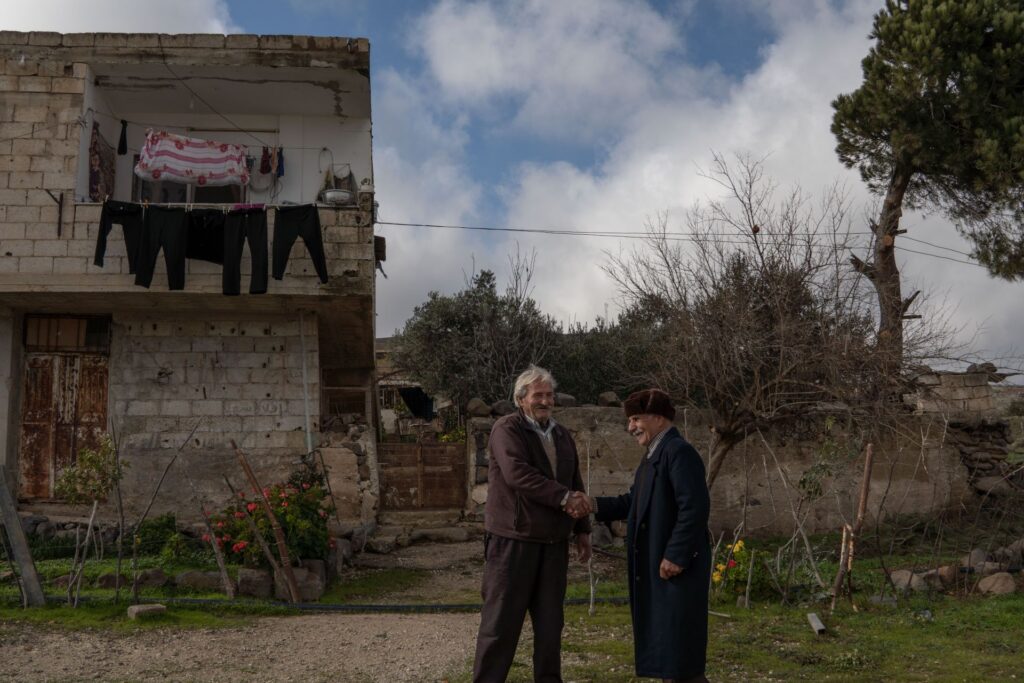
“You come in military garb, holding a rifle, and talk about peace? Peace is when you put out your hand, and I put out mine, so we hold hands and walk,” he recalls replying.
He mentions that the soldiers often try to weaponize the idea that the Circassians are a minority, with comments about the community’s “Arab neighbors.”
“They’re not our neighbours — they’re our family,” he tells me he said to them when they asked whether the “Arabs” were disturbing them.
He sips on his coffee, seated in the veranda of the Beer Ajem municipality, next to its head, Fouad Ibrahim. Ibrahim, too, mentions that the Israeli army has tried multiple times to approach him individually. He views this as an attempt to “separate [people] from the state.”
“[I told them to] deal [with me] through my state. Make peace. Make agreements. Make treaties. Now, if you communicate with the Syrian state, tell them you want to provide aid, they will certainly not refuse,” he says.
He listens carefully as Othman talks. He sighs, aware of the position his country is currently in.
“I know my size. Right now, I want to make peace, I want reconciliation, and I want to unite the people. … Even if we refuse to accept [Israel’s actions], we don’t have the ability to,” he says.
On the table in front of him lie three mushrooms, picked fresh from the fields surrounding the municipality. Across the road, two cattle herders chat as they keep an eye on about 10 black and white cows.
“We are accepting the reality imposed on us.”
Beer Ajem is located just a couple of miles away from Bariqa, a village lying just across the ceasefire line from Alonei Habashan, an Israeli settlement in the occupied Golan Heights. In August 2025, a group of settlers crossed into the area near Bariqa, creating an outpost and a memorial for a killed army soldier. The Israeli army intervened and returned them to Israeli territory.
For Jamal Othman, a doctor working in the Bariqa Medical Center, the constant Israeli presence is an improvement on the presence of Assad regime forces.
“The regime checkpoints instilled horror in us. The Israeli invasions worry us, but they don’t horrify us.”
Jamal is originally from the occupied part of the Golan Heights. For a while, he and his family lived in displacement camps in Hajar al-Aswad, an area on the outskirts of Damascus that suffered a lot during the civil war. He later moved to Rohaina, in Quneitra, and built a house there. His only worry now is that Israeli forces will displace him again.
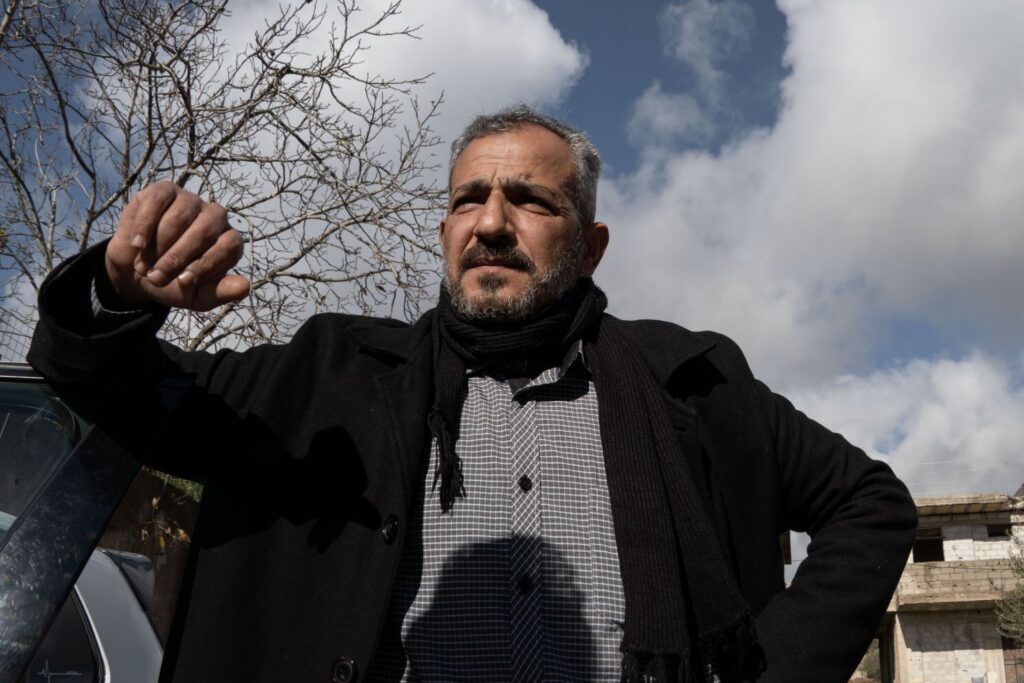
“Before the Gaza war, we had a very good impression of Israel — a European, democratic society with good human rights,” he says. “Since the Gaza war, our point of view has changed completely.”
Since the fall of the regime, Israel regularly installs flying checkpoints along the roads, taking control of some routes, and forcing residents to take longer paths to move between villages. On our way to Bariqa, our driver, Nawwar, pointed to a spot on our road past the village of Jabah, and said that the Israeli army often puts up a checkpoint there. For Jamal, the sight of the Israeli soldiers is something he’s used to.
“The thing is, if I’m walking on a path and I see a soldier, whether Syrian or Israeli, and he tells me to walk on another path, I’ll do it even if it’s harder for me,” he says.
That those who are compliant are not bothered at checkpoints is something that Ibrahim also conveys.
“Sometimes a patrol passes by, or they set up checkpoints on the main road. When a citizen passes by, greets them and smiles at them, they are welcoming. But if you frown, they pull you out and search you, they don’t like you,” he says.
When Jamal draws parallels between having a Syrian or an Israeli soldier in his path, Nawwar pushes him on the point. He asks what right an Israeli soldier has on Syrian territory, as opposed to a member of the Syrian security apparatus.
“There’s something called fait accompli policy, and it’s something we need to respect,” Othman replies.
Caroline Rose, former director of the New Lines Institute, attributes Israel’s “expansionist stance” in Syria partly to its desire for leverage in ongoing talks with Damascus.
“This is definitely a pressure point that Israel is trying to add in these discussions,” she says, adding that Israel’s goals include Syria joining the Abraham Accords and the establishment of a deconfliction zone.
“If it can allow occupation forces, if it can allow settlers to essentially flow into these areas, if it can set up more checkpoints, if it can conduct mass arrests, that’s all leverage that it can use in negotiations with Damascus.”
Recently, a Druze acquaintance of mine was telling me how his wife gave birth in the Druze-majority village of Hadar, Quneitra. He told me medical services in the area are sparse, but that Israel brings in mobile medical points twice a week. Rose explains how this is a deliberate strategy to “win hearts and minds in the region.”
“[Israel is] trying to draw very distinct battle lines in Syria to ensure that there’s no unified Syria, and create hedges against the Syrian administration,” she says.
Rose notes that joining the Abraham Accords would affect President Ahmad al-Sharaa’s image at home, adding that she often notices government announcements rejecting the Abraham Accords after even a “mumble of a [Syria-Israel] meeting taking place.”
Ziad Fhaily, a journalist from Quneitra, rejects the idea that Israel would be able to occupy Quneitra.
“No Arab will leave their land — me, I wouldn’t make the same mistake our relatives in the Golan made. I’ll live and die here,” he says, adding that he believes this is the opinion of over 90% of the population.
Yet the actions of the Israeli army affect his life. He explains how he was once driving around in his neighborhood and was stopped by an Israeli soldier at a checkpoint, who asked if he was a government employee due to his license plate being from Idlib. Fhaily says the soldier then asked him why he had tinted windows, saying they were “not allowed.”
“We’re here in place of Assad’s forces,” Fhaily recalls them saying.
“I swear, I wanted to say something, but I couldn’t, I was scared they’d detain me or something,” he tells me from his living room. His home is next to a tutoring center that he heads. In the yard stands an olive tree, the area home to stray cats and a few chickens.
“I’d have told them, Assad’s occupation left, and the Israeli occupation came in its place.”
Fhaily hasn’t taken the same route since, out of fear.
While in Quneitra, I realized that residents’ opinions were colored by years of civil war and economic hardship. Their homes have long been the playground of foreign powers. For instance, Ghazi, who invited Israeli soldiers into his home and had tea with them, often uses the word “kayan” (entity) when referring to Israel, as opposed to its name, or “dawleh” (country). “Israel is the enemy,” he says at one point in our conversation.
Yet a common idea that many residents express is a keenness to cooperate with the approach of the Syrian government, which Rose describes as “careful inaction.”
“This is a no-problems policy that [Damascus] has implemented across their Foreign Ministry. It is a way of trying to preserve their national security, trying to avoid any direct confrontation with countries like Israel, or Iran-backed militants that are operating in the region,” she says.
“And that way, they can salvage momentum at home.”
In January 2026, Israel and Syria signed an intelligence-sharing agreement, which also focuses on de-escalation in the region. Syria’s goals from the agreement include guarantees of sovereignty and a commitment from Israel to stop interfering in domestic affairs.
In mid-January, Minister of Information Hamza al-Mustafa said in an interview that Syria “can’t be a part of the Abraham Accords because Israel is occupying our land, especially in the Golan Heights.”
“As the president said, the Abraham Accords [are signed] with a state whose land Israel does not occupy,” he added, saying it was not an option for the short or medium term.
For Fhaily, the delicate balance of Israel’s aggression on Quneitra remains unsustainable.
“People may not be speaking freely out of fear, but this situation won’t be accepted forever — it won’t last. And God forbid, if it collapses or if people manage to infiltrate [from Israel] or anything, it would honestly turn into hell for Israel,” he says.
“If you think people don’t have a problem [with it] — impossible. People have a problem with any occupying power.”
“Spotlight” is a newsletter about underreported cultural trends and news from around the world, emailed to subscribers twice a week. Sign up here.