


Members of the al-Salim family picked through the detritus of destroyed lives in the village of al-Taff on Wednesday. Stray chickens pecked at their feet, mistaking bits of foam bedding for scattered kernels of wheat. Tattered clothes swayed gently, ribbon-like, from the boughs of a nearby tree. They are the clothes of three children, and their uncle and grandmother, killed in a Jordanian airstrike.
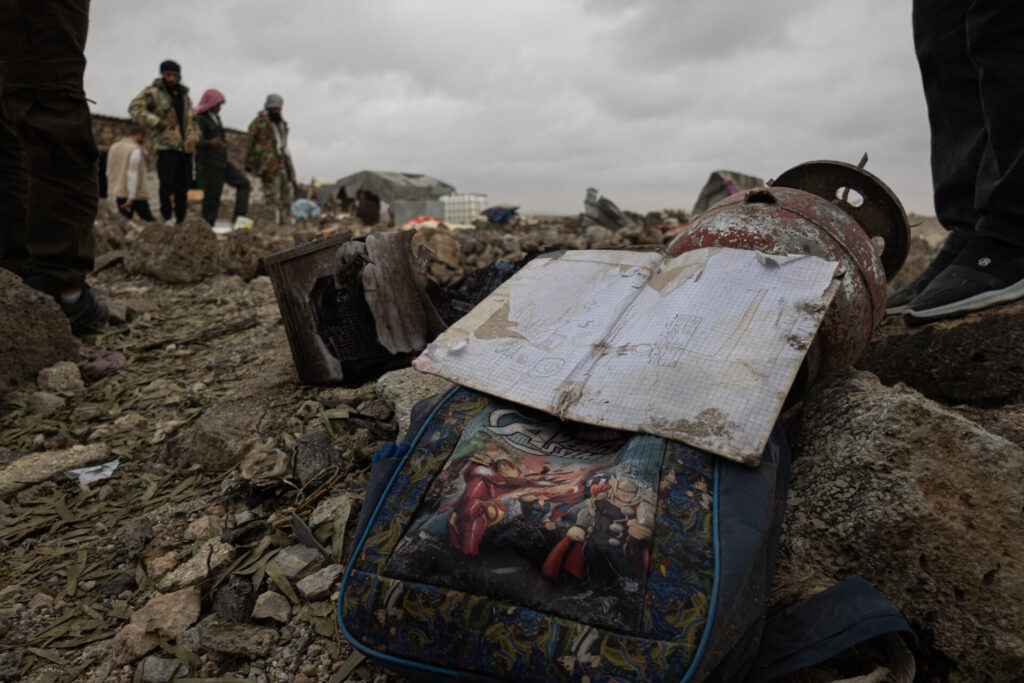
The notebook of the youngest, 8-year-old Lamis, rests on a burnt and bloodied Avengers backpack at the rim of a blackened crater. The body of her cat, Pearl, lies rotting a few yards away.
She was killed on Monday night, in what the Jordanian air force described as a “precision operation” launched in “retaliation” for the killing of nine people during a funeral in a church in the Jordanian village of Hamoud, in the Karak governorate, on Friday.
Alongside the attack that killed the five family members in al-Taff, the air force also struck three other sites in southern Syria, killing Riyad Karrad, 80, and Mutlaq Abu al-Khail, 60.
Jordan said that more than 20 Islamic State group fighters were killed and several weapons depots destroyed. The Jordanian military concluded its announcement with a declaration: “May God have mercy on the martyrs of Karak.”
“May God have mercy on our martyrs as well,” said Abu Hadi, 70, the patriarch of the al-Salim family, in between greeting guests at the customary three-day memorial service.
Autumn has come to Daraa. The sky lies low, penned in by a thick bank of gray cloud, which masks the jets rumbling above, an ever-present feature of life in this part of Syria. Over the summer, those jets were Israeli; now, Abu Hadi doesn’t know where they come from — although it’s possible he simply no longer cares.
Deep creases line his face, marks of a shepherd’s existence, a healthy smoking habit and a life marred by loss. His son, Hadi, disappeared into Assad’s dungeons many years ago. “Now [Hadi’s] three children have been martyred too,” he declared with grim severity.
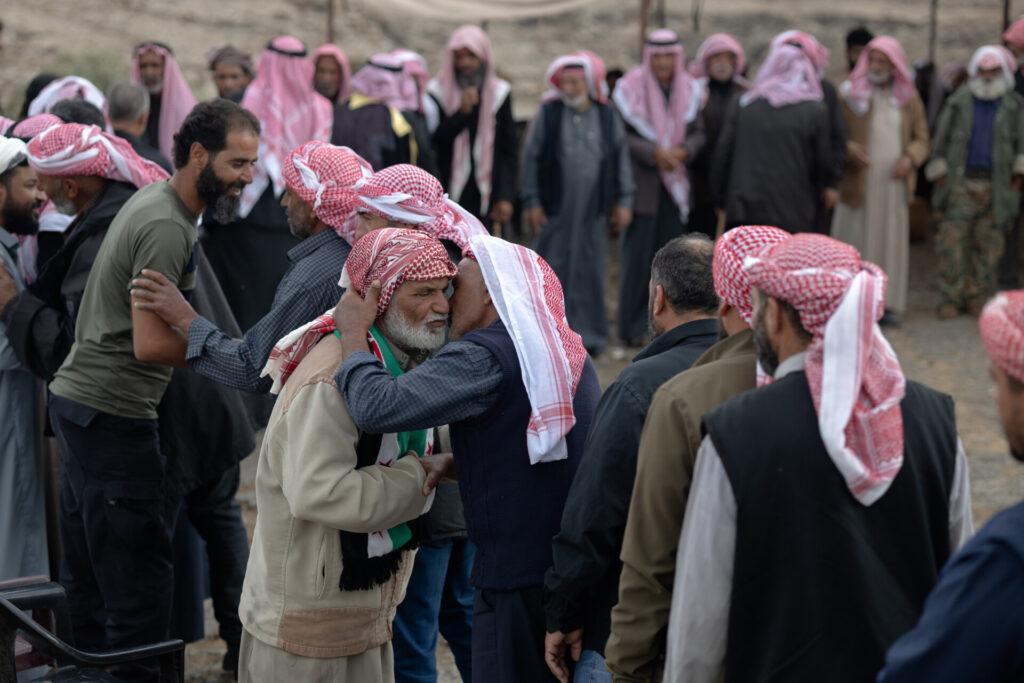
Wrapped in a Syrian flag scarf, Abu Hadi meets a constant stream of visitors with an iron handshake and an indecipherable number of cheek kisses. He estimated that he was a dozen yards away from the blast. “I was thrown to the ground,” he recounted. “I don’t remember how long I stayed there, but I remember trying to shout for help but no sound coming out.”
Scores of family members, who live in the huts and tents that make up the village of al-Taff, rushed to the scene. The bodies of the family had been torn apart in the explosion. Abu Hadi described trying to reassemble the pieces of his grandchildren. Their dried blood still cakes chunks of rubble, attracting swarms of flies.
Militaries tend to use technocratic language, like “precision munitions” or “surgical strikes,” to obscure the gruesome reality of modern warfare. In truth, there is little that is “clean” about humans’ technological capacity to kill.
“If there were indeed ISIS here, like they say, why not request the [Syrian] government to arrest them? Neither Jordan nor Syria has given us an explanation,” Abu Hadi said.
There seemed little point in asking him if his son Zaher, 23, was indeed a member of the Islamic State group, although I decided to ask him anyway. “No,” he answered emphatically. “He raised sheep.” Abu Hadi’s “no” spread through the gathered crowd in murmured agreement.
Omar, 20, picked up an old whistle, which lay discarded on some scorched schoolbooks. Zaher was his cousin. “This was what he used to corral the sheep,” he said. “He was just a shepherd.”
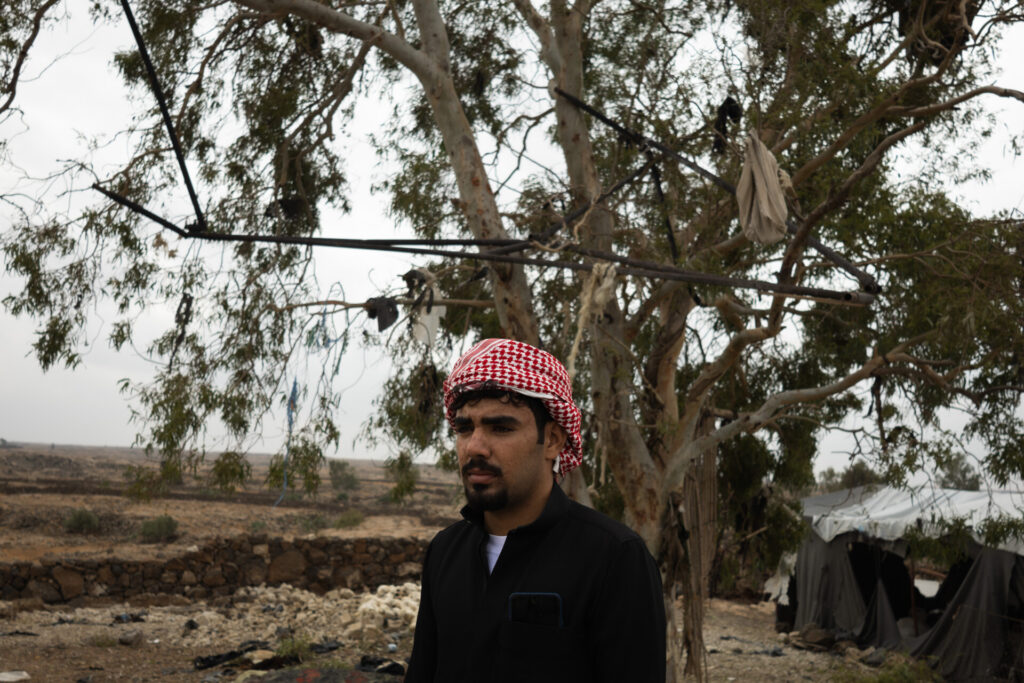
Omar had found refuge in Jordan during the war. “Jordanians are good people,” he acknowledged. “We are the same people really. I don’t know why they would do this.”
In a neighboring hut, built from black basalt spewed forth an epoch ago by the region’s dead volcanoes, Raked al-Salim, 35, lay staring at the ceiling. He was still in pain. Outside, women clamored, preparing food for the visiting guests. A dozen large, steaming trays of chicken and rice lay waiting to be served. A constant procession of friends entered to ask after his health.
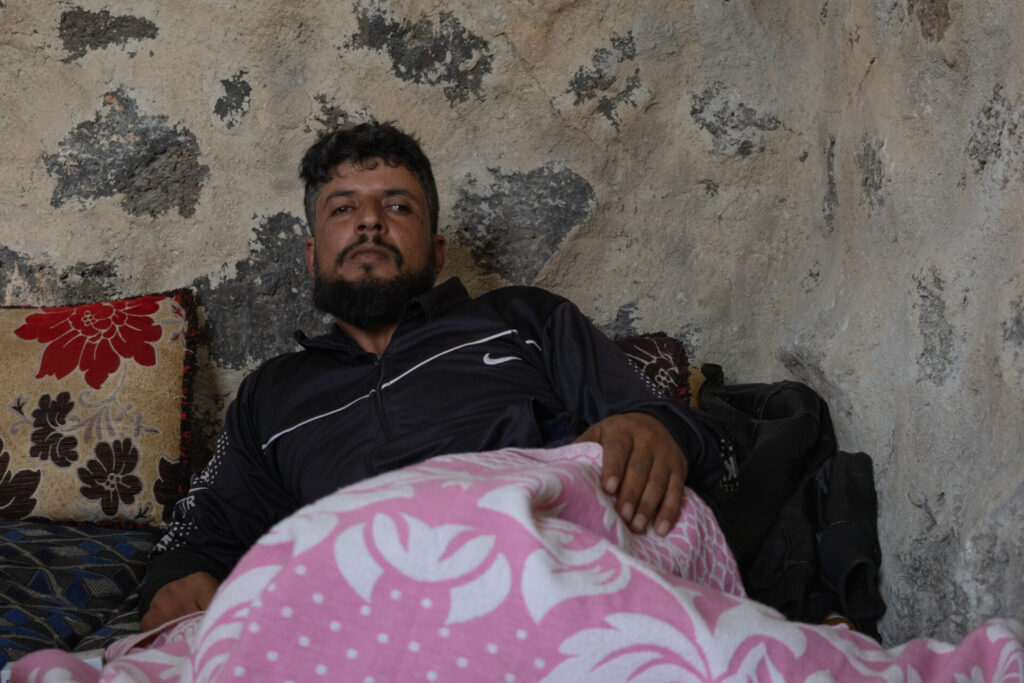
Raked’s mind was foggy, and there was still a drilling ring in his ears. His memories were hazy: He had gone to get water from the tank when he heard the sound of a distant whistle. The night sky was clear, but in the distance he saw flashes of lightning. The whistle became a roar. He remembered flames and dust, sound and pain. He was a few yards from the strike.
He listed a series of injuries simply too long to repeat. Among them were fragments of shrapnel in his spine and shoulder that the doctors weren’t able to remove, along with another fragment lodged near his heart. He also can’t hear from one ear.
“I am not part of ISIS,” he said. “I just sell sheep.” He had once fought with the opposition as part of the Omari Brigades, a Syrian rebel group, then had reconciled with the Assad regime in 2018. He had been stationed in Palmyra when Assad fell. Like many others, he dropped his weapons, stripped off his uniform and went home, renouncing military life.
“Sure, ISIS is in the area but they are far from here,” he let slip. He was the only person to acknowledge an Islamic State presence in the area, but insisted that they were not in al-Taff, nor related to his family.
“Everyone knows everything about everyone here — if someone were to join ISIS they would get handed in to the government immediately,” Raked swore. A cousin took out a pen. “This was Yaseen’s,” he said as he passed it over. “He was a school kid. How can he be ISIS?”
“Keep it, a souvenir,” he added to an awkward silence. It felt wrong to accept such a gift, but somehow more wrong to refuse it. I took it.
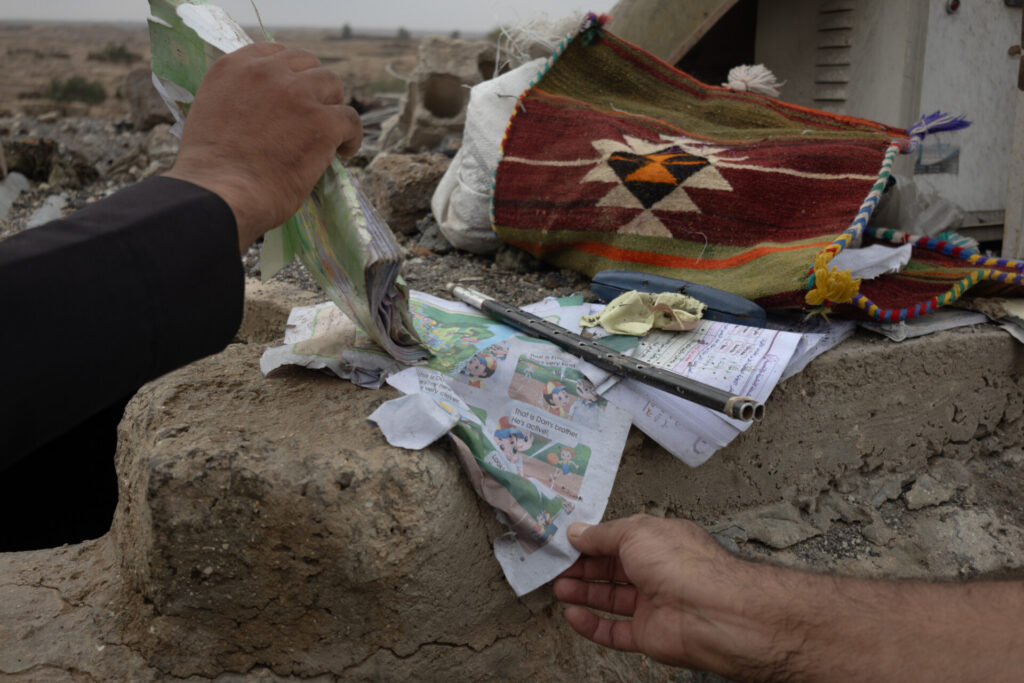
Among the wreckage of the massacre, there was certainly no Islamic State paraphernalia or sign of weapons, just the charred remains of an ordinary life: children’s books, instruments and cooking utensils.
Jordan’s public broadcaster, Al-Mamlaka, however, reported that those killed in al-Taff were the mother and three nephews of one of the suspected church attackers. Even if this is correct, one can quite easily deduce that neither 9-year-old Osama nor his 11-year-old brother Yaseen was a member of the Islamic State.
According to Al-Mamlaka, the strike targeted a concrete structure next to the tent in which the family was sleeping.
Neighbors and distant relatives flocked to al-Taff on Wednesday to pay their respects to the al-Salim family. Among them was George Shahaf, a Christian from the neighboring village of Al-Masmiyah.
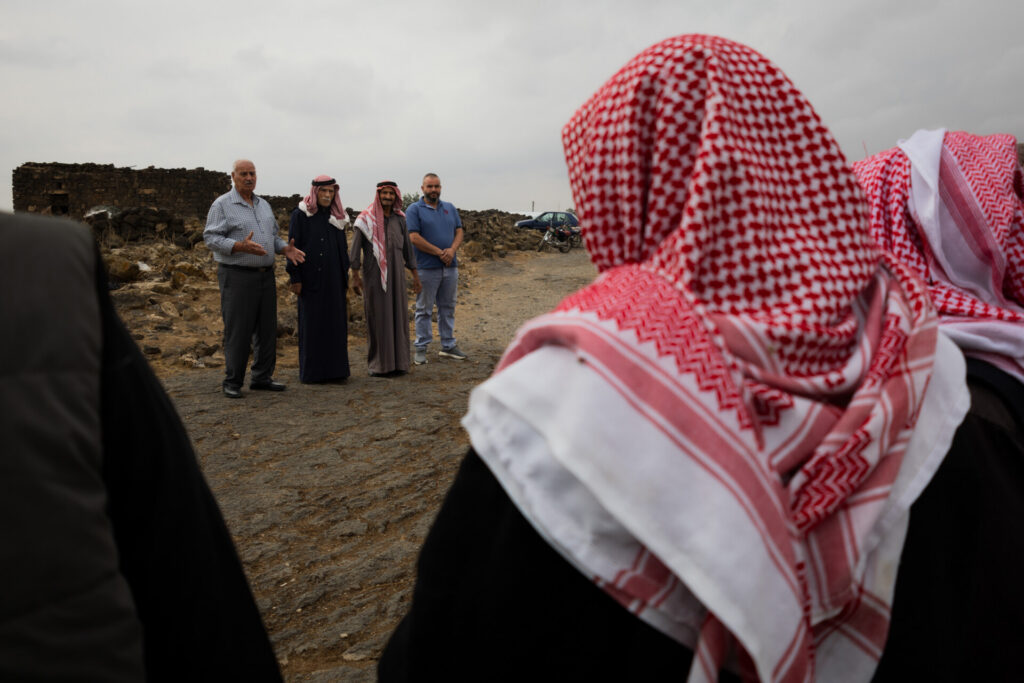
“What happened here was a grave tragedy,” he said. “It is reprehensible to claim this was retaliation for the attack [in Jordan].”
“These were just children.”
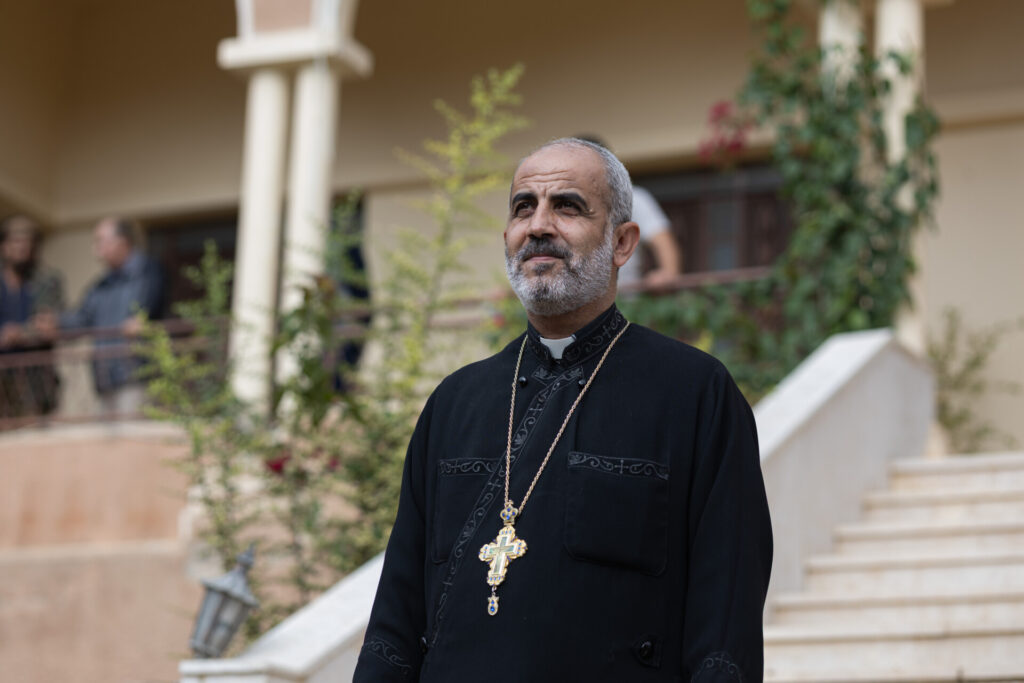
Father Khoury sat on a plush velvet chair in the bishopric of the nearby Christian town of Khabab. He shared Shahaf’s sentiment. “Members of our church visited al-Taff yesterday to give condolences,” he explained. “Christians and Muslims have lived together in peace for centuries. We break bread together and drink from the same wells. We are neighbors, and friends, and family.”
Alongside neighbors, an array of government officials, whose importance can be quickly deduced by the size of their entourage and the sophistication of their bodyguards’ weaponry, trooped into the village. The single dirt road leading into al-Taff was soon blocked by a number of black SUVs, whose drivers bickered over the prime parking spots.
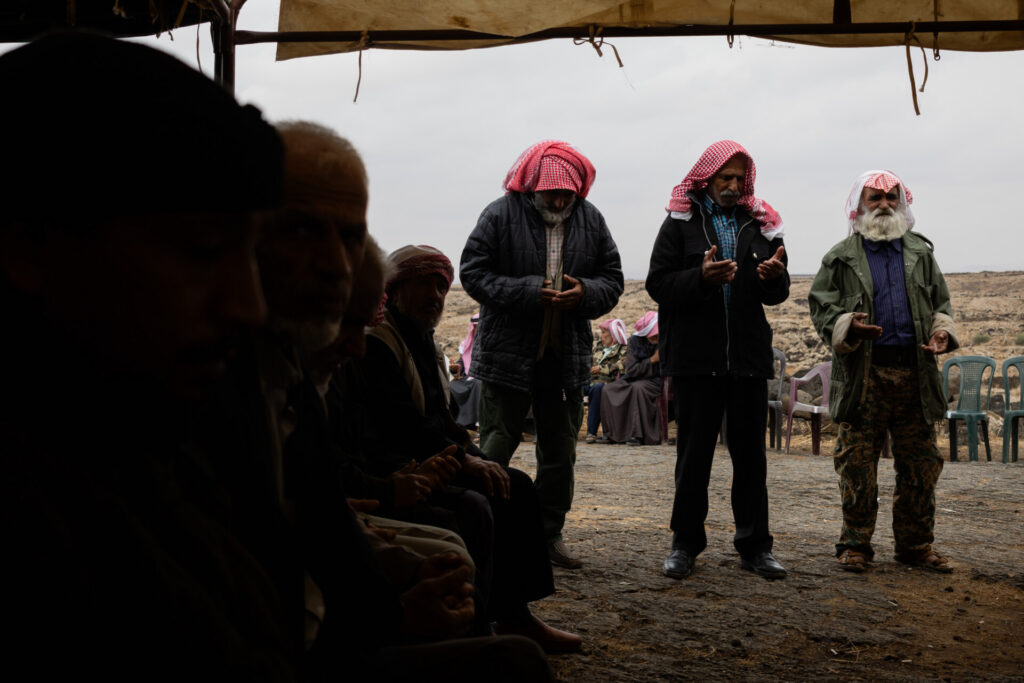
As a senior official with the local Internal Security branch emptied his cup of coffee, Abu Hadi implored him to provide clarity on why al-Taff was targeted.
A man in the onlooking crowd whispered into the ear of his friend. “He is intelligence,” motioning toward the official. “[Abu Hadi] should ask if the Jordanians had bad intel.”
The official offered his sincere condolences but little clarity on what had transpired here. He later declined to be interviewed.
The Ministry of Interior also declined to comment on the events “because this is an issue between two neighboring Arab states, and we would prefer not to draw media attention to it.”
The Syrian government has condemned the killings and summoned the Jordanian ambassador for an official dressing down. Jordan’s foreign minister, meanwhile, has expressed “deep regret and sorrow” over the deaths of civilians.
Both countries agreed to form an investigative committee to look into the circumstances that resulted in the deaths.
Even within Syria, determining a suspect’s affiliation with the Islamic State is a difficult charge. In September, three members of the Ministry of Interior were killed during an operation to bust a supposed cell in the nearby town of As-Sanamayn.
However, according to local residents, the operation was actually directed against an armed group led by a local commander, Mohsen al-Haymed, and the government simply labeled it an operation against the Islamic State to justify its crackdown.
In the resort town of Rankous in Syria’s Qalamoun mountains, hundreds of local residents took to the streets in protest on Tuesday following a government raid on an alleged Islamic State cell that left seven people dead.
Residents and the relatives of those killed have rejected government claims that those involved were affiliated with the Islamic State. The Ministry of Interior announced that it will investigate the events in Rankous under judicial supervision.
For those mourning in al-Taff, there are questions about the degree of coordination between Syria and Jordan in the lead up to Monday’s strikes. Jordan announced that the strikes took place in coordination with the Syrian authorities, but Damascus quickly denied it.
Abu Hadi has a theory. “Maybe they worked together but then Damascus disowned the operation as soon as it became clear civilians were killed,” he suggested. We may never know.
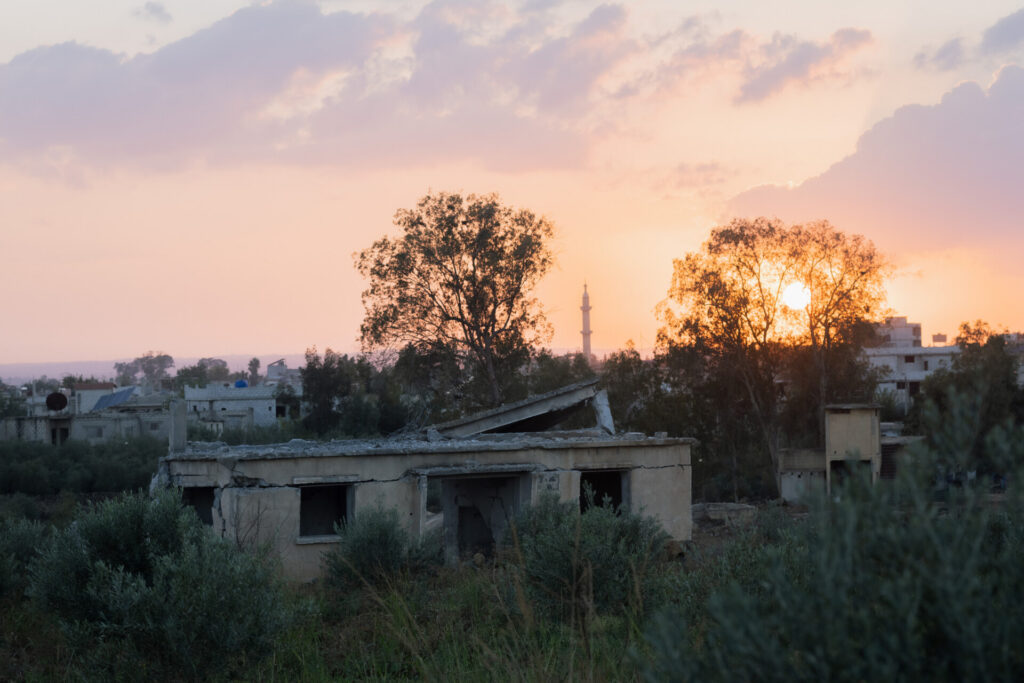
A ruby sun set over the town of Muzayrib, casting the green valley of orchards and long grass, within which the town is nestled, in golden bronze. Smoke rose from the clusters of tents dotted among the green growth at the edge of town. The distant holler of mothers calling their children home for dinner rang out, amid the unsettling sound of sporadic gunfire. Located just a few miles from the barbed-wire fences and watchtowers of the Jordanian border, this place was a refuge from Assad’s barrel bombs. On Monday night, it was the Jordanians who did the bombing.
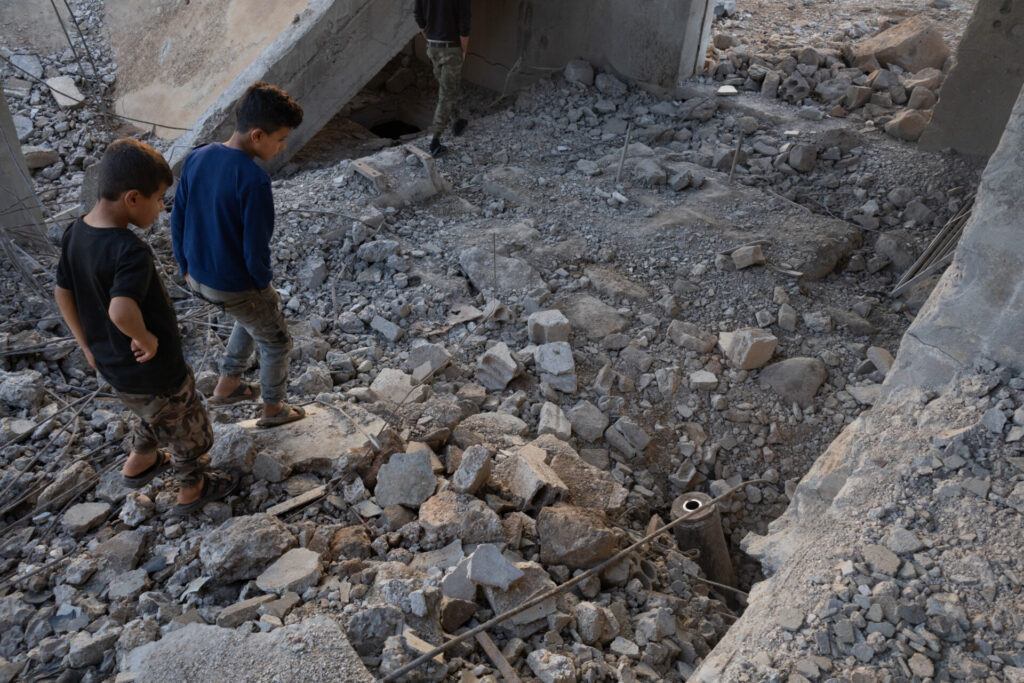
A young boy acted as a guide through the thick clumps of tall grass until he reached a small clearing and the remains of a concrete structure. Here, Saleh stood with his hands clasped behind his back twiddling a set of prayer beads. He had been getting ready to sleep when he heard an immense din and felt the ground shake. He came out of his home to see a nearby abandoned building in flames. “There was a homeless guy living here by the name of Hamdi,” he said. “Thank God he wasn’t here at the time.”
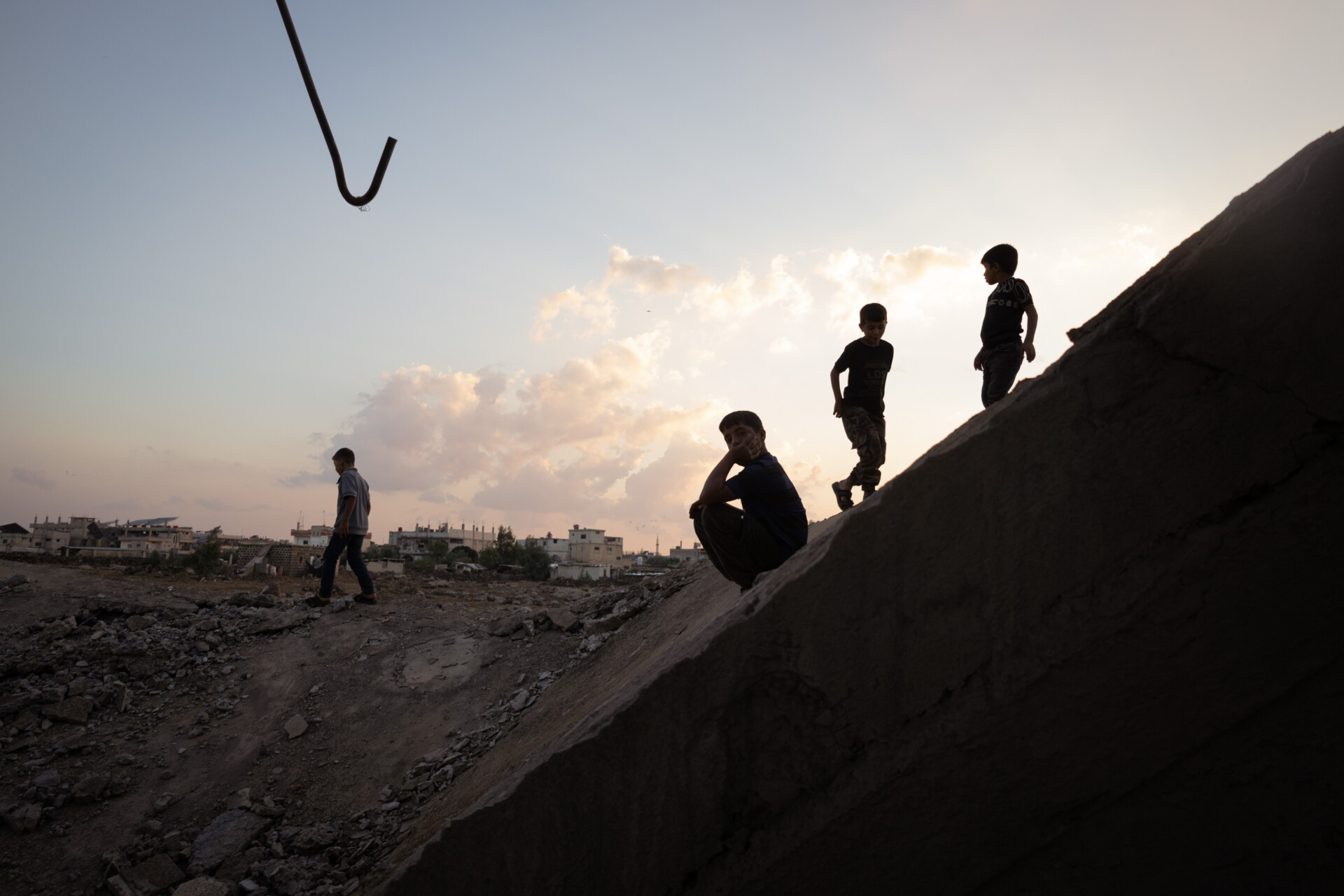
At least a dozen singed mattresses were strewn across the floor of the site. Unlike in al-Taff, there was no detritus of lived lives here, though, just bedding. I wondered if the building could have been a hideout or a weapons depot. The only sign of weaponry was half a Jordanian missile sticking out of the floor, around which a group of local children were playing. They chased each other through the rubble. This is still a common sight in Syria.
Syria is a country seeking to reassert its sovereignty. Yet Daraa — hemmed in by an encroaching Israeli occupation in the west, secessionist armed groups in Sweida in the east, and a Jordan that remains observant and wary in the south — is a testament to how far Syria has yet to travel.
The country remains a playground for its neighbors, and its ruins remain playgrounds for its children. For Abu Hadi and the al-Salim family, all they can do now is demand justice.
“Someone should be held to account,” he insisted. “Somebody, somewhere is responsible for this.”