


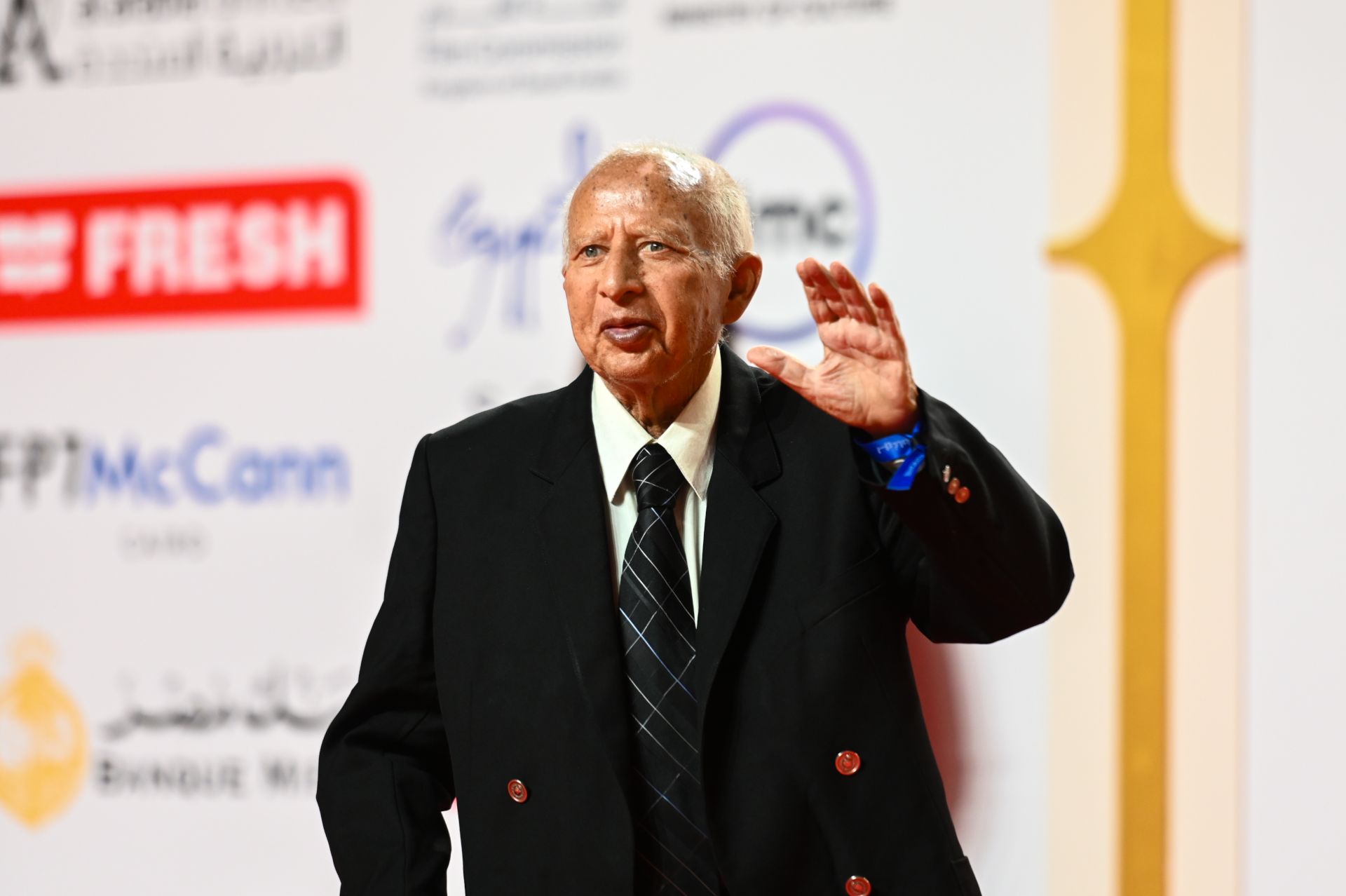
Growing up in Toronto in the 1990s, the soundtrack of my childhood was composed of Umm Kulthum and Abdel Halim Hafez drifting from the bathroom as my father showered, or the cassette tapes of Warda, Hakim, Amr Diab and their likes that my parents played at family gatherings in our small apartment as their relatives and friends swung their hips into the cold winter nights. It felt as though I’d inherited those songs long before I had any coherent understanding of who I was or where I belonged, and even now I find myself returning to them sometimes more effortlessly than any other music I’ve since added to my playlists. Following my father’s death, I found myself instinctively looking for those familiar voices and lyrics that seemed to contain a piece of the world he left behind, efforts made easier by the YouTube and social media accounts that helped me reconnect to fragments of a homeland that still feels both distant and intimate. That is how I first encountered Hany Shenouda.
I almost certainly discovered his music through Habibi Funk, the Berlin-based reissue record label that has spent years rescuing overlooked North African and Middle Eastern recordings from obscurity. Later, I heard Al Massrieen’s infectiously melodic music woven throughout “Ramy,” the Hulu series released in 2019 about a young Muslim Egyptian-American man struggling to reconcile those identities. The songs felt both familiar and yet completely new and of this time. As Habibi Funk co-founder Jannis Stürtz (who goes by DJ Habibi Funk) told me, Al Massrieen’s music felt remarkably timeless and their recordings “aged gracefully,” remaining sonically vibrant and emotionally accessible decades after they were made.
This ability to balance the now and then, the here and there was one of Hany Shenouda’s gifts.
Shenouda, who died on July 20 at the age of 83, was one of the greatest architects of modern Egyptian pop music. Over a career spanning six decades, the composer, arranger and producer helped move Egyptian music into a new era, combining familiar Arabic melodies with the textures of 1970s modernity: synthesizers, electronic effects, funk and rock rhythms, and elaborate studio arrangements. By the end of his career, “the Maestro,” as he was fondly called by some, had composed more than 900 works, leaving his mark not only on the region’s music but on the sounds and stories that accompanied generations of Egyptians.
Born in 1943 in Tanta, a bustling provincial city in Egypt’s Nile Delta that sits roughly midway between Cairo and Alexandria, long considered the country’s cultural capitals, Shenouda took an early interest in music. He graduated from the Faculty of Music Education in 1966, and by 1970 was performing with Les Petits Chats, the legendary Cairo cover band that introduced generations of Egyptian youth to Western pop rock and disco, translating global sounds for local audiences. It was during this period that he met the celebrated Nobel Prize-winning writer Naguib Mahfouz, who, while interviewing the young musicians, challenged the band members to stop performing other people’s songs and create something that spoke to their own society. Shenouda later credited that conversation with inspiring the founding of Al Massrieen (The Egyptians), one of Egypt’s earliest contemporary bands, in 1977.
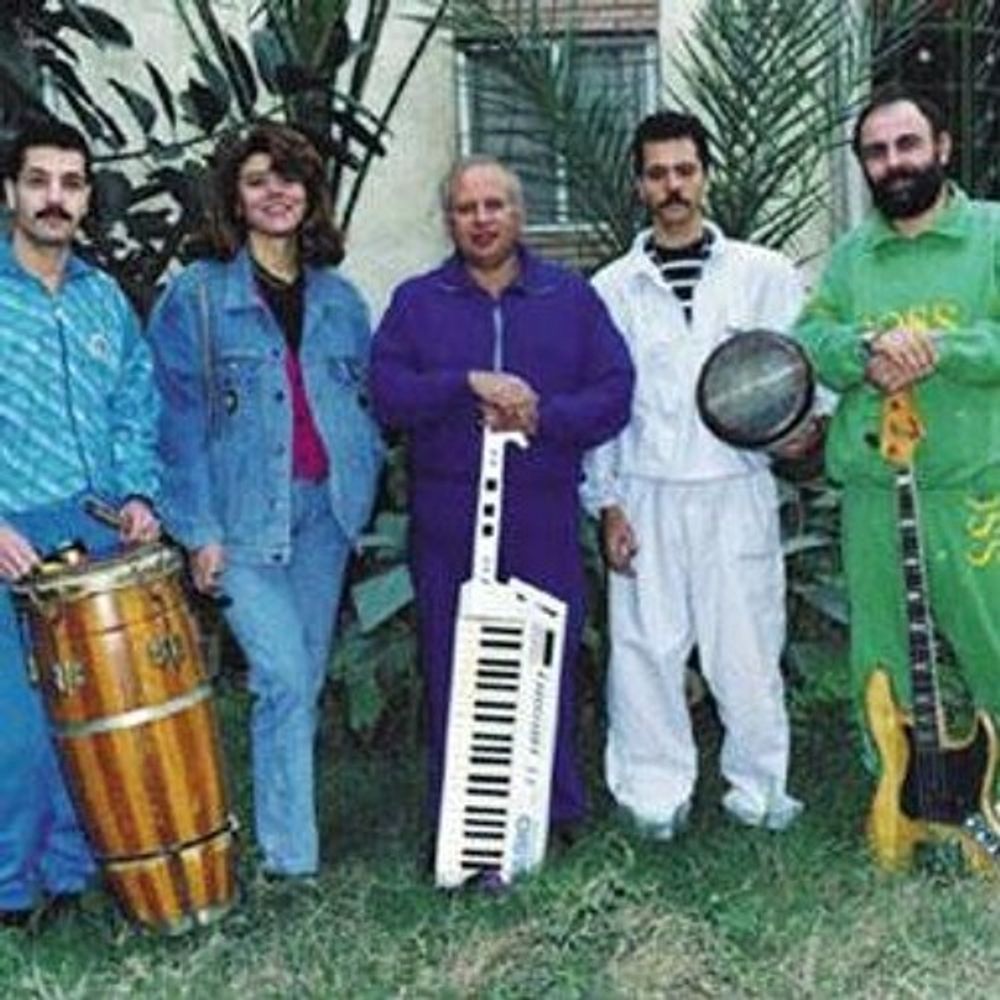
Arab music was long dominated by a pantheon of solo singers like Abdel Halim Hafez, Umm Kulthum, Mohammed Abdel Wahab, Sheikh Imam and Fairuz, but Al Massrieen represented something different: a band built around experimentation, youth culture and a new Egyptian identity. Their sounds captured a country in transition, an Egypt moving beyond the cultural nationalism that defined the Nasser era, opening itself to new global influences while searching for a fresh sound of its own. The country had long been the cultural center of the Arab world, exporting its films, television, books and music across the region. For decades, institutions like Sawt el-Qahira, the state-backed label that emerged as the Arab world’s most prominent record company from the 1960s through the 1980s, helped distribute music across the region. In an age defined by transnational connectivity, online influencers and the growing cultural visibility of the Gulf, it might be hard to imagine that Cairo was, for a long time, where Arab artists went to become stars. Shenouda belonged to the final generations of these artists, who worked at the height of that cultural dominance.
But his real influence extended far beyond his own recordings. Shenouda is best known for molding the careers of some of the Arab world’s biggest names. He composed some of Mohamed Mounir’s earliest and most influential albums, blending Nubian musical traditions with contemporary arrangements and helping to shape one of Egypt’s most distinctive voices. He worked with legends including Nagat El Saghira and Faiza Ahmed, and played a pivotal role in discovering Amr Diab, bringing the young singer from Port Said to Cairo and helping launch the career of one of the Arab world’s biggest pop stars. His influence extended across generations and genres, from Egypt’s golden age of singers to the younger artists who would later reinterpret his work.
And his imprint was not limited to pop music. Shenouda was also one of the great composers of onscreen music, creating scores and soundtracks for more than 150 films and television productions. His creations helped shape some of Egypt’s most beloved films, including “El Mashbouh” (“The Suspect”), “El Hareef” (“The Street Player”), “Ghareeb fi Beity” (“A Stranger in My Home”), “El Ghoul” (“The Ghoul”) and “Shams el Zanaty” (an adaptation of Akira Kurosawa’s “Seven Samurai” and the Western “The Magnificent Seven”) — films that featured the biggest names and are instantly recognizable to a generation of Egyptian viewers. Even late in his life, he continued composing for new audiences, including the soundtrack for the acclaimed 2024 Egyptian streaming series “Hala Khasa” (“A Special Case”).
In a 2020 Pitchfork interview, the Emmy award-winning stand-up comedian, actor and writer Ramy Youssef called Shenouda “the Pharrell of Egypt” (a reference to Pharrell Williams, the prolific American producer behind countless chart-topping records), a fitting comparison for a producer whose legacy is inseparable from the artists and sounds he helped build. His music lives on decades later, even among those of us generationally and geographically removed from the Egypt that produced it, even at a time of digital mass production that sees a new song or music publication from the region drop every other day. Youssef himself said he used Al Massrieen’s music in the “Ramy” series because it reflected the show’s central tension, a young person trying to reconcile inherited history with a modern identity.
It’s no coincidence that the series arrived amid a wider digital fascination with an Arab past. Across social media, archival accounts like @middleastarchive, @archive.arabi and the Iraq Photo Archive were resurrecting old images, newspaper stories, grainy videos and forgotten cultural ephemera, while labels such as Habibi Funk were curating long-neglected recordings for new audiences. Al Massrieen’s music became part of that rediscovery, circulating through playlists and Instagram reels just as easily as it once traveled through radio broadcasts back home. This is the magic of artistic production: that the same music that once represented a rapidly modernizing Egypt could, decades later, become the soundtrack for a generation of diaspora Arabs who, like me, are constantly negotiating our relationship with home.
Shenouda’s own life also reflected the idiosyncrasies of the new Egypt. Though he came from a Coptic family, he often cited Quranic verses in his press appearances and conversations. In later interviews, he would recall an absurd incident from his detention under Gamal Abdel Nasser in the 1960s. Rounded up alongside alleged members of the Muslim Brotherhood during a period of political repression, Shenouda spent three days in detention, during which an officer mistook his discussion of musical scales for Quranic chanting and accused him of uttering “suspicious chants,” demanding that he denounce an affiliation he never had.
Yet for most of Shenouda’s career, his Coptic background, if present at all, was secondary to his artistic identity. His music became so deeply embedded in Egyptian culture that he was embraced not as a representative of one religious community, but as one of the architects of a shared national identity. His work belonged to a broader Egyptian imagination, despite sectarian reactions on social media to videos of his funeral at St. Mary’s Church in Cairo’s upscale Maadi neighborhood.
His ideas about what should be considered proper music represented another tension. Though celebrated as part of a vanguard that transformed Egyptian pop music, he often spoke like a keeper of an older, more conservative culture, advancing innovation while arguing that it should not come at the expense of morality or social norms. He defended the right of mahraganat performers to exist, for example, while objecting to what he considered vulgar lyrics. The genre, which emerged from Cairo’s working-class neighborhoods and became one of the defining sounds of Egypt’s younger generation, had become the subject of a wider cultural battle over class, censorship and the meaning of Egyptian identity. At the same time, Shenouda produced one of the most iconic Egyptian songs in 1980, “Zahma Ya Donia Zahma” (“Crowded, Oh World, Crowded”), for the boundary-pushing Ahmad Adawiya, who was one of the most popular performers to pioneer the shaabi genre, traditional working-class Egyptian folk music that was a sort of precursor to today’s electronic-driven mahraganat. The contradiction seemed to sit comfortably in Shenouda, a man who once pushed Egyptian music into the future, but who remained protective of the cultural values that shaped him.
Still, even in his final years, the Maestro’s devotion to music remained absolute. It was reported that his wife of 40 years later moved in with their daughter Dina to help with her family, while Shenouda chose to remain in Cairo, dedicating himself entirely to his work. His final artistic project was, fittingly, a bridge between generations: a reimagining of “Bahlam Maak” (“I Dream With You”), the 1979 song he composed for Nagat El-Saghira, this time featuring the up-and-coming Egyptian rapper Ziad Zaza and singer Tina, whom Shenouda presented as one of his latest discoveries. Shenouda lived long enough to see a new generation discover his work. According to Stürtz, who often visited Shenouda while in Egypt, he regularly spoke about how gratifying it was to see Al Massrieen finally receive the recognition he felt the band had missed when it first appeared, from international reissues to Ramy Youssef’s use of its songs. What pleased him most, Stürtz told me, was not simply the renewed attention but the realization that the music still resonated with listeners decades later.
The cultural center of the Arab world may have shifted away from Egypt; the country that produced Shenouda, the country of towering musicians, poets, filmmakers, journalists and writers whose work shaped an entire region, no longer occupies the place it once did. But sometimes this legacy returns unexpectedly: through a Berlin-based DJ, an American TV series, a trending TikTok song — a young global diaspora audience searching for a connection to a time and place we inherited but never fully experienced. Hany Shenouda’s music found us because it was always looking outward and ahead.
“Spotlight” is a newsletter about underreported cultural trends and news from around the world, emailed to subscribers twice a week. Sign up here.