

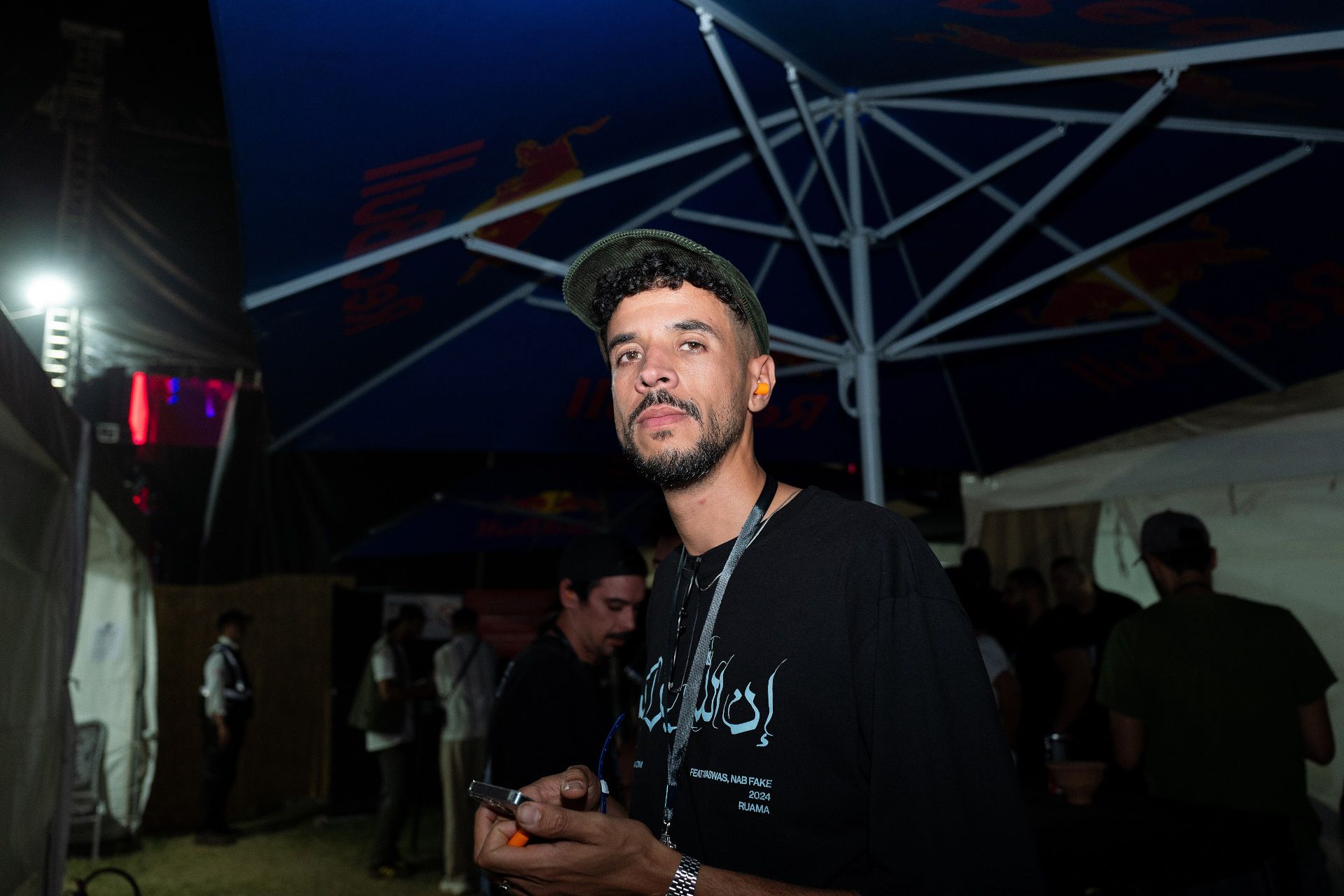
Last week, Moroccan musician Mehdi Black Wind became the fourth rapper in a year to be arrested by government authorities over alleged speech-related offenses.
Moroccan authorities charged the emcee and filmmaker with “insulting a constitutional institution.” He faces up to two years in prison if convicted.
In an ironic twist, Mehdi Black Wind, whose real name is El Mahdi Lyoubi, may not be able to secure legal representation for his trial due to an ongoing nationwide general strike by lawyers over proposed legislation that they say would further erode the profession’s independence.
Lyoubi had been set to travel from Rabat back to Marseille, France, where he has resided since 2017, before he was blocked from boarding his flight and detained at the airport. He was then held for interrogation in Casablanca at the headquarters of the National Brigade of the Judicial Police on July 13. On July 15, Lyoubi appeared in court, where a judge ordered that he remain in custody pending trial. His next hearing is scheduled for July 22.
The rapper first rose to prominence in the 2010s for his politically charged lyrics and socially conscious music. He has been an outspoken critic of government corruption and the economic inequality that has plagued Morocco, particularly its youth.
“Goodness and peace, I dreamed of justice in my country. I woke up and found everyone in the chopper in a Prada jacket. I responded with values. Throw your honor in the gutter, pray to God and you’ll find pain,” he raps on the song “3IN MIKA.”
On Monday, several prominent Moroccan artists — including rappers ElGrandeToto, Small X, Stormy, Khtek and Don Bigg — signed a petition calling for the immediate release of Lyoubi and the end of government persecution of rappers over their work.
Lyoubi’s arrest is part of a disturbing trend in Morocco, where rap artists face threats over their lyrical content, raising fresh questions about the limits of artistic and political expression in the country.
Since they began in September 2025, the country’s “GenZ 212” protests (named after Morocco’s international calling code) have seen young Moroccans lead a public outcry against high unemployment and the government’s broken promises. Rappers who have joined the protests or released music explicitly criticizing the government have faced intense scrutiny and legal pressure from Moroccan authorities.
Rapper Hamza Raid, known professionally as Raid, was detained at the start of the protests for “unauthorized assembly and incitement to commit crimes using electronic means.” He has since been released and is currently awaiting trial.
In November 2025, rapper Pause Flow was arrested for “insulting an organized body and public officials in the exercise of their duties” before being released a month later.
And in March of this year, rapper L7assal was arrested for criticizing Morocco’s normalization of relations with Israel and government corruption, and subsequently sentenced to eight months in prison.
Khtek, a Moroccan rapper who has worked to organize efforts to put public pressure on the government around each of these cases, told New Lines that this growing crackdown on artists is an attempt to silence those who dare to challenge the power and systems that have left Moroccans reeling.
“When artists begin to fear that a lyric or a song could lead to prosecution or imprisonment, it affects far more than one individual. It sends a message to an entire generation of creators,” she told New Lines.
The daughter of a prominent political activist, Khtek helped gather the signatures of high-profile artists for Lyoubi’s petition. She said that his arrest did not come as a surprise, yet still felt like a blow to the artistic community.
“I’ve always been struck by his courage,” she said. “He never made music to please people or avoid difficult subjects. He spoke honestly, even when he knew there could be consequences. Deep down, many of us feared that one day he would pay the price for that honesty.”
The Moroccan government maintains a complicated relationship with rap. Though the genre took time to be fully embraced, it now flourishes, with live performances approved and sanctioned by the state. At the country’s annual Mawazine Festival, which is partially backed by the government, Moroccan rappers have graced the stage as headlining acts. Some of those headliners are among the artists who signed the petition demanding the release of Lyoubi.
Rap remains one of Morocco’s most explicit and outspoken forms of artistic expression, making rappers recurring targets for the authorities. Whether or not these cases result in convictions, rap has increasingly become a battleground for free speech in Morocco.
As Lyoubi awaits his fate, rappers appear ready to push back against limits to their lyrics and free speech. They refuse to ignore the basic tenets and history of rap as a genre of social protest, reflecting public sentiment and speaking truth to power.