

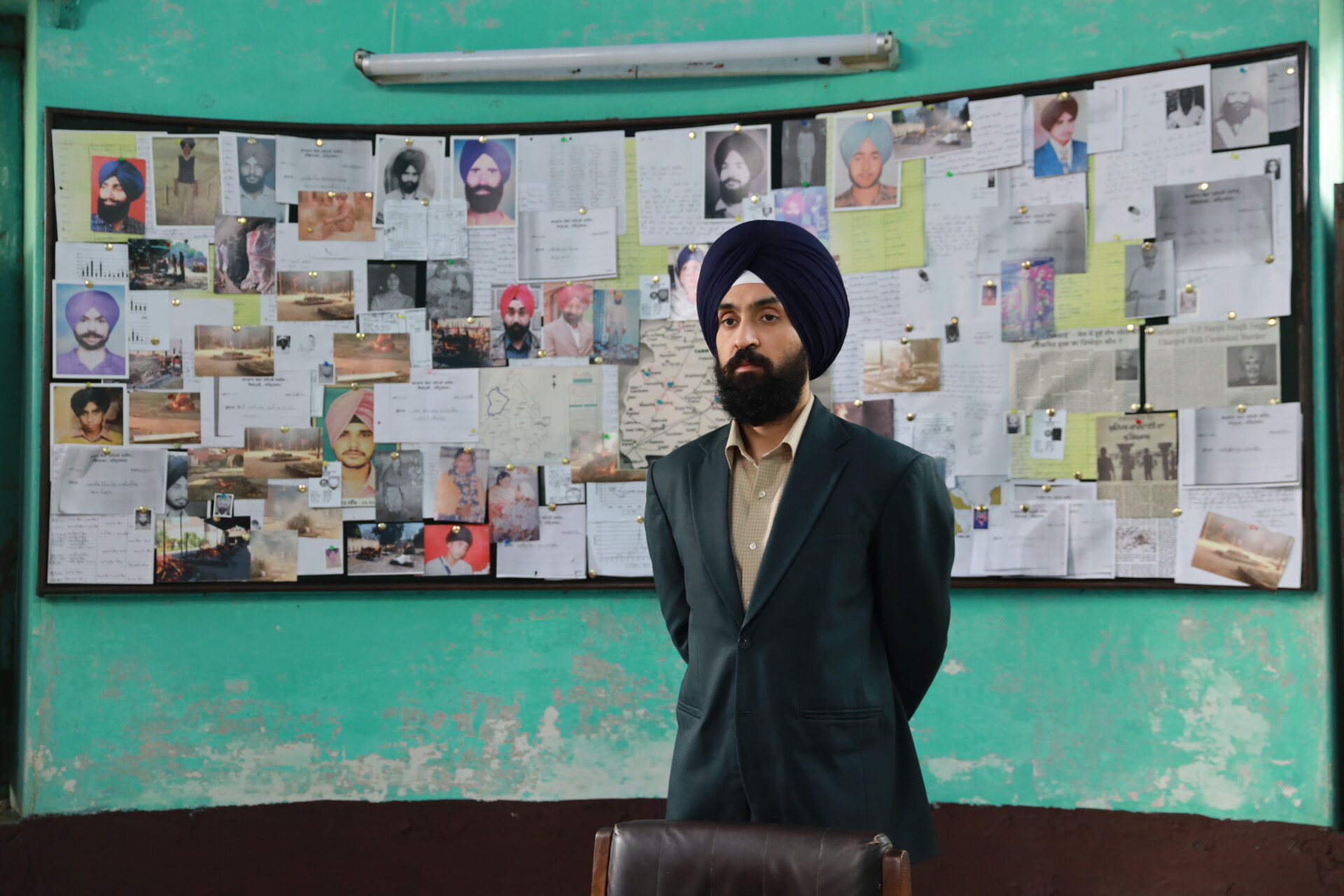
“It has been thrilling, exciting, anxious and a little sad,” Indian filmmaker Honey Trehan told New Lines nearly two weeks after his film “Satluj” briefly appeared on the Indian streaming platform Zee5. The biopic, which was removed without warning two days later, on July 5, had been blocked from release since 2022.
The streamer soon issued a vague statement expressing support for the film’s creative vision but citing unspecified “current developments” as the reason for removing it, first in India and then internationally. It was later reported that the government had ordered the takedown, arguing that it went against India’s sovereignty and integrity.
The film, starring globally acclaimed actor-singer Diljit Dosanjh, is based on the life of Jaswant Singh Khalra, the human rights activist who uncovered evidence of some 25,000 alleged illegal killings in the northwestern state of Punjab during the Sikh separatist insurgency of the 1980s and 1990s. The period was marked by widespread allegations of police brutality, and Khalra himself was abducted and killed by police in 1995.
The film had remained in limbo since 2022, when the Central Board of Film Certification (CBFC), better known as India’s censorship board, proposed more than 120 cuts as a condition for its theatrical release. Trehan refused, and its release was indefinitely stalled.
When it was released on Zee5, its name had been changed to “Satluj” from its previous title, “Punjab 95.” I wrote about the film’s prolonged censorship battle and the shrinking space for political freedom in Indian cinema for New Lines in December 2025.
That is why the film’s digital release was cloaked in secrecy. “Every time we announced the release, we were stopped, so we did not tell anyone,” Trehan said. “When I got a call from RSVP Movies [the production house] saying that Zee5 wanted to release the film, I couldn’t believe it.”
Zee5 is one of India’s largest homegrown streaming platforms, with tens of millions of paying subscribers, offering thousands of films and TV shows across 12 Indian languages.
So deep was his disbelief that, even on the day of the film’s release, Trehan called executives at the streaming platform to confirm that it was actually going ahead. “Even [Dosanjh] called me, asking the same question. I told him, ‘if the film doesn’t release, do not hold me responsible.’ He laughed and said, ‘We’ve been through this many times before.’”
Zee5’s conditions for releasing the film were straightforward: no promotional campaign and a new title. Trehan agreed. “Satluj,” named after the longest river flowing through Punjab, appeared without fanfare — and vanished just as suddenly.
Since streaming platforms fall outside the jurisdiction of the CBFC, films released online do not require certification from the board, which allowed “Satluj” to bypass the theatrical approval process. Trehan and Dosanjh both anticipated some backlash, but neither expected the government to order the film’s removal after its release.
“Given the way the CBFC had been behaving with the film, it was evident that there would be retaliation,” Trehan said. “But by doing what they did, it has only proved that we thought too highly of them and they, in fact, are not that nice.”
Despite the ban, the film did not disappear entirely. If anything, the stranglehold around “Satluj” only evoked more curiosity among viewers.
A day after the film was taken down, Dosanjh urged fans who had downloaded copies to share them, in protest. Since then, “Satluj” has continued to resurface online, with copies repeatedly uploaded to YouTube as each link is removed and another takes its place, drawing ever more viewers.
Community screenings in protest have also sprung up across India, particularly in Punjab, where people are gathering at gurdwaras, or Sikh places of worship, to watch the film. Similar screenings have been organized in London, New York and across Canada.
Although these public screenings are legally fraught because the film has been removed, their numbers continue to grow, driven by local activists and Sikh organizations. The Shiromani Akali Dal, the Sikh-centric political party in Punjab, has instructed its workers to organize screenings across the state.
The campaign has thus become both an act of resistance and an instance of piracy. “Legally, I do not want my film to be watched in a pirated manner,” Trehan said. “But the government is responsible for this. For the short time that the film was available on streaming, people watched it nicely.”
The screenings reminded Trehan of the argument the CBFC had made while delaying the film’s release: that it could create a “law and order situation” in Punjab. But the visuals tell another story. Across social media, the recurring scenes from community screenings show people sitting together and watching the film in silence.
“The film and Jaswant Singh Khalra have brought Punjab together,” Trehan said. “There are no religious or class divisions in the crowd. This is what films are supposed to do. This is what art is supposed to do.”
Renewed interest in the film has also brought to light criticisms against it. The long-standing one has been that it advances a pro-Sikh separatist narrative through its portrayal of Khalra. Another line of criticism has focused on the number of extrajudicial killings portrayed in the film, with some accusing Trehan of inflating the figures.
Hartosh Singh Bal, a prominent left-leaning Indian journalist, publicly branded the film as “propaganda,” arguing that it exaggerates the scale of the killings.
“Some people are saying it is a propaganda film. I am saying other propaganda films have been released. Let this also be released, and let the people decide what we are endorsing. Everything should be open to the public domain because this is a democracy,” Trehan said.
He added that he has “spoken about the other side of the story,” through his principal characters, who present the perspective of the Indian government as well.
“My film is about Jaswant Singh Khalra. In his speeches, he is talking about 25,000 people. Being a conscientious filmmaker, I used the word ‘estimated 25,000,’ and given that my story is on his life, I will take into record everything he is saying.”
Trehan added that the larger conversation should be about Khalra himself. “He was abducted and killed by the cops, and those responsible for it were given life imprisonment by the courts in India. This is a fact, and the bigger picture.”
What is clear is that Trehan’s film has inspired renewed interest in Khalra, in India and beyond. It is a rare occurrence, and Trehan is aware of it. Whether or not he resumes the fight for its release, the film, like the river it is named after, continues to flow — and find new audiences.
Meanwhile, the government, according to an India Today report, is considering legal action over the public screenings, arguing that the film was released without necessary certification.
“I have a firm belief that you cannot kill Khalra. You can only abduct him. He is a thought, and one cannot kill a thought. I would urge the government to step forward and rescue him,” Trehan told me.