

Is the Ed Sheeran and Macklemore Controversy a Breakthrough or a Distraction? I’m Still Not Sure
A year ago to the day, I went to a fundraising concert in London, “Together for Palestine,” spearheaded by Brian Eno. The tickets sold out in two hours — all 12,000 of them. The lineup was long and star-studded: actors Richard Gere, Guy Pearce and Benedict Cumberbatch; soccer player Eric Cantona; journalist Mehdi Hassan; and musicians from Damon Albarn, Neneh Cherry and Omar Souleyman to Brian Eno himself. Here there was no need to worry about wearing a keffiyeh: There were more people wearing them than not, and “Free Palestine” badges were being distributed to everyone in the queue.
Four solid hours of programming later, complete with anger, tears, music and dance, the mood was buoyant, from the sheer range and depth of solidarity. But as I left the venue and made my way home, a different mood settled over me that I couldn’t quite understand. Through the euphoria of hearing superstars expressing what we’d all felt so impotent about for two long years of genocide came an unmistakable sense of guilt. I was feeling better, I realized, on the back of at least tens of thousands killed in Gaza. Furthermore, I was under no illusion that so many people speaking out were going to change my government’s policy; two years of protest, massive popular support for Palestine and experts’ reports on the situation on the ground had not resulted in a change of direction, so why would a group of artists succeed?
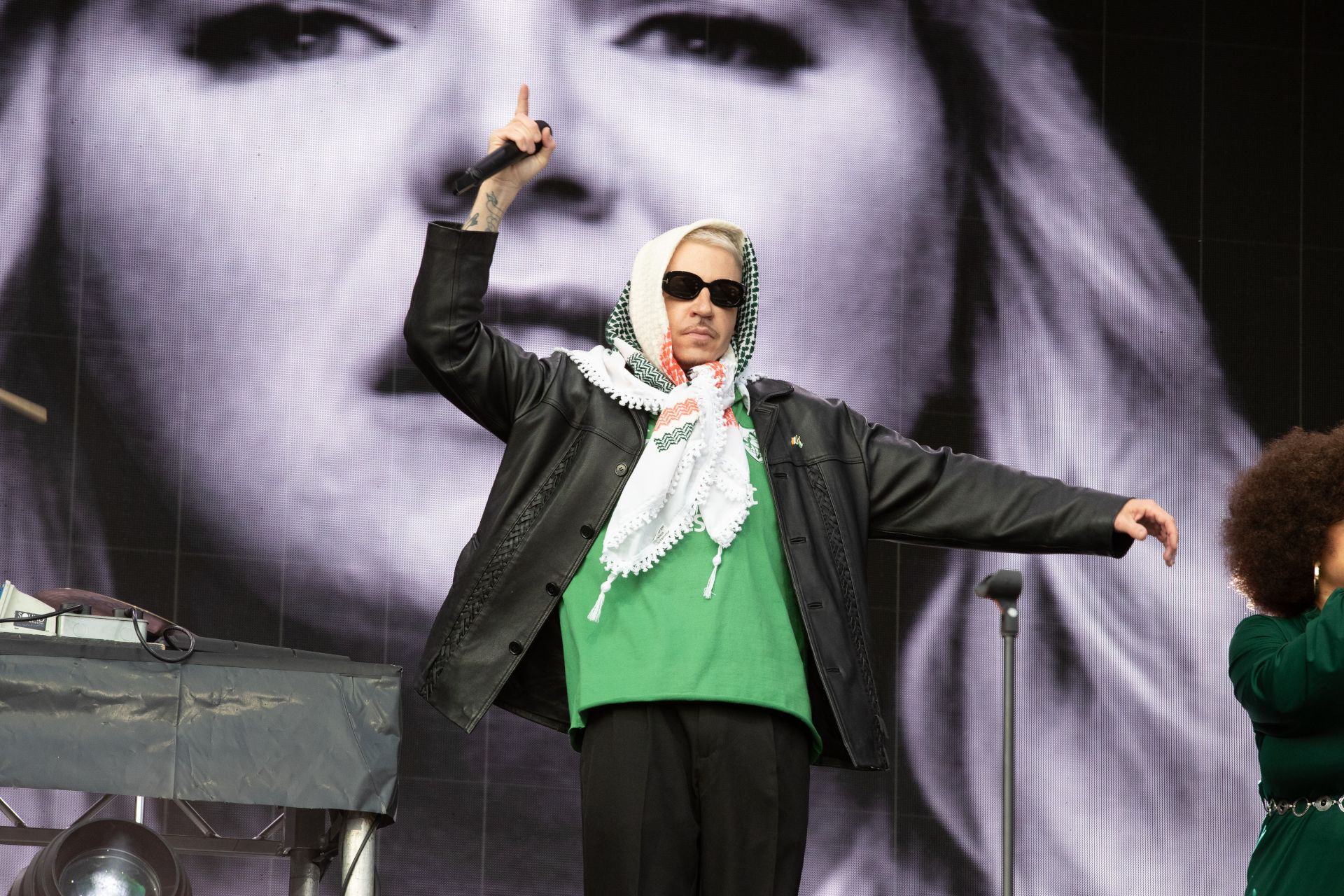
The subject of artists speaking out on Gaza has erupted on a far bigger scale over the past few days, with Ed Sheeran facing a very lonely tour after losing all his support acts as well as his own band, who pulled out in solidarity with hip-hop artist Macklemore. The pressure came from billionaire Robert Kraft, owner of one of the venues, who took the time to personally ensure Macklemore was dropped for what he called the “hate speech” of saying “Free Palestine.” The domino effect of canceling these two words from one artist in one show has dominated headlines ever since.
Editors in newsrooms have grappled with how to cover Gaza for the past three years; when crimes are so large-scale and continuous, it is hard to judge which should get the headline. Is it the top-line numbers that are more important, or is the human story more likely to get through? When one hospital has been covered in depth, can the next bombing be an equally well-covered story, or should the beam of attention swing to wider humanitarian issues?
We’ve grappled with this too. In a recent New Lines editorial meeting, we discussed what the Macklemore controversy really meant in the world, and whether we could add anything to the debate. A split soon became apparent in our personal opinions on solidarity. I agreed with a colleague who said it was distracting from the issue the artists were actually talking about: Macklemore was dominating front pages in a way Gaza hasn’t for well over a year. But another colleague said: “What more can artists do? This isn’t nothing.” Others agreed, saying that it could change perceptions, debate and possibly voting patterns in the future.
But what will such change really bring for the people in Palestine, and Palestinians living across the world? Commentators are describing this as a sea change, a pivotal moment, a “massive cultural shift,” comparing it to the global solidarity movement of the 1980s against apartheid. But this is hardly the first time such things have been said; in fact, I feel as if many decisions and statements since Oct. 7, 2023, have been described as such with no discernible difference to those living in Gaza, where children have been killed at a rate of roughly one per day since the so-called ceasefire came into effect, and basic needs are still unmet, including food and medicine. In fact, I feel I grew up with such statements being made by various politicians and activists, condemning violence or land grabs, but the violence and settlement building go on, and on.
An instructive analogy with the Iraq War was brought up: Unprecedented numbers of people marched and protested against the plans for the invasion, which went ahead anyway, in the face of huge opposition from many different groups in the U.S., U.K. and other countries. This opposition to the war only strengthened as the results of the invasion became clear, and did indeed have huge reverberations leading to fundamental change — Obama’s foreign policy was entirely shaped by the long shadow of the invasion — but this did not result in any improvement for the Iraqi people who continue to suffer the effects, socially, politically and physically.
Of course these actions are not nothing: The Brian Eno concert raised over $2 million; the various stars and billionaires appear to be locked in a donation war to Palestinian causes; and money can and does save lives. The statements and the subsequent headlines put pressure on politicians and perhaps influence voter behavior in the future. But none of this should distract from the core issue: Palestinians continue to be killed, injured, harassed, evicted, starved and tortured by Israeli forces, and nothing is changing that reality.