



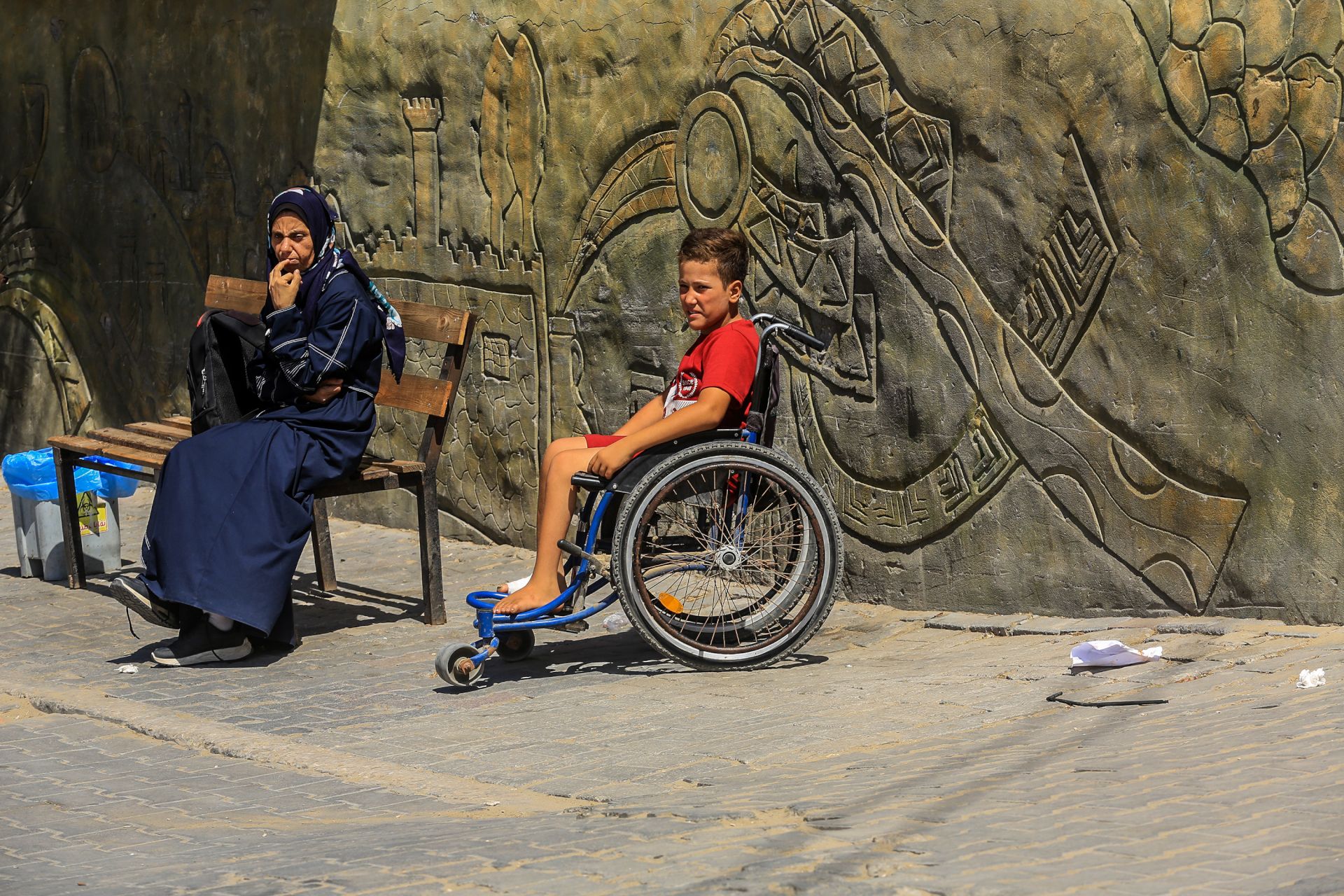
Every day, Ibrahim Abu Aram waited for a phone call telling him that his medical evacuation had finally been approved.
A father and blacksmith from Gaza, Ibrahim had been diagnosed with pemphigus vulgaris, a rare autoimmune disease that causes painful blisters across the body. In a video recorded during the height of his illness, he said: “I used to work, but as the disease progressed, my whole life came to a standstill.”
Years of treatment failed to stop the disease. After developing sepsis, his condition deteriorated further, leaving specialized care outside Gaza as his only remaining chance of survival. Together with his family, he spent four years seeking permission to leave Gaza for treatment, carrying two medical referrals as each delay put his life further at risk.
In April 2026, Israel still had not approved his medical evacuation. Ibrahim died before he could leave Gaza for the treatment he needed.
Ibrahim was far from alone. According to data from the World Health Organization (WHO), at least 1,092 patients registered for medical evacuation died in Gaza while waiting to leave between July 2024 and late November 2025. For many Palestinians in Gaza, survival depends not only on the urgency of a patient’s medical condition, but also on a chain of administrative decisions over which they have no control. As Israel’s genocide has devastated Gaza’s healthcare system, treatment abroad has become the only remaining option for many patients. According to the WHO, more than 20,000 people in Gaza currently require medical evacuation. But reaching that treatment means navigating a medical evacuation system in which weeks or months can pass as illnesses progress, and ultimately it is only Israeli approval that determines who can leave, a process that patients and humanitarian organizations describe as opaque, corrupt and unpredictable. Some, like Ibrahim, never receive permission in time.
Medical evacuations out of Gaza long predate the current war. Before October 2023, patients requiring treatment unavailable in Gaza were routinely referred to hospitals in the West Bank, East Jerusalem and sometimes Israel. Palestinians with cancer, congenital conditions and other illnesses requiring specialized care had long been referred to hospitals outside the strip. Between 2019 and 2021, however, 35% of security-permit applications by patients in Gaza were either denied or delayed, according to WHO figures. In July 2023, 1 in 5 patient applications was denied or delayed, as were more than half of applications from people seeking to accompany them.
Israel has controlled Palestinians’ movement into and out of Gaza since occupying the territory in 1967. But in 2004, during the Second Intifada, Israel formalized a more restrictive patient permit system, subjecting individual medical referrals to security approval. The change came amid a sharp tightening of access through the Erez crossing following Palestinian attacks there. Even after ending its permanent military presence and settlements inside Gaza in 2005, Israel continued to control most of the strip’s external access, as well as its airspace and maritime borders. After imposing a full blockade in 2007, it sharply restricted who could leave through crossings under its control.
Those restrictions also carry obligations under international humanitarian law: Article 17 of the Fourth Geneva Convention requires parties to a conflict to “endeavour to conclude local agreements for the removal from besieged or encircled areas, of wounded, sick, infirm, and aged persons, children and maternity cases.” The International Committee of the Red Cross says the provision is intended specifically to enable patients to leave areas where necessary medical care is no longer possible, and requires parties to make their best efforts in good faith to facilitate such arrangements.
What changed after Oct. 7 was the scale of the dependence on treatment outside Gaza. The destruction of hospitals, shortages of medicines and supplies, and tens of thousands of traumatic injuries increased the number of people requiring medical evacuation dramatically.
That system changed again when the Israeli military launched its ground offensive in Rafah in May 2024, closing the main crossing into Egypt that had thus far served as the primary evacuation route. As New Lines reported at the time, the closure brought medical evacuations through Rafah to a halt, leaving some 12,000 patients waiting for treatment abroad. Following its closure, medical evacuations were redirected through the Karam Abu Salem (Kerem Shalom) crossing, southwest of Rafah, introducing additional stages of coordination and administrative approvals.
The evacuation route has remained precarious even when crossings are operating. In April 2026, the WHO temporarily suspended its support for medical evacuations after a person contracted to provide services to the organization was killed by Israel during an evacuation operation. Evacuations resumed several days later, after the WHO said it had received commitments from the “relevant parties” regarding the safety of patients and staff.
“The entire evacuation system had to change almost overnight,” Islam, 26, a nurse with the Palestine Red Crescent Society, told New Lines.
She explained that the process begins when doctors determine that a patient’s condition can no longer be treated inside Gaza. A medical referral sets out the diagnosis, the treatment required and why it cannot be provided locally. The WHO reviews referrals, helps identify hospitals in Israel, the wider region and around the world that are willing to receive patients (including in America and EU countries) and coordinates with receiving hospitals and the relevant authorities. But completing those medical and logistical steps still does not guarantee departure.
The WHO’s own descriptions of the process seem to have differed over time. In a September 2025 document, the organization said the Gaza referral committee shared its prioritized list with the WHO, which then identified receiving countries before submitting accepted cases to Israeli authorities for security clearance. But in an April 2026 statement on evacuations from Rafah, the WHO described a different process: The Palestinian Authority first shared the prioritized list with Israeli and Egyptian authorities, with the WHO receiving it only after patients had obtained security clearance. The WHO did not respond to requests from New Lines to clarify the discrepancy.
“Even if the WHO completes everything, it still depends on whether the Israeli authorities approve the patient’s departure,” Islam said.
The uncertainty doesn’t end with the patient. Children are generally allowed to travel with up to two companions, while adult patients are generally permitted one, Islam explained. Each companion must also receive separate approval from the Israeli authorities. A patient’s evacuation can therefore be delayed not only because of their own application, but by decisions about the people who would travel with them.
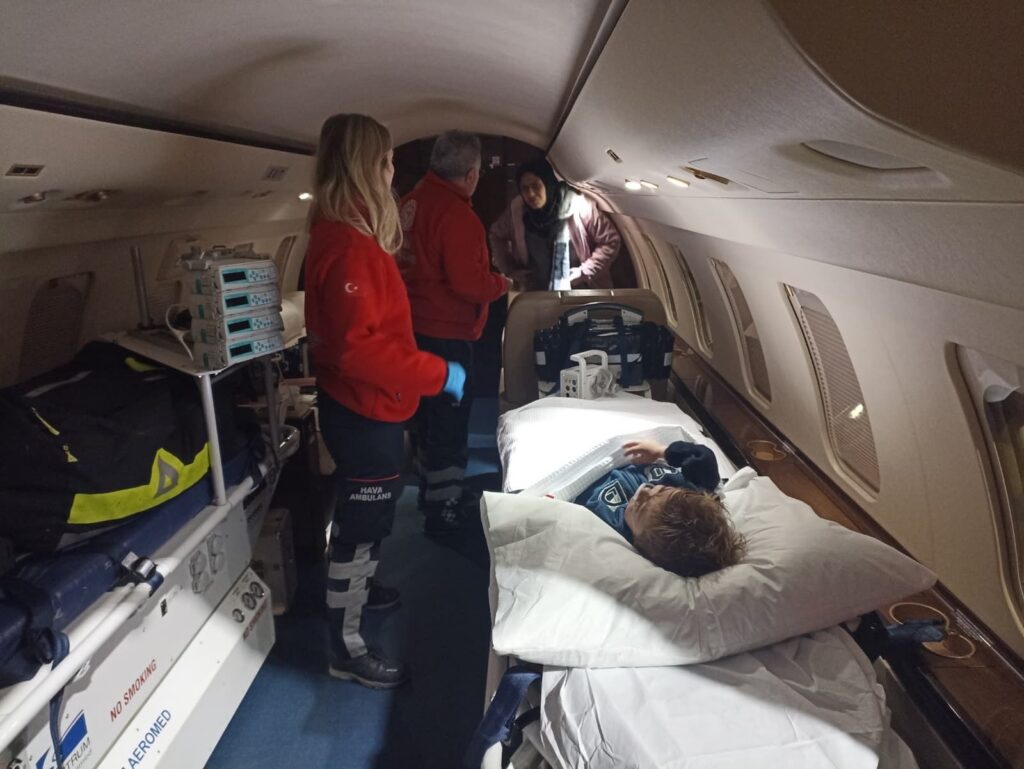
Even receiving approval doesn’t necessarily guarantee that a patient or companion will be allowed to leave. In Dec. 2025, for example, Israeli authorities approved the Abu Muammer family to leave Gaza for medical treatment in Turkey but detained the father of the patient, Ali Fuad Abu Muammer, as the family attempted to pass through Karem Abu Salem crossing. His wife and children were forced to continue without him, traveling through Jordan before flying to Turkey.
Israeli authorities do sometimes cite “security grounds” when denying patients or their companions, but the basis for those decisions is generally not disclosed. The Coordinator of Government Activities in the Territories (COGAT), the Israeli military body that oversees civilian affairs in the occupied Palestinian territories, did not respond to New Lines’ questions about the criteria used to make such determinations or whether those denied are told the specific reason.
Gaza’s healthcare system, though limited in its resources, was once able to treat a relatively large share of the illnesses and injuries of the territory. Government, nongovernmental and specialized hospitals provided care to tens of thousands of patients each year, while only the most complex cases, requiring highly specialized treatment or advanced surgery, were referred to hospitals outside the strip. As New Lines has previously reported, even specialized care available inside Gaza, including fertility treatment, was constrained by Israeli restrictions on the entry of medical equipment and supplies.
But Israel has shattered that fragile balance. From the first days of the war, Israel not only carried out a military campaign across Gaza but also dismantled the conditions necessary for healthcare to function. It tightened restrictions on movement and severely limited the entry of fuel, medicines and medical supplies, while continued bombardment rapidly pushed hospitals beyond their capacity. Hospitals were damaged or forced out of service just as they faced an unprecedented influx of patients, many with severe injuries requiring specialized care. At the same time, shortages of fuel, medicine and medical supplies deepened, while healthcare workers were killed or separated from their workplaces by evacuation orders and repeated displacement. Together, these pressures steadily eroded Gaza’s ability to provide even basic medical treatment.
This was how Gaza’s healthcare crisis deepened: As the number of injured people and patients grew, Gaza’s ability to treat them shrank. The problem was no longer just overcrowded hospitals. Entire categories of medical care had become unavailable inside the strip. Most patients simply could no longer get the treatment they needed, from people with severe injuries to cancer patients, children and those living with chronic illnesses.
These deaths form part of a toll that extends beyond those killed directly by Israeli attacks. Gaza’s official death count, itself widely believed to be an undercount, cannot fully capture those who survived bombardment only to die later because treatment was unavailable, medicines could not enter or they could not leave Gaza to receive care. The patients who die waiting for medical evacuation belong to this less visible toll of the war.
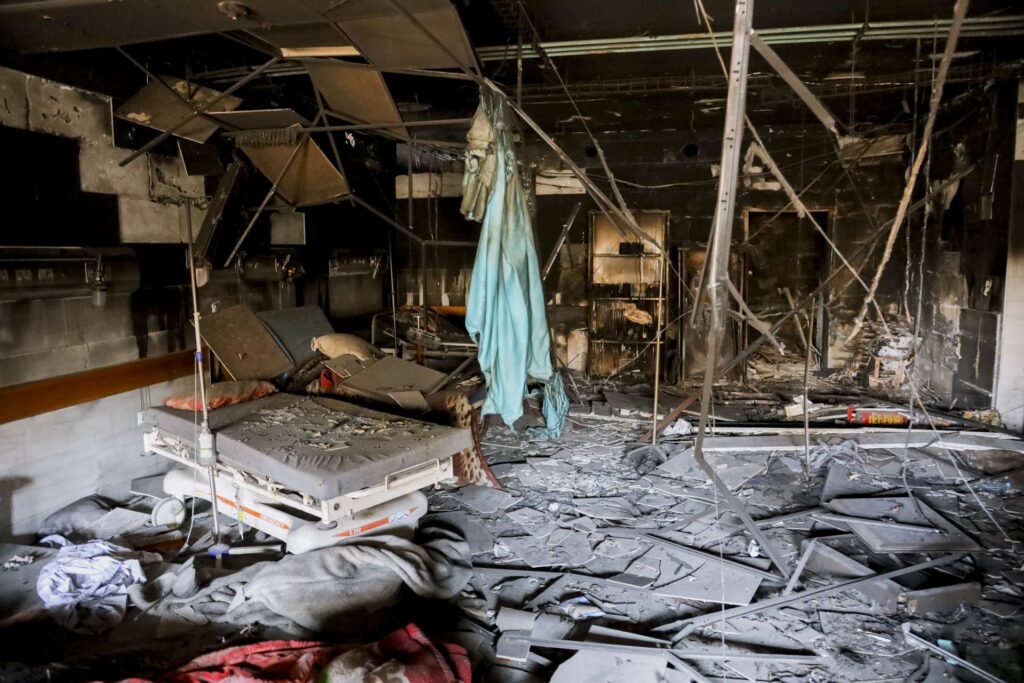
Dr. James Smith, an emergency physician who was in Gaza as recently as last month, said he saw the consequences of those delays repeatedly. Patients awaiting evacuation continued to deteriorate as conditions that ordinarily require specialist treatment went untreated.
“While they wait, in short, they suffer,” Smith told New Lines. “Many people become very unwell while they’re waiting; they become more malnourished, their conditions continue to deteriorate.”
Shahd Samir, a 21-year-old Palestinian from Gaza, said that losing her eye was just the beginning of her medical ordeal.
On June 19, 2025, she was struck in the eye by shrapnel after an Israeli strike hit a tent near where she was standing with her sisters in Gaza City. She was first taken to Al-Shifa Hospital, then transferred to Al-Ahli Arab Hospital, before eventually being referred to the Gaza Eye Hospital. Because of the severity of her injury and the specialized treatment and resources no longer available inside Gaza, doctors had no choice but to remove her eye.
The surgery required follow-up. She needed a prosthetic eye. Yet the materials required to make one were unavailable in Gaza. So doctors referred her for treatment outside the strip.
“The doctors told me the treatment exists, but not in Gaza. More than a year later, I’m still waiting for a chance to receive it,” she says.
On top of the inability to access routine healthcare, the cost of what remains available has soared. Unable to obtain a prosthetic eye, Shahd bought a cosmetic ocular shell at her own expense, paying more than $1,000 for it. Before the war, a similar shell cost around $30. Even so, she says it does not match her remaining eye or provide the appearance of a properly fitted prosthesis, and she is still waiting for permission to leave Gaza to complete her treatment.
Shahd’s story reflects the reality faced by countless others.
Dr. Hossam Dawood, director of the Gaza Eye Hospital, says the eye care crisis has long outgrown the problem of replacing glasses. Today, it affects nearly every aspect of treating eye diseases and injuries, as Israel continues to restrict the entry of essential medical supplies while much of Gaza’s healthcare infrastructure remains devastated by the war.
He says the hospital faces severe shortages of the materials needed for surgery, including those used in cataract and corneal transplant procedures, as well as the supplies required to produce prosthetic eyes. As a result, more than 4,000 eye surgeries are currently backlogged.
A prosthetic eye may not be able to restore lost vision, but it serves more than a cosmetic purpose: A properly fitted prosthesis helps maintain the shape of the eye socket and supports the eyelids and surrounding tissue. Since the war began, more than 17,000 Palestinians have suffered partial eye injuries, while over 600 patients need prosthetic eyes, some requiring prostheses for both eyes. Yet the medical resources needed to meet those needs remain critically scarce.
According to Dawood, many conditions that could have been treated before the war are now at risk of worsening because of Israel’s continued restrictions on medical supplies for eye care, alongside the extensive damage inflicted on hospitals and healthcare facilities across Gaza. For many Palestinians, the choice is no longer between treatment options. It is between waiting for lenses that may never arrive and surgery that may never come.
Doctors sometimes describe the consequences as “delay-related morbidity and mortality” or “waitlist morbidity and mortality.” Smith said he saw patients in Gaza becoming progressively sicker while awaiting evacuation.
For eye patients, delays can have irreversible consequences: Injuries that require specialized surgery or follow-up can progress to permanent vision loss when that care is unavailable.
For cancer patients, delays can mean a premature and painful death. A study of Gaza cancer patients seeking chemotherapy or radiotherapy between 2008 and 2017 found that, during the final three years studied, patients whose initial Israeli medical permit applications were denied or delayed had a 45% higher risk of death than those whose applications were approved.
For Suhaila Al-Mabhouh, the problem was never the absence of treatment. It was whether she could reach it before time ran out. Doctors told her family that her cancer was still treatable if she could reach specialized care in time.
“At first, the cancer was in her gallbladder and had just begun spreading to her liver. We could still treat it,” her husband, Sameh Al-Mabhouh, said. After reviewing her medical records, an oncologist in Gaza prepared an urgent referral, while doctors at Egypt’s National Cancer Institute told the family that treatment was available.
“The deciding factor in her case was speed,” Sameh recalled one of the doctors telling him.
But speed was exactly what the evacuation system could not provide. Israel did not approve Suhaila’s evacuation while her cancer was still treatable.
“I didn’t leave a single door without knocking on it to help us travel,” he said. Sameh contacted specialist doctors and hospitals, appealed to the WHO and reached out to anyone he thought might help inside and outside Gaza, including contacts in Egypt. Yet while the family searched for help, Israel did not approve Suhaila’s evacuation, and the cancer continued to spread.
“Israel neither provides us with the medicines, doctors and equipment we need, nor allows us to travel for treatment,” Sameh said.
By the time her condition reached its final stage, “my wife had to drink water through a syringe, and the evacuation still hadn’t come.”
On June 20, 2026, Suhaila died before she could leave Gaza.
“Our story is only one among thousands,” Sameh said. “My wife’s ordeal lasted only two months. Others have been waiting for years.”
The stories of Ibrahim, Shahd and Suhaila reveal different dimensions of the same crisis. Each needed treatment that was unavailable or inaccessible in Gaza. Each depended on medical evacuation. But while their medical conditions differed, they were all shaped by the same reality: Treatment remained out of reach for too long.
On meeting Ahmed, a 10-year-old boy from Gaza, in the displacement camp where his family now lives, it was immediately clear that surviving his injury had been only the beginning of his medical complications. More than a year and a half earlier, during the war, an Israeli missile struck the house next to his family’s home, throwing him down a staircase and causing a skull fracture and internal bleeding. He underwent emergency surgery in Gaza that saved his life and spent two weeks in intensive care on a ventilator. When he woke up, he could no longer speak; the left side of his body was paralyzed because doctors had removed part of his skull to save his life.
Ahmed later developed bacterial meningitis and spent months undergoing treatment and physical rehabilitation. Slowly, he regained his speech, learned to sit up again, and eventually managed to walk short distances. But his progress gradually reached the limits of what Gaza’s healthcare system could provide. Smith said he encountered other patients with similar needs, including a man awaiting evacuation for a cranioplasty after a traumatic brain injury. Without evacuation, Smith said, “it could be many years, if ever, before he receives the operation that he needs.”
“What Ahmed has achieved is the furthest he can go in Gaza,” his mother explained. “He still needs specialized rehabilitation, but the treatment and equipment he needs simply aren’t available here.”
The family hoped Ahmed’s condition would finally improve after a visiting Egyptian medical team performed reconstructive surgery on his skull. The delegation was among the foreign medical missions permitted to enter Gaza to aid local healthcare workers, thousands of whom have been killed, injured or detained by Israeli forces. But such access remains subject to Israeli approval and is far from guaranteed, and individual physicians and medical organizations are repeatedly denied entry. According to a 2025 study, 44% of international healthcare workers registered through the WHO’s emergency medical team initiative who have attempted to enter Gaza since the breakdown of the March 2025 ceasefire have been denied entry.
“We thought everything was finally over,” his mother recalled. “But unfortunately, the operation wasn’t completely successful.”
The implanted bone failed to fuse properly with his skull, leaving a gap behind his ear. Doctors told the family he urgently needed another reconstructive operation that could not be performed inside Gaza. His injury also caused severe eye misalignment that now requires specialized surgery unavailable in the strip.
After determining that no further treatment could be provided locally, doctors referred Ahmed for medical evacuation. His case was accepted onto the WHO’s priority list, reflecting the urgency of his condition. But, as with thousands of other patients, being judged a priority did not mean that Israeli authorities would grant him permission to leave. At the time of writing, his family still had no indication of when he might be allowed to leave Gaza, or whether treatment would come before his condition deteriorated further.
Ordinary childhood activities have now become part of Ahmed’s recovery. Doctors had instructed him to avoid direct sunlight and never sleep on the right side of his head. He struggled to walk normally, held a pen with difficulty and could study for only short periods before severe headaches forced him to stop.
“He can’t study like other children anymore,” his mother said. “Even after studying for just an hour, he becomes exhausted, starts crying and says only one thing: ‘I’m tired.'”
To better understand what happens after a patient’s name is placed on the evacuation list, we later spoke with Yahya, Ahmed’s 23-year-old brother. Now studying in Italy, Yahya has spent months trying to secure Ahmed’s medical evacuation from abroad. Despite Ahmed being classified as a priority case, he said the family had still received no indication of when Ahmed might actually be allowed to leave Gaza.
“His name is on the list, but no one can tell us when his turn will come,” Yahya told New Lines. “We just keep waiting. Every day we hope for a call, but no one can tell us whether it will be tomorrow, next month, or even later.”
Smith said visiting doctors regularly encountered patients in the same position. “Most often we would see patients that have already been put on the list, who are presenting as they become more and more unwell while they wait,” he said. “Once on the list, there is almost nothing that we can do to expedite their cases.”
That uncertainty has been felt by many Palestinians. In recent months, sick and wounded patients and their family members have held small demonstrations outside Gaza’s hospitals demanding that they be allowed out for treatment, including on Aug. 30 when they gathered outside Nasser Hospital in Khan Younis.
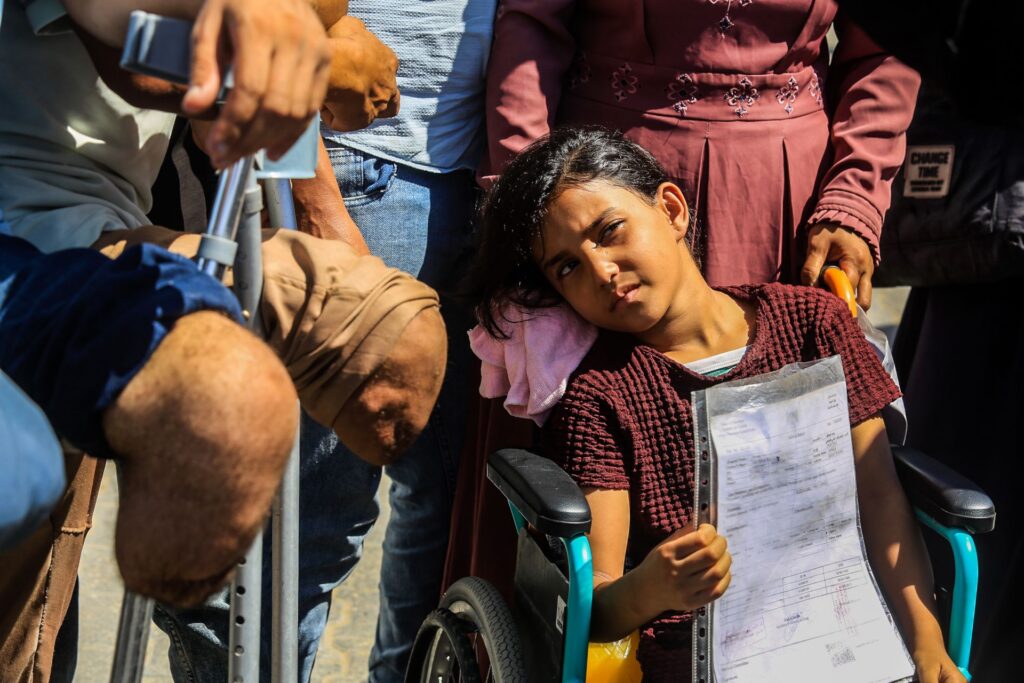
For families like Ahmed’s, being placed on the evacuation list is not the end of the process but the beginning of another period of uncertainty. While the WHO coordinates medical evacuations, the timing of each patient’s departure depends on additional approvals and logistical arrangements beyond its control.
The approval process can also separate patients from the people intending to accompany them.
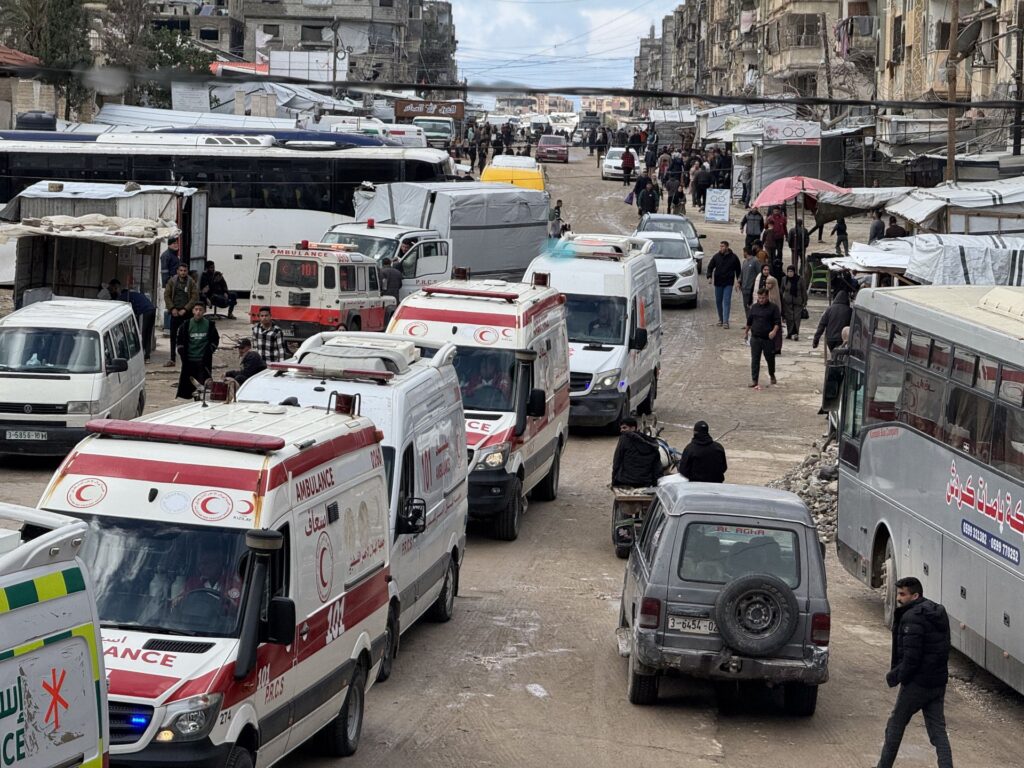
We saw what those approvals meant in practice while reporting on one of Gaza’s medical evacuation convoys. There, we met Anas, a 29-year-old Palestinian who had been scheduled to accompany a patient out of Gaza for treatment.
Anas said that after the patient’s medical evacuation had finally been approved, the family believed the hardest part was over. But only hours before departure, he was informed that his own request to accompany the patient had been rejected.
Later, when Anas called to make sure the patient had arrived safely, the patient told him what had happened. As he boarded the bus, he looked toward the seat that had been reserved for Anas. Instead, another approved companion was sitting there. He thought about asking what had happened, but remained silent. After waiting so long to reach that moment, he feared that any question or objection might jeopardize his chance to leave Gaza for treatment.
This person was unknown to both Anas and the patient. He may have paid to be listed as a companion to get the chance to leave Gaza (in some cases up to $30,000), or used personal connections to be put on the list. These people may even leave the patient on arrival in Egypt. It is impossible to know how this person was assigned to be a companion in this case, even for the people directly involved, another example of the opacity and corruption of the entire system.
COGAT did not respond to our questions about the criteria used to make those decisions. For Smith, who had just returned from treating patients in Gaza, the consequences of those delays were impossible to separate from the system governing who could leave. “It is my view that Israel is using the delays to the medical evacuation process to inflict even greater harm,” he said.
Anas’ experience captures the imbalance at the heart of the crisis. Doctors could determine that treatment is unavailable in Gaza. Hospitals abroad could agree to receive the patient. The WHO could arrange evacuation. Yet the final outcome is decided by Israel. That was true in important ways before the current war, but the consequences have become vastly greater as Israel’s assault has damaged hospitals, restricted medical supplies and created tens of thousands more patients requiring care unavailable inside Gaza. For thousands of Palestinians, survival no longer depends only on medicine or surgery. It depends on whether Israeli occupation allows them to reach the treatment that could save their lives before it’s too late.
Become a member today to receive access to all our paywalled essays and the best of New Lines delivered to your inbox through our newsletters.